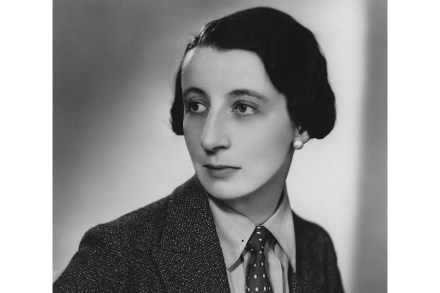
Patricia highsmith

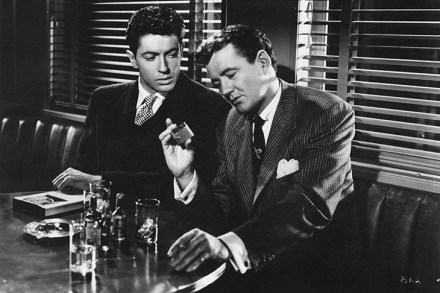
Seventy-five years of Strangers on a Train

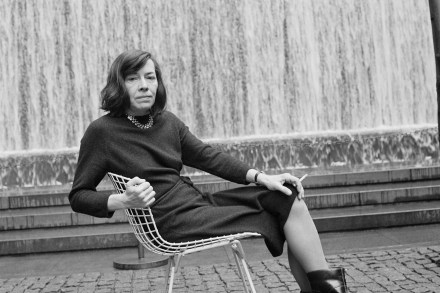
According to her own notebook, the idea for Strangers on a Train came to its author, Patricia Highsmith, in December 1945, while she was walking along the Hudson River in upstate New York with her mother, Mary Coates, and her stepfather, Stanley Highsmith. Given her fractious relationship with her mother, it is not surprising that the idea for a novel – two people swapping murders – came while in the company of the woman she thought of as her lifelong enemy. Divorced from Patricia’s father nine days before she was born in 1921, Mary spent most of her daughter’s childhood courting a new suitor, Stanley.

Highsmith

Mediterranean Gothic: The Sleepwalkers, by Scarlett Thomas, reviewed

From our UK edition

Scarlett Thomas likes islands: either literal sea-girt territories or closed enclaves where this wickedly inventive novelist practises her richly enjoyable experiments in plot and form. If her recent Oligarchy found its sour-sweet spot in a grisly girls’ boarding school, The Sleepwalkers creates another insular possession: the Greek island of ‘Kathos’, which almost resembles Samos. Here, within sight of the Turkish coast, the newlyweds Evelyn and Richard arrive as late-September storms brew to undergo their honeymoon from hell. Ever since novels such as Bright Young Things (also island-set) and PopCo, Thomas has known how to fuse an acidly satirical streak of observation with storytelling artifice that keeps her readers pleasurably unsettled and alert.

Grey, gloomy, and utterly joyless: Ripley reviewed

From our UK edition

If you’ve spent any time gawping at Netflix over the past half-decade or so, you’ll already know that human culture has reached its final, perfect form. We made a good effort with cave paintings, epic poetry, theatre, literature and the rest of them, but the apex of culture is the bingeable, episodic rabbit-hole Netflix documentary about a sociopathic liar. Maybe we love con artists because they’re the only people still selling something new There have been so many of these now that it’s difficult to tell them apart. There was the one about the man who matched with women on dating websites by pretending to be the playboy scion to an Israeli diamond fortune – but who was really just spending the money he’d conned out of his previous girlfriend.

Ripley is not the edge-of-seat thriller you expect

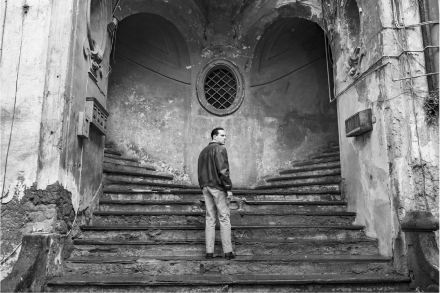
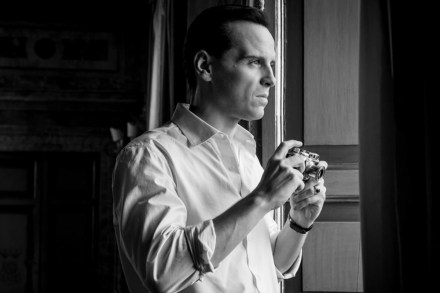
At a time when most streaming shows front-load their first episode with all the drama, intrigue and titillation so that the audience will keep on watching, the opening of Steven Zaillian’s Ripley is almost comically counterintuitive. We see Andrew Scott’s Tom Ripley lugging a corpse down a flight of stairs, without explanation as to who he is or who his victim is, and then we begin the series proper, filmed (by There Will Be Blood cinematographer Robert Elswitt) in crisp black and white. Over the course of eight episodes, Zaillian follows Highsmith’s first Ripley novel, The Talented Mr. Ripley, reasonably closely, albeit with ornamentations and digressions. But if you had any expectation that this would be an edge-of-seat thriller, well, think again.

ripley

Life is a game of cards: Burning Angel and Other Stories, by Lawrence Osborne, reviewed

From our UK edition

This compelling and unnerving collection of stories is Lawrence Osborne’s first, coming in the wake of recent critically acclaimed novels – including The Forgiven, adapted into a film – and earlier works of memoir, essays and travelogue. Born in England, currently residing in Bangkok, Osborne has earned comparisons with Graham Greene for his portraits of flawed white characters in foreign settings, and Patricia Highsmith, thanks to the menacing noir atmosphere. These nine stories, written over the past decade, do not disappoint. Osborne removes his protagonists – English or American, on the young side of middle age – from their native environments and transplants them into exotic, perilous locations.

Refreshingly unfettered: LRB Podcast’s Close Readings on Patricia Highsmith

From our UK edition

I’d forgotten what a rich and deep and characterful voice John le Carré had. Listening to author and lawyer Philippe Sands’s Archive on 4 programme on him last week, I was struck by how much more engaging it was than almost every other male voice on the radio these days. Le Carré’s weren’t simply the measured tones of a mid--century public schoolboy. There was a real spirit in his voice, something melodic, which, in a world of Nick Grimshaws and Greg Jameses, stopped me in my tracks. Le Carré’s voice was undoubtedly part of the armoury that enabled him to win people over, even ‘to manipulate crowds’.

Let’s swap murders: Amanda Craig’s The Golden Rule reviewed

From our UK edition

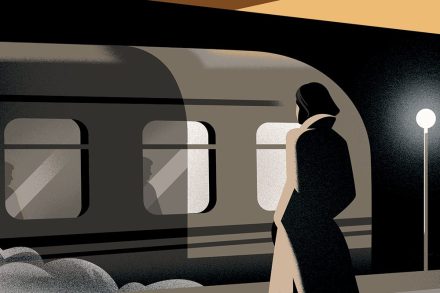
It has been three years since Amanda Craig’s previous novel, The Lie of the Land, the story of a foundering marriage set among the gathering shadows of Brexit. The Golden Rule is worth the wait. It opens with a nod to Patricia Highsmith’s Strangers on a Train, the classic thriller in which two strangers, meeting by chance on a train, agree to murder each other’s wives. In this case, the genders are reversed, and the strangers are two women, Hannah and Jinni, who meet on the long journey from London to Cornwall. Hannah, the central character, has escaped from her working-class Cornish family via university to London. But life has turned sour. Her husband, an entitled aristocratic sprig named Jake, has left her and their young daughter Maisy for the glamorous Eve.

A choice of classic crime fiction

From our UK edition

A guide to reading in lockdown. My involvement with crime and mystery fiction started when I was four. The first book I remember reading for myself was Hurrah for Little Noddy. As Enid Blyton aficionados will know, this is the second in the series about a self-absorbed wooden doll. It’s a thrilling tale about a massive car heist (those pesky goblins), involving a red herring, a car chase, wrongful arrest (oh poor Noddy), a stupid police officer and the intervention of a gifted amateur (Big Ears’s finest moment). Drop everything and re-read it. Much of Blyton’s prodigious output is crime fiction writ small. I have a theory that its imprint on tender minds is largely responsible for the flourishing condition of British crime fiction over the past 40-odd years.