Parliament

PMQs live blog | 27 October 2010

From our UK edition

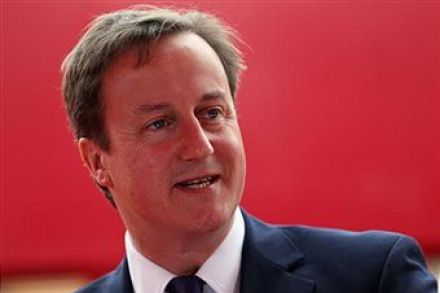
VERDICT: The housing benefit cuts inspired Ed Miliband's chosen attack – and he deployed it quite effectively, with none of the unclarity that we saw last week. For the most part, though, Cameron stood firm – leaning on his favourite rhetorical stick, What Would Labour Do? – and his final flurry against Ed Miliband was enough, I think, to win him this encounter on points. But don't expect this housing benefit issue to dissipate quickly. Bob Russell's question was evidence enough of how tricky this could be for the coalition. 1232: And that's it. My quick verdict shortly. 1231: Bob Russell, a Lib Dem, says that housing benefit cuts are "not a laughing matter," and urges the PM to reconsider the coalition's position.
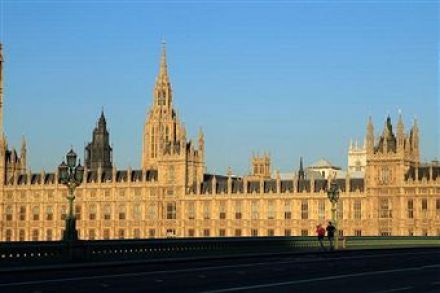
Too many of today’s MPs would have been on the wrong side at Marston-Moor

From our UK edition

We are about to find out how many coalition MPs are lobby fodder. In half-an-hour or so, the House of Commons is going to vote on whether any reduction in the number of MPs should be matched by an equivalent reduction in the number of ministers. If this measure is defeated, the power of the executive will be increased, the payroll vote will be a larger proportion of the House than it is today. Sadly, it looks as if the executive will defeat Charles Walker’s amendment. Tory MPs admit that there is absolutely no intellectual defence for the government’s view that the number of MPs can be reduced by 10 percent but the number of ministers must stay the same, but they are still going to vote against the amendment out of a mixture of loyalty and self-interest.

PMQs live blog | 20 October 2010

From our UK edition

QUICK VERDICT: More heat than light today, but Cameron easily got the better of Ed Miliband. Now to the Spending Review live blog. 1230: Cameron says that as cuts are made, the government will have to reform the way it does criminal justice. This is a prelude for the deep cuts that the Home Office and Justice department are expected to face in the spending review. 1228: The Lib Dem MP asks whether Cameron believes that better-off graduates should bear more for their university costs. Cameron says that he agrees on principle, and claims that "everyone in the House" wants the "same thing": a fair and well-funded university system. 1226: Cameron says that the spending review will contain answers on social housing - but hints that the results may be better than expected.

A test of Cameron’s commitment to the new politics

From our UK edition

In opposition, nearly every politician talks about the dangers of an over-mighty executive. But office has a habit of changing peoples’ views on this subject. Charles Walker’s amendment (which he discusses over at ConservativeHome, here) to match any reduction in the number of MPs with an equivalent reduction in the number of ministers, so that the proportional size of the payroll vote remains the same, is an early test of whether office has begun to erode Cameron’s commitment to a proper balance between the executive and the legislature.   If a reduction in the number of MPs is not matched by a reduction in the number of ministers, then the executive will become more powerful and the House more of a creature of it.

PMQs live blog | 13 October 2010

From our UK edition

VERDICT: Well, who would have thought it? In his first PMQs performance, Ed Miliband not only put in a solid showing – but he got the better of David Cameron. I certainly don't agree with the Labour leader's central argument: that it is unfair to restrict child benefit. But he put his point across in measured, reasonable tones – and Cameron seemed flustered by comparison, as he wagged on about the size of the deficit. Make no mistake, the argument and the public's sympathies will unwind themselves over the course of the entire Parliament. They will not be resolved in one session of PMQs. But in presentational terms, MiliE will have the more flattering clips on the news later – which is more than he could have expected going into today.

The Pope: moderation is Britain’s national instinct

From our UK edition

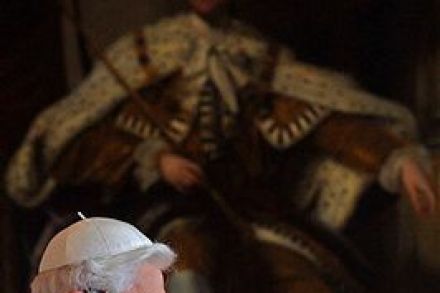
Another good speech from Pope Benedict XVI, grand in historical sweep and intellectual clarity. His softly spoken, yet heavily-accented, English demands some mental concentration. And it was funny watching some of the tired looking politicians squinting as they tried to figure out what on earth the Pontiff was saying.   But if his voice was tricky to hear, his message was reasonably clear. He was effusive in his praise for this country’s parliamentary history, for common law, and for British democracy. At the same time, he did not shrink from suggesting that modern Britain is at risk of detaching itself from the Christian philosophical tradition that underpins everything that he believes is good about our free society.

PMQs live blog | 15 September 2010

From our UK edition

Stay tuned for live coverage of today's Cameron vs Harman clash from 1200. 1200: A prompt start. Cameron begins with condolences for the fallen in Afghanistan. Clegg grabs the PM by the elbow as he sits down - making sure there wasn't an embarrassing lap-sitting moment, I think. 1201: Julian Smith asks whether it is "irresponsible" of Labour to back union strikes. Cameron says it is, natch, 1203: A dignified start by Harman. She passes on her congratulations for the Cameron's new baby, and her condolences for the death of his father. Her question is about what progress the government is making on tackling human trafficking. 1204: Cameron quips that Harman is "by far the most popular" Labour leader he's ever faced across the dispatch box.

Labour get the inquiry they wanted

From our UK edition

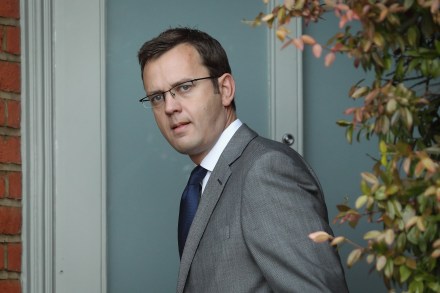
To these eyes, this afternoon's phone hacking debate was a surprisingly sedate affair. Chris Bryant – proposing a motion to have an inquiry conducted by the Standards and Privileges committee into the News of the World's actions – seemed to go out his way to depoliticise the argument, and other Labour MPs followed his lead. And so there was relatively little mention of Andy Coulson, with the emphasis instead on the wrongs that might have been done to the House by the police and the media more generally. It was, then, little surprise that Bryant's motion was passed unanimously. There were some flashes of controversy and acid, though. Bryant himself went quite hard on the police, claiming that they had not fulfilled their "duty of care".

PMQs live blog | 8 September 2010

From our UK edition

Stay tuned for live coverage of Clegg vs Straw from 1200. 1201: And here we go. Clegg begins by passing on his best wishes to David Cameron and his family. Condolences for the fallen in Afghanistan follow - "we will never forget their sacrifices." 1204: Mark Pritchard begins with a dubiously plant-like question. "300 policemen have been laid off in West Mercia," he observes - is the fiscal mess left by the last government to blame? It tees Clegg up to tear into Labour's legacy. A combative start. 1206: Jack Straw steps up to the dispatch box. He begins with condolences for our troops, and then adds some warm regards for Cameron and his family.

Rebels ‘owe’ David Cameron their support

From our UK edition

I bumped into a Tory MP earlier who one might have expected to be rebelling tonight. But he told me he was, reluctantly voting for the AV bill, because “I owe him [David Cameron] this.” His logic was that Cameron had come to the parliamentary party and told them he was going to offer the Lib Dems this so the party was honour-bound to vote it through. This argument has resonance with Tory MPs. The only thing that limits its appeal is a feeling that Cameron might not have been entirely straight with them about why he had to offer the Lib Dems AV. I expect tonight’s rebellion to be relatively small, 10 to 12 according to those on the backbenches who should know. But the real drama will start in the committee stage when all sorts of amendments are put down.

Cameron and Clegg’s message to Tory AV rebels

From our UK edition

So, Cameron and Clegg end the summer break much as they started it: with a public statement on the aims and successes of the coalition government. Their article in today's Sunday Telegraph hops across all the usual touchstones – reform, deficit reduction, people power, and all that – but it lands with an unusually combative splash. In anticipation of tomorrow night's bellwether vote on the AV referendum and redrafted constituency boundaries, the two party leaders write: "This is an important moment for political renewal. We have different views on the future of our voting system. But we both recognise that there are genuine concerns about the current system. And we emphatically agree that the decision is not, in any case, for government alone...

Who governs Britain? | 28 August 2010

From our UK edition

CoffeeHousers may like to see the full leaked letter (pasted below) to which I referred in The Spectator's cover story this week. It shows how the NUT is using Freedom of Information to try and force school heads to hand over a list of names of anyone who might support a campaign to opt out of local authority control and become quasi-independent Academies. We have blacked out any information that may reveal the source. This letter helps explain why Michael Gove will have so few names next week, when he lists the list of schools who have succeeded in their fast-track application. Out of the 3,000 eligible, a few dozen will have made it.

Obama defeats our shameful libel laws

From our UK edition

Here's one divergence between the US and the UK where we can all get behind our American brethren. Yesterday, Barack Obama signed into law a provision blocking his country's thinkers and writers from foreign libel laws. The target is "libel tourism," by which complainants skip around the First Amendment by taking their cases to less conscientious countries. And by "less conscientious countries," I mean, erm, here.         As various organisations have documented, not least the Index on Censorship, the libel laws in this country are a joke – and a pernicious one at that.

The battle over IPSA enters a new phase

From our UK edition

MPs have never really got along with the new expenses body, the Independent Parliamentary Standards Authority. But now their mood towards it seems to have become even frostier. I imagine that IPSA's three-month anniversary, and the rather complacent-sounding celebrations that accompanied it, are something to do with that. Tom Harris's wonderfully acerbic Birthday message, from a couple of days ago, captures how many MPs feel about the whole affair. In letters to the Telegraph today, Michael Fabricant and Denis MacShane ratchet up the attacks on IPSA. And while many will not see them as the ideal poster boys for a rebellion against an expenses watchdog, it's worth remembering that they are far from alone.

Are the OBR’s growth forecasts too optimistic?

From our UK edition

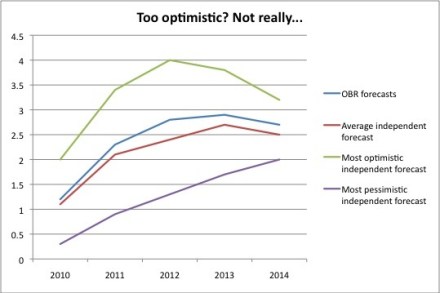
Much ado about the Office for Budget Responsibility's growth predictions in the Treasury Select Committee earlier, especially as an OBR official admitted that the cuts and tax hikes in the Budget could conceivably tip us into a double-dip recession. So are the OBR's official forecasts too optimistic, as some are now claiming? Only time will tell, but we can get a decent sense of things by comparing them with the independent forecasts that the Treasury collect here. And this is the result: In other words, the OBR growth forecasts stick pretty closely to the average independent forecast, although they are a touch more optimistic. Admittedly, these independent forecasts were collected before the Budget (but after the election), so they may be tweaked in a month or two.

A sensible policy change

From our UK edition

Tucked away in Nick Clegg’s statement confirming that the referendum on AV was going to be on the 5th of May next year, was the abandonment of the controversial 55 percent rule for a dissolution of parliament. This has been replaced by a far more sensible arrangement. If the government cannot win a confidence vote, there’ll then be 14 days for one that can command the confidence of the House to be formed. If that does not happen, then there’ll be an election. However, if a government wants to dissolve parliament then it’ll require a two thirds majority. But it is still unclear how this rule could be made to bind any parliament as no parliament can bind its successor.

Sleeping beauties

From our UK edition

We can't really let today go by without mentioning Nicholas Cecil's extraordinary scoop in the Standard.  Here's a snippet: "MPs are sleeping secretly in the Commons after being stripped of their second home allowance. A handful of parliamentarians are bedding down at Westminster during the week because they are now banned from claiming on the taxpayer for a hotel, a rented flat, or a mortgage on a second home. But they want to stay anonymous for fear they will be evicted on health and safety grounds. “I'm not complaining. I'm just getting on with it,” said a Tory who asked not to be named. “I'm desperately trying to do the best for my constituents, which is to be here.

The trimmers mobilise

From our UK edition

The Independent on Sunday reports that a cabal of four disgruntled/horrified Lib Dem MPs have held secret talks with Labour to amend contentious elements of the Budget, such as the VAT hike. Four rebels will not be enough to defeat the government, but it is the first indication that Simon Hughes’ call to arms will be answered by the social democrat wing of the party, damaging the coalition’s long-term prospects. Of course, it is healthy that government backbenchers scrutinise and improve government legislation for whatever cause – the odd amendment to public borrowing clauses would have been welcome over the last decade. Scrutiny does not imply revolution, stressed Andrew George, the four members’ leader. But scrutiny is a double edged sword.

Hughes and Davis fomenting rebellion?

From our UK edition

From opposing sides of the coalition's strait, two warning shots have been fired across the government's bows. David Davis has challenged Theresa May’s decision to renew the 28-day detention limit for six months pending a review. And Simon Hughes has declared that he and a like-minded posse will seek to amend ‘unfair’ aspects of the Finance Bill. Neither is an outright revolt. Neither move amounts to what Ed Miliband termed ‘cracks appearing in the coalition’. Both Davis and Hughes remain in support of the coalition agreement – Hughes will ‘support the Budget’, and Davis, to his enormous credit, has made excessive and illiberal detention periods his raison d’être.