Parliament

Budget 2010 – live blog

From our UK edition

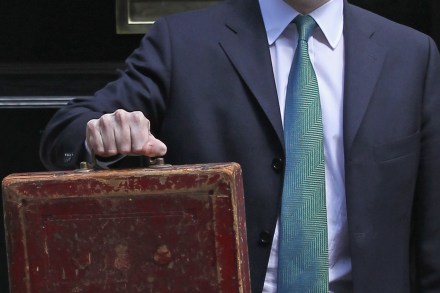
1343, PH: Harman has sat down now, so we'll draw the live blog to a close.  I'll write a summary post shortly. 1342, FN: I wish I could trash Harman's response, but it's actually quite good.  Many a Tory would be secretly cheering her trashing of the LibDems. "The LibDems denounced early cuts, now they're backing them - how could they support everything they fought against, how could they let down everyone who voted for them?" Again, a fair point. "The LibDems used to stand up for people's jobs, now they only stand up for their own." Her main point - that forecasts for unemployment have risen - is a fairly strong one if true. Osborne did indeed shy away from admitting to VAT rise plans in the election campaign.
Worrying developments

From our UK edition

Paul Waugh has news that the Treasury asked a broadcaster to sign a written legal agreement that they would not ask any questions about the OBR’s announcement. Well, some of the figures embarrassed Osborne but surely it wasn’t that bad? As Paul notes, this may be a case of the Civil Service taking advantage of ministers’ inexperience but even so. Equally, the government has adopted the practice of its predecessor and issued statements to the press before stating them to the House. Carry on like this and we'll join the axis of evil. New politics please. UPDATE: Turns out not to have been so worrying.

Laughs, politics and sincerity

From our UK edition

The opening of the Queen’s speech debate is, traditionally, a light-hearted affair. Peter Lilley opened up with a rather witty speech. He compared the Liberal Democrats to the bastards of the Major Cabinet, it is better to have them inside the Cabinet pissing out than outside the Cabinet pissing in. He went on to warn the new Prime Minister that the appropriate response to John Major and Gordon Brown’s microphone troubles is not to turn your microphone off but to keep ‘your receiver switched on to hear legitimate concerns.’ David Cameron would be well advised to heed this tactfully-expressed advice. Lilley ended with a heart-felt plea to bring the troops home from Afghanistan as soon as possible.

What Harriet Harman can do for us all

From our UK edition

Today's the day, I suspect, when it will really hit home with Labour that they are now in Opposition.  Attacking a government's legislative agenda isn't something they've had to do for 13 years.  And while you could say that the Brown machine acted as an opposition in government – geared to destroy its rivals – this is different terrain, with different priorities.  It will fall to Harriet Harman to lead the charge from 1430 onwards. The FT's Jim Pickard has some sensible advice for Labour's stand-in leader.  But the crucial point is this: "It will be tempting to slam 'Cameron and Clegg' for 'taking £6bn out of the economy' and 'risking a double dip recession'.

The Queen’s Speech: full text

From our UK edition

Via PoliticsHome: HER MAJESTY’S MOST GRACIOUS SPEECH TO BOTH HOUSES OF PARLIAMENT TUESDAY 25 MAY 2010 MY LORDS AND MEMBERS OF THE HOUSE OF COMMONS My Government’s legislative programme will be based upon the principles of freedom, fairness and responsibility. The first priority is to reduce the deficit and restore economic growth. Action will be taken to accelerate the reduction of the structural budget deficit.  A new Office for Budget Responsibility will provide confidence in the management of the public finances. The tax and benefits system will be made fairer and simpler.  Changes to National Insurance will safeguard jobs and support the economy.

A day of pomp and positivity

From our UK edition

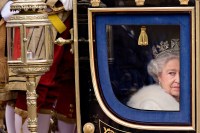
The sun is filtering through the garden at 22 Old Queen Street, and a brass band is marching around St James's Park: we're getting the light and the pomp in equal measures for today's Queen's Speech.  As for the actual policy, well, we largely know what it's all about.  There will be proposals for scrapping ID cards, strengthening civil liberties, reforming schools, making the police more accountable, and more.  The emphasis from the government is on handing power back to the people. The question is whether the coalition can make today's positives balance out the age of austerity.  The stock market today provides a gloomy reminder that their biggest challenge is, and will remain, the economy.

A show of Cameron’s adaptability

From our UK edition

Great to hear that David Cameron has decided to keep the 1922 committee reinstated. This is a significant, unexpected development – and sign of strength, not weakness. Interestingly, I hear that George Osborne had not been properly consulted about last week's events: ie the way in which MPs were asked to vote into effectively abolishing the 1922 committee of backbenchers and being strongarmed, Blair-style, by the leadership. Cameron had not intended things to turn out as they did and Osborne, in particular, was dismayed.   I always suspected that last week's fracas was a simple misjudgment, easily explained under the chaotic events of coalition.

Ministers won’t be able to vote in 1922 elections

From our UK edition

So it turns out that John Redwood's uncertainty was well-placed. According to Jonathan Isaby over at ConservativeHome, the Tory chief whip has decreed that ministers won't be able to vote in 1922 Committee elections after all. They will only be able to attend meetings, which, as Jonathan says, "no-one ever really had a complaint about." All this comes on the back of confusion about what last week's ballot even meant, making a curious situation even curiouser.  But, whatever the reasons behind it, the outcome will be seen as a climbdown by David Cameron – and perhaps the first real dent to his authority since coming to power. Meanwhile, the 118 "rebels" will revel in how things have turned out.

John Redwood “not sure” whether ministers will vote in 1922 Committee

From our UK edition

John Redwood is interviewed by Andrew Neil on Straight Talk this weekend, and there's a rather eyecatching exchange where the Tory MP claims that he's "not sure" whether ministers will be able to vote in the 1922 Committee, after all: John Redwood: ...as I understand the ballot, the ballot was about whether Ministers should come regularly to the 22 or not, and so I have no problem with that, and if that is the agreement, then fine. Andrew Neil: So are you not clear yet whether Ministers can come along as full members of the 22 Committee? JR: Well, I’m not sure whether they vote in 1922 elections, which is the point you were asserting, and we’ll have to see whether that’s true or not.

The latest expenses battle

From our UK edition

IPSA, IPSA, IPSA.  If there's one thing exercising MPs across all parties at the moment, then it's the new expenses regime in the Commons: the Independent Parliamentary Standards Authority.  I won't run through all of their grievances here, mainly because you can find good summaries here, here and here.  But they are already a frustrating mix of seemingly legitimate concerns (about staff wages) and outrageous whining (about not having taxi fares paid for before 11pm)(erm, pay for them yourself). The latest news is that John Bercow is going to intervene, to "ensure the new rules are interpreted reasonably and that MPs are treated courteously.

Cameron has won the 1922 Committee vote…

From our UK edition

...by 168 to 118 votes, according to Paul Waugh.  Comfortable, but not comfortable enough to suggest that there won't be a strong core of resentment to this change. UPDATE: This could rumble on. Here's the latest from PoliticsHome: A number of MPs, headed by the previous 1922 secretary Christopher Chope, are planning to challenge the surprisingly close result, and have not ruled out legal action. They point out that: 1. The difference between the winners and losers is more than bridged by members of the government (who they point out are not entitled to vote according to the current rules of the committee). 2.

The 1922-2010 Committee

From our UK edition

In a move of breath-taking audacity, David Cameron has just announced that there will be a ballot of the parliamentary party to establish whether or not members of the government payroll vote will be able to be full voting members of the 1922 Committee. This may seem like a small technical change but it is of massive importance: it would hugely limit the power of Conservative backbenchers to hold the government to account. When the Conservative party has been in government, the 1922 Committee has been the voice of the backbenchers. It is how they have held Conservative ministers and prime ministers to account. Cameron’s move, if successful, would effectively remove that power from them.

Bercow remains Speaker, as Parliament reconvenes

From our UK edition

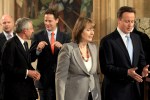
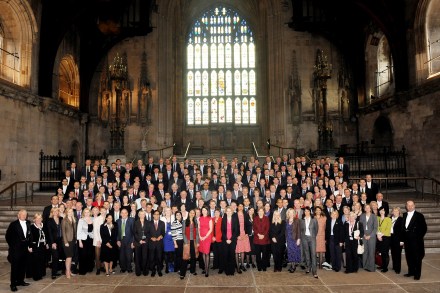
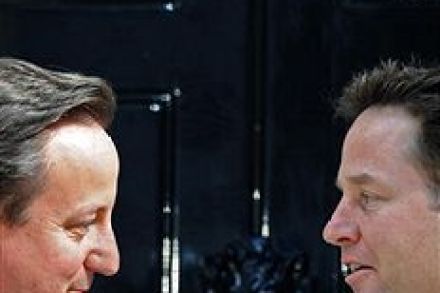
David Cameron sat alongside Nick Clegg on the government benches, with Harriet Harman two sword-lengths away as leader of the Opposition.  Even though the coalition has been around for a week now, it took the images from the Commons this afternoon to bring home just how extraordinary recent politics has been.  I mean, even the SNP's Angus Robertson got to make a speech now that the Lib Dems aren't a party of opposition.  This, plainly, is going to take some getting used to. They were all witness, today, to the re-election of John Bercow as Speaker.  In the end, it was easy for the Buckingham MP, as the "ayes" heavily outweighed a handful of "nos," and he was duly "dragged" to the Speaker's chair without a formal vote.

Nadine Dorries’ Kill Bercow email

From our UK edition

Via PoliticsHome. If anything sways hearts and minds, then I suspect it will be the name of Sir Menzies Campbell among the "able and willing" replacement candidates: Dear new Member, Many congratulations and welcome to the House. Please forgive me for this generic email being brief and to the point. The first job of the House today is to appoint the Speaker. The Father of the House, Sir Peter Tapsell, will present a motion to the House that John Bercow remains as Speaker. At this point, members will shout 'Aye', on this occasion there will also be members from all parties shouting 'No'.

We should judge Bercow at the end of this Parliament

From our UK edition

Well, the news that Sir Menzies Campbell is lobbying to be made Speaker – as revealed by Iain Dale last night – certainly adds a dash of spice to proceedings.  But I'd still expect John Bercow to comfortably survive any re-election vote today.  On paper, all the arithmetic works in his favour.  And there's a sense that many Tory backbenchers are holding their fire for bigger battles with the party leadership ahead. But does Bercow deserve to stay?  I must admit, I'm rather ambivalent about the issue: I didn't really want him as Speaker, but I didn't really not want him as Speaker either.  And after his solid enough first year in the Speaker's chair, my thinking remains more or less the same now.

The gathering storm over the 55 percent plan

From our UK edition

There is a massive difference between rebellious talk and actual rebellion. But some of the language surrounding the 55 percent rule has been striking. When I told one senior MP that David Cameron had said on Sunday that he would whip this vote, the MP shot back defiantly, ‘you whip if you want to.’ David Davis’s intervention on the issue on the World at One was particularly significant. Having called the 55 percent rule ‘just a terrible formula for government’ it is hard to see how he can support the measure. It is also hard to imagine that a man who picks his fights so carefully would have marched so far up the hill if he was not confident that he had a critical number of foot soldiers behind him.

The life of a Tory MP

From our UK edition

A Norwegian MP once told me that every time he thought life on the opposition benches was terrible he would think about life on the government backbenches – and realise how much he enjoyed his job. Life as a government-supporting backbench MP is difficult; if you are not willing to cap your ambition, you have to support the government, keep criticism muted and hope for elevation to ministerial rank in any future reshuffle. It is doubly difficult for the hard-working Tory MPs who lost out on government jobs because of the need to find space for Lib Dems, rather than because of their personal abilities. I can think of at least half a dozen MPs who would have made excellent ministers. What should they do now?

Reform? Looks more like gerrymandering

From our UK edition

Much ado about this 55 percent proposal – whereby that proportion of the House, rather than just over 50 percent, would be required to vote down a government – and rightly so.  But, as so often, Iain Martin says all that needs to be said.  Here's a snippet from his must-read post: "It is rather stretching things to try and present this piece of proposed gerrymandering as 'Political Reform.' It is actually designed to ensure that even a walk-out of the whole Lib Dem parliamentary group couldn't actually bring down this government. This would weaken parliament and strengthen the hand of the executive considerably - when it is only weeks since both parties were talking of doing the opposite.