Parliament

Is Britain’s Rachel Reeves the new Hillary Clinton?

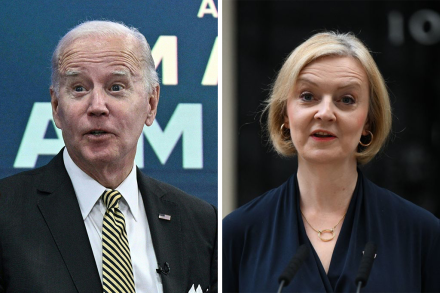
Britain's Chancellor of the Exchequer Rachel Reeves, the second most powerful politician in the country, shed a few tears from the front row of the government benches in the House of Commons during the weekly Prime Minister's Questions session. Her boss Prime Minister Keir Starmer – to her mounting horror – pointedly refused to confirm whether she'd be staying in her current post. "We’ve got free school meals, breakfast clubs, we’ve got £15 billion invested in transport funds in the North and the Midlands. We’re cutting regulation, planning and infrastructure is pounding forward," Starmer said with affected bolshiness.

Reeves

America’s Summer of Discontent, 250 years ago

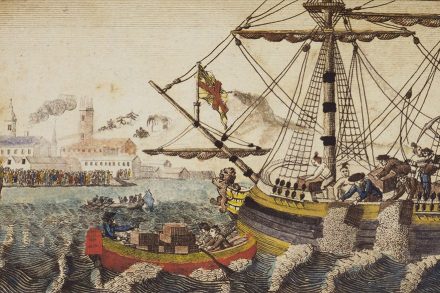
In the summer of 1774, large numbers of American colonists, from Massachusetts Bay down to the Virginia Tidewater, were disaffected and angry. For a decade, they had felt increasingly oppressed by Great Britain, ever since London had imposed duties on various exports to America to help pay for the costs of the victorious Seven Years’ War.  The Stamp Act of 1765 and the 1767 the Townshend Acts, which added duties on lead, glass, tea and other items, became hated symbols of imperial power. The colonists considered the duties to be taxes levied by Parliament, and while they acknowledged Britain’s right to regulate trade, they balked at the presumption by British lawmakers to directly tax them.

discontent

At home with Jacob Rees-Mogg

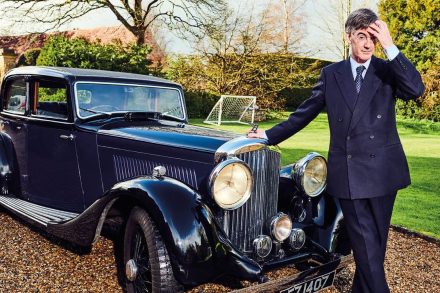
Before I arrived at Gournay Court, Jacob Rees-Mogg’s seventeenth-century home in Somerset, I’d missed the main event. Beforehand, I’d asked the Conservative Member of Parliament to lean in to whatever our photographer asked — and somehow, before I turned up an hour late, she managed to get him in a nearby field feeding sheep from the palm of his hand. He didn’t seem to mind. In fact, there were only a few times he said no to our increasingly deranged demands. Once was after we asked him to get up on the humongous dining room table, spread his legs and act natural. “Well, I couldn’t possibly do that,” he replied. When you drive up to Gournay Court, you encounter what I can only describe as the quintessential British upper class. Think afternoon tea at the Savoy.

Rees-mogg

Why Trump is soaring as Boris falls

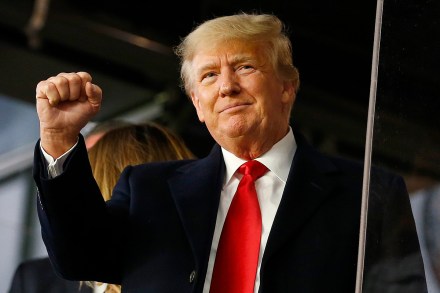
“In order to make our country successful, safe, and glorious again, I will probably have to do it again,” said former president Donald J. Trump at a rally in Texas last Saturday. It was yet another hint that he will seek the presidency in 2024. Over the weekend, British politics simultaneously fluttered at the possibility that former prime minister Boris Johnson might return to office following the resignation of his successor Liz Truss. Trump and Johnson share more than a scintilla of similarity. Large and blond, both men made their way into politics as flippant populist spoilers, antagonizing establishment critics while inspiring outsiders who felt excluded from elite decision making.

trump

How nice it must be to sack incompetent leaders

Liz Truss has resigned after only forty-five days in office, the shortest serving prime minister in British history. She's long come off as a stubborn and prideful figure, stuffed with confidence even if she doesn't express it well. It must have taken a momentous behind-the-scenes rebellion to convince her to go — and surely that's what happened. The past couple of weeks in British politics have been nothing short of mesmerizing. We Americans now understand how the rest of the world must have felt gawking at us for five years.

What Americans can learn from the monarchy

September 8, 2022 will go down in history as the date we lost Her Majesty Elizabeth II, Queen of the United Kingdom of Great Britain and Northern Ireland, Canada, Australia, New Zealand, and of her other realms and territories, Head of the Commonwealth, Defender of the Faith. Her son Charles, Prince of Wales, has now succeeded her as King Charles III. For the first time in this writer’s life, the anthem is to be sung as "God Save the King." To write about the accomplishments of the sole public figure remaining from one’s earliest memories is a daunting task. The Queen in her turn inherited an institution that is difficult for Americans — especially of a conservative stripe — to understand.

Boris Johnson and the return of ‘Pestminster’

You might be wondering why Britain's government has rolled from crisis to crisis since the pandemic began, culminating today in the resignations of two leading ministers, and with the threat of more hanging overhead. Some would blame the character of 2020 and the pestilential years since; others the nature of Boris Johnson, the prime minister: his "colorful" personal life (a hard-working euphemism); his lack of focus; his indifference to the truth. I would look a little broader. Britain's political life is the product of the people who fill its parliament. And very many of them are deeply substandard people. The straw that apparently broke the camel's back this week was the government's former deputy chief whip, a man called Chris Pincher.