Papua new guinea

For most people on Earth, learning is just another form of entertainment

When the anthropologist Bronislaw Malinowski traveled to Papua New Guinea in the 1920s, he discovered a group of remote and mostly naked tribes, none of whom had encountered literacy before. And without writing, he found, they organized knowledge in a different way from the rest of the world. Rather than label and categorize everything that exists into linear encyclopedic facts, for instance, they only bothered to record and give names to local flora and fauna if they were useful in their own lives. Animals that were neither food nor dangerous, for example, were treated as unimportant. That is just a bush, they would say, or, merely a flying animal. After centuries of mass literacy, we’ve forgotten that our brains still work like this, too.
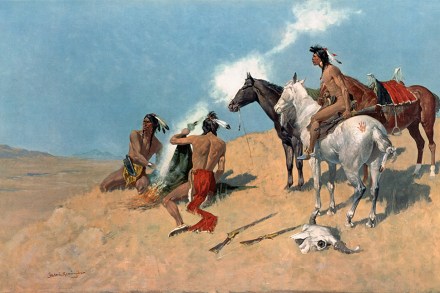
The world’s most exotic languages are vanishing in a puff of smoke

From our UK edition

It is one of academia’s horrible ironies that linguistics, the subject devoted to human communication, has managed to communicate nothing about its many startling and fundamental discoveries to the world outside its university departments. So any book such as this linguistic tour of some of the world’s exotic, hidden and endangered languages is to be welcomed with sobbing gratitude. Almost all the languages Lorna Gibb describes are staples of linguistics course books, but I’m assuming each will come as startling news to a general readership. One which was new to me was the sign language used by native north Americans throughout the Great Plains, and thanks to Gibb, I also now know how to interpret their smoke signals: two puffs = all is well; three puffs = help!

Do we still need explorers today?

From our UK edition

In November 2017 Benedict Allen found himself at the centre of a media frenzy. He’d been in Papua New Guinea (PNG) on a one-man expedition and hadn’t been heard of for weeks. Declaring him ‘lost’, several papers turned on him, accusing him of being overprivileged and imperialistic. One even suggested the whole thing was a stunt. It didn’t help that he was picked up by a helicopter, sent by the Daily Mail. This was a story the paper’s rivals wanted to spoil. Explorer is Allen’s account of that journey and how it all began. It’s no excuse or apology, but is written with anger and passion. The story begins in adolescence, with a boy who was idealistic, stubborn and determined to travel the world alone and in his own way.