Palestine

How politics ruined Instagram

Someday, we’ll count them like fallen soldiers: the online platforms that began by promising to be different, an escape from the grind of endless internet flame wars, and ended up like all the others, captured by memeified outrage. The trajectory is always the same. Tumblr, originally a home for cheeky fanblogs with titles like ‘fuckyeahsharks!’, was overtaken in a few short years by the ‘Your Fave Is Problematic’ brand of outrage archaeology. Facebook started as a place to collect your photos, share updates about your lunch and platonically ‘poke’ your friends, only to devolve into a wasteland abandoned by virtually everyone except a bunch of angry boomers battling over whether or not Hillary Clinton does, in fact, eat babies. Twitter...

instagram

Don’t compare Israel to Hamas

From our UK edition

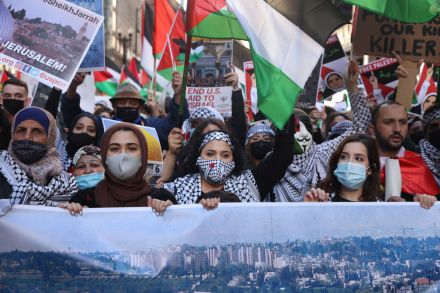
No, not this time, Boris. The Prime Minister’s ‘both sides’ response to the terrorist attacks on Israel underscores how Western political elites — left, right and centre — lose all critical reasoning when it comes to one tiny strip of land in the Middle East. Israel is under assault from Hamas, the Islamist mafia that runs Gaza like 19th-century Sicily. This follows tensions over the policing of holy sites during Ramadan; a spate of violent street incidents between Israelis and Palestinians; marching and incitement by the Israeli far-right; Palestinian rioting in Jerusalem; and Arab-Israeli rioting outside the capital.

Netflix’s Caliphate is all too frighteningly plausible

From our UK edition

Sweden is now properly celebrated as the Land that Called Coronavirus Correctly. But in the distant past, those with long memories may recall, it had a less flattering reputation as the Land Absolutely Ruddy Swarming With Jihadists. Caliphate — an eight part Swedish-made drama on Netflix — takes you back there in vivid and compelling detail. Partly, it’s an edge-of-seat thriller about a major terrorist attack on Swedish soil —from its conception in Isis-held Raqqa to its execution (or its foiling by the security services: I haven’t got there yet so I don’t know) by a mix of radicalised locals and hardened Isis killers flown in from Syria.

The battle the Israeli Defense Force can’t win

From our UK edition

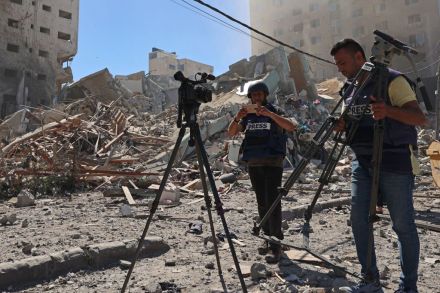
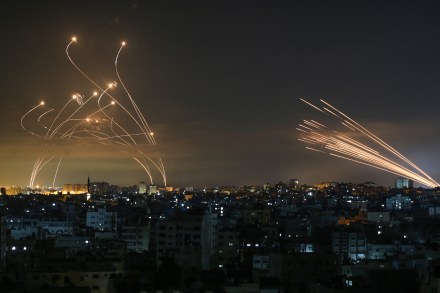
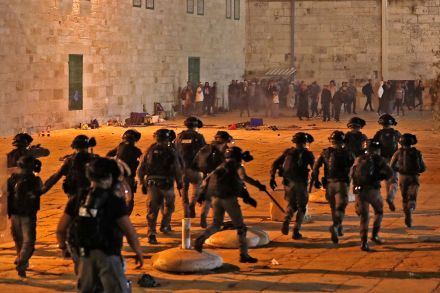
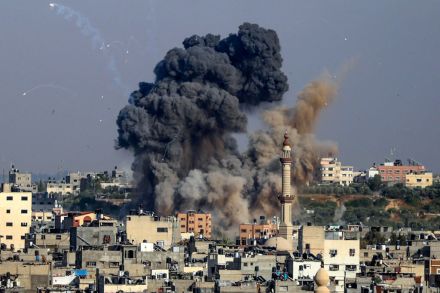
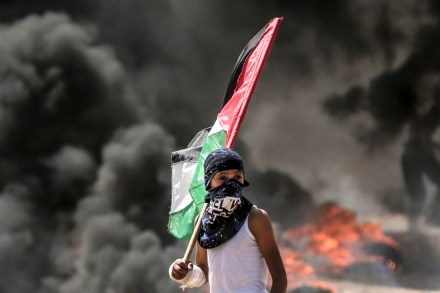
The hostilities between Israel and Gaza caught Netanyahu’s government by surprise. What started as a local demonstration by Palestinians against ongoing efforts to evict them quickly escalated into violent clashes with a heavy-handed Israeli police. Hamas then demanded Israel remove its forces from the area, including the nearby Al-Aqsa mosque, or face reprisals. When they didn’t, the terror group retaliated by firing rockets into Jerusalem. This was on Monday. By Wednesday there had been fierce exchanges of fire between both sides. Hamas fired over 1,500 rockets towards Israeli cities and towns. Despite Israel’s impressive Iron Dome anti-missile system and widely available shelters, over 200 Israelis have been injured and seven killed.

Palestinians in Jerusalem live in a strange limbo

From our UK edition

Jerusalem Thomas Friedman has a lot to answer for. The New York Times’s oracle has ruined, through overuse in his columns, the best source of local knowledge for journalists: the cab driver. No other hack can now quote his driver for fear of colleagues’ ridicule. Which is a pity, because the cab drivers in Jerusalem are those rare creatures who not only regularly cross between the three deeply divided cities — Zionist Jerusalem, ultra-Orthodox Jerusalem and Palestinian Jerusalem — but also converse freely with the denizens of all three.

Israel’s worrying descent into violence

From our UK edition

I didn’t hear the boom on Monday night. I didn’t hear the siren either, due to some loud renovations. Sitting at my desk in the bomb shelter in my flat that doubles as a home office, I found out we were under rocket attack by reading about it on Twitter. With the blast door and inch-thick steel window plate closed, I waited for the all-clear. A few minutes later, minor damage was reported to a house just outside Jerusalem, hit by shrapnel from a rocket that flew 40 miles from Gaza. Others were intercepted by the Iron Dome anti-rocket system. A dramatic end to Jerusalem Day, when Israel celebrates the reunification of the city under Israeli rule in 1967.

Israel is not to blame for shelved Palestinian elections

From our UK edition

Last week, the irony that stalks the Middle East found a new expression: while Israel has been playing out an almost comical surfeit of democracy, staging four elections in two years, the Palestinian Authority, which has refused to give voters a say since 2006, has shelved another election. Mahmoud Abbas, 85, is currently enjoying the 16th year of his supposedly four-year term as Palestinian president. (Would it be too cheap a shot to wonder how the world would react if Netanyahu behaved like that?) When he announced that a poll would finally be held this month, seasoned observers laid bets that it would never happen.

Riots in Jerusalem

From our UK edition

In 2015, I was nearly beaten by a far-right mob in Jerusalem. Thursday night’s riot in the holy city reminded me a lot of that evening. Thankfully, this time, nobody died, but that same feeling of tension, anger and violence was in the air. My run in with the mob began at a small vigil to protest against the murder of a family at the hands of Palestinian terrorists. For some reason they decided we were ‘left-wing protesters’ — the police were able to encircle us but could do nothing to stop the bottles being thrown, the spit, the curses. Our crowd of attacks moved on, beating any Arabs they came across.

Israel’s changing global fortunes

From our UK edition

Israel has been working closely with other countries and international companies, developing and producing vaccines against Covid-19. At the same time, the Middle Eastern country is rapidly improving relations with its Gulf neighbours, the latest evidence being the appointment of a new UAE ambassador to Israel. A major shift has taken place in Israel — 20 years ago the country was under siege from terrorists, with bus bombings rocking Jerusalem and terror attacks in the heart of Tel Aviv. Just a few years ago Israel was fighting a major war in Gaza against Hamas, a war that is the subject of an inquiry by the International Criminal Court. For many years Israel has attempted to re-brand itself using public diplomacy and showcasing its tech sector and vibrant society.

Corruption affects everything in Palestine – even vaccines

From our UK edition

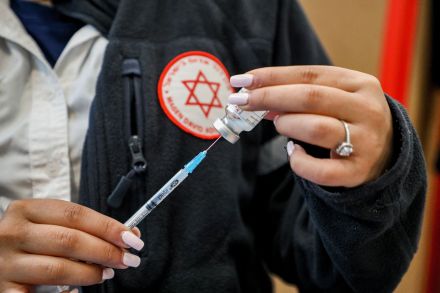
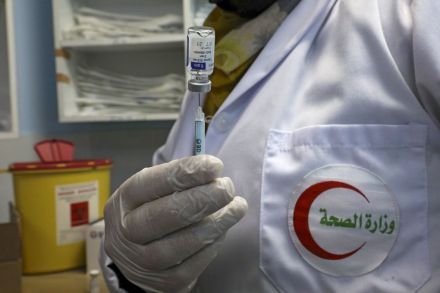
Visit certain parts of the West Bank and you’ll encounter mansions owned by senior officials in the Palestinian Authority (PA). By any standards – let alone those to which ordinary citizens are accustomed – they are impressive, with arches, colonnades and tall windows. If you’d been watching them in recent weeks, you might have seen vaccines being quietly delivered to these residences in unmarked cars, having been skimmed off the supply intended for medical workers. Those, at least, were the allegations made by a number of Palestinian human rights and civil society groups. Last week, the Palestinian health ministry was forced to come clean.

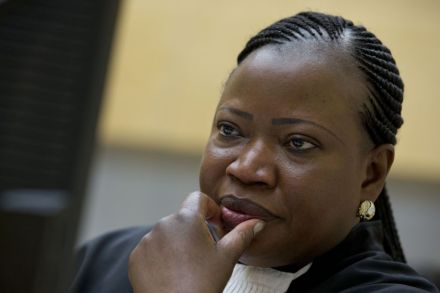
The ICC is playing politics by targeting Israel

From our UK edition

Sovereignty, that old-new friend, is in vogue again thanks to Brexit and the advances made by nationalists across Europe and the United States. Those of us who lament these developments should not regret the reassertion of national sovereignty, for it is intimately linked to democracy and self-determination and provides domestic legitimacy for the kind of liberal, cooperative world order we wish to see. If you want a strong international community, you need to have strong, confident nation-states in which people believes their country can be active in the world without losing its sense of self.

The Arab-Israeli conflict may finally be over

From our UK edition

The dawn of the new year is rising on a world that would have been unrecognisable 12 months ago. The scourge of Covid, the fall of Trump, the resolution of Brexit; all have carved history in unpredictable ways. But nowhere has seen greater changes than the Middle East, where, for the first time, people are daring to believe that the Arab-Israeli conflict is over. In January 2020, Israel was as isolated as ever in the region. Its ‘cold peace’ agreements with Egypt and Jordan, which were not matched by affection on the street, were as good as it got. The Arab League’s notorious threefold rejectionism — no to peace, no to recognition, no to negotiation — seemed unmovable.

Pompeo’s principles

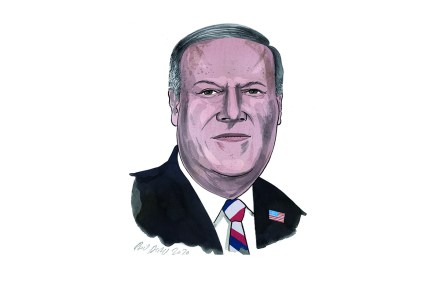
‘Come in.’ Burly, brisk and maskless, Mike Pompeo indicates a chair before the marble fireplace. ‘It’s all right if we’re six feet — or two meters — apart.’ We are meeting at the State Department the day after Pompeo’s return from Qatar, where US negotiators have opened discussions with the Taliban and other Afghan factions on an end to the war in Afghanistan. It’s also the day before the signing of the Abraham Accords between Israel and the UAE and Bahrain. Cheerful and perhaps a little tired, Pompeo exudes forceful confidence: a man who knows what needs to be done. As Secretary of State since 2018, Pompeo has been the strategist who has translated Trump’s generalities into the specifics of policy.

benjamin netanyahu

Netanyahu wins again, eventually

Benjamin Netanyahu is to tight corners as Harry Houdini was to handcuffs. Only a fool or an expert foreign analyst would write off Netanyahu simply because Likud didn’t come first in Tuesday’s elections. There’s about as much chance of him throwing in the towel after coming a close second to Blue & White as there is of him ending up in Houdini’s bracelets because of corruption charges. Consider the blue-rinsed Machiavelli’s previous electoral failures. In 2009, Likud won 27 mandates, second to the 28 seats of Tzipi Livni and her new centrist party, Kadima. Netanyahu formed a majority coalition government, Kadima dissolved after the 2015 elections, and Livni, a politician without a public, retired from politics in 2019.

Have Arab nations forgotten about Palestine by accepting Israel?

From our UK edition

The Palestinians are entering one of the most precarious periods in their nation’s history. The normalisation of relations between Israel and the United Arab Emirates is only the beginning as other Arab and Muslim states are expected to follow. Yesterday, Haidar Badawi Sadiq, spokesman for the Sudanese foreign ministry, confirmed talks between Khartoum and Jerusalem and predicted a treaty before the end of the year. Today, Sadiq was fired and the ministry denied all knowledge of secret negotiations. Maybe Sadiq spoke out of turn; maybe he jumped the gun; maybe he floated the test balloon that he was told to. No matter.

How I got canceled

Perhaps contemporary ‘cancel culture’ officially began in 1989, when Khomeini issued his fatwa against Salman Rushdie for having ‘defamed’ Islam in The Satanic Verses. Rushdie was ushered into hiding and the Islamist assault on truth-speech in the West was on. But here’s what I also think. The day after Israel won its 1967 war of self-defense, the propaganda began in deadly earnest against both Israel and the West. Within two decades, perhaps less, Western universities were intellectually and politically ‘occupied’ by Stalinist and Islamist narratives. Balkanized social identities and victimology ruled.

phyllis chesler

Jared and the Jews

For most Jewish Americans, Jared Kushner is the son-in-law and counselor of a president they didn’t vote for in 2016. He prays with a punctiliousness they romanticize but prefer not to emulate. Jared’s grandparents learned about history the hard way: they survived the Holocaust and immigrated with no money and little English. The typical Jewish American grandparents are boomers who vote Democratic all the way down the card. They believe America is different for the Jews, even if they were raised to believe that difference was un-American and bad for their careers. And here comes Jared, a frum Jew who married the boss’s blonde daughter. It could be a romance from Washington Irving’s Tales of the Alhambra. Less romantically, it is a tale from history.

jews

Western states have failed the Palestinian ‘right of return’

The issue of Palestinian refugees, and the Arab and Palestinian demand that those refugees be allowed to exercise what they call a ‘right of return’, attracts scant attention. Neither Israel’s leaders nor its public, and certainly not the international community, spend very much time discussing it. This is in stark contrast to other core issues. For example, there is endless discussion of the settlements and the military occupation of the territories, which are indeed important; but the Palestinian refugee issue has barely been subjected to any real strategic discussion. There have been no serious attempts at a resolution, or even efforts to place it on the agenda.

palestinian

Critics are wrong to scoff at Trump’s Israel-Palestine deal

From our UK edition

‘In business, when I have a tough deal, people would say, “This is tougher than the Israelis and the Palestinians,”’ said President Donald Trump as he unveiled his long-awaited Middle East plan, the so-called Deal of the Century, during a White House ceremony on Tuesday. The comment, ad-libbed, not only demonstrated that the former real-estate tycoon does have a sense of humour. It suggested that, contrary to the conventional wisdom, President Trump is ready to do business when it comes to peace in the Holy Land. 'Actually, there’s nothing tougher than this one but we have to get it done,' he added. 'We have an obligation to humanity to get it done.

How Netanyahu gains from the death of Baha Abu al-Ata

There’s a lot going on in Israel. Due to indiscriminate rocket fire from Palestinian Islamic Jihad in Gaza, schools in many Israeli cities, including Tel Aviv, were closed on Tuesday. Some have already been closed for Wednesday. The rockets target anyone and anything, and give everyone, young or old, the same amount of time, usually under one minute, to seek cover. Thanks to the shelters and Iron Dome, an air defense system which today had an interception success rate of 90 percent per the IDF, these rockets typically result in few Israeli deaths. But the collective psychological trauma of constantly being under fire is impossible to measure.

gaza palestinian islamic jihad baha abu al-ata