Palantir

Why is Peter Thiel in Argentina?

Many people enjoy ascribing meaning to the behavior and actions of elite politicians, celebrities – and especially billionaires. They read volumes into their every move, like studying tea leaves or predicting whole futures from the position and movement of the stars. So Peter Thiel’s decision to relocate to Argentina has elicited exactly the reaction one would expect. Thiel is the billionaire co-founder of PayPal and Palantir. Whenever he does anything unusual, the speculation begins within hours, growing more and more outlandish with every attempt to explain his actions. Is he finally fleeing the US? Is he seeking refuge from a wealth tax? Is he insuring himself against doomsday in anticipation of civilizational collapse?

The coming storm against MAGA

Economist and former New York Times opinion writer Paul Krugman has called for a post-Trump “deMAGAfication” of America, and left no mystery about the comparison he was making. “And I’m not going over the top by using a word that’s very similar to the ‘denazification’ that we pursued successfully after World War Two in Germany.” Krugman remained vague about the nature of this “thorough purging,” but said it should include “not just the MAGA ideology, but the whole structure of hugely unequal power, hugely unequal wealth that made this horrific moment possible.” Today’s left – secular, post-Christian, postmodern and postcolonial, untethered from faith, tradition or national feeling – has few moral intuitions other than “Do not be Hitler.

The rise of Palantir Derangement Syndrome

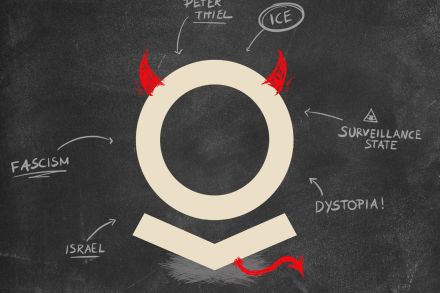
A late spring outbreak of righteous indignation is affecting the United Kingdom. It’s yet another variant of Palantir Derangement Syndrome. Virologists tracked this smug neurosis as it jumped across the Atlantic from the American left to British Labour. Symptoms include selective blindness, performative anguish, a hilarious inability to grasp the facts and Tourette’s-level outbursts of repetitive left-wing clichés. Earlier this month, a committee dominated by British Labour MPs who are infected by PDS called for Palantir to be stripped of its £330 million deal to help British hospitals save the lives of patients. The House of Commons science, innovation and technology committee accused the American tech giant of having a “clear mismatch” with British values.

Can we trust Palantir?

From our UK edition

Best not to say too much about Albert Manifold, who was ousted as chairman of BP last week after only eight months in post over ‘governance oversight and conduct issues’. Manifold called the board’s allegations against him ‘lies’ and writs may be expected to fly. But the broader question is why a 117-year-old company built on long-term collegiate strategy-making has become incapable of holding a stable leadership team together from one year to the next. Bernard Looney was chief executive from 2020 until he resigned in 2023 after allegations that he misled BP’s board over relationships with colleagues. His successor, Murray Auchincloss, lasted less than two years before being replaced by Meg O’Neill, headhunted from Woodside Energy in Australia.

The Palantir manifesto doesn’t go far enough

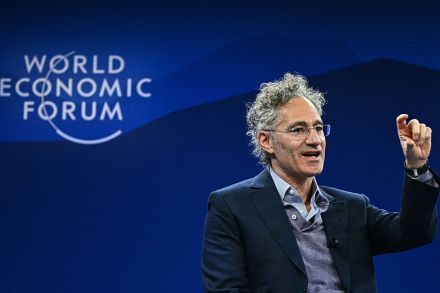
Tech companies like Palantir now find themselves in a bind. Wanting government contracts, they have a reason to stay politically neutral. At the same time, they rightly suspect that the greater part of the left has already marked them for destruction. The hostility has little to do with Silicon Valley’s enthusiasm for Austrian economics, or its occasional calls for a property-based franchise – an old National Liberal demand rather than a fascist one. Rather, the left is hostile to technology because it is America’s conservative party, suspicious of anything that threatens to undermine old solidarities.

alex karp palantir

DC’s rat genocide

Like Amsterdam, like New York City, Washington is a rat city. Old buildings and moisture create the conditions for them to thrive. Rats provide the midsized city with classical urban charm. On the other hand, they’re vermin. As of this week, it’s official: DC Health is putting rats on the pill. The agency is planning to put “edible fertility control bait in areas prone to large numbers of rats.” Cockburn wonders if putting rodents on birth control is a little like attempting a regime change in a foreign nation. How much do we actually know about the delicate balance of the ecosystem? If we sterilize the rats, what comes next? Must we then move to kill all the eels in the Potomac?

How Silicon Valley is calling the shots on the battlefields of Ukraine

Sometime in the late morning of February 4, somebody at SpaceX headquarters pressed a computer key. A command line was beamed to Starlink’s 9,600 satellites in low Earth orbit. Their onboard processors, circling 550 kilometers above the Earth, instantly obeyed the command and fractionally changed their operational settings. Back down on the frozen ground, in the trenches, bunkers and ruined cities of Russian-occupied Ukraine, hundreds of Starlink terminals lost internet connectivity. As another freezing night set in, the Russian army’s drones and tactical comms went dark. “We are left without communication!” complained a frontline Russian military officer in a video posted on the Telegram channel “Voenkory Russian Spring.

The Maduro raid was a triumph of American innovation

In the early hours of Saturday, January 3, Caracas went dark. Power failed across much of the city as strikes and cyber-attacks disabled critical systems. What followed was not a conventional invasion, but one of the most audacious special forces operations in modern history. Within hours, Nicolás Maduro and his wife, Cilia Flores, had been seized from the heart of Venezuela’s largest military complex. No tanks rolled through the streets. No territory was occupied. The operation succeeded not through brute force alone, but because of something far more decisive: overwhelming American dominance of intelligence, networks, surveillance and infrastructure.

maduro american

Why DC loves to hate Partiful

If you’re under 50, you may have noticed that Partiful has quietly annexed the American social calendar over the past year or two. The event-planning app, founded by former Palantir employees, began as another Silicon Valley toy, but it didn’t stay regional for long. Its loud dashboard aesthetic spread quickly through the Bay Area and then achieved escape velocity in Washington, DC. I wouldn’t be surprised if the strong cultural current between tech and defense is what created near-perfect conditions for a social revival in nerd world. While I understand a bit of snobbery over the aesthetics, I’ve been surprised by the constant performative disdain I’ve observed accompanying its rise. Everywhere I go, I hear people say they “hate” Partiful.

partiful

Olivia Nuzzi, teen-pop sensation

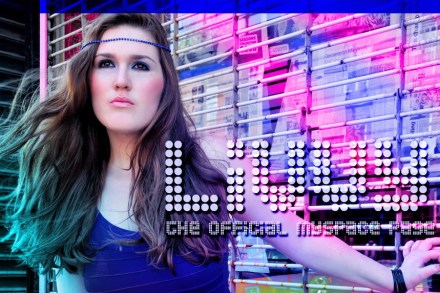
We all know far too much about Olivia Nuzzi. The first excerpts from American Canto, her unwelcome addition to the “spliterature” genre about her affair with Robert F. Kennedy Jr., have been unavoidable for the past few days. Cockburn can’t decide what’s worse: the revelations themselves or the windy prose in which Nuzzi’s editors have allowed her to inflict them on us. Her ex-fiancé Ryan Lizza’s addition to “the Discourse” last night didn’t help matters. Rather than envisioning who sent pictures of what to whom, or getting jealous of a brainworm, Cockburn has found himself nostalgic. He’s casting his mind back to 2009, back when Nuzzi sought attention in a more innocent fashion: as an aspiring teen-pop starlet.

olivia nuzzi

The tech right-MAGA alliance is far from over

In the aftermath of the Musk-Trump break-up, many are wondering about the future of the “tech right” and its relationship to the MAGA movement. In 2024, the two groups fought together and won. One definition of the tech right is simply “Technology people who aren’t crazy leftists.” Many in this group shifted right because of the excesses of wokeness and DEI within Silicon Valley. The dysfunction of far-left culture, which attacks merit and excellence, created a lot of apostates. Some were Democrats until quite recently! For my part, I was raised in the tradition of liberty, with an education that included not just Ayn Rand and Milton Friedman, but also Edmund Burke and G.K. Chesterton. Not to insult my friends, but I am not a recent convert.

tech right

What motivates Peter Thiel apart from the desire for more wealth?

From our UK edition

If you’ve only heard one thing about Peter Thiel (and many have heard nothing at all) it is that he is a believer in the power of young blood. The tech multibillionaire and founding investor of the surveillance company Palantir is a public advocate of parabiosis, an experimental field of biology investigating whether transfusions of blood from young people to older ones can stall or even reverse ageing. Rumours that Thiel himself has received such transfusions have persisted for years. When asked about them directly in a rare interview, he replied simply: ‘I’m not a vampire.’ Max Chafkin’s The Contrarian makes for deeply uncomfortable reading.