Paintings

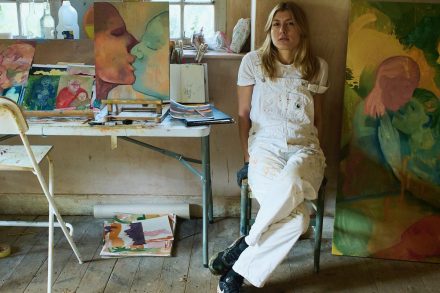
Figures emerge like ghosts from Antonia Showering’s canvases

Figures emerge like ghosts from Antonia Showering’s canvases, their sketchy lines and expressionistic color palette relaying an atmosphere of deeply personal narrative as much as an emotional message, wordless but with universal resonance. Take 2025's "The Waiting Room" (2025), from her current show, titled In Line, at Timothy Taylor: A woman, resting on a bed in a pool of maroon, has just given birth; her belly appears aglow in a warm yellow as her newborn, outlined in pale purple, rests next to her, umbilical cord still attached. “I wanted to talk about the vulnerability about someone postpartum,” says the artist. The hues she’s employed are bodily, those of flesh, fat, and veins, yet here transcend into a surreal haze of life’s first moments. Antonia Showering, 5L (2024).

Antonia Showering

Presenting our planet and perilous situation as art

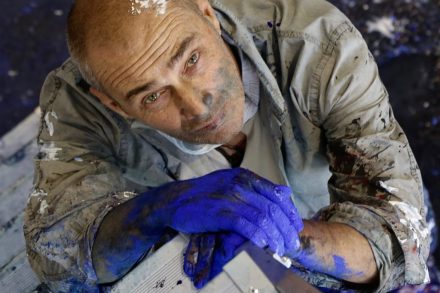
Philippe Pastor is an artist on a mission to educate, alarm and call to action. His subject: our planet and the perilous situation we find ourselves in at this moment of time.  Pastor’s latest works, installed to coincide with Climate Week in New York, are a clear indication of where he sees the state of play. The first enormous canvas, ominously titled La Fin Du Monde, seems to depict an apocalyptic clash of water, fire and ice. Heavy brush strokes are densely laid on with glue and pigment, giving a sense of the swirling waters enveloping us all. “I start the paintings with a story in my mind,” he said, speaking from his studio — a former seventeenth-century farm near Cadaqués.

The divine Dalí and his ‘Christ’

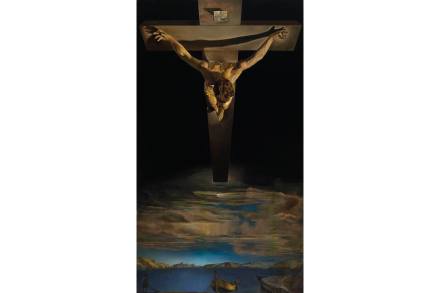
I arrived in the city of Figueres early one January morning to visit one of the most popular, and bizarre, art museums in the world, the Teatre-Museu Gala Salvador Dalí. It houses a dreamlike picture that, for the first time since it left over seventy years ago, has made a temporary return journey to Spain. Originally simply titled “The Christ,” the 1951 canvas depicting the giant figure of a man on a cross, shown at an overhead angle hovering over a moody seascape, was painted by the most famous son of Figueres, Salvador Dalí. Through April 30, it forms the centerpiece of a show exploring its creation, history, local connections and symbolism.

Dalí

Radical in the Rotunda

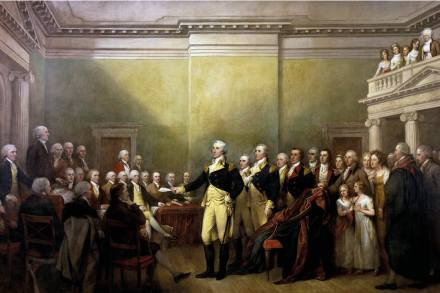
In a recent Saturday Night Live sketch, comedian Nate Bargatze portrayed General George Washington addressing his troops around a campfire in 1777, as they ask themselves what the Revolution is for. Washington shares some of his dreams for the new American republic — though he dodges difficult questions about slavery — in an effort to inspire his men to fight on. The writers take full advantage of the fact that a number of peculiarly American things, such as our version of football (in which feet rarely figure) or our complicated system of weights and measures, seem rather odd to the rest of the world. “We will be free to measure liquids in liters and milliliters, but not all liquids,” the general explains. “Only soda, wine and alcohol.

Trumbull

Inside the traditional art revolution

More and more often lately, people are rejecting tired modern art. They often find solace in the art of the past; online accounts admiring “traditional art” have amassed hundreds of thousands of followers, but they act as online repositories for a bittersweet recognition: what once was, no longer is. But the kind of art they seek, involving detail, meaning and skill, still exists, and it is growing. The cultural hegemony of contemporary, abstract art is slowly beginning to crack; through those cracks we can see new art surfacing. As I have become increasingly disillusioned with the state of politics, an observation from Ernst Jünger, the German philosopher and skeptic of the extreme politics of his day, rings true to me.

art revolution Milano Painting Academy

Why are there no paintings in Star Wars?

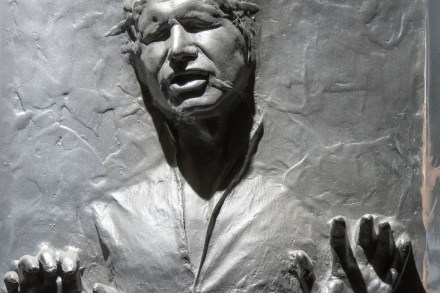
Why are there no paintings in Star Wars movies? The question occurred to me recently, rewatching The Rise of Skywalker. I’m old enough to recall seeing A New Hope in a drive-in in summer 1977, as well as the infamous Star Wars Holiday Special on television in 1978. Over time, my interest in Star Wars has shifted into something akin to nostalgia, so it may not be surprising that this question never struck me before. What is surprising, however, given their glaring omission from the films, is that the man who created the Star Wars universe happens to be a major collector of art — including paintings — and is due to open the Lucas Museum of Narrative Art in Los Angeles by 2025.

Star Wars

The dynamic genius of Milton Avery

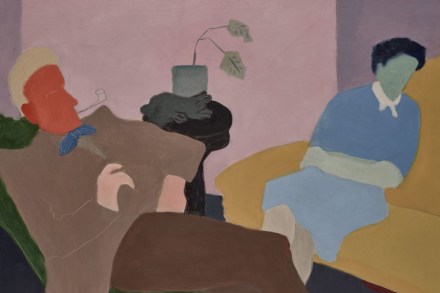
It’s hard not to feel slightly odd when standing in front of a Milton Avery painting. Take his 1943 work Hors d’Oeuvres as an example. The painting — currently on show at London’s Royal Academy’s exhibition, Milton Avery: American Colorist — is large, at nearly a meter across, and the background is what appears to be a coastal landscape, with a greenish sea and the curve of a bay appearing in the upper right-hand corner. In the foreground of the painting is a cream table and on it, a blue platter of food: the “hors d’oeuvres” of the work’s title. So far, it might be hard to understand what is so disconcerting about this painting.