Painting

Enlightened patronage

From our UK edition

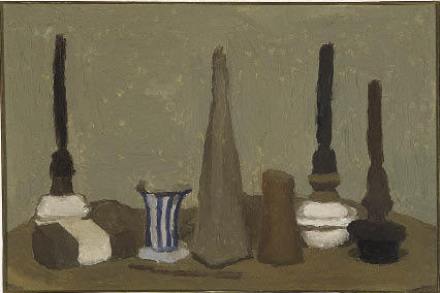
Alberto Della Ragione (1892–1973) was a naval engineer from Genoa with a passion for music, poetry and the visual arts; he also had the collecting bug. Alberto Della Ragione (1892–1973) was a naval engineer from Genoa with a passion for music, poetry and the visual arts; he also had the collecting bug. Towards the end of the 1920s, he sold his earlier accumulation of 19th-century paintings and began to acquire modern art, concentrating on works with a figurative bias, but by some of the most adventurous spirits then active in Italy.
Death watch

From our UK edition

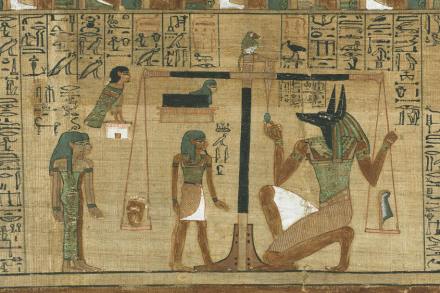
Although I stopped watching TV some years ago, films are a continuing solace and pleasure. Among the Christmas treats was a previously unseen Jack Nicholson movie, entitled The Bucket List. The plot revolves around two very different Americans, Nicholson and Morgan Freeman, both of whom are suffering from cancer and are given a mere matter of months to live. The Bucket List is their wish list of things to do before they die, some of the more exotic of which the wealthy Nicholson enables them to achieve. The excellent Freeman, a poorer man but the greater philosopher, reminds Nicholson of a more important consideration: the two questions asked of Ancient Egyptians at the gates of Paradise. Have you found joy in your life? And, has your life brought joy to others?

A Cumberland legend

From our UK edition

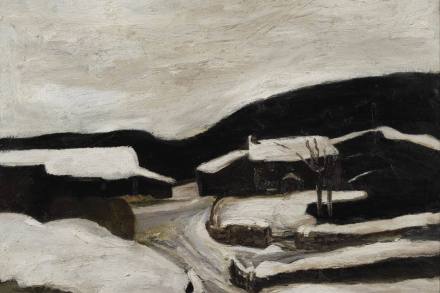
The legend of the glamorous artist Sheila Fell (1931–79), with her striking looks — black hair, white skin, large eyes — who died young, has tended to obscure the real achievement of her art. The legend of the glamorous artist Sheila Fell (1931–79), with her striking looks — black hair, white skin, large eyes — who died young, has tended to obscure the real achievement of her art. She was part of a talented generation which included her friends Frank Auerbach, Jeffery Camp and Craigie Aitchison, and was given her first solo exhibition at the age of 24 by Helen Lessore at the Beaux Arts Gallery in London. Fell came from Cumberland and painted its landscape. At that first show, L.S.

A look ahead | 18 December 2010

The trend of fewer temporary exhibitions in our museums is becoming established, as the cost of mounting blockbusters escalates beyond even the generous reach of sponsorship. This is in sharp contrast to the commercial galleries, which still put on as many as 10 or 15 different shows a year in the hope of tempting clients to part with their cash. Taking a keen look at forthcoming exhibitions is always a mixed pleasure: the expected counterpointed with the novel, the obvious with the obscure. Thankfully, there are still enough exciting prospects in the public sector to raise the spirits and move us to make a note in the diary.

Intimations of infinity

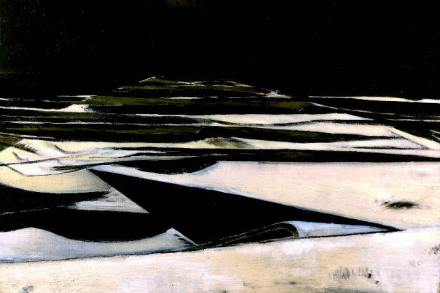
Andrew Lambirth finds a striking metaphor for the physical limitations of earthbound existence versus the infinite freedom of the spirit in Paul Nash’s painting ‘Winter Sea’ Paul Nash is one of the best-loved English painters of the last century, a great imaginative artist, always trying to discover the appropriate form for what he wanted to say. Nash was a philosopher-poet who expressed himself best (though he was a good writer) in visual terms and chose landscape painting as his primary vehicle. Although he died prematurely, in 1946 at the age of 57, his work stands easily above that of most of his contemporaries, and its originality and inventiveness have continued to inspire painters and beguile the public.

Exhibitions Round-up: lifting the heart

From our UK edition

The run-up to Christmas is the perfect season for an exhibition of Andrew Logan’s joyful and extravagant art. The run-up to Christmas is the perfect season for an exhibition of Andrew Logan’s joyful and extravagant art. At Flowers (82 Kingsland Road, E2, until 31 December) is an installation of glittering sculptures which lightens the spirit and brings a song to the lips. Fashion meets fantasy in Logan’s signature mirror sculptures, his unique blend of resin, glass, fibreglass, paint and glitter. For the past 40 years, Logan (born 1945) has brought colour and light into people’s lives. He was a pioneer of the sensational long before the YBAs toddled into view; revealingly, Sir Norman Rosenthal, chief enabler of the YBAs, is a long-time admirer of Logan.

Light relief

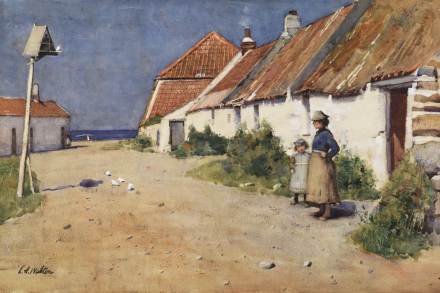
The so-called Glasgow Boys had no manifesto, common background or style, apart from working in and around the city of Glasgow and sharing a belief in the importance of painting from direct observation and experience. They acknowledged the influence of the naturalism practised by the Barbizon and Hague schools in the later 19th century, and rejected narrative in painting and especially the sickly sentimentalism that bedevilled so much Victorian art. They were a loosely associated group of painters, sometimes called the Glasgow School but preferring to be known by the slightly more raffish title of the Glasgow Boys, who banded together principally to exhibit. This ploy worked and they achieved a degree of international recognition.

Forget the matchstick men

From our UK edition

Here at last is a book that takes L. S. Lowry’s art seriously and treats it with the scholarly attention it deserves. Here at last is a book that takes L. S. Lowry’s art seriously and treats it with the scholarly attention it deserves. Tom Rosenthal has been a life-long admirer of Lowry’s work, spending his formative years in Greater Manchester and even interviewing the old curmudgeon for Radio 3 in the 1960s. One of his aims in this book is to dispel the various myths that have grown up around Lowry and his critically underestimated art. It has become fashionable in the art world to look down on Lowry as a naive painter who could only paint industrial landscapes full of ridiculous scampering matchstick people.

The folly of ambition

From our UK edition

Andrew Lambirth talks to the artist Keith Coventry about drawing inspiration from Sickert, Churchill and Ladybird Books Keith Coventry has no time to visit the two lap-dancing clubs that lurk a few doors down from his studio, a small room with barred windows in a light-industrial block in the East End. Here, he puts in long hours, often forgetting to eat in his total immersion in the act of putting paint on canvas. He grudgingly admits to being a workaholic. This is where he painted ‘Spectrum Jesus’, which two months ago won him the £25,000 John Moores Painting Prize, one of the most prestigious accolades in the art world. Winning the John Moores does not guarantee immortality — not much does, except perhaps genius — but it can make a difference.

On the charm offensive

From our UK edition

Derek Hill (1916–2000), writes Bruce Arnold, was an English representational landscape and portrait painter of ‘haunting and evocative creative spirituality that is perhaps indefinable’. Derek Hill (1916–2000), writes Bruce Arnold, was an English representational landscape and portrait painter of ‘haunting and evocative creative spirituality that is perhaps indefinable’. But the biographer was undeterred. As an English author of books on the arts and the chief arts critic of the Irish Independent, he was a friend of Hill’s for the last 37 years of his life.

Small blessings

From our UK edition

As I pointed out last week, one of the chief attractions of the Treasures from Budapest show at the Royal Academy is the inclusion of two rooms of Old Master drawings. For those of us who find large exhibitions overwhelming, there is a refreshingly modest display of French drawings (admission free) at the Wallace Collection, which makes a good companion to the RA’s blockbuster. The earliest work is a fanciful, somehow ethereal, black-chalk and brown-wash 16th-century drawing of a water festival at Fontainebleau, by Antoine Caron. Much tougher is a neighbouring red-chalk study by Jacques Callot, ‘Ecce Homo’. Despite a certain vulgarity of pose and gesture, it has a brash energy that buttonholes the viewer in a way the Caron never could.

Picasso by Picasso

From our UK edition

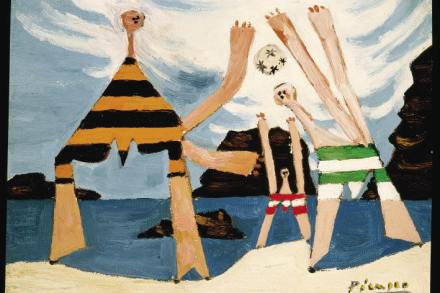
In an upstairs room in an unfrequented corner of Zurich’s Kunsthaus, there is a portrait of one of the unsung heroes of modern art. In an upstairs room in an unfrequented corner of Zurich’s Kunsthaus, there is a portrait of one of the unsung heroes of modern art. Wilhelm Wartmann was the first director of this splendid gallery, and in the autumn of 1932 he mounted the first major retrospective of the work of Pablo Picasso. This autumn, to celebrate its centenary, the Kunsthaus is mounting the same show. It’s a unique chance to see how the world saw Picasso at his peak — and how Picasso saw Picasso — for this groundbreaking exhibition was curated by the artist himself.

Taking a firm line

From our UK edition

This book collects nearly 300 examples of Alasdair Gray’s work as a painter and illustrator. This book collects nearly 300 examples of Alasdair Gray’s work as a painter and illustrator. As an art student in 1950s Glasgow, he scorned the conservatism of tutors who painted the way ‘Monet might have painted had he been timid and Scottish, with an inferior grasp of colour and design’. Instead of traditional still lifes and landscapes, he produced devious biblical scenes populated with weird and sinewy figures inspired by Blake, Breughel and Bosch.

Double exposure

From our UK edition

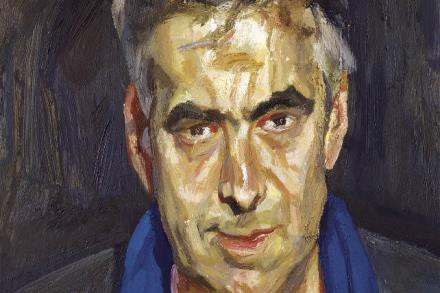
I never thought I’d write these words. I never thought I’d write these words. This book is unclassifiable. It belongs to a whole new genre. The field of literature has been extended! And I saw it happen. Martin Gayford, who writes for The Spectator and whom I’ve never met, kept a diary during the seven months he spent sitting for the painter Lucian Freud in 2003/4. The book is a journal, an act of confession, a character study of Freud, a piecemeal survey of art history and an investigation into the practicalities of portraiture. It’s also a hostage drama. Gayford has no idea how many months or years the painting will take, and his abductor-cum-immortaliser asserts his right to abandon the project at any moment, without warning.

Surprising literary ventures | 9 September 2009

From our UK edition

Patricia Highsmith, as readers will know, was the author of the upmarket thrillers Strangers on a Train and The Talented Mr Ripley, among others. She was also a keen artist, and illustrated (rather than wrote) the rare book Miranda the Panda is on the Veranda, to text supplied by her friend Doris Sanders. Its pages, somewhat Seussian in tone, include statements such as: ‘Mabel Grable, a sable, reads a fable at the table in the stable near the gable with a cable’; ‘A monk and a skunk and some junk on an elephant’s trunk’; and ‘A veil on a snail.’ The book was published by Coward-McCann, who also handled her adult fiction.

From worthless to priceless

From our UK edition

A combination of art history ‘lite’ and the personal touch — a common yoking together these days, even in books supposedly of art history ‘full strength’ — makes for, in Philip Hook’s hands, an engaging read. As a dealer and auctioneer, and the author of several thrillers, he has advantages not given to the general run of such investigative writers. His subject is the rise of French Impressionist painting, after its initial years of critical contempt and commercial failure, to international mass appeal and soaring value. It’s a familiar story, frequently told, and a reader looking for new light on the fortunes of Monet, Pissarro, Renoir, Sisley et al. will search in vain. Where Hook scores is in his practical experience.