Painting

How Richard Wilson made Wales beautiful

From our UK edition

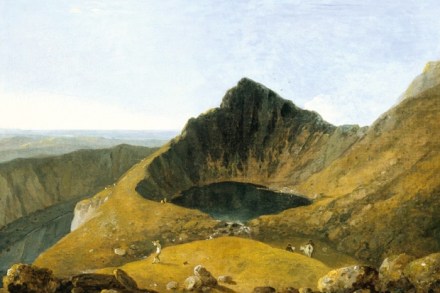
‘I recollect nothing so much as a solemn — bright — warm — fresh landscape by Wilson, which swims in my brain like a delicious dream,’ wrote Constable of his encounter with the Welsh artist’s ‘Tabley House, Cheshire’ after he visited the gallery of that house owned by Sir John Leicester. Recalling this epiphany, Constable went on to say of Richard Wilson: ‘He was one of the great appointments to shew to the world what exists in nature but which was not known till his time.
Dear Mary: How can I tame my brother’s savage table manners?

From our UK edition

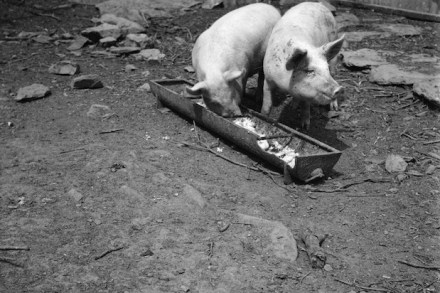
Q. I live far away from my brother and his family, but went to stay with them recently for the first time in many years. Having supper was like eating a meal with the starving. Brother, wife and their young teenager hunched down low in order to be nearer to their large plates of stew, which they ingested by noisy slurping and eating off both forks and knives, scraping the plates clean intently and, in my brother’s case, lifting plate to mouth to make sure the last bit of gravy went unwasted. Sister-in-law holds knife and fork like pencils. Child is learning the same. My mother would have been horrified at this Hogarthian scene, as was I. I also felt sick. How can I help them to mend their ways? — K., London A.

The age of the starving artist

From our UK edition

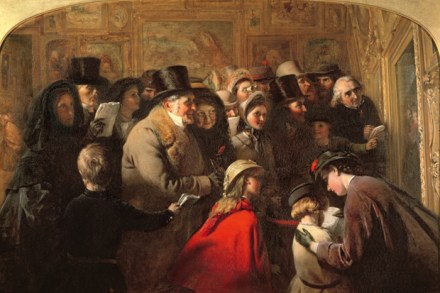
What remains of art is art, of course; and what chiefly interests us is the creative talents of a painter or a sculptor. What we forget is that the work of art wouldn’t be there without some kind of engagement with the brutal forces of money. James Hamilton’s riveting book is a richly detailed study of how, in Britain in the 19th century, artists and a small army of opportunists, art lovers, collectors and businessmen of all sorts used their ingenuity to turn the visual arts into money.

The mathematical revolution behind ‘the greatest picture in the world’

From our UK edition

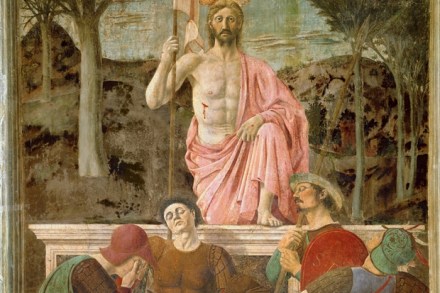
It seems odd to enter a room dominated by what Aldous Huxley famously called ‘the greatest picture in the world’ to find not another soul there. Looking down from an end wall of the mediaeval civic hall in the quiet little Tuscan town of Borgo San Sepolcro, Piero della Francesca’s ‘Resurrection’ is an image of astonishing power, showing a stern-faced risen Christ stepping out of his tomb in the dawn light of the first Easter morning like an unstoppable force of nature, exuding supernatural authority as he turns the leaves on the trees behind him from wintry death to the new life of spring. This is a painting like no other in the history of art.

Ladies’ hats were his waterlillies – the obsessive brilliance of Edgar Degas

From our UK edition

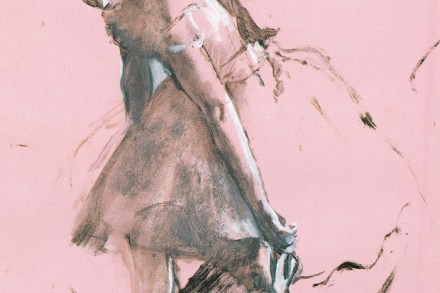
Lucian Freud once said that ‘being able to draw well is the hardest thing — far harder than painting, as one can easily see from the fact that there are so few great draughtsmen compared to the number of great painters — Ingres, Degas, Van Gogh, Rembrandt, just a few.’ Christopher Lloyd’s new study of Degas’s drawings and pastels, with over 200 beautifully reproduced illustrations, demonstrates that Edgar Degas (1834–1917) deserves his place on that list. And more than that, it shows that for him there was no distinction between painting and drawing. In his art these categories so blur together that it is hard to say whether certain pictures — pastels with tempera paint additions, for example — are one or the other.

Do critics make good artists? Come and judge ours

From our UK edition

Artists make good critics, but do critics make good artists? It’s hard to tell, when most are too chicken to try. For over 20 years, Spectator critic Andrew Lambirth has been making collages. He caught the habit from the British Surrealist Eileen Agar in the late 1980s and kept it private, until forced to go public last year when Eileen Hogan selected six of his works for The Discerning Eye. Now 20 are going on show at the Minories in Colchester in a joint exhibition with his friend and fellow Suffolk resident Maggi Hambling (8–14 March, closed Sundays). Hambling’s contribution to the show is a new five-day series of paintings grappling with her old adversary, the ‘raging beast’ that is the North Sea.

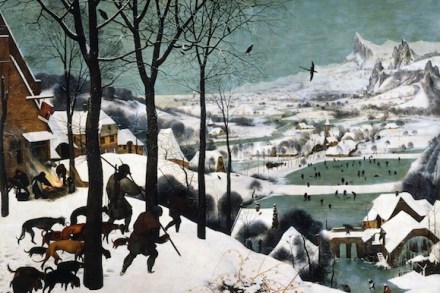
A spirit to warm Bruegel’s ‘Hunters in the Snow’

From our UK edition

The ostensible subject matter is misleading, as is any conflation with his lesser relatives’ wassailing peasants and roistering village squares. But Pieter Bruegel the Elder’s work is profoundly serious. It has a formidable intellectual content, a Shakespearian emotional range: a sardonic and stoical view of the human condition. There are paintings — ‘The Triumph of Death’, ‘The Blind Leading the Blind’ — which descend from Hieronymus Bosch. There is also the marvellous ‘Fall of Icarus’. According to recent scholarship, the version we have is not a Bruegel, but a later copy. That is plausible; it looks later. Yet the composition is classic Bruegel. He would be drawn to any legend expressing the vanity of human wishes.

Painting Now doesn’t represent painting now. Thank goodness

From our UK edition

The death of painting has been so often foretold — almost as frequently as its renaissance — that any such prediction today is nothing short of foolhardy. Of course, painting is alive and well and living in London, but you wouldn’t know that from the current exhibition of five artists at Tate Millbank. (By the way, this is a paying display, the regular admission fee being £10. Not surprisingly, it was deserted when I visited. This sort of show, to do its job properly and communicate to the public at large, should be free.) According to the press release, each of the five artists ‘has adopted an approach to painting that both exploits and subverts its conventions’. I wish.

How China’s Bayeux Tapestry differs from ours

From our UK edition

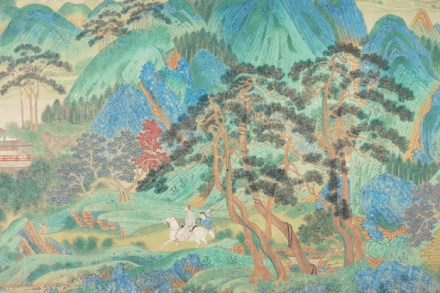
The V&A’s remarkable survey of Chinese painting begins quietly with a beautiful scroll depicting ‘Court Ladies Preparing Newly Woven Silk’, from the early 12th century, which, with its bright colours, shallow space and lack of setting, invites comparison with a western masterpiece of a similar date, the Bayeux Tapestry. The crowded urgencies and narrative drive of the English/French embroidered cloth couldn’t be further from the refined intervals and sophisticated relationships of the Chinese scroll, and yet both tell much about the cultures that produced them. However, neither should be read simply as historical documents: both offer rare aesthetic pleasures of quite different distillations.

What my addiction to Chinese painting made me do

From our UK edition

My addiction to Chinese landscape painting began in 1965 at the V&A, in a travelling exhibition of the Crawford Collection from America. The catalogue entries were supplied by the doyen of Chinese art historians in Britain, Michael Sullivan, who died aged 97 just a month before the opening of this latest exhibition of Chinese painting at the V&A. His particularly well-written and stimulating books on Chinese art, especially Symbols of Eternity, published in 1980, kept my addiction smouldering until at last I felt I had to do something about it and wrote a novel, The Ten Thousand Things. Its central character is a 14th-century Chinese landscape-painter, Wang Meng, whose ‘total absorption in the language of painting’ reminded Sullivan of Cézanne.

Jeremy Clarke in France: A couple of formidables, dinner with bucketfuls of rosé, dancing, cognac with sugar cubes and a delightful romance

From our UK edition

Golly my testicles are shrinking fast. At this rate by Christmas they’ll be down to the size of garden peas. And I might have breasts on the way, too, it says on page 92 of the hormone injection contraindications leaflet. Fantastic! Just what I’ve always wanted. After two days at the seaside at St Raphaël, me and my incredible shrinking knackers headed inland to a busy, famously pretty little village in the hills. Friends — a sculptor and his wife — put me up in their tall rented house on the plane tree-shaded square for five days.

Paul Nash, by Andrew Causey – review

From our UK edition

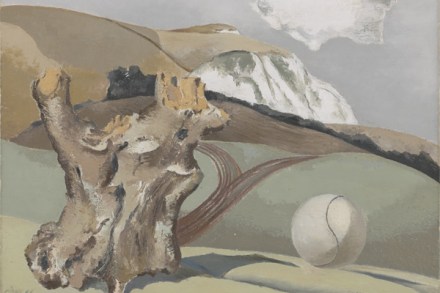
Andrew Causey opens his book on a slightly defensive note: Paul Nash, he says is often identified as Britain’s outstanding 20th-century landscape painter, as if painting the natural scene was the only thing he did, or landscape art as a genre is entirely separable from others, such as portraiture or history painting. It is unexpected to find that at least among art historians the idea of landscape painting as a lesser genre still lingers.

How Roy Lichtenstein became weighed down with superficiality

From our UK edition

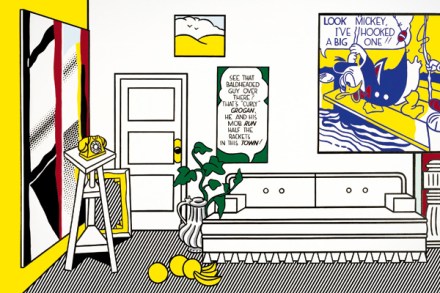
On both sides of the Atlantic there are still heated debates about who invented Pop Art, the Americans or the British, but it seems much more probable that concurrently each initiated their own brand in response to the zeitgeist of post-war consumerism. Certainly, the American Roy Lichtenstein (1923–97), after near-abstract beginnings, started in 1961 to paint large freehand versions of comic-strip frames, complete with speech bubbles, and exhibited them in New York in the first Pop Art shows. He moved on a bit from comic strips to Disney, advertising and the ordinary objects of the modern environment, and developed a style of measured drawing and stencils that broke up colour into what looked like the Ben-Day dots of mechanical reproduction familiar from newspapers.

Peter Archer — Notes from an Inland Sea

From our UK edition

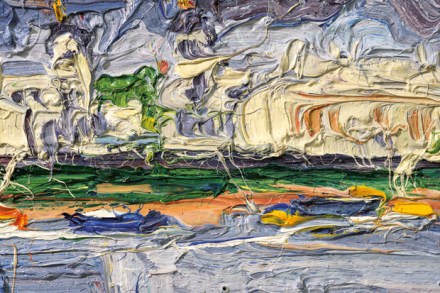
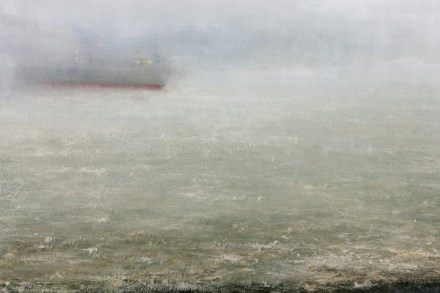
Peter Archer used to paint landscapes on the Cornish side of the Tamar river. Their most notable features were lovingly observed trees and the tall chimneys of abandoned tin mines. One might have expected that when he moved to a coalmining valley in South Wales, his landscapes would have become blacker and its main features hills and slag-heaps. Instead, he has gone to sea, not literally nor even as an observer from some visited shore, but in his imagination. The Welsh coal-mines may have had something to do with it, since these are predominantly grey paintings in which, like Conrad’s Thames Estuary, ‘the air was dark above Gravesend, and farther back still seemed condensed into a mournful gloom, brooding motionless...

David Inshaw: the great romantic

From our UK edition

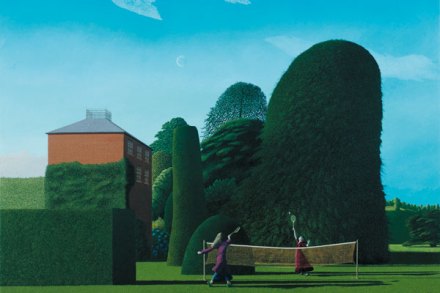
David Inshaw will celebrate his 70th birthday on 21 March, around the time of the spring equinox. On the eve of this grand climacteric, which will be marked by an exhibition of new and old work at the Fine Art Society, I went down to Devizes to interview him. He has lived for much of his life there, with brief interludes in Bristol, London, Cambridge and Wales. In Devizes he is surrounded by the countryside that has most inspired him — the Marlborough Downs and the open stretches of Salisbury Plain, the trees and hills of his beloved Wiltshire. Inshaw is a landscape and figure painter, known to many as a Ruralist (a group he co-founded in 1975 with his great friend Sir Peter Blake, and which he left in 1983).

Wandering eye

From our UK edition

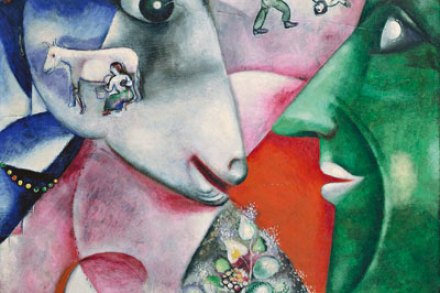
‘When Matisse dies,’ declared Picasso, ‘Chagall will be the only painter left who understands what colour really is.’ Wandering around this splendid show you can see exactly what he meant. Chagall never used colour for cheap effect, but to convey meaning and emotion. The effect of seeing so many of his works together is almost overwhelming — a symphony hung upon a wall. But these aren’t the romantic paintings of Chagall’s later years, the visions of young lovers floating over seas of flowers. These are the urgent artworks of his youth, made at a time of immense upheaval. By focusing on these early years, to the virtual exclusion of his later work, this fascinating retrospective casts Marc Chagall in an entirely different light.

Oh brother!

From our UK edition

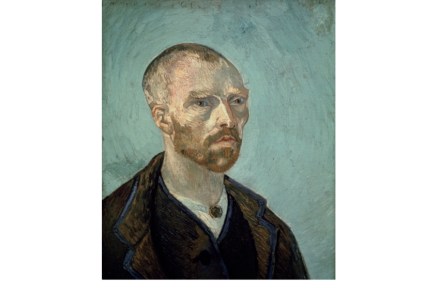
Long in the writing, deep in research, heavy to hold, this is the latest of umpteen biographies of Vincent van Gogh (1853-90). But it should be said straightaway that it is extremely readable, contains new material and is freshly, even startlingly re-interpretative of a life whose bare bones are very familiar. The more one reads, the more absorbing it becomes, both in its breadth of approach and its colossal detail. Potential readers, however, should be warned: this is no sentimentalising study, no apologia for the excesses of the ‘mad genius’ of popular renown. Quite the contrary: one’s dismay intensifies as the self-crucifixion of Van Gogh’s life unfolds, disaster after disaster on page after page.

William Nicholson: Catalogue Raisonné of the Oil Paintings by Patricia Reed

From our UK edition

A pleasingly tactile canvas-like cover adorns this heavy book and proclaims its purpose; the boldly brushed illustration is a detail from ‘Mauve Primulas on a Table’ painted in January 1928 when the artist was in his mid-fifties. He wrote of a ‘painting orgy’ and how he suffered ‘tennis-elbow from holding my brush for 8 hours solid’. Patricia Reed’s catalogue note adds, ‘the work is a synthesis of the motifs that interested him at this moment: a tilted picture plane, textured cloth, penumbrated shadows, a cropped bowl and a pair of open scissors’.

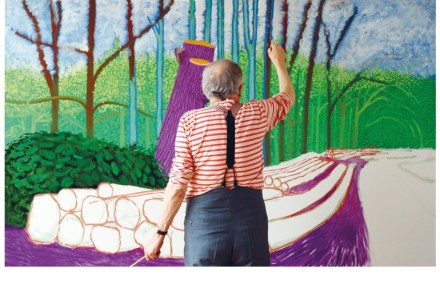
A Bigger Message: Conversations with David Hockney by Martin Gayford

From our UK edition

Like his contemporary and fellow Yorkshireman, Alan Bennett, whom he slightly resembles physically, David Hockney has been loved and admired throughout his lifetime. He painted one of his greatest works, ‘A Grand Procession of Dignitaries in the Semi-Egyptian Style’ in 1961 while still at the Royal College of Art. He has dazzled, surprised and often upset the world of art ever since. Picasso aside, he is the wittiest modern painter, in the sense not just of being funny, but intelligent; a whole history of Western art is both contained and extended by his originality. For example, it was both funny, and in the 1960s brave, to apply Boucher’s soft pornography to bums as well as bosoms.

The English El Greco

From our UK edition

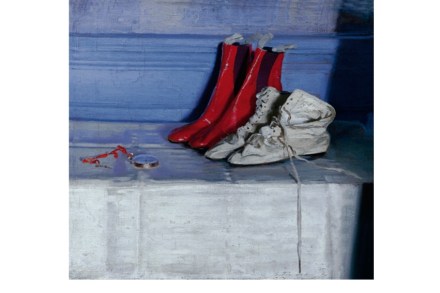
Talk about ‘enemies of promise’. Talk about ‘enemies of promise’. In the March 1942 number of Horizon magazine there appeared what could be a heartfelt illustration of the whinger’s conceit propagated by Horizon’s editor, Cyril Connolly, to the effect that life stifles artistic ambitions. Plate 2, ‘Dreamer in Landscape’ by John Craxton, is a pen-and-wash drawing of horny plants breathing down the neck of a dozing boy. How very Craxton. Not yet 20 and already well-versed in overgrown styling and poetic self-pity. For decades Craxton lived with the fact that early promise guarantees nothing.