Paganism

Working out isn’t so new after all

One of the things I did during my nine-month hiatus from Prufrock, the email newsletter I send three times a week (if you aren’t a subscriber, why not give it a try?) was to cycle the Blue Ridge Parkway twice. I started in Cherokee, North Carolina, rode to the start of Skyline Drive, Virginia, and back. It took two weeks — one at the beginning of the summer and one at the end — and I clocked over 900 miles and 100,000 feet of climbing. It was something I had wanted to do for a long time. I loved it and will never do it again. Cycling is an ideal way to experience a landscape. You feel the ups and the downs. Walking has a pleasure of its own, but with cycling you can experience an entire region — in all its subtle variety — in a single day.

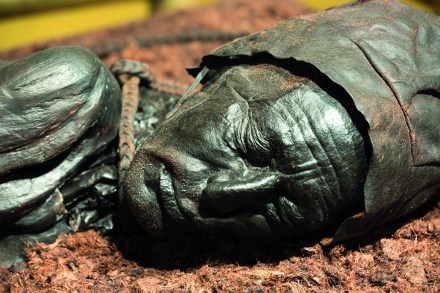
Bog bodies: mysteries of the Iron Age

Some believe All Hallows’ Eve (October 31) is adopted from a much older Celtic holiday, Samhain, that marked the change from harvest’s richness to the darkness of winter. In its modern guise, Halloween still retains something of that pagan philosophy — a time when the borders between the living and the spirit world are supposed to be at their weakest. For our pre-Christian ancestors, this sense of the in-between was felt not only in the mulchy decay of autumn but in the land around them. Bogs were an in-between space for Iron Age Europeans. They thought that these muted open wetlands, with their sodden pools of still black water, exposed an opening to some other realm.

bog

The pagan rites of Ruth Bader Ginsburg

When Ruth Bader Ginsburg succumbed to cancer, #RestInPower immediately trended. The ACLU, New York senator Kirsten Gillibrand, actress Reese Witherspoon and the ostensibly Jewish uber-left activists of Bend the Arc all used the woke neologism in their tributes.The play on words likely originated in the 1990s rap. It entered mainstream usage after the 2016 election when the left lost its mind. Even in a culture that’s increasingly — pathetically — obsessed with politics, politicizing death feels like a new low. Ginsburg’s final rite of passage signals a rejection of Jewish and Christian customs along with democratic norms, and a return to paganism and violence.

pagan

How Christianity saw off its rivals and became the universal church

In the reign of Constantine, whose conversion to Christianity in AD 310 set the entire Roman world on a course to becoming Christian, a Palestinian scholar named Eusebius pondered the reasons for the triumph of his faith. Naturally, he saw behind it the guiding hand of God; but he did not rest content with that as an explanation. The purposes of heaven were to be traced in the patterns of earthly history. ‘It was not merely as a consequence of human agency that the greater part of the world’s peoples came to be joined under the sole rule of Rome — nor that this should have coincided with the lifetime of Jesus.’ A global faith, Eusebius argued, had been rendered possible by a globalised age.