Opera

The gang rape was the least offensive thing about Royal Opera’s new William Tell

From our UK edition

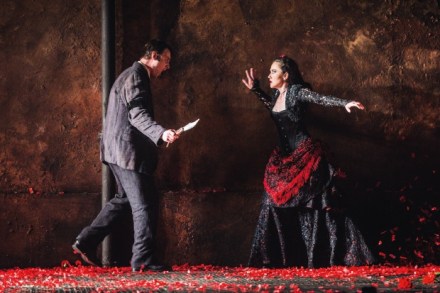
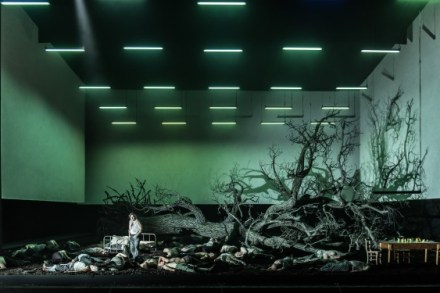
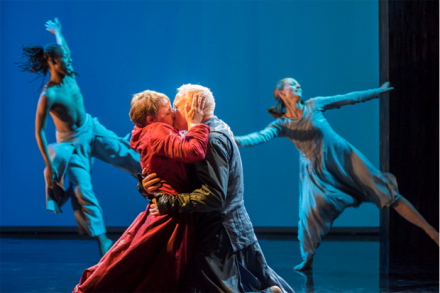
Guillaume Tell Royal Opera House, in rep until 17 July There’s no such thing as a tasteful rape scene — or there certainly shouldn’t be. It’s an act of grossest violation, of primal violence. It’s also a reality — and a growing one at that — of contemporary warfare, a ‘weapon’ increasingly deployed strategically, coolly, by armies rather than individuals. Setting his new production of Rossini’s Guillaume Tell in the Balkan conflict of the 1990s, director Damiano Michieletto puts the issue front and centre in a scene whose music was almost lost on opening night in the extraordinary and unprecedented chorus of boos and catcalls from the audience.
Better than Bayreuth

From our UK edition

Which of Wagner’s mature dramas is the most challenging, for performers and spectators? The one you’re seeing at the moment, seems to be the answer for me. The better I know them, the more apprehensive I get about whether I can rise to their level, and whether the performers can, and whether we can pace ourselves and not flag at the prospect of the last act, in most of them the greatest and most exhausting. In the end, though, I think Tristan und Isolde takes the biscuit. It’s a matter of gratitude, almost, if the Prelude isn’t as overwhelming as it naturally tends to be. At Longborough this year it wasn’t, and I was duly grateful.

Maestro maker

From our UK edition

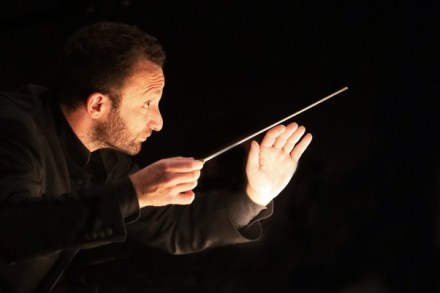
When Margaret Thatcher imagined perfect power, she thought of the orchestral conductor. ‘She envied me,’ said Herbert von Karajan, ‘that people always did what I requested.’ Power, however, is a mirage that fades as you get close. What Mrs Thatcher saw were the trappings, never the essence. Great conductors might get the glory, but someone else pulled the strings. Behind every power there is a greater force. Behind every conductor, there was Ronald Wilford. It is hard to think of Wilford, who died last week, aged 87, without a sneaking admiration. A self-schooled Machiavellian, a Mandelson of music, he invented a chimera of ‘the great conductor’ and, as president of Columbia Artists (CAMI), sold it at unimaginable profit.

The new head of the Berlin Philharmonic was no-one’s first choice

From our UK edition

Let’s face facts. Kirill Petrenko was no-one’s first choice as music director of the Berlin Philharmonic Orchestra. His name came into the reckoning only after 124 orchestra members split fatally down the middle in an all-day election on May 11, half of them voting for the German favourite Christian Thielemann and the other half for the blazing young Latvian, Andris Nelsons. By nightfall, the players were at each other’s throats and wiser heads knew they had to seek a third candidate, a compromise. But who? The Venezuelan Gustavo Dudamel, who set the orchestra alight last week, had ruled himself out. So had Daniel Barenboim, Mariss Jansons, Yannick Nézet-Séguin and other front-runners.

The claret of the gods

From our UK edition

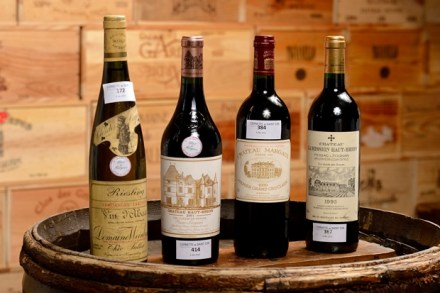
I cannot remember a jollier lunch. There are two brothers, Sebastian and Nicholas Payne, both practical epicureans. They have made a profession out of their pleasures. For many years, Sebastian was the chief buyer for the Wine Society. As he has a superb palate and is relentless in the search for good value, he is entitled to undying gratitude from tens of thousands of British wine drinkers. Nicholas has spent his career running opera companies. Sebastian knows a lot about opera, Nicholas about wine: the brothers share a cellar. We had assembled to taste some 2001 clarets, which required concentration, and rewarded it. But there was also time for opera talk. Nicholas’s vocation must require diplomatic skills.

Country house opera

From our UK edition

I stole a blanket last night. Rather a nice one, in fact. I feel bad about it, of course, but guilt is less inconvenient than pneumonia; and after trying to blow-dry my waterlogged dinner jacket with the winds howling through Garsington Opera’s ‘airy’ pavilion, it seemed like pneumonia or the blanket were the options. Forgive the melodramatic, self-justificatory tone. That, too, has its roots in the evening’s diversions, which included a performance of Intermezzo, Richard Strauss’s melodramatic and self-justificatory autobiographical account of a marital misunderstanding. It’s an odd piece, lovely in some ways, trite and misogynistic in others.

Between Kafka and Crossroads

From our UK edition

We opera critics love gazing into crystal balls. We’re particularly good at discovering Ed Milibands and backing them to the hilt. Postwar opera is full of them. Take Hans Werner Henze. He was considered the future his entire life. Yet watching a presentation of two of his chamber operas at the Guildhall School of Music last week, it was hard not to think, how? Why? To be fair Henze never intended his early radio opera Ein Landarzt (1961) to work on stage. Originally conceived as a vehicle for Dietrich Fischer-Dieskau, the piece concedes nothing to dramatic interest (even in this theatrical adaptation). An overwrought Kafka monologue — in which a doctor hallucinates for half an hour — is coolly despatched in an orchestral game of pass-the-parcel.

Long life | 11 June 2015

From our UK edition

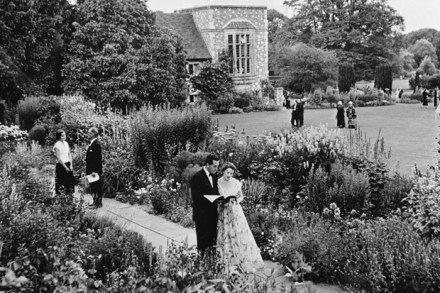
It’s June, and the country-house summer opera festivals are now in full swing. Glyndebourne, which opened the season last month, has now been joined by its leading emulators — Garsington in Oxfordshire, The Grange in Hampshire and Longborough in Gloucestershire; and next month a newcomer, Winslow Hall Opera in Buckinghamshire, will be putting on La Traviata with much the same cast that shone last year in its greatly admired production of Lucia di Lammermoor. The gentry in dinner jackets and long dresses are already flouncing about on lawns throughout England.

Blowing hot and cold | 11 June 2015

From our UK edition

The opera director David Alden has never been one to tread the straight and narrow. Something kinky would emerge, I’m sure, even if he directed the Queen’s televised Christmas message. So matching him up at English National Opera with the madness, obsessions and phantasmagoria of Tchaikovsky’s whirring and troubling The Queen of Spades was simply asking for trouble. The Alden fingerprints quickly emerge. We’re in several periods at the same time: Pushkin’s Imperial Russia, yes, but also Stalin’s ossified Soviet Union, plus splashes of the frivolous 1920s and 60s and a snatch of the 18th century.

Dietrich Fischer-Dieskau

From our UK edition

For anyone who has been interested in classical vocal music since the middle of the last century, whether choral, operatic or solo, there has been one inescapable name and voice: Dietrich Fischer-Dieskau. His repertoire was gigantic, surely larger than that of any singer ever. He began public concerts and recordings in the late 1940s and only gave up in the 1990s, when he took to conducting and narrating, as well as painting, writing a large number of books about German composers (including a ridiculous one on Wagner and Nietzsche) and of course coaching young singers.

Carmen v. Carmen

From our UK edition

It’s been a busy operatic week, with a nearly great concert performance of Parsifal in Birmingham on Sunday (reviewed by Anna Picard in last week’s Spectator), Carmen at the Coliseum on Wednesday, Donizetti’s Poliuto at Glyndebourne on Thursday and Carmen, also at Glyndebourne, on Saturday. A trajectory that Nietzsche would have approved of, moving from brooding northern transfiguration to sunlit, brilliant southern violence and destruction. Poliuto is mostly known, if at all, in the live recording made at La Scala in 1960 as a vehicle for Callas’s return, in a role that made comparatively small demands on her, and much larger ones on Franco Corelli and Ettore Bastianini.

Lost boys

From our UK edition

In Beryl Bainbridge’s novel An Awfully Big Adventure the producer Meredith Potter issues a doughty injunction on the subject of staging Peter Pan: ‘I am not qualified to judge whether the grief his mother felt on the death of his elder brother had an adverse effect on Mr Barrie’s emotional development, nor do I care one way or the other. We all have our crosses to bear. Sufficient to say that I regard the play as pure make-believe. I don’t want any truck with symbolic interpretations.’ Symbolic interpretation hangs heavily over the rough-and-tumble jumble of Janacek, Beethoven, Stravinsky, Satie, Handel, Vivaldi, sea shanties and klezmer in Lavinia Greenlaw and Richard Ayres’s half-brilliant, half-bewildering operatic adaptation for Welsh National Opera.

Why do directors of comic opera encourage performers not to behave like human beings?

From our UK edition

The Royal Academy of Music's Sir Jack Lyons Theatre is closing, whether for refurbishment or to make way for something more ambitious I don't know. It's a place where I have spent many great evenings, with immense amounts of young vocal talent - most of it never heard of again - under the batons of Colin Davis, Jane Glover and other superb conductors. Next year's productions will be in Hackney, Shoreditch and in the underground hangar across the Marylebone Road. To bring the curtain down on the old theatre, the RAM chose two comic English one-acters, of a certain vintage, the 1950s - that abused decade. The first was Walton's The Bear, from Chekhov.

Polite pillage

From our UK edition

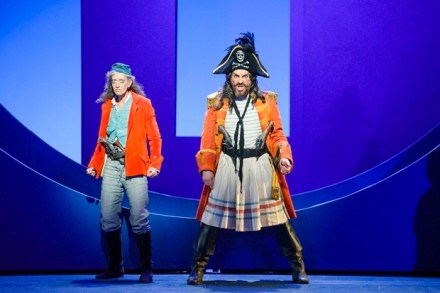
Forget the pollsters and political pundits — English National Opera called it first and called it Right when it programmed Gilbert and Sullivan’s The Pirates of Penzance to open just days after the general election. Who else is the target audience for an operetta that guilelessly proclaims, ‘We love our House of Peers’, and celebrates both the dynastic possibilities of marriage and the material aspirations of a Major-General who bought his ancestors along with his faux-baronial castle, if not Tories (shy or otherwise)? But if ENO has hit a political home run, the same can’t be said artistically of a production Gilbert himself might have described as ‘skim milk masquerading as cream’. Mike Leigh swore he would never direct an opera.

Ways of hearing

From our UK edition

‘What gives your lies such power?’ asks the bewildered Sicilian leader in Szymanowski’s opera Krol Roger. The question is addressed to a charismatic shepherd, on trial for propagating a lascivious new religion of unbridled sensuality. Roger’s wife, Roxana, has already converted along with many of his subjects, while the city’s conservative and clerical factions clamour for the blasphemer’s death. But Roger resolves to see for himself. Or rather hear for himself.

Triple triumph | 30 April 2015

From our UK edition

Three staples of the Italian repertoire, performed and seen in very different circumstances, have confirmed my view that they deserve their place in the repertoire, however many other works by their composers or contemporaries may be unearthed. I saw OperaUpClose’s version of Donizetti’s The Elixir of Love in the Mumford Theatre Cambridge, an underused venue that has the advantage of being 200 yards from my house. It is by far the best thing I have seen OUC do, and I regret catching only the last of many performances, but the only one here, where there is almost no interest in opera.

Off colour

From our UK edition

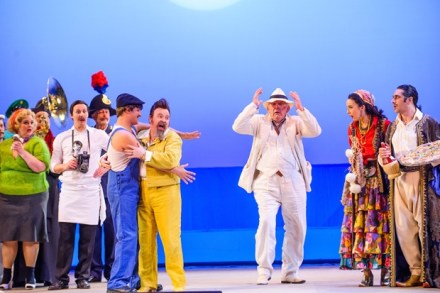
Big slats of orange, burning yellows, an Adriatic in electric blue: I wish I’d bought my sunglasses to the Royal Opera’s latest revival of Il turco in Italia. Moshe Leiser and Patrice Caurier’s production of Rossini’s opera buffo first burst on to the Covent Garden stage in 2005, and its shrieking colours haven’t dimmed with the years. For good or bad, this is one show when you do actually come out whistling the sets (they’re by Christian Fenouillat). I was humming Agostino Cavalca’s costumes too, from gypsy confusion through bouncing fezzes to the absurd glitter of the climactic masked ball.

Falling down

From our UK edition

This week, some 200 years since Goya’s ‘The Disasters of War’, almost 80 years after Picasso’s ‘Guernica’, and over 50 since Malcolm Browne won a Pulitzer for his photograph of a self-immolating Buddhist monk, the British media found itself questioning whether art should, or even could, ever represent the horrors of recent history. It was a conversation that picked minutely over the ethical responsibilities of an opera based on the events of 9/11 — was it too soon? how would the families feel? would it exploit tragedy for drama? — but one whose ceaseless moral whys and wherefores prevented it ever arriving at the only real artistic question: how?

Benjamin’s Into The Little Hill is a masterpiece: Speech Acts at Shadwell Opera reviewed

From our UK edition

Speech Acts Shadwell Opera, Courtyard Theatre Election time is upon us again. But before we arrive at the main event there are the warm-up acts – televised debates, broadsheet profiles and daytime television interviews – to be endured. Making this political stand-up more bearable are the intelligent heckles coming from the arts. London’s theatres are filled with issue-plays talking about all the topics the politicians aren’t – the housing crisis, NHS, life on the dole – but despite a rich seam of politically-charged works at its disposal (The Marriage of Figaro, Don Carlo, Boris Godunov among them), the main UK opera houses aren’t following suit.

The audio anoraks bringing the great vintage recordings back to life

From our UK edition

If there’s one thing people find annoying about classical music anoraks, it’s our passion for vintage recordings. ‘Listen to that ravishing rubato,’ we gush, as an elderly soprano swoops and scoops to the accompaniment of what sounds like a giant egg-and-bacon fry-up. And if non-anorak listeners do manage to ignore the pops, scratches and static, what do they hear? Wrong notes. Plenty of them. Is that really Artur Schnabel murdering the mighty fugue of Beethoven’s ‘Hammerklavier’ Sonata or is it Les Dawson? There are actually two problems here — a disconcerting style of performance and crappy recorded sound. It’s important to distinguish between them.