Opec

The US is back in charge of the oil industry

The United States is getting sucked into a conflict in the Middle East, central banks are desperately trying to keep inflation under control and the world is facing an energy shock that may cripple the global economy. There are lots of ways the world looks very similar to the early 1970s. And yet, it is now clear that there is also one significant difference between now and then. Whereas half a century ago, the oil cartel OPEC was rising in power, with Tuesday’s shock decision by the United Arab Emirates to quit the group, it is clear that it is falling apart. In reality, the US is taking back control of the fossil fuel industry – and that is of huge geopolitical significance.

oil

The coming turbulent times in the oil market

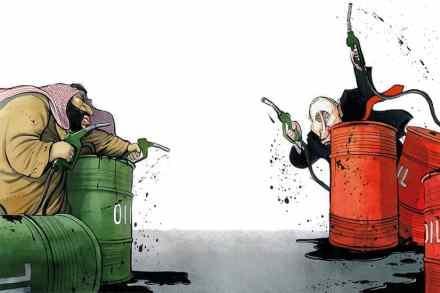
When the Wall Street Journal reported on November 21 that OPEC, the oil cartel dominated by Saudi Arabia, was planning to increase production by 500,000 barrels per day in December, the crude market immediately reacted. Oil prices plunged by 6 percent, bringing the Brent benchmark close to $80 a barrel. Saudi energy minister Prince Abdulaziz bin Salman, the older brother of king-in-waiting Mohammed bin Salman, immediately went to work disputing the report. No decisions at OPEC had been made, he said, and it was possible the cartel could even proceed with further production cuts if needed to maintain balance in the market (for the Saudis, "balance" is usually defined as padding the kingdom’s balance sheet). Abdulaziz’s intervention helped make up most of those earlier losses.

oil

How the US failed to stop OPEC from cutting oil production

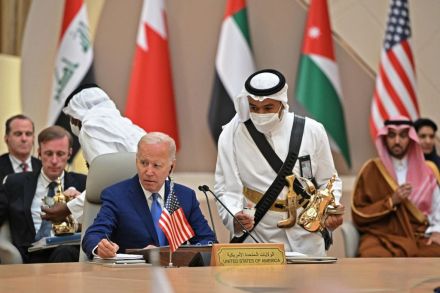
Near the top of President Biden’s to-do list for the past few months has been to keep gas prices down. On Wednesday, this was dealt a likely fatal blow by the Organization of Petroleum Exporting Countries, or OPEC, which, led by Saudi Arabia, agreed to cut its overall production by two million barrels per day. In actuality, the cut will mean a reduction of more like one million barrels per day if it's taken into account that OPEC has been underproducing compared to its previously stated production goals. Still, this is a significant cut, and the effects on oil markets are already being felt.

How the Saudis embarrassed Biden over oil prices

As Americans confront high inflation rates, tumbling prices at the gas pump are at least giving them a little relief. Brent Crude, the global benchmark for oil, has declined by 27 percent from its $127 peak six months ago. Gas prices in the United States, which were averaging just over $5 a gallon earlier in the summer, are now in the $3.72 range. That means Americans are saving $10 to $15 every time they fill up their tanks. Yet crude is a global commodity, and its price can fluctuate for any number of reasons — war, recession, and an economic slowdown in China to name but a few.