October 7

The hypocrisy of the Maduro fan club

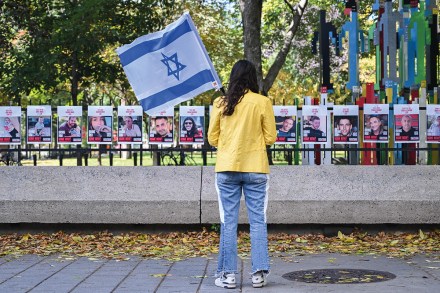
Finally, the left has found a "kidnap victim" it cares about. Having spent more than two years making excuses for Hamas’s savage seizing of 251 Israelis, having violently torn down posters of those stolen Jews, now the activist class has suddenly decided that abduction is bad after all. Why? Because a dictator they admire, Nicolás Maduro, has been abducted by the United States. What do we even say about people who get more agitated by the seizing of a 63-year-old corrupt ruler than they do by the abduction of a nine-month-old Jew? That was Kfir Bibas, kidnapped along with his mother and his four-year-old brother during Hamas’s carnival of fascist violence on October 7, 2023. They were later murdered.

maduro

Israel is turning the screws on Hezbollah

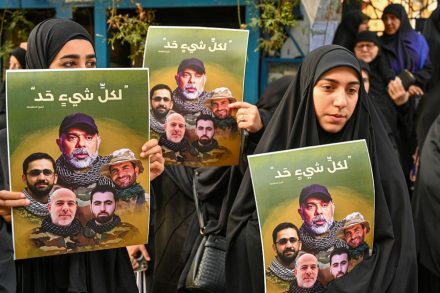
The killing of Lebanese Hezbollah military chief Haytham Ali Tababtabai by Israel this week reflects how much the balance of power between Jerusalem and the Iran-backed Shia Islamist group has shifted since the year-long war between the two in 2023 and 2024. Yet, paradoxically, Tabatabai’s killing also shows that nothing has been finally settled between the two enemies. While Hezbollah has now been shown to be much weaker than Israel, it nevertheless remains stronger than any internal faction in Lebanon, including the official Lebanese government.

hezbollah lebanon

Has Israel won?

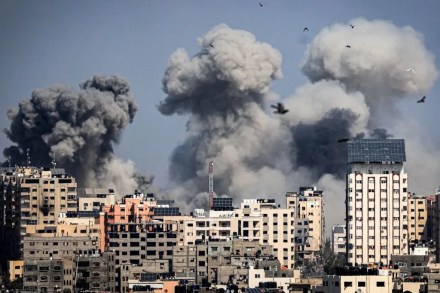
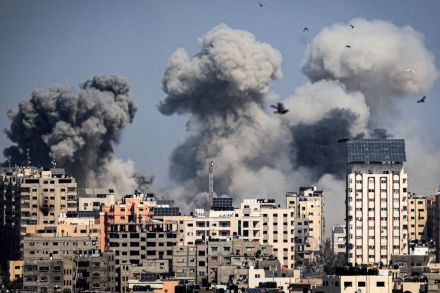
The deliberate slaughter of Israeli Jews on October 7, 2023, was the most consequential event in the modern Middle East. It sent powerful reverberations across the region and well beyond it to the United States, the UK, Europe and Russia. Those tremors, like the war begun by the massacre, continue to this day. On that fateful day, Hamas terrorists left Gaza, crossed into Israel in a carefully-planned attack, designed to kill as many Jews as possible and take others captive for negotiating leverage. The terrorists attacked young, unarmed concert-goers at an Israeli music festival and the residents of a nearby town. The attack killed 1,195 innocents. Approximately 250 more were taken hostage, dragged back to Gaza and held for ransom by their kidnappers.

October 7

A profound account of the October 7 pogrom

I first learned about anti-Semitism at the age of eight, when my father explained to me that his closest business friend could not live near us because he was Jewish. This was 1961, hardly three miles from Mount Vernon, Virginia, in a new-build neighborhood that was racially segregated, as was my elementary school. Black children descended from George Washington’s slaves lived in a nearby rural ghetto called Gum Springs and were not welcome east of Fort Hunt Road. Somehow that memory – like John F. Kennedy’s assassination two years later and the view of his funeral procession from my father’s office window – is one of my earliest and starkest recollections.

Murray

Ta-Nehisi Coates, the DEIty

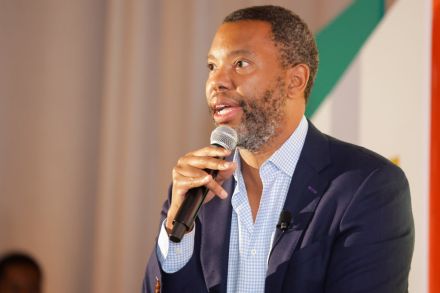
A decade ago, in June 2014, the Atlantic published a cover story with a simple declarative title: “The Case for Reparations,” by Ta-Nehisi Coates. The piece had taken him two years to write, and the work paid off — with praise sweeping through the ranks of media, prizes from the most prominent elite institutions. The piece was named the “Top Work of Journalism of the Decade” by New York University’s journalism institute. It was hailed as a rare piece of writing which pushed open a cultural dialogue about a controversial subject.

Coates
South Africa

South Africa’s international decline

South Africa’s recent foreign policy has both surprised and dismayed Western diplomats and strategists. Many of these entered their careers during the era of the “end of history” when the Soviet Union had collapsed and with it, or so the thinking went, the last serious threat to the Western liberal order. Western democracy had triumphed, and policy doctrines of hard power and deterrence could give way to strategies of acquiescence and engagement. In South Africa, the African National Congress Party of Nelson Mandela was coming to power. Given that its key ally the Soviet Union had collapsed, the ANC took a sufficiently circumspect view of the new unipolar global order for Western diplomats to conclude that it had become their ally.

The endgame: Biden’s quest for a foreign policy legacy

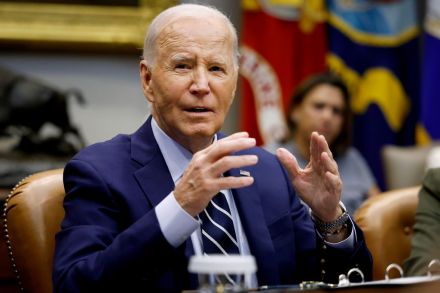
President Joe Biden only has a few more months before he steps out of the White House, hands over the keys to his successor and spends his remaining days soaking in the Delaware sun. But before he enjoys retirement, the lifelong public servant has a big piece of unfinished business: scoring a major foreign policy win that will secure his place in the history books. Unfortunately, dreaming about being a statesman is one thing; being one is quite another. The two conflicts that would give the president that coveted status — the wars in Gaza and Ukraine — aren’t presently amenable to diplomatic resolution. And while Biden and his advisors may be committed to doing the impossible, all the commitment in the world won’t do much if the combatants are intent on slugging it out.

Biden

Campus protesters for Palestine no longer deserve the benefit of the doubt

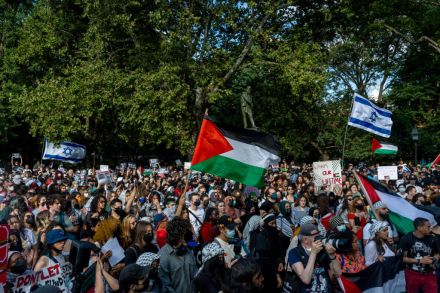
On Monday afternoon as I sat in class at NYU studying the antisemitic policies of the Third Reich, the “Flood NYC for Palestine” protests descended upon Washington Square Park. This October 7, a year after the worst Jewish massacre since the Holocaust, hundreds of people had interrupted their afternoons to join a march in support of what’s euphemistically referred to as Palestinian “resistance by any means necessary.” To say “terrorism” would be unsubtle, you see. NYU students staged a planned “walk out” to join the “flood” on Monday.

palestine campus

Black Sunday: reckoning with October 7 a year later

October 7 was the bloodiest day in Jewish history since the Holocaust. Some refer to it as Israel’s 9/11, though proportionally it was like fifteen 9/11s. However, numbers rarely tell the full story and here they fall devastatingly short. I was awake when it started. I’ve always been a night owl but staying up until six in the morning is unusual for me. On that bright fall morning I heard sounds like a thunderstorm and went outside to see what was going on. I live on a hill overlooking Gush Dan, the informal megalopolis that’s home for almost half the population of this stamp-sized country. When something big happens I can often see it.

October 7

The fight to curtail TikTok’s US influence

One hundred and twenty minutes. That’s how much time more than 40 percent of American children spent on TikTok every day last year. The app, owned by the Chinese company ByteDance, worms its way into the minds of young people to an extraordinary degree, dwarfing their use of Instagram, Facebook, Twitter/X and Snapchat. And when word went out that the House of Representatives was seriously considering forcing a sale to peel the app away from the power of the Chinese Communist Party, TikTok fired back by weaponizing the same children against Congress — driving a deluge of confused phone calls to Capitol Hill, including some where teens threatened to commit suicide if the vote went forward.

TikTok
Jerusalem israel

Inside the real Israel

Tel Aviv Like most people, and most Jews, I’ve been experiencing the war in Israel and Gaza from thousands of miles away. I spent the weeks after October 7 with my face glued to my phone, rather than hiding in a shelter as rockets flew above. I experienced every wave of despair, every GoPro atrocity, every moment, hours away in another world; one that wasn’t directly affected by the chaos but was still consumed by it anyway. When the kibbutzim were being destroyed by gleeful Hamas militants, I was at a wedding in Barcelona. When Israel started to fight back, I was safely at my desk doing my work emails, ensconced in the security of distance.

How the Democrats went anti-Israel

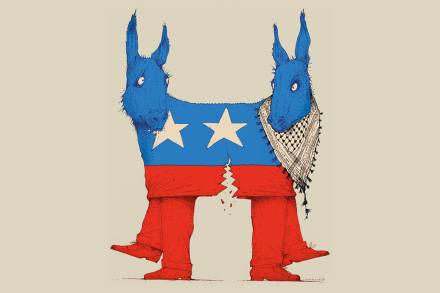
The migraine arrived suddenly and unexpectedly — a headache of global proportion that made every sound a shrieking cacophony, impossible to ignore. Tuning it out, as the Democratic coalition had managed to do successfully for the better part of a decade, was no longer an option. The nightmare had arrived, and it had a throbbing mantra, carried across the bluest corners of the country in pixels and TikToks and in the bellow of a boiling mass of blathering, megaphone-wielding youths: “From the river to the sea.” Even before the horror of the October 7 attack and the war on Hamas that followed, Israel has carried the potential to cause political tribulation for Democrats in the post-Obama era.

israel democrats

The fight ahead

If there could ever be a positive that comes out of the horrific terrorist attacks in Israel in October, it’s this — the battle lines have never been clearer. That may seem obvious in the context of Israel versus Hamas, but for Americans, watching the drawing of the fault lines has been extremely clarifying. In the hours that followed the atrocities, the people who reject any sort of nuance in politics wanted to “put into context” the murders of 1,400 Jews — including elderly Holocaust survivors, women and children. The Manhattan chapter of the Democratic Socialists of America, of which Representative Alexandria Ocasio-Cortez remains a member, tweeted support of Palestine and its intention of holding a rally in Times Square.

editorial cover
Israel

On the ground in Ashkelon

Southern Israel I woke up on Tuesday morning, October 10, having just got back from New York City covering a big pro-Palestine protest. War reporting has been something I’ve always wanted to do. I figured it might be hard to catch a flight to Israel with everything going on, but because of the large Jewish and Israeli population living around Miami, there was a direct El Al flight that evening to Tel Aviv for $800. It was the last direct flight out of Miami for a couple of days, so I thought, “If I am going to do this, today is the day.” I was planning on leaving my job at Townhall the following week to start my independent Substack, but told them I was departing that day to go cover the war in Israel. They wished me well and off I went.