Northern ireland

Ancient hatreds mask Stormont’s current challenge

From our UK edition

Ignore the antediluvian hatreds for a moment. As Anne Dawson says, the recent violence in East Belfast was largely inspired by current economic distress. Northern Ireland’s economy is a serious cause for concern. Central expenditure per head is 25 per cent higher in Ulster than the UK norm and 70 per cent of Northern Ireland’s economy lies in the public sector according to parliamentary one estimate. Although the province has much to commend itself to business – competitive operating costs and excellent transport links serviced by substantial capital investment – private enterprise remains depressed. A report by PriceWaterhouseCoopers in March found that growth was negligible and that unemployment is running at 6.

Why Belfast is ablaze

From our UK edition

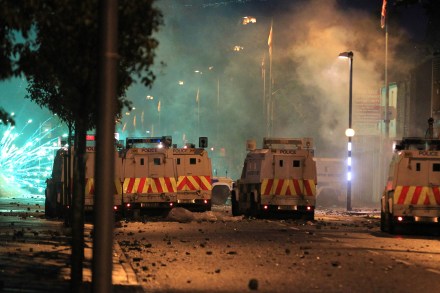
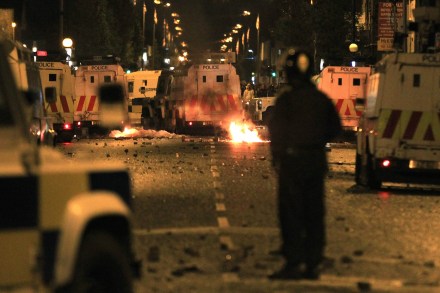
I live three miles away from where the rioting was happening in East Belfast last night, and heard the helicopters whirring overhead. It was the kind of sound that anyone living in the city hoped never to hear again. As a child, I'd lie in bed and hear bombs and sirens and helicopters — and we had all hoped that dark chapter had been closed. A tipping point of violence has now been reached. A press photographer has been shot, another given a fractured skull after a second night of riots. And in the aftermath, the blame game cacophony begins: Who started it? It was them. No it was them … ad infinitum on BBC Radio Ulster's Stephen Nolan Show. While the most important question in all of this is not addressed. Why is this happening? Why now?

From the archives: The Good Friday Agreement

From our UK edition

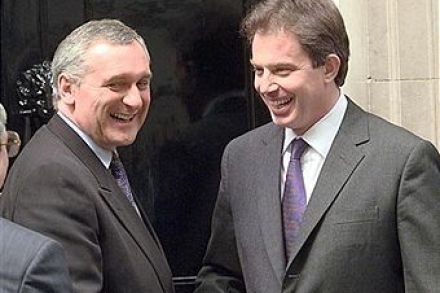
On Sunday, it will be thirteen years to the day since the people of Northern Ireland voted in a referendum on the Good Friday Agreement. The result was one of overwhelming support: 71 per cent to 29. Here is Bruce Anderson’s take on the Agreement from his Politics column at the time:   Mr Blair was rough on Mr Ahern (and while Unionists were there), Bruce Anderson, The Spectator, 18 April 1998   Occasionally, one is glad to be wrong. In this column last week, I wrote about the imminent collapse of the Ulster peace process. It seemed then as if everything was unravelling; the gaps between the various sides had been narrowed and narrowed, but still seemed insurmountable.

When Dublin trembled

From our UK edition

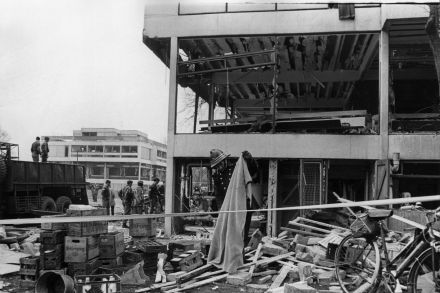
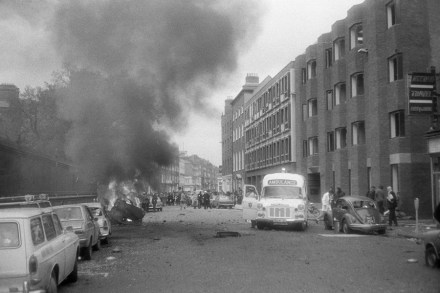
On 17 May 1974 — 37 years ago today — I was a 19-year-old student at Trinity College Dublin, celebrating the end of term in the Pavilion Bar near the sports fields. The summer exams were still to come, but we were carefree; the main subject of conversation was whether we could organise a disco party later on. Then, a little after 5.30 p.m., everything changed. First, all about us seemed to shiver, as if there were an earth tremor. Then, just as it occurred to me that Dublin did not generally suffer tectonic stress, there was a deafening bang that seemed to go on for an age. Somebody shouted: ‘It’s a fucking bomb!

The threat of Republican terror

From our UK edition

The Metropolitan Police has released a statement saying that they have received a bomb threat for central London today from dissident Irish Republicans. There’s no information on where in the capital or what time today the warning relates to.   The threat, for which the spurious attempt at justification is presumably related to the Queen’s visit to Ireland tomorrow, may well be a hoax. But if it is real, it would attest to the growing reach of dissident Republicans whose previous operations have been confined to Northern Ireland itself. (The best book on dissident Republicanism is Legion of the Rearguard by occasional Coffee House contributor Martyn Frampton).

Sectarianism breathes again in Ulster

From our UK edition

Can Tom Elliott lead the Ulster Unionists? That’s the question commentators in Northern Ireland are asking, after the party suffered yet another reverse at the polls. Elliott was elected leader on a landslide in September and he is already under pressure, seemingly powerless to arrest the decline of the once dominant force in Northern Irish politics. He is visibly rattled, as the clip above proves. It was probably a reaction in the heat of the moment, but one that should alarm for those Tories who still seek an alliance with the UUP.* It was hoped that the scale of Elliott’s victory would unite the fractious party. But the divisions that characterised Sir Reg Empey’s leadership have intensified under Elliott. The factions are many and various.

Northern Ireland unites, sort of

From our UK edition

A man hunt is underway for the perpetrators of yesterday's murder in Omagh, and the administration at Stormont and the PSNI have presented a united front against antediluvian dissidence. Meanwhile, Martin McGuinness, the deputy first minister, is accused by groups associated with the DUP and the Traditional Unionist Voice of having attended an illegal march commemorating the IRA last October. Sectarianism is still rife.

Desperate rearguard

From our UK edition

The murder of a police officer in Northern Ireland once again proves that the threat from dissident republican terrorism remains only too real. This latest attack comes against a background of various attempted bombings and hoax alerts that have disrupted life in the province. Back in January, a sophisticated “double-tap” bomb attack on a police patrol in north Belfast was only narrowly averted. Since then a series of incidents have occurred in Derry, Belfast and Fermanagh. Going back further, the last two years (since the triple murder of March 2009) have seen the bombing of banks, courthouses, police stations and even MI5’s regional headquarters in Northern Ireland. Just over fourteen months ago, another young police constable in Co.

BREAKING: Car bomb explodes in Omagh, County Tyrone

From our UK edition

Not clear as yet if there have been any casaulties. More to follow. Reports are sketchy, but it seems that the blast took place in a residential road, away from the crowded central shopping areas that were the scene of the bloody atrocity committed 13 years ago.  The bomb was planted underneath the car of a local Catholic PSNI officer .The officer is critically wounded.  This act is very likely to have been perpetrated by extreme Republican dissidents; and it follows a trend of Republican/gang violence against police in the province, a battle for which London and Stormont allocated more than £240 million last month. UPDATE: DUP MP Jeffrey Donaldson reports that the officer has died.

Did Obama Ask Peter King to be his Ambassador to Ireland?

From our UK edition

Peter King, America's worst Congressman, is back in the news and just as loathsome as ever. No surprise there. This, however, is news to me and wholly surprising: After Obama was elected president, King got a call from Rahm Emanuel, the incoming chief of staff. "President-elect Obama would like you to be ambassador to Ireland," said Emanuel, according to King's recollection of the conversation. King said he thought hard about it over a long weekend, fantasizing about hosting his Irish relatives at the ambassador's 62-acre estate inside Dublin's Phoenix Park, where the Irish president also lives. But King declined the offer.

The coalition outlines its national security concerns

From our UK edition

What a curious creature this National Security Strategy is. For some reason, I expected something more than a 39-page document in the same mushy pea colour scheme as the coalition agreement. But that is what we've got – and it doesn't really tell us much. The centrepiece of the document comes on page 27 (reproduced below), with a neat, three-tier guide to the security risks facing this country. At the highest priority level are atrocities such as "chemical, biological, radiological or nuclear attack by terrorists," and "hostile attacks upon UK cyberspace". Further down, there are mentions for "organised crime" and "disruption to oil or gas supplies," among others. But, before we get there, there is – as Nicholas Watt notes – a good deal of waffle.

A cousin across the water

From our UK edition

Though he was to live at Castle Leslie in Co. Monaghan, Sir John Randalph (later Shane) Leslie, cousin of Winston Churchill, was born at Stratford House, London, in 1885 though baptised at Glaslough with Lord Randolph Churchill as godfather. Though he was to live at Castle Leslie in Co. Monaghan, Sir John Randalph (later Shane) Leslie, cousin of Winston Churchill, was born at Stratford House, London, in 1885 though baptised at Glaslough with Lord Randolph Churchill as godfather. After Eton and King’s, Cambridge, Shane, at Churchill’s bidding, stood as a Home Ruler for Londonderry City in both the 1910 general elections.

Why the Bloody Sunday soldiers must not be brought to trial

From our UK edition

In The Times today, Danny Finkelstein eloquently sums up why it would be so wrong for any of the soldiers involved in Bloody Sunday to be prosecuted given all that has happened in the peace process: "To stop the killing, we sacrificed principles that should stand above everything. We sacrificed the rule of law and the principle of one law for everybody. We sacrificed justice and accountability to the courts. We bought peace but there is a bill to pay. And today we must pay it." I must admit to sometimes wondering if the price we have paid for peace in Northern Ireland is too high: that too many victims have been denied justice, that unforgivable acts have been forgiven.

Cameron is dignified in trying circumstances

From our UK edition

As David says, the conclusions of the Saville Inquiry make for grim reading. One person with close links to the services who served in Northern Ireland just told me, ‘it is far worse than we expected.’ In the House, David Cameron’s statement on it was heard in subdued silence. It would be remiss not to say that David Cameron dealt with this situation as well as anyone could. There was no equivalent to Jonathan Powell’s disgraceful statement that ‘the war against Irish terrorism was not our war’. He pointed out the context of the event and the fact that it was very much the exception rather than the rule of the work of the British security services in Northern Ireland.

Lord Saville eviscerates the British army

From our UK edition

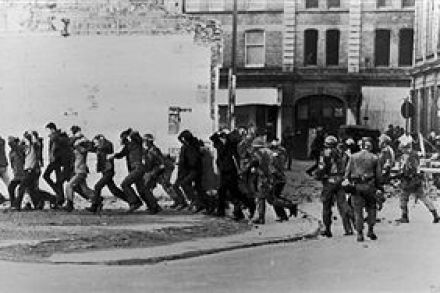
David Cameron has just told the House of Commons: ‘There is no doubt, there is no equivalence. The events of the 20th January were in no way justified…You do not honour the British army by excusing the unjustifiable.’ He apologised for the atrocity and the Wigery report. According to Lord Saville, there was no conspiracy or pre-meditation, but soldiers of Support Company 1 Para entered Bogside in Derry and opened fire without provocation from the victims or nationalist paramilitaries – though Martin McGuiness ‘was present, probably armed with a Thompson sub-machine gun’. Lord Saville concludes that the testimony of many soldiers was false.

McGuiness, culpability and atonement

From our UK edition

I wish that every time Martin McGuinness offered commentary on the Saville Inquiry, it was pointed out that he admitted to the inquiry that he was the IRA’s second in command in Derry. We should never forget that the IRA has more to apologise and atone for than any other group that played a role in the Troubles. The idea that the RUC or the British military and the IRA are all equally guilty is the worst kind of simplistic moral relativism. McGuinness is now deputy first minister of Northern Ireland and drawing a handsome salary as part of the peace process.

A day that re-opens old wounds

From our UK edition

Building on a peace process of compromises, Tony Blair called the Bloody Sunday inquiry to placate nationalists in Northern Ireland. But I wonder if he ever intended its findings to be published? The Saville Report was only ever going to re-open old wounds. With the greatest respect to Lord Saville, who is a distinguished lawyer, this report cannot dispense justice. Establishing the facts is impossible 30 years after the tragedy, and the punishment can only be collective. Yet the political dictates of peace mean that the British army must be blackened. The soldiers who beat both sets of paramilitaries to the negotiating table will be branded as criminals. Whatever their impulse, British officers took a disastrous decision to disobey orders and open fire.

Trimble frozen out of government

From our UK edition

The announcement that Lord Trimble will join the Israeli review into the flotilla incident is a reminder that he has no role in the current government. Trimble takes the Tory whip and given that the party is not overly supplied with Nobel Prize winners, it is a bit of a surprise that no role has been found for him. In opposition, the word was always that relations between him and the new leadership of the Ulster Unionists, the Tories’ electoral allies in Northern Ireland, were not great. But the UUP leader has resigned since the election. Now, it may well be that Trimble himself is the obstacle. Even his admirers admit that he is not the easiest man in the world to get along with. Or, it might be that Trimble is a victim of the Coalition.

The Ulster effect

From our UK edition

The electoral map that most of the broadcasters use misses off Northern Ireland entirely. But if the election is as close as people expect, then those 18 seats across the Irish Sea could become vital.   The first thing to note is that Sinn Fein remains committed to its policy of not taking its seats at Westminster. So every Sinn Fein MP elected reduces the number that a party needs to have an effective majority in the Commons. Iris Robinson, expenses and the rise of Traditional Unionist Voice have all rather dented the DUP, the largest party in Northern Ireland at the last election. But it should still send back a fair few MPs.

The Tories will trust in the Irish

From our UK edition

The Telegraph reports that a Conservative minority government would rely on an ‘informal understanding’ with Unionist MPs and that David Cameron is preparing the ground for co-operation.  It’s a courageous plan, in the Sir Humphrey sense.  Many journalists argue that Cameron has a duty to preserve the Union. Certainly he does, but his overtures to the Ulster Unionists have been self-defeating. There is an assumption that the Unionist parties are conservative. Besides conserving the Union, they are not. Back in February, I reported that the Tory alliance with Reg Empey was serving only to eviscerate the UUP, as its socialist and social democratic factions revolted against Tory alignment.