Northern ireland

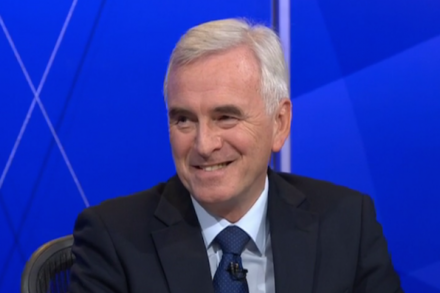
John McDonnell’s slick performance on Question Time was worthy of Tony Blair

From our UK edition

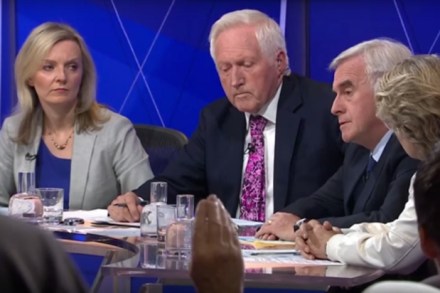
Hats off to John McDonnell. We've all been fretting about how the Corbyn gang would cope against the media slick Tories. We all think that, despite the appeal of conviction politics, a shadow chancellor such as McDonnell will be eaten alive by the Tory front bench. John McDonnell's performance on BBC Question Time last night suggested otherwise. Question Time is a good test for politicians: they have to look and sound passionate while saying nothing much at all. McDonnell did exactly that, and with gusto. He masterfully shrugged off his 'joke' about killing Margaret Thatcher. When asked about his support for the IRA, he managed almost simultaneously to apologise and to take credit for bringing peace to Northern Ireland.

Why are people falling for John McDonnell’s Question Time ‘apology’?

From our UK edition

John McDonnell's Question Time 'apology' was no such thing and I am amazed to see anybody for fall for it. It was obviously insisted upon by Labour party spin-doctors. But as the words themselves show, it was not an apology. Sure, he apologised for causing any offence or upset, but not for the fact that he was wholly and utterly wrong. And wrong not only to have praised people who spent three decades shooting people and planting bombs in public places but wrong on the facts too. I cannot think how he can get away with this, but it seems like he will, not least because his boss has done so by mounting the same defence. Because of course McDonnell has adopted the Jeremy Corbyn tactic I have written about previously here and here.

David Cameron is taking a gamble on the Stormont crisis: will it work?

From our UK edition

Northern Ireland is in crisis - one anyone familiar with politics here will find eerily familiar. The same faces that dominated news bulletins in the 1980s and 1990s are still in place, albeit slightly more wrinkled and weary.  But one striking difference is the response, or lack thereof, from David Cameron.  Northern Irish politicians are used to British Prime Ministers immediately flying into Belfast for crisis talks, to stage joint press conferences side by side and attend photo calls with furrowed brows and concerned looks. Yet Cameron has so far dodged any particular involvement in the talks and bluntly refused to concede to the DUP’s demands to suspend Stormont.

Peter Robinson’s departure intensifies Northern Ireland’s political crisis

From our UK edition

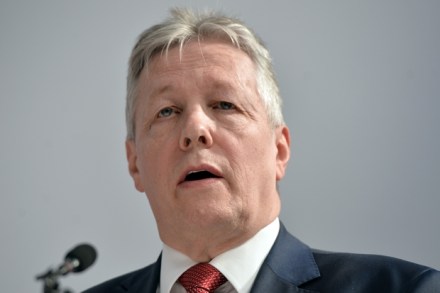
The political crisis in Northern Ireland has just become much more serious. Peter Robinson has stepped down as first minister and pulled all but one DUP Minister out of the executive. This means that there is now just one Unionist as part of the government there. Robinson’s aim is to make the UK government suspend Stormont. This crisis has been caused by the IRA’s continuing activities. Last month, the Police Service of Northern Ireland declared that the Provisional IRA was involved in the murder of Kevin McGuigan. This week, Sinn Fein’s northern chairman Bobby Storey was one of three republicans arrested for questioning in connection with the matter. Now, Sinn Fein denies that the IRA exists anymore.

Stripping the bark from Jeremy Corbyn will be the easiest campaign in modern political history

From our UK edition

Lately, I've been thinking about Willie Horton and Michael Dukakis. That's what Jeremy Corbyn's rise to prominence will do to a fellow. Horton, you will remember, was the convicted murderer who never returned from a weekend furlough granted to him while Dukakis was governor of Massachusetts, and subsequently kidnapped a couple in Maryland, stabbing the husband and repeatedly raping the wife. He became the star of George Bush's 1988 presidential election campaign. Lee Atwater, Bush's most pugnacious strategist, had vowed to "strip the bark" from Dukakis and promised that "by the time we're finished they're going to wonder whether Willie Horton is Dukakis' running-mate".

The spies we left in the cold

From our UK edition

When a terrorist group is active in the UK — as Islamist extremists and dissident republicans are at the moment — there is no more essential figure in the prevention of carnage than an agent working for the security services. Reliable intelligence is what defuses bombs, intercepts arms caches, and apprehends suspects. Its acquisition can involve unimaginable personal risks, in circumstances of nerve-shredding tension. We should all be grateful, but most of us never get to know what to say thank you for, or to whom. An agent’s success manifests itself in nothing happening. Its continued value depends on secrecy. Is MI5 grateful on our behalf? Well, it seems that gratitude for intelligence sources may come with an expiry date.

Jeremy Corbyn reunites with his old ‘comrade’ Gerry Adams in Parliament

From our UK edition

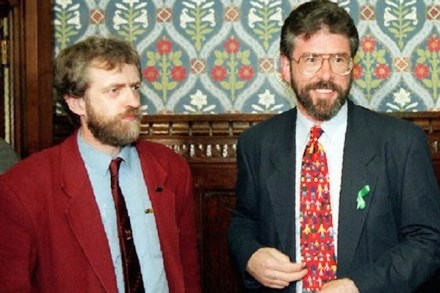
Jeremy Corbyn just can't help making friends wherever he goes. He previously described Hamas operatives as 'friends' and now he has found time out of his Labour leadership campaign to meet up with his old 'comrade' Gerry Adams in Portcullis House. The Sinn Féin president has tweeted a picture of their meet up, which Martin McGuinness also attended: https://twitter.com/GerryAdamsSF/status/623530633055313920 Of course the pair go way back. Corbyn, who supported ending British status for Northern Ireland, was heavily crtiticised after he invited Adams -- along with other Sinn Féin members -- to the House of Commons shortly after the Brighton bombing in 1984.

Keep the cops away from the radical clerics, be they Christian or Muslim

From our UK edition

If you want to see our grievance-ridden, huckster-driven future, looks to Northern Ireland, which has always been a world leader in the fevered politics of religious victimhood and aggression. Just as the Tories and much of the politically-correct liberal centre think they can force us to be nice by allowing the cops to arrest those who 'spread hate but do not break laws' (in George Osborne’s sinister words) so Northern Ireland has all kinds of restrictions of 'hate speech' to police its rich and diverse tradition of religious bigotry. I suppose it was inevitable that they would catch 78-year-old Pastor James McConnell of the Whitewell Metropolitan Tabernacle in North Belfast. The pastor is a protestant of the fundamentalist kind.

There’s no substitute for human intelligence

From our UK edition

Spying may be one of the two oldest professions, but unlike the other one it has changed quite a lot over the years, and continues to do so. During the quarter-century since the end of the Cold War, the main preoccupation of our intelligence agencies has not been with classic espionage by the Soviet Union, or with identifying new Philbys operating on their behalf. Espionage still goes on, but it is small beer compared to the terrorist threat that commands no less than 75 per cent of our agencies’ time and resources. Stephen Grey takes us through the transformation in the recent past experienced by MI6, MI5 and GCHQ, as well as their counterparts in the United States.

The Spectator’s Notes | 28 May 2015

From our UK edition

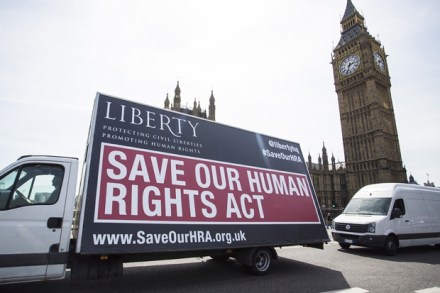
Amnesty International and others have placed a large newspaper advertisement telling Michael Gove ‘Don’t Scrap Our Human Rights’. The ad asserts that ‘A government cannot give human rights or take them away’, which, if true, makes one wonder how it can scrap them. Human rights are philosophically a confused idea; but their political power consists in the fact that anyone questioning them can be made to look nasty. People who love making new laws — particularly new laws that cost money — therefore like to present these laws as human rights. Article 29 of the EU’s Charter of Fundamental Rights, for example, says ‘Everyone has the right of access to a free placement service’.

The ‘gay cake’ case highlights a new intolerance developing in Ireland

From our UK edition

In what sense, precisely, has a bakery in County Antrim contravened discrimination law by refusing to ice a cake with a gay marriage slogan on it? The 'gay cake' case does have the useful function of identifying the partisan and idiot character of the Equality Commission, in this case, of Northern Ireland, which acted for gay rights activist Gareth Lee, the offended customer, whose slogan was repudiated by Ashers Bakery. The cake itself is silent on the matter right now but it was, I gather, available to be consumed by any customer of Ashers Bakery, regardless of race, religion or sexual orientation. [caption id="attachment_9131252" align="alignright" width="221"] The image the customer wanted on the cake[/caption] And that’s just the point.

The other kingmaker

From our UK edition

Nigel Dodds, the Democratic Unionist Party leader at Westminster, is reflecting drolly on his party’s recent popularity: ‘I certainly think that the last year or two has been remarkable in the number of new friends we have encountered, people who are very keen to have a cup of tea or chat to you or whatever. I don’t put it all down to our natural charm.’ As pre-election talk of political pacts thickens — with both Conservatives and Labour angling for support — former House of Commons wallflowers have found their dance cards increasingly full. Which of the main parties might feel like a more natural ally? I ask.

Sinn Féin has begun to think of itself as the ‘Irish Syriza’

From our UK edition

Imagine a party that’s a cross between the SNP, Syriza and Ukip - one that is anti-establishment and combines the self-regard of the plucky outsider with an intermittent lead in the opinion polls. Imagine that and you’re getting close to the character of Sinn Féin, as manifest in its party conference this weekend. The last you may have heard of Sinn Féin was as a purely Northern Irish outfit, getting on just dandy with the DUP if intermittently embarrassed by reminders of its past during the Troubles. Well, think again. The party regularly outpolls the major party of government in the Republic, Fine Gael, and seems likely to do just fine in the election in Northern Ireland.

Another enemy within: Thatcher (and Wilson) vs the BBC

From our UK edition

In a ‘Dear Bill’ letter in Private Eye, an imaginary Denis Thatcher wrote off the BBC as a nest of ‘pinkoes and traitors’. That drollery points to the corporation’s paradoxical place in British life: an essential part of the establishment (‘Auntie’) yet sometimes its most daring critic, willing to put impartiality above patriotism. Jean Seaton makes one wonder at this impressive balancing act in a book that continues Asa Briggs’s magisterial history of the BBC up to 1987. After the war many from newly liberated Europe thanked the BBC Overseas Service for keeping hope alive during the Occupation; this was reprised after the Berlin wall fell.

Want to understand the conflict in Ukraine? Compare it to Ireland

From our UK edition

What seemed this time last year to be a little local difficulty in Ukraine has metastasised to the point where a peace plan drafted in Paris and Berlin may be all that stands in the way of war between the West and Russia. Over the months, many of those watching, appalled, from the safety of the side-lines, have combed history for precedents and parallels that might aid understanding or offer clues as to what might be done. Last spring, after Russia snatched Crimea and appeared ready to grab a chunk of eastern Ukraine too, the favoured comparisons were with Nazi Germany’s 1938 annexation of Sudetenland. It was a parallel that seemed all too plausible, given the Kremlin’s statements about the need to protect Russian 'compatriots' wherever they might live.

Defiant Tony Blair apologises for collapse of Downey trial, but says On the Runs scheme was necessary

From our UK edition

Meetings of the Northern Ireland Affairs Select Committee are rarely so popular that they have to book an overspill room, but today’s hearing with Tony Blair was a sell-out occasion, with both the Wilson Room and the Boothroyd Room in Portcullis House packed with people wanting to watch the former Prime Minister give evidence on the On the Runs scheme. He was in a pretty defiant mood during the two hour-long session, but then so were the MPs, particularly Ian Paisley Jr, whose aggressive questioning ensured Blair was never truly at ease. Blair insisted repeatedly that the controversial ‘comfort letters’ were only issued to those who were not going to prosecuted, and some who were not even known to the authorities in Northern Ireland.

I guarded Rudolf Hess

From our UK edition

I had the misfortune to meet Lord Richards on probably the darkest day of his 42 years in the military. In July 2009 I went to visit the then Commander-in-Chief UK Land Forces in his office on the edge of Salisbury plain and we spoke about his career, and the army in general. All the while staff officers ran in and out with updates and requests concerning a double IED attack which had left five soldiers of 2nd Battalion, The Rifles, dead and a dozen wounded — the single worst incident in our 13-year involvement in Afghanistan. Richards was, as the title of his auto-biography suggests, in total command of himself and the situation — eloquent but concise, knowledgeable and incisive; and while far from unfeeling, his judgment was completely unclouded by emotion.

Spectator letters: Mindfulness, addiction, and dinner with Richard Nixon

From our UK edition

Mind games Sir: I hope that people are not unduly put off by Melanie McDonagh’s misrepresentation of mindfulness as a cop-out for navel-gazers who lack the moral fibre to engage in ‘proper’ religion (‘The cult of mindfulness’, 1 November). She describes it as a ‘practice of self-obsession’, but it is the opposite: it creates a space in which the self can be seen for what it is as it hops around, generating superfluous judgments. You begin to obsess less about what your ‘self’ compulsively comes up with, and to approach life from a more anchored perspective. May I invite those who think that sounds bogus and flaky to engage in a short experiment?

Does Jonathan Powell really want to negotiate with the Islamic State?

From our UK edition

I think I’ve finally worked out the time-honoured Jonathan Powell formula for promoting a new book: take which-ever group constitutes the most bloodthirsty terrorist organisation of the day — in this case IS, the warped Islamist force currently enslaving and beheading its way across Iraq and Syria — and create a media fizz by boldly declaring that sooner or later we’re going to have to negotiate with them. Powell’s predicted circumstances in which the ‘talking’ to IS should actually happen, however, are hedged with unrealised conditions. At other moments he will daringly hint that talking is best without any preconditions at all.

Jonathan Powell is wrong – talks with the IRA prolonged the Troubles

From our UK edition

Jonathan Powell seems to be unavoidable at the moment. Having read his first two books a couple of times I felt a weary sense of resignation on news of the third. It wasn’t until I saw and heard him on channel 4 news that I felt serious irritation. We, whoever 'we' may be, should talk with everyone, everywhere, at any time, because we always do anyway - pretty much summed it up. Words are important - the more so when they are delivered by Tony Blair’s former chief of staff, who is much credited  with making a serious contribution to the Belfast Agreement. Jonathan Powell is a serious man, although one would be hard pushed to recognise that if you tuned into his Channel 4 performance.