North korea

Is North Korea about to test another nuke?

From our UK edition

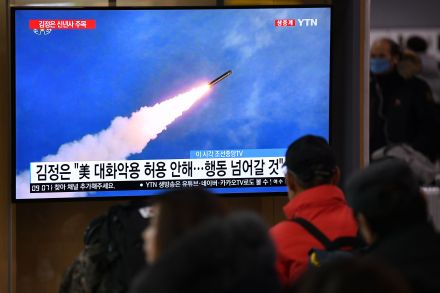
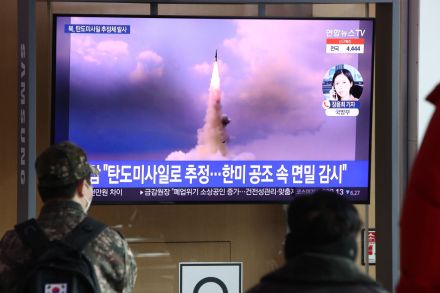
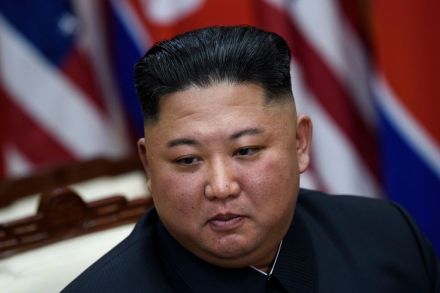
North Korea’s spring has started with a bang. The United States and South Korea have staged their largest joint military exercises in five years, and Pyongyang’s rhetoric is becoming more aggressive. Kim Jong Un has warned that the US and South Korea would ‘plunge into despair’ for holding the drills, as he fired two missiles into the sea between the Korean Peninsula and Japan. Kim’s regime has already fired more than 20 missiles this year, launching increasingly ambitious and sophisticated ballistic and cruise missiles. Earlier this week, North Korean state media proudly claimed that the regime had developed tactical nuclear weapons for the first time.

Jimmy Carter’s second act was better than his first

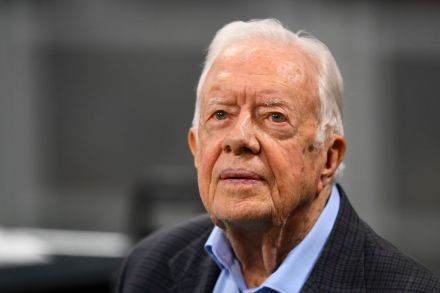
Jimmy Carter is commonly depicted as one of America’s worst presidents. His four-year tenure is said to be a mishmash of screw-ups, from high energy prices and even higher inflation to low economic growth and a very public, very embarrassing hostage rescue attempt in Iran. His signature achievement, the 1978 Camp David Accords, which codified peace and normalized diplomatic relations between Egypt and Israel, is treated as a small stretch of fresh pavement in an otherwise potholed road. Fair or not, that’s the perception.

jimmy carter

Why did North Korea fire a missile over Japan?

From our UK edition

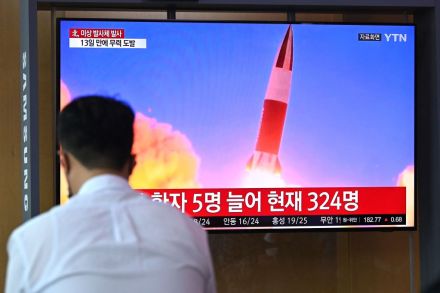
It was a new dawn, a new day, and a new North Korean missile test. The land of the morning calm – as South Korea is affectionately-nicknamed – awoke to the launch of the fifth North Korean ballistic missile in ten days. Over the past ten months, the international community has become accustomed to a growing number of North Korean missile launches, of an increasingly diverse range of missiles. Kim Jong-un’s determination for North Korea to become a nuclear state, and be recognised as such is only heightening. Russia and China are now more reticent than ever to side with the West and support sanctions on North Korea Last night’s launch was of a Hwasong-12 intermediate-range ballistic missile.

Russia’s war is a global cancer

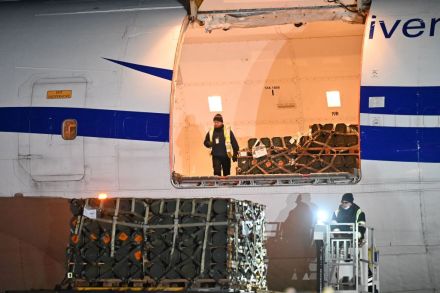
One thing I have always found fascinating about Russia is that when they tell us they are going to do something, they usually do it. So when Moscow struck a military base near the Poland-Ukraine border that was a staging ground for arms shipments, we shouldn't have been surprised. They told us that was their next plan of action just twenty-four hours before they did it. But that’s just the beginning of what Russia likely has in store for the West, NATO, and the entire world if we aren’t careful. Russian president Vladimir Putin’s plan seems simple: chaos on a scale that will extend far beyond Ukraine. You see, Putin is starting to come to grips with the fact that he can’t win the war in Ukraine — at least on paper — unless he destroys Ukraine.

cancer

The next North Korea crisis has begun

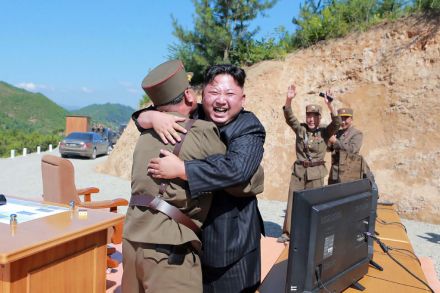
While the world is captivated by all things Omicron and Russia, North Korea is once again back on the world stage. And that can only mean one thing: bigger and badder missile tests. None of this should come as a surprise. North Korea’s leader, Kim Jong-un, has announced to the world on numerous occasions that he will continue to test such weapons, even as his nation suffers from a “food problem.” Kim, his father, and his grandfather have been marching towards a fully viable nuclear deterrent for decades now. What is new is that Kim has declared that he will not abide by the promise he made to not test certain weapons platforms that directly threaten the US homeland — what drove the near-nuclear showdown with President Donald Trump back in 2017.

north korea

Why we keep getting North Korea wrong

Kim Jong-un is focused first and foremost on managing his country’s lingering food crisis. But that doesn’t mean the thirty-seven-year-old dictator has any intention of siphoning off resources from North Korea’s weapons programs. He made that abundantly obvious this week, when Pyongyang conducted its second ballistic missile test using hypersonic technology in four months. According to North Korean media, the missile traveled 435 miles to the east, hitting the designated target. The response to the latest test was predictable. South Korea called an emergency meeting to discuss the launch. The US State Department quickly issued a statement to reporters reminding them that the tests are a violation of multiple UN Security Council Resolutions (as if North Korea cared).

north korea

Biden wants to forget all about North Korea

If you don’t follow North Korea for a living as I do, you likely have forgotten all about the so-called hermit kingdom and its portly pariah of a leader, Kim Jong-un. Sure, there are the occasional headlines. Kim has lost a whole bunch of weight. The country is locked down as it has no way to combat Covid-19 and would never let in the international community to distribute vaccines. And, of course, there was last night's missile test. But even then the media does not seem to care much when it comes to North Korea. The reasons are quite obvious: with the Omicron variant sweeping the world, even a regime such as North Korea's has trouble breaking into the news cycle.

Can Kim Jong-un survive for another ten years?

From our UK edition

Ten years ago today, at noon on 19 December 2011, the veteran newsreader and ‘Pink Lady’ Ri Chun-hee, donned an unusual black hanbok. Struggling to hold back her tears, Ri announced that North Korea’s Dear Leader, Kim Jong-il – a recluse workaholic who had led the country for 17 years – had died. On the same day, his twenty-something second son, Kim Jong-un, was duly anointed as the ‘great successor to the revolutionary cause’. Today’s anniversary does not reflect well on Kim’s legacy as leader of North Korea. He now rules a state crippled by economic problems, beset by factionalism in the ruling party, and which has sour relations with both the US and South Korea. After ten years in power, how did it all go so wrong for Jong-un?

North Korea is on the verge of a humanitarian collapse

From our UK edition

During the Trump years, North Korea was hardly ever out of the news. From the US President’s threats of ‘fire and fury’ against the rogue state, to dramatic meetings with Kim Jong-un in Singapore and Hanoi, the world’s attention was firmly focused on Pyongyang. But with Trump out of office, the chaos of Covid-19, and the fall of Afghanistan, North Korea has fallen off the agenda. That could well be a terrible mistake, considering the state’s pressing humanitarian crisis. Following the coronavirus outbreak last January, North Korea shut its borders almost completely. As a result trade with China, by far its biggest economic partner, has decreased by at least 80 per cent.

Don’t fear North Korea’s recent missile launch

Let’s be honest. If North Korea didn’t have nuclear weapons and missiles to carry them to targets as far away as the US homeland, you would not be reading this article. In fact, the national security establishment would most likely consider North Korea, a nation that can no longer feed itself with a GDP smaller than Rhode Island's, to be a joke. And yet the so-called Democratic People’s Republic of Korea (DPRK) keeps cranking out ever-more advanced weapons platforms that drive headlines and clicks the world over. North Korea’s most recent test, a submarine-launched ballistic missile, seems at least on the surface to be pretty threatening. Yet a more sober analysis suggests that such a weapon, at least by itself, is no major threat to anyone, and for the foreseeable future.

north korea

North Korea will be Biden’s real test

North Korea now possesses a nuclear weapons arsenal that could kill millions of people in minutes. Our media, rushing to create the simple but misleading narrative that President Joe Biden has ended America’s supposed longest war, forget that Washington technically has been at war with North Korea for 71 years. It's Pyongyang, not Kabul, that will be the real test of Biden's foreign policy — and the real opportunity. A few months back, the Biden administration named that conflict its top national security priority. Yet Team Biden has done little to work towards ending what can only be described as the ultimate forever war. And, just like clockwork, Pyongyang seems to always remind us that its deadly atomic arsenal is growing by the day.

kim jong-un north korea

North Korea’s cryptic crisis

From our UK edition

For years, the West has tried to cajole the North Korean regime using sanctions, much to the frustration of Kim Jong-un. But now in the era of Covid, Pyongyang has been forced to inflict greater economic harm on itself, entrenching its international isolation and the suffering of its people. The hermit kingdom was one of the first countries to close itself off. The border with South Korea is already one of the most fortified in the world, while the northern Chinese perimeter, a vital point of trade, was sealed in January 2020 before many in the West had even heard of Covid.

Lil’ Kim: should the West prepare for chaos in North Korea?

From our UK edition

On 24 June, North Korean state TV aired a short interview with an unnamed Pyongyang resident. The man, who appeared to be in his fifties, said that his fellow countrymen had all been left heartbroken and in tears when they saw the new, ‘emaciated’ look of Kim Jong-un. The country’s hereditary dictator, who hadn’t been seen in public for a month, recently re-emerged looking rather different. Even now it’s a bit of a stretch to call him ‘emaciated’, since his estimated body weight is nearly 19 stone. Still, it is a big drop from the 23 stone he weighed only a month earlier. However, it was not Kim’s weight loss but the interview itself which was truly surprising.

The increasing cruelty of the North Korean regime

From our UK edition

On a humid summer’s day in Singapore three years ago today, Donald Trump became the first incumbent US president to meet with his North Korean counterpart. For all of the summit’s theatre, Kim Jong-un’s pledge to ‘work toward complete denuclearisation of the Korean peninsula’ seems unlikely to be realised. Three years on, and the country shows little intention of either abandoning its nuclear ambitions or reforming Pyongyang. Instead, the regime has tightened its control over society, not least ideologically, after the failure of the Supreme Leader’s five-year economic plan. In 2018, the leadership assured North Koreans that the country had achieved its primary geopolitical aim of becoming a ‘fully-fledged nuclear state’.

Insane and fascinating: BBC World Service’s Lazarus Heist reviewed

From our UK edition

The narrative podcast remains a form in search of a genre. The template set by the hit show Serial — enterprising American journalists with janky piano theme tune shed new light on tantalising murder — still predominates seven years on. To this we can add the format pioneered by S-Town (initial murder investigation subsides into rich human detail) and, more recently, the excellent Wind of Change (intriguing what-if maps cultural and macropolitical shifts, with bonus CIA window-dressing). I remain sceptical about the form’s usefulness as a way of breaking hard news. Caliphate, the New York Times jaw-dropper on the Islamic State, is less gripping now its key source has been revealed as a fraud.

Beware the rise of state-sponsored cyberattacks

From our UK edition

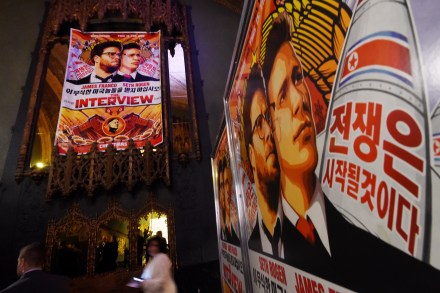
In November 2014, a glowing red skeleton appeared on the computer screens of executives at Sony Pictures Entertainment. ‘Hacked,’ began the accompanying message. It went on to explain that Sony data had been stolen and would be released to the world. ‘This is only the beginning,’ it warned. Gossipy emails about Angelina Jolie, licensing problems around the character of Spider-Man, and the script of the next James Bond film were all leaked online and lapped up by showbusiness reporters. Then things became much more serious. The hackers threatened a terror attack against the premiere of Seth Rogen’s film The Interview, which mocked North Korea and its leader.

Biden must learn from Trump’s mistakes on North Korea

From our UK edition

Anniversaries are usually celebratory occasions, but not this one. It's now been two years since the infamous Hanoi summit between Donald Trump and Kim Jong-un, and there is precious little to show other than an important lesson in how negotiations with North Korea can sour.  Joe Biden is now nearing his first one-hundred days in office. Little has been said about dealing with the North Korea problem. But one thing is for sure: a US-North Korea summit is far from imminent. Following their first encounter in Singapore in June 2018, it suited Trump and Kim to meet again. For both leaders, the theatre and optics of their gathering was too good to resist a second outing. It is then that things appeared to go wrong.

What will Joe Biden do about North Korea?

From our UK edition

Kim Jong-un marked the new year by treating North Koreans to several days of lengthy speeches followed by a display of North Korea’s nuclear and missile capabilities. Behind this show of power lies a truth that Jong-un and his country faces a series of unprecedented challenges this year. Sanctions continue to bite and, combined with the coronavirus pandemic, the North Korean economy remains paralysed. Yet this doesn't mean the task for Joe Biden in dealing with a problem like North Korea will be easy: in fact, with domestic problems exacerbating, it will make Biden’s task even harder. In 2018, the North Korean leader set out a ‘new strategic line’.

A vacation in a hell of a state

This article is in The Spectator’s November 2019 US edition. Subscribe here. Michael Palin in North Korea was a two-part 2018 documentary on the Monty Python actor’s tightly choreographed tour of North Korea. Palin dances with cheerfully drunk North Koreans on International Workers’ Day and picnics with his guide, a woman called So Hyang. He plays catch with an inflatable globe with some North Korean children and learns some taekwondo.

north korea michael palin

Why liberals turn a blind eye to the global persecution of Christians

From our UK edition

The new episode of Holy Smoke is about the persecution of Christians. That's a familiar concept, even if we don't read much about it in the media. But here's what it means in 2019: The rape, murder and dismemberment of pregnant Christian women in Nigeria by Islamist thugs. The use of face-recognition technology by the Chinese government to monitor, control and, where it deems necessary, eradicate Christian worship by demolishing thousands of churches The evisceration of ancient Christian communities in the lands of the Bible. The relentless torture of Christians in North Korea. The burning of Christian villages by Hindu nationalists in India, and vicious attacks on Christians in Sri Lanka and Burma by Buddhists, egged on by bloodthirsty monks.