Nineteen Eighty-Four

Life lessons from George Orwell

It was the British political journalist Jason Cowley, writing in London’s Sunday Times a month or two back, who posed a query calculated to strike terror into the heart of any self-respecting Orwell-fancier. Were we, Cowley wondered, with the air of one who tosses a Sèvres vase into the air to watch it descend into heap of fragments, approaching peak Orwell? Was the man in whose voluminous output so much of modern political and sociocultural malaise has been refracted losing his sheen? Some Orwellians – myself included – on hearing this would probably respond with a rather handy Latin phrase: si monumentem requiris, circumspice, which loosely translates as, “If you want evidence, buster, then take a look around.
1984 on Audible is a deliciously chilling immersion experience

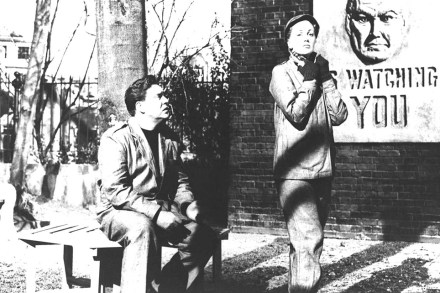
Forty years on from the year in which it is set, and released on the date of Winston Smith’s first diary entry, George Orwell’s seminal dystopian novel Nineteen Eighty-Four (not 1984, despite how this most recent retelling has chosen to style the title) has received perhaps its highest-profile adaptation since Michael Radford’s film. Andrew Garfield plays the reluctantly rebellious Winston, and man-of-the-moment Andrew Scott is a smoothly vicious O’Brien. Cynthia Erivo makes for a suitably feisty Julia, and Tom Hardy reprises his Bane boom as Big Brother, although his contributions are wisely kept to a minimum.

george orwell nineteen eighty-four audible

Why is George Orwell so difficult to pin down?

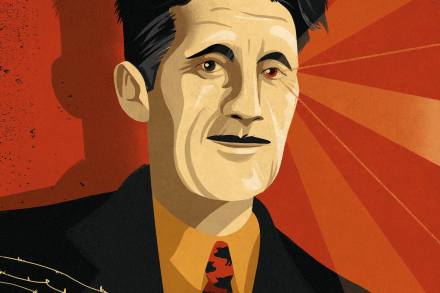
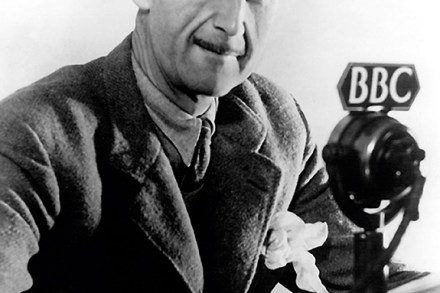
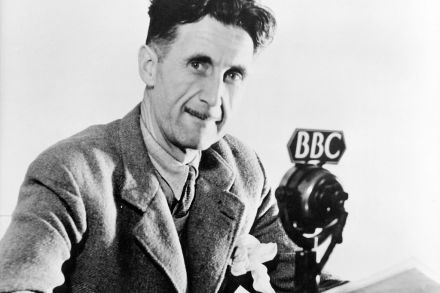
Outside Broadcasting House, the BBC’s main center in London, is an imposing, eight-foot-high statue of a man. He leans over slightly, as if to accost passersby, and holds a cigarette. A sign behind him declares, “If liberty means anything at all, it means the right to tell people what they do not want to hear.” The man is the author and critic George Orwell and the statue was intended as a permanent commemoration of his writings and values, as well as his short-lived stint at the BBC during World War Two.

orwell

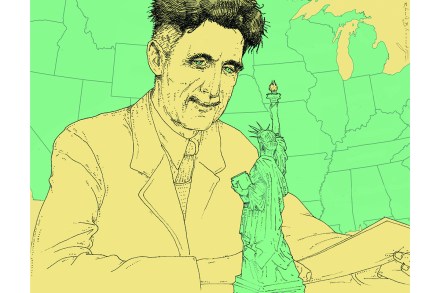
How America influenced George Orwell

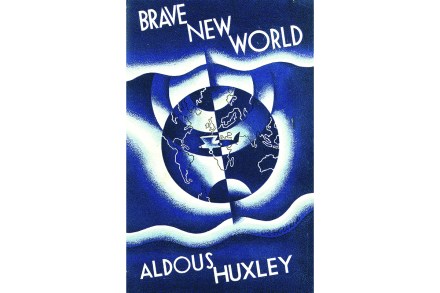
Some of the most tantalizing pieces of George Orwell’s journalism are the reviews written on the hoof, filed against deadlines, sent straight to the typewriter while World War Two raged above his head. One of them is a round-up of four reprinted dystopian novels supplied to the weekly magazine Time and Tide in July 1940, shortly after the fall of France. (Today, it’s rarely reissued and barely available outside the stout bindings of volume XII of Orwell: The Complete Works.) The four books are Jack London’s The Iron Heel (1908), H.G. Wells’s When the Sleeper Wakes (1910), Aldous Huxley’s Brave New World (1932) and Ernest Bramah’s The Secret of the League (1907).

orwell

The beautiful people turn their private jets towards Davos

Larry Fink is unhappy. The grand panjandrum of BlackRock, the world’s largest and most odoriferously PC pile of pelf, can’t understand why the Lilliputians of the world are singling him out for abuse. Having jetted in on his private plane to the World Economic Forum (WEF) at Davos in order to join the squads of beautiful people warning about the environmental dangers of gas stoves, the moral virtue of eating bugs not meat, and the need to “recalibrate” our understanding of free speech, the poor little rich boy is pouting because people are waking up to the totalitarian reality of what the WEF stands for. What is that reality?

How science fiction novels read the future

The pandemic is not quite over, but we are getting used to its inconveniences. What disaster will be next? An antibiotic-resistant strain of the bubonic plague? Climate collapse? Coronal mass ejection? Will the next catastrophe be natural — perhaps a massive volcanic eruption, the likes of which we have not seen for more than two centuries, since Tambora in 1815? Or will it be a manmade calamity — nuclear war or a cyberattack? And might we inadvertently descend into a new form of AI-enabled totalitarianism in our efforts to ward off such calamities? To all these potential disasters it is impossible to attach more than made-up probabilities. So what can we do about them? The best answer would be that we should strive to imagine them.

science fiction

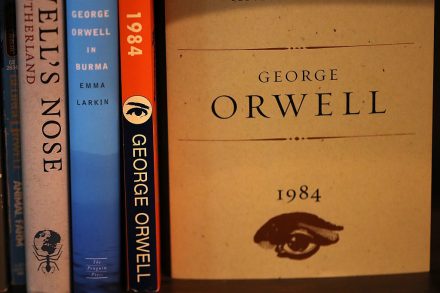
Nineteen Eighty-Four is not a guidebook for the present day

Is there a literary cliché more dull than saying of some old yellowing book that it is 'as relevant today as it was when it was written'? This month marks the 70th anniversary of George Orwell’s Nineteen Eighty-Four. Journalists on both sides of the Atlantic – to whom Orwell is a holy patron saint – have clacked out lengthy tributes (and entire whole books) to St Orwell’s most famous work. What, they ask, does Nineteen Eighty-Four mean today? Well my answer, for whatever that’s worth, is: nothing. Nineteen Eighty-Four has nothing new to say to us and we have almost nothing new to say about Nineteen Eighty-Four. Realistically, we have very little left to say about George Orwell too.

nineteen eighty-four