Nietzsche

Why Goethe matters

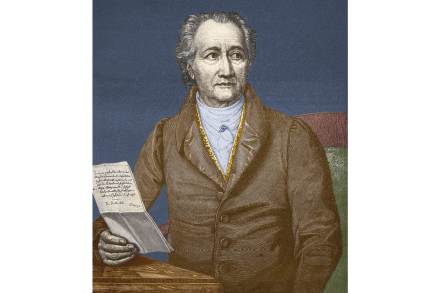
Johann Wolfgang von Goethe bears one of the most famous names in world literature, though he is largely unread by English-speakers. He is most closely associated with the novel and dramatic form, so many would be surprised to know that he primarily spoke of himself, for much of a long life that spanned from 1749 to 1832, as a scientist. He was a pioneering exponent of the science of evolution, and in two wonderful poems, The Metamorphosis of Plants and The Metamorphosis of Animals, he explored his belief that nature evolves from simpler, earlier life forms. This, rather incredibly, was seventy or eighty years before Charles Darwin began to write.

Goethe
argument

Picking a fight

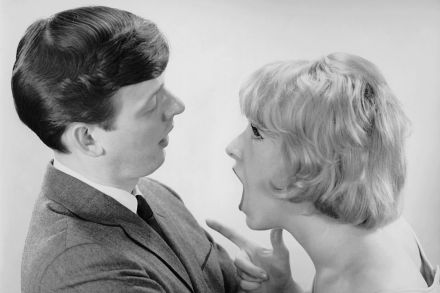
Lee Siegel’s defense of argument in the latest volume of Yale’s “Why X Matters” series is original, provocative and frustrating, which isn’t bad for a book on argument. Siegel is less interested in what argument does than in what it is. An “expression of a universal longing for a better life” is how he puts it initially. It is also a justification for “ways of living,” something that“ flows from our intuitive certainty that our right to exist is the most fundamental truth,” and an expression of our “unique, particular existence.” Albert Camus stated in The Myth of Sisyphus that the only serious philosophical question is suicide, “whether life is or is not worth living.” Siegel therefore writes “To exist is to argue your existence.” You get the idea.

The monsters we become

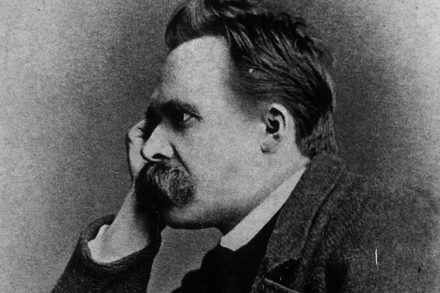
Nietzsche would have been great at Twitter. He excelled at epigrams, which are to philosophy as the fortune-cookie motto is to Chinese takeout, and he loved to hate. Scholars divide as to whether his epigrammatic excellence came from using a typewriter — he was the earliest philosophical adopter of this technology — or because he was no good at joined-up thinking but very good at vituperating about the news. It was Nietzsche who spotted that the emerging theme of democratic society was not the reign of reason and universal brotherhood, but the ‘stupidification of the world’ and resentment. He called it ressentiment. Philosophy goes better in French, and Nietzsche had lately turned against Wagner, anti-Semitism and German nationalism.

Nietzsche

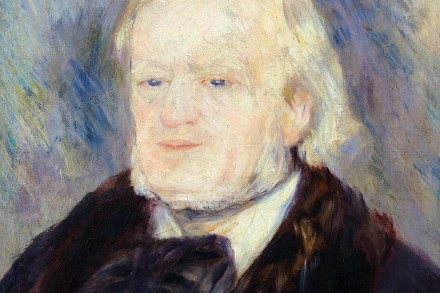
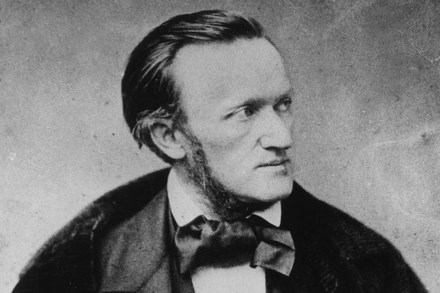
The wonder of Wagner

Laramie, Wyoming Nearly all the famous artistic controversies in the aesthetic history of the western world — the Battle of the Ancients and the Moderns in France and the contest between the rococo and neoclassical schools across Europe in the middle of the 18th century; the subsequent rivalry between the Classicists and the Romantics and the contretemps in the late-19th century between the Realists and the Impressionists — are as dead, irrelevant and forgotten today as the wars between the Guelphs and the Ghibellines.

wagner

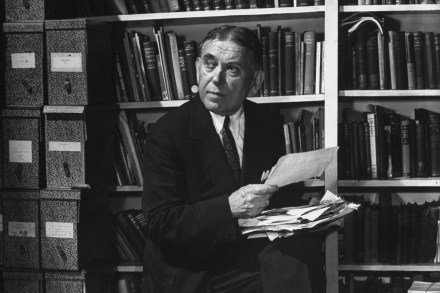
Novel inspirations: H.L. Mencken, the bad boy of Baltimore

This article is in The Spectator’s January 2020 US edition. Subscribe here. In this age of dim digitized media in which E.J. Dionne and David Brooks are honored as distinguished columnists, the byline Henry Louis Mencken is virtually forgotten. Mencken, who died in his sleep 64 years ago this week after listening to Die Meistersinger on the Saturday afternoon broadcast from the Metropolitan Opera, is unlikely to be remembered by the mediacrats who abhor everything the man stood for. Yet Mencken in the 1920s was one of the most celebrated figures in America, and even the western world.

mencken

Tulsi Gabbard: a Gandhi in Lycra

Andrew Yang claimed to be surprised that the media dubbed Tulsi Gabbard the first Asian American to run for the Democratic nomination. Of course Gabbard snagged this prize of the higher tokenism, first claimed by Patsy Mink in 1972. Yang may be doing better in the single-figure freakshow of the nomination race, but Gabbard looks better when encasing her policies in a tight wetsuit or engaging in Lycra-clad iron-pumping. https://twitter.com/tulsigabbard/status/1173605168841203712?lang=en This is not all the Gabbard candidacy has set a-pumping. No Democrat so quickens the blood of the red-meat, male-voice choir of Buchananites and Bannonites.

tulsi gabbard