Nhs

Tories set Labour in their crosshairs over Mid-Staffs

From our UK edition

After today's slightly confusing PMQs line from the Prime Minister about unidentified 'people' who 'should be thinking of their positions' after the Mid-Staffs scandal, ministers and loyal backbenchers have gone out to bat for the government. After PMQs, the Prime Minister's sources refused to say who these 'people' were who needed to consider their positions. But now Jeremy Hunt has written a piece for ConHome saying 'Labour can and will be held accountable for what happened at Mid-Staffs'. He then warns that the party appears to have learned no lessons at all from the Francis Report and that the public shouldn't trust them again: 'Labour’s reaction to Mid Staffs has been a deafening silence which is shocking both in its arrogance and complacency.

Who should we blame for the Mid-Staffs scandal?

From our UK edition

As the row over who knew what and when in the Mid-Staffordshire tragedy grows, it's worth taking a close look at the data involved. When you consider the Mid-Staffs scandal across the timeline of the previous government, the findings present extremely uncomfortable evidence for which the Labour party must be held to account. There are two key measures. These are the number of ‘expected deaths’, weighing up the age and condition of patients admitted to hospital, against the actual total number of deaths occurring. The difference between the two figures is known as ‘unexplained deaths’.

Lib Dems avoid conference grief on NHS

From our UK edition

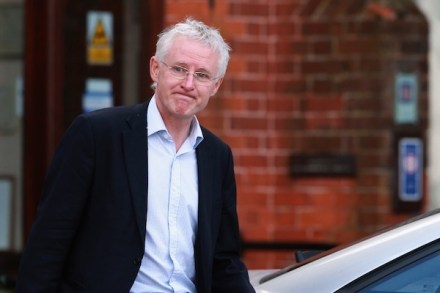
Norman Lamb's announcement today that the government will re-write regulations on competition in the NHS seals up one source of grief for the Lib Dems ahead of their spring conference this weekend. Activists had been threatening an awkward showdown with the leadership on the section 75 regulations, and instead ministers (its notable that Lib Dem Lamb was sent out to bat for the government today rather than a Conservative) can go to their party and argue that they are keeping check on the Conservatives when it comes to the NHS. But this has a flipside, which is that the row over secret courts will gain more momentum now activists' minds are focused.

David Nicholson’s select committee session: five key points

From our UK edition

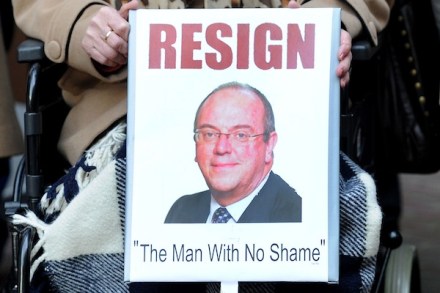
Sir David Nicholson didn't deliver the most confident performance before the Health Select Committee this morning, but he didn't leave the session looking fatally wounded. Here are the key points from his evidence: 1. No-one knew what was going on. The NHS is such a big organisation that, as Nicholson admitted, it was perfectly possible for the Strategic Health Authority that he oversaw had no idea that there were concerns about the Mid-Staffordshire Trust. He said: 'We had no idea, the information was never brought to the SHA… we didn't see any of the information that would lead you to believe that this was going on, shocking as it is.' He added that 'there was no culture of sharing information'.

Why did no Tory attack Vince Cable for his opposition to the NHS budget ring fence?

From our UK edition

This weekend David Cameron argued that the Tories are the ‘only party simultaneously committed to proper investment in the NHS and bringing down immigration'. This makes it all the odder that the Tories didn’t seize on Vince Cable’s comments on the Sunday Politics yesterday. The Business Secretary declared: ‘I’ve always been very critical of ring fencing but the policy under this government I accepted as part of the coalition arrangements.' In other words, if Cable—the senior Liberal Democrat economic spokesman—had his way, the health budget would not be ring-fenced. But this comment seems to have gone unnoticed by the Tories; there was no press release from a Tory MP highlighting it.

How to be an anti-politics party in government: make the public sector accountable

From our UK edition

One of the lessons from last week's Eastleigh by-election - and indeed the Italian elections - is that voters don't like politicians at the moment. It's easy for those like Nigel Farage to mop up this anti-politics sentiment in the same way as Nick Clegg could say before the 2010 election 'the more they attack each other, the more they sound the same'. But how does the Conservative party try to appeal to those voters fed up with the Establishment of which it is so clearly a part? David Cameron can hardly start attacking himself, after all. There is one thing that the Tories could do - and which their backbenchers are pushing for - which would at least undermine a sense that the party is tied up in the cosy Establishment.

The NHS cancer surgeon who blew the whistle on foreigners scamming the NHS

From our UK edition

Today's Sunday Times splashes on news that David Cameron is going to crack down on health tourism - that is, foreign nationals coming to Britain primarily to claim free treatment on the NHS. There have been anecdotal reports of this for some time, but the official figures suggest that there is no health tourism problem, because the number of foreign nationals treated amounts to less than 0.5 per cent of the NHS budget. Of course, the official figures wouldn't show a problem. The scam involves people being marked down as eligible, even though they are ineligible. Statistics are, as so often, unreliable witness. More reliable are those who work in the NHS and see the abuse with their own eyes every day.

Why David Nicholson must go

From our UK edition

As the Mid-Staffs tragedy unfurls, it becomes more and more apparent that contrary to the insistence of former Labour Ministers and Prime Ministers, this was not an isolated case, but an appalling example of problems evident throughout the NHS. Indeed, back in 2008, the then Labour Government received reports from respected international health consultants warning of a culture of fear and compliance within the NHS; a place where the emphasis was on 'hitting the targets, but missing the point' and patient safety came second to presenting a set of statistics suitable for dispatch-box delivery.

Letters | 28 February 2013

From our UK edition

Healing the world Sir: We most warmly commend the courage of Professor Meirion Thomas (‘The next NHS scandal’, 23 February) in lifting the lid on the appalling abuse of the NHS by foreign visitors. It has been going on for years but has been covered up by the culture of fear that has pervaded that organisation. We stand ready to support the professor in parliament if that should prove necessary. Regrettably, the present position is even worse than he described. The relevant quango (the Primary Care Commissioning group) issued instructions last July that GPs must accept an application for registration from any foreign visitor who is here for more than 24 hours as well as from all illegal immigrants.

Are British Doctors Paid Too Much?

From our UK edition

I knew that British doctors are well-paid but unti I saw, via Kevin Drum, this chart I had no idea they were so much better-paid than most of their peers in the western world.  This is culled from a 2004 OECD report (Pdf) and all figures are in PPP-adjusted dollars. Of course, doctors received significant pay increases during the Blair years. Specialists were not treated as kindly as (well-trained) GPs but even their wages increased by more than 30% in real terms. Which is fine. The constituency demanding pay cuts for doctors is very small. Nevertheless, these charts (which are not, I think, outdated in any significant sense) are worth recalling next time doctors try suggesting they are hard done by.

Britain can’t afford an International Health Service

From our UK edition

Health tourism is raised every now again by politicians, but never has it been raised so forcefully by such a senior doctor. In this week's Spectator, Professor J.Meirion Thomas, a consultant surgeon with the NHS and one of Britain's leading cancer experts, speaks out about health tourism. He writes: I am frustrated at seeing the NHS targeted by patients who are ineligible for free care, but who usually get through the net. Specialist units may be especially vulnerable. Reluctantly, I have decided to share my concerns. The final trigger to write this article was a potentially ineligible patient who accused me of unethical behaviour because I would not promote his application with my Trust for immediate and free NHS care.

The View from 22 — the battle for Eastleigh and free riding the NHS

From our UK edition

The Tories and Lib Dems are locking horns in Eastleigh but what is Labour's strategy? In this week's View from 22 podcast, James Forsyth debates with the Fabian Society's Marcus Roberts on how Labour is working to regain long-lost voters in the South East, as well as their aims for this by-election. We also examine this week's Spectator cover on what Eastleigh says about the health of the coalition. Mary Wakefield joins to discuss the next big NHS scandal — the abuse of access to treatment. Does anyone track access to NHS services? Do doctors care about who patients are and can anything be done about it? Freddy Gray also explains why we need a rethink on taxes, as well as why David Cameron shouldn't have bothered to comment on Hilary Mantel's LRB essay.

There will soon be a popular revolt over NHS standards

From our UK edition

Can anyone think of a bigger scandal in any British public service than that revealed at Stafford Hospital? It is worse than Aberfan, or Bloody Sunday, or the King’s Cross fire, or Jimmy Savile, or even the abolition of grammar schools. Up to 1,200 people died unnecessarily, not because of one error, or a particular set of errors, but because of the way an entire hospital was run for several years. There is plenty of evidence now emerging that comparable disasters have taken place at other hospitals, for similar reasons. Yet I searched last Saturday’s Guardian in vain for a single mention. Politicians are desperately closing the subject down. They have persuaded themselves that everyone loves the NHS, especially its nurses.

Where’s the outrage?

From our UK edition

There’s normally no shortage of outrage in our politics. In Britain today, we specialise in working ourselves into a bate. This is what makes the lack of outrage at what happened at Mid Staffs all the more peculiar. If the government had received a report detailing such appalling behaviour in any institution other than an NHS hospital and responded so meekly, there would have been a series of angry front pages denouncing Whitehall complacency. The government is considering changing the law of the land because of what happened at the care home Winterbourne View, which was appalling but nowhere near as serious as what happened at Mid Staffs. But when it comes to the NHS, we all suspend our critical faculties.

Jeremy Hunt’s promising path as Health Secretary

From our UK edition

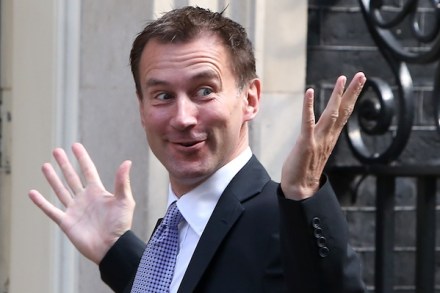
When Jeremy Hunt became Health Secretary last September, the Google Alert I set up against his name would spew forth a regular stream of contemptuous comment on the new appointment. Invariably accompanied by an unflattering photo – quite often that one (above) where Hunt arrives in Downing Street looking less ready for a Cabinet meeting than as the stand-in children's entertainer – the pieces conformed to an ordained boiler-plate. They would focus either on his Murdoch-stained record in office, or on the certainty that he was about to privatise the NHS out of existence or, failing that, on the general observation that here was another public school twit, capable of getting lost in the back of his own ministerial car.

Time’s up for the NHS monopoly

From our UK edition

Is it time we faced up to the fact that the NHS itself is the reason for the continuous stream of scandals? It’s not just the Mid Staffs Foundation Trust, or the ‘Nicholson Challenge’ or ‘the reforms’, or ‘the culture’. The NHS suffers from systemic faults. Above all, the regular flow of defects and failures is what you would expect from a command-and-control regime that has a monopoly. It’s not as though making this claim is new. The last Labour Government recognized the structural flaws in the NHS nearly a decade ago.

Being squeamish about the NHS won’t stop another Stafford Hospital

From our UK edition

Should heads roll over the Mid Staffordshire Hospitals Trust scandal? I ask only because as I listened to Mark Carney giving evidence to the Treasury Select Committee for several hours this morning, I found myself browsing through a number of articles on this site and others about the Libor scandal. Back in those heady days of George Osborne accusing Ed Balls of having questions to answer, and Bob Diamond resigning from Barclays ahead of his appearance before the same select committee, people were very keen for heads to roll, and not just those sitting on bankers' necks. They were also keen that those who performed badly when questioned about their suspicions of Libor fixing didn't rise to higher positions, with Paul Tucker watching his own shot at the job Carney has now won slipping away.

David Cameron’s sombre response to Mid-Staffs report includes hint of political row to come

From our UK edition

David Cameron does big solemn occasions well. He's skilled at taking a statement above the usual tit-for-tat partisan exchanges in the Commons. Everyone knows that, as does the Prime Minister, which is why he made the statement on the Francis Report rather than the Health Secretary. The Tories know that turning the response to this inquiry into a political football would not serve the party well, given Labour's 16-point lead in the polls on the NHS. The tone was sombre, with the Prime Minister apologising for the suffering caused by failures at the Mid Staffordshire NHS trust. He also emphasised that today was not about hunting down scapegoats, even though some are calling for the resignation of Sir David Nicholson as NHS chief executive.

Francis report: Cameron needs to talk about the structure of NHS care as well as the culture

From our UK edition

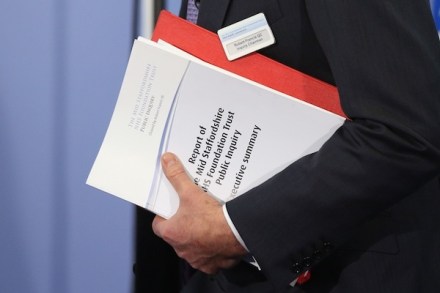
The Francis Report into Mid Staffordshire hospital trust will be published at 11.30am today. David Cameron will make a Commons statement this afternoon on the matter. Yesterday I explained why Cameron should be bold today and go beyond the usual 'lessons must be learned, procedures should be tightened' platitudes. One of the greatest risks is that the government ends up introducing more targets and more bureaucracy with simply replace or even add to burden created by Labour which the Report will criticise today. But as Iain Martin points out, the Mid-Staffs failure took place following huge increases in NHS spending. This isn't a death-by-cuts story.

Cameron’s opportunity to preach an NHS worthy of worship

From our UK edition

Today MPs are debating a matter of conscience, invoking their personal religious beliefs as they examine the same sex marriage bill. The debate has largely remained remarkably respectful thus far. But tomorrow the Prime Minister will give a statement on another matter that stirs similar religious fervour: the NHS. It will be David Cameron who delivers the government's response to the Francis Report on the failings of the Mid Staffordshire NHS Trust, not the Health Secretary. The Prime Minister manages these occasions well: we saw that with the Bloody Sunday and Hillsborough statements. British voters might, according to the latest census data, be losing their religion. But when it comes to the NHS, they remain faithful.