Nhs

Why is the NHS spending public money on inferior treatment, and why don’t patients know about it?

From our UK edition

The NHS reform debate remains fixated with money. Budgets, we are led to believe, are directly related to the quality of treatment a patient receives. But in too many areas the same spending in comparable areas is producing widely differing results. Most patients remain in the dark, thinking that if a treatment is available locally, then a national service will deliver similar outcomes. Yet the NHS' own data shows this is untrue. Take mental health. Both North Tyneside and Gateshead have similar health characteristics. They spend similar sums per head on a course of treatment -£214 in North Tyneside and £215 in Gateshead - both above the national average of £205.

The political battle over A&E will get nastier before the problem is solved

From our UK edition

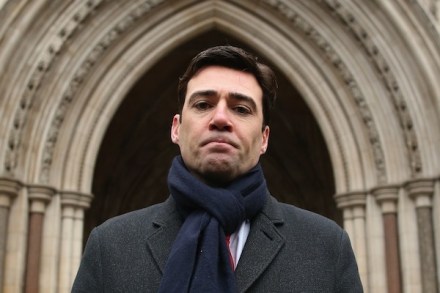
Today's row about Accident and Emergency has little to do with the issue itself, and far more about one party trying to prove a point about the other. Those rows are the most vitriolic, the most hard-fought, and to the outside world, the most pointless. The King's Fund today finds waiting times are at their worst level for nine years. What's going wrong? Each side has its own theories. But what's significant is that each side is trying to use this row to steal that coveted 'party of the NHS' title. This was abundantly clear from Andy Burnham's response to the report, written in what appears to be a spitting rage.

Julie Bailey: Enemy of the People

From our UK edition

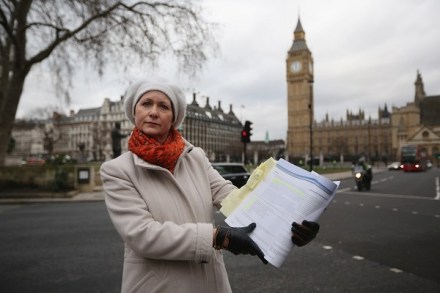
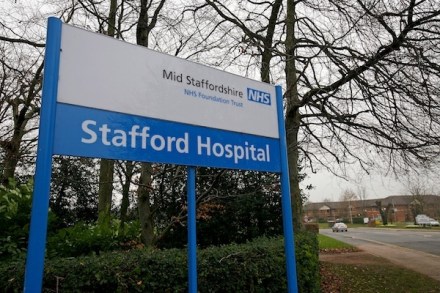
They’re running Julie Bailey out of town. The poison pen letters, foul-mouthed phone calls, slashed tyres, shit through the letterbox, boycott of her cafe and attacks on her mother's grave have become too much. Stafford's upstanding citizens, or a good number of them, want her gone. So she is leaving her home and business, and looking for a better place. 'People come up to me in the street and just start bawling,' she told me. 'I can’t go out by myself. I always need someone with me'” Bailey had been the public face of the campaign to highlight the conditions inside Stafford Hospital. She showed that nurses left food and drink out of patients’ reach and that those in agony screamed for pain relief that never came.

Sir David Nicholson to go: but will it change the culture at the top of the NHS?

From our UK edition

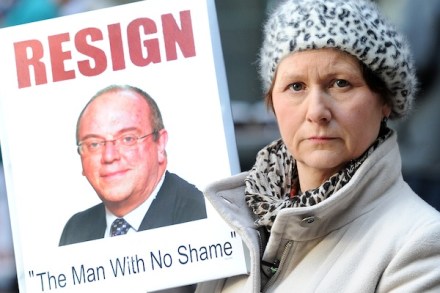
Health Service Journal has a great scoop this afternoon that NHS boss Sir David Nicholson will retire in March 2014. The man who was in charge of the Mid-Staffordshire NHS Trust when the serious failings in care took place had long been considered a busted flush, but his departure seems to be set for a great deal later than those pushing for it had hoped. I've spoken to Conservative MP Charlotte Leslie, who has long been after Nicholson's scalp. She says: 'I don't think it's soon enough and he should go immediately. If you want to oversee a massive culture change from the bullying and stifling of whistleblowers, then you start at the top. He seriously misled the Public Accounts Committee and the Health Select Committee.

Jeremy Hunt attacks Labour for A&E crisis

From our UK edition

Andy Burnham summoned Jeremy Hunt to the Commons this afternoon for a shouty hour about who loves the NHS more. The Health Secretary's answer to Labour's urgent question on the government's plans for changes to the GP contract and the crisis in Accident and Emergency departments was largely a direct attack on decisions the opposition took when it was in government. He decried Labour's 'disastrous changes to the GP contract' which had led to a significant rise in the number of patients visiting A&E, and 'the disastrous failure of Labour's IT contract'. He also told Burnham that his government had failed to address the disconnect between social care and the health service.

Susan Hill’s diary: The joy of fountain pens, the frustration of GP appointments

From our UK edition

I bet you remember your first fountain pen. Mine was a Conway Stewart with marbled barrel, I had it for starting Big School and I used to polish it. That trusty pen lasted until A-levels finally broke its back and after that I slipped down the primrose ballpoint path to slovenly writing. I never used a typewriter — too noisy, so I hand-wrote my books until the almost-silent laptop seduced me down another slithery slope. But I still hand-write when I need to take my time — books can be divided, like Americans, into fast ones and slow ones. Recently, a friend told me he had gone back to a fountain pen and was finding it a joy when writing up his notes — he is not a novelist but an engineer, and appreciates good tools.

It’s time to admit it: the NHS is unable to look after our elderly

From our UK edition

I decided to become a hospital visitor last year, after being a patient and finding myself in something more like a factory than an old-fashioned ward. A terror of infection in 2011 (there were 2,053 deaths involving Clostridium difficile) has ended the cosy world of side tables covered in flowers and cards. Concerns about data protection have put paid to WRVS ladies pushing trolleys, and vicars walking around offering solace. There aren’t even many nurses about, and even if there were, you wouldn’t want to bother them for tea and a chat. It’s OK if you have family or friends nearby, but if you don’t, being a patient in today’s NHS is a bleak experience.

The question Labour won’t even consider on the NHS

From our UK edition

Labour's new independent commission on health and social care aims to draw up plans on bringing together health services and social care so that the NHS can be financially sustainable. Launching the plans today, Ed Miliband said that 'we must make every pound we spend go further at a time when our NHS faces the risk of being overwhelmed by a crisis in funding because of care needs by the end of this decade'. But there is one big question that Sir John Oldham, who will chair the year-long review, won't be asking about the long-term financial viability of the health service. It's a question that some Labourites are well-attuned to, and that the chair of NHS England (formerly the NHS Commissioning Board) Malcolm Grant raised earlier this month.

Nurses cannot dismiss calls for reform out of hand

From our UK edition

It's not unusual for a trade union representing its members to resist change, and today the Royal College of Nursing is sticking well and truly to form. Not only has Peter Carter, its chief executive, called the government's plan to put nurses through a year of work as healthcare assistants 'stupid', he has also penned an op-ed for the Guardian in which he appears resistant to the suggestion that the profession needs to consider wholesale reform following the Francis Report. Carter writes: 'For the million or so people working in the NHS, a number of things come with the job: a boom-and-bust budget, growing demand and a high level of public expectation.

The dangers of cancer screening

From our UK edition

Within five years, we could find out how genetically predisposed we are to developing certain types of cancer. Through DNA screening, the most susceptible of us will be prompted to adapt our lifestyles accordingly and ultimately reduce the risk of developing the disease. The breakthrough has been hailed as the 'the biggest leap forward yet in understanding the genetic basis of cancer'. But at what cost? The good news is clear enough. Researchers at the Institute of Cancer Research and Cambridge University have identified 74 ‘single nucleotide polymorphisms’ – small physical elements found on human DNA - that correlate with the probability of developing ovarian, breast and prostate cancer.

David Nicholson should have no future in the NHS

From our UK edition

When T.S Eliot spoke of the folly of trying to ‘Devise systems so perfect, that nobody will need to be good’, he effectively described a distinction between the left – who instinctively turn to systems to get things done, and the right – who tend to believe in focusing on individuals, people, and their values. In a world where the centre-ground has become over-crowded with political parties all frantically claiming it, and a rainbow array of party hues (Blue Labour, Red Tories), this is a distinction that still makes some sense. In fewer areas is this distinction seen more clearly than how we think of our public services. Whether we think of them as the people who work in them on the front line, or the systems they work in.

Could a digital and more transparent NHS prevent another Mid Staffs scandal?

From our UK edition

Digital politics is all the rage. Take what Rachel Sylvester described in today’s Times as ‘digital Bennism’ — an online movement that is becoming increasingly influential to the Labour party’s campaign methods. And in the forthcoming Spectator, I’ve a piece discussing why policymakers are adopting internet-centric ideals to challenge the traditional way of doing things. The government’s digital ventures were discussed at Policy Exchange this afternoon. Rohan Silva — David Cameron’s senior policy advisor — said the government’s digital work is the ‘most radical thing people haven’t heard of’.

Letter to PM: ‘Nicholson must go with all speed’

From our UK edition

Earlier, I blogged that Tory MP Charlotte Leslie planned to raise concerns with the Prime Minister about Sir David Nicholson's incorrect select committee evidence. She's now written a letter, which I've seen, telling David Cameron that the NHS chief executive 'must go with all speed', and reminding the Tory leader that she has the backing of 60 colleagues. The letter is pretty strong stuff. It says: 'I am deeply concerned that the man who currently leads the largest employer in the country has not only overseen a culture that has damaged our NHS, but has now given a false account to a Select Committee in this way. I know you are aware that wilfully misleading a parliamentary select committee is an offence for which one can be tried at the Bar of the House.

David Cameron under fresh pressure to sack David Nicholson after select committee blunder

From our UK edition

David Cameron is coming under fresh pressure to force out NHS chief executive Sir David Nicholson this afternoon. The health boss has had to apologise to the Public Accounts Committee, after his evidence yesterday was directly contradicted by whistleblower Gary Walker's testimony to the Health Select Committee today. Nicholson told the PAC that Walker 'didn't identify himself as a whistleblower at that moment in time, nor did he raise with me any issues of patient safety'. But today Walker produced a letter which said 'I assume the Department of Health has a policy on whistleblowing and would therefore like this letter to be considered in that context'.

Jeremy Hunt continues his quest to make the Tories the party of the NHS

From our UK edition

Jeremy Hunt used his address to the Conservative Spring Forum this afternoon as the next step in his quest to make the Conservatives the party of the NHS, not Labour. His speech was in some ways quite formulaic: it started with good news about health care in this country, then praise for the 'extraordinary' staff working in the NHS. But then it moved on to his duty 'to be honest about the failures' of the health service too. He said: 'If you care about something you don’t try to sweep problems under the carpet – you expose them, sort them out and make things better. And by criticising us when we do that, Labour show extraordinary complacency about the treatment suffered by some of the most vulnerable people in our society.

Letters | 14 March 2013

From our UK edition

Sir David must stand down Sir: Reading the reports of Sir David Nicholson’s evidence before the House of Commons Health Committee on 5 March 2013 (Leading article, 9 March), it seems to me inconceivable that he could remain in his post. We are informed by the Prime Minister that in the current circumstances the NHS is unable to do without him. But nobody is indispensable and in any case, to judge by Sir David’s recent performance, he is incompetent, a hopeless leader, has a very poor memory and is more interested in saving his skin than in the wellbeing of NHS patients.

Mid-Staffs scandal: The Tories must beware focusing solely on Andy Burnham

From our UK edition

MPs were debating accountability in the NHS following the Mid-Staffs scandal today, and as part of that, the argument about who - if anyone - should be held responsible continues to rumble on. Charlotte Leslie and many of her Tory colleagues want to see Sir David Nicholson gone (and The Telegraph's Robert Winnett reports that senior government figures are considering a route by which he can exit). But the focus of Jeremy Hunt and other Conservatives is on Andy Burnham instead. Today Hunt said: '[Nicholson] does bear some responsibility. He said himself 'we lost our focus', he has apologised and has been held to account by this House and others. But I don't believe that he bears total responsibility, or indeed personal responsibility for what happened.

Letters | 7 March 2013

From our UK edition

Gove’s history lessons Sir: ‘The idea that there is a canonical body of knowledge that must be mastered,’ says Professor Jackie Eales, ‘but not questioned, is inconsistent with high standards of education in any age.’ This is not true. Primary education is, or should be, all about just such a body of knowledge. This gives children a foundation of fact, preferably facts learnt by heart. Without it, they cannot begin to reason, and develop valid ideas, in the secondary stage. It may be a tight squeeze to get them through English history up to 1700 by the age of 11, but it is better than not covering the ground at all. The bizarre result of 25 years of the national curriculum is that schoolchildren don’t know English history.

If David Cameron wants to save the NHS, he should sack David Nicholson

From our UK edition

Twenty-five years ago, when he had left the Communist party and taken over as chief executive at Doncaster Royal Infirmary, Sir David Nicholson made a point of promising his staff a ‘job for life’. He has certainly stuck to his ideology. This week he admitted his part in the Mid Staffordshire hospitals scandal, in which up to 1,200 patients died from poor care and neglect. He confessed that as chief executive of the Shropshire and Staffordshire Strategic Health Authority — the body which was supposed to oversee Stafford Hospital — he had failed to notice its high death rates. And yet still he appears to believe that he has the right to stay as NHS chief executive for as long as he likes.

1922 Committee: Tory MPs call on Sir David Nicholson to go

From our UK edition

Tonight’s meeting of the 1922 Committee of Tory MPs was dominated by calls for Sir David Nicholson to quit as NHS Chief Executive over the Mid Staffs scandal. Bill Cash, who was the MP for Stafford and now represents the Staffordshire seat of Stone, stood up and asked, ‘is there a single person in this room who thinks Nicholson shouldn’t go?’ Only one person indicated that they disagreed with Cash. I understand that more than 10 MPs followed Cash’s lead and made the case that Nicholson had to go if accountability in public life was to mean anything. Those calling for Nicholson’s departure were emphatically not the usual suspects. Indeed, I understand that ultra loyalist Charlie Elphicke was one of them.