Nhs

Cameron’s shield and spear

From our UK edition

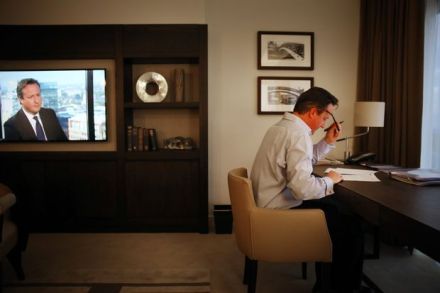
[audioplayer src="http://traffic.libsyn.com/spectator/TheViewFrom22_2_Oct_2014_v4.mp3" title="James Forsyth and Isabel Hardman review the conference season" startat=604] Listen [/audioplayer]Today’s speech was all about equipping the Tories with the weapons they’ll need to fight the next election. The Cameroons have always been convinced, with justification, that the Tories can only hope to win elections if they neutralise the NHS as an issue. So, we saw Cameron giving the party a shield on that issue—a promise to increase spending on the NHS every year. This was combined with Cameron’s most personal—and angriest—response yet to Labour efforts to suggest that he’s privatising or running down the NHS.

Tories will keep NHS ring fence, Cameron to announce

From our UK edition

The Tories will protect the NHS budget, David Cameron will announce in his speech to his party conference today. Extracts of the Prime Minister's speech, which he will deliver in Birmingham later today, include a promise to 'protect the NHS budget and continue to invest more'. Cameron will repeat George Osborne's argument that 'you can only have a strong NHS if you have a strong economy', and will also mention his own personal commitment to the health service, saying: 'From the country that unravelled DNA, we are now mapping it for each individual. Cracking this code could mean curing rare genetic diseases and saving lives. Our NHS is leading the world on this incredible technology. 'I understand very personally the difference it could make.

If David Cameron wants seven-day GP clinics, he’ll need market reform

From our UK edition

Today, David Cameron will pledge that if he’s re-elected he’ll give everyone access to a family doctor seven days a week. He will say:- “People need to be able to see their GP at a time that suits them and their family. That’s why we will make sure everyone can see a GP seven days a week by 2020. We will also support thousands more GP practices to stay open longer, giving millions of patients better access to their doctor. This is only possible because we’ve taken difficult decisions to reduce inefficient and ineffective spending elsewhere as part of our long-term economic plan. You can’t fund the NHS if you don’t have a healthy, growing economy.

Ukip conference: Louise Bours’ shouty sermon on the NHS

From our UK edition

Politicians always speak about the NHS with passion. It is our national religion. So today Louise Bours, Ukip's health spokeswoman, adopted the demeanour of a Pentecostal preacher, addressing her party conference at such a high volume that MPs gathered in the House of Commons chamber could probably hear her as she pledged to work with Unite to oppose the Transatlantic Trade and Investment Partnership. She said she had received a letter from Len McCluskey outlining his concerns about the agreement, and replied: 'UKIP WILL FIGHT ALONGSIDE YOU TO ENSURE THE NHS IS EXCLUDED FROM TTIP.' This was an explicit attempt to quash Labour attacks on Ukip as a party that wants to restrict access to the health service.

Labour conference: Andy Burnham gives the only speech that should worry the Tories

From our UK edition

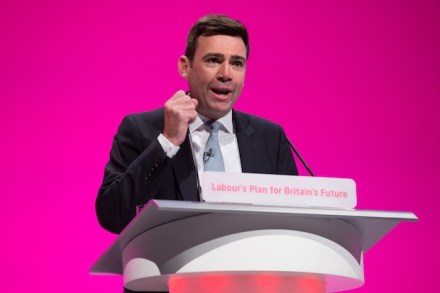
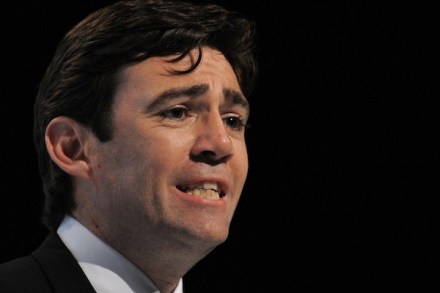
Andy Burnham has just delivered the best speech from a Labour MP at conference. Taken from the autocue, it was emotive, stirring, tribal, and just what delegates needed. It seemed to have taken rather a number of lessons from the 'Yes' campaign in Scotland in that it was relentlessly negative about the threat that the Tories pose to the NHS and framed not voting Labour as an active threat to the health service. Burnham got a number of standing ovations - the first was just a few words into his speech - and had the audience captivated throughout. Why? He spoke with a passion and a sense of purpose.

Spectator letters: In defence of the EU, the Welsh and Mary Wakefield

From our UK edition

Breaking the unions Sir: By the time this letter appears we shall know whether the land of my birth has separated from the land of my life. I hope not. But is there not an uncanny parallel between the rise of the Scottish desire to quit England and the English desire to quit Europe? The same arguments about control from a city outside the nation; about elites and technocrats dictating to and imposing upon a sturdy independent people; the belief that outside the union (with England, with European partners) a radiant future beckons; endless columns, pamphlets and books explaining why rule from London/Brussels must be overthrown; and a charismatic, one-liner leader worshipped by his followers and given uncritical support by the BBC and other media.

Maybe I should become a Slovakian health tourist

From our UK edition

‘Let me get this straight,’ I said, looking my Slovakian friend in the eye. ‘You are going to go back to your own country because the healthcare here is no good?’ ‘Yes,’ she said. ‘Is no good. Is terrible. I leave job and go home and sign on. I get treatment in Slovakia.’ I shook my head like a wet dog as if this might rouse me from a rum sort of surrealist nightmare. But it wasn’t a dream. It was true. My Slovakian friend, who seems sane enough, has decided to leave Britain in search of a better life in Bratislava. I don’t know her that well, it is true. She’s a friend’s lodger. We have become acquainted over the months she has been living in his house in Surrey and she seems nice enough.

The Labour candidate happy to cook his own goose

From our UK edition

Labour like to campaign with the slogan ‘our NHS’, but are they taking their claim of owning the health service a little bit too far? Dr Mark Hayes is standing for the party in Selby, Yorkshire yet remains head of the local NHS Clinical Commissioning Group (CCG). When questions were raised about a conflict of interest between the roles, the good doctor admitted using NHS resources for his campaign, saying ‘the CCG will protect me from unwanted media enquiries.’ Why exactly is the taxpayer stumping up to field awkward questions for a Labour candidate? If Labour do win, Hayes is out of a job: Shadow Health Secretary Andy Burnham has pledged to all but scrap CCGs all together. A turkey actually voting for Christmas.

The irresponsibility of Andy Burnham

From our UK edition

Nothing matters more in British politics right now than keeping the country together. The polls in Scotland show that no one can be complacent about the result on the 18th of September. One thing that has helped the Nationalists to close the gap in Scotland is a serious of alarmist predictions about the NHS. They have seized on some of Andy Burnham’s overblown rhetoric to claim that the NHS south of the border is about to be privatised and that this will have a knock-on effect on Scotland. Given this, a period of silence on Mr Burnham’s part until after the referendum would be most welcome.

It’s not just Ashya King’s parents who the authorities despise

From our UK edition

My first act upon returning from my holiday was to sign the online petition to have the supremely irritating children’s cartoon figure Peppa Pig banned from television. I have always found the creature half-witted, arrogant and sinister, and the tune which accompanies her exploits is both grating and didactic. Further, even allowing for the usual anthropomorphic licence employed by cartoonists, this Peppa does not remotely resemble a proper pig, and her snout is worryingly two-dimensional. She gave me hours of misery when my daughter was a toddler, although not quite so much as Balamory — a programme which made me feel physically unwell.

Six rivals for the name Isis

From our UK edition

Not in their name The BBC decided to start calling the Islamic terror group Isis by the acronym IS instead. Some organisations who are retaining the name: — Isis Equity Partners London-based private equity group — The Isis Student magazine at Oxford University — Isis day spa and hair salon in Oxford (not to mention hair salons in Birmingham, Ascot, Sunningdale and Writtle) — HMP Isis Young Offenders’ Institution in Thamesmead — Isis Motors Secondhand car dealership in Hayes, Middlesex — Spirit of Isis Ethically sourced crystal shop in Bedford Fighting faiths It was claimed that more British Muslims are fighting for jihadist forces than have joined HM Forces. What is the declared religion of British servicemen? Christian 86% No religion 12.

Revealed: why paramedics are fleeing the NHS

From our UK edition

I can't blame bigwigs in the NHS for the meltdown of our 999 service. It's fundamentally our own fault that the service we depend on to save our lives is breaking down. We call 999 at the slightest sniffle, which means paramedics and ambulance drivers find it impossible to keep up. They're run ragged trying both to respond to every call and hit the government's response time targets. What I can blame the bigwigs for (by which I mean senior management in the NHS London Ambulance Services) and do in this week's Spectator cover story, is that they have responded to the crisis in a catastrophically counterproductive way, with the result that their paramedics are fleeing the service.

Visiting Burgundy from my hospital bed

From our UK edition

There have been some splendid rumours about my health. According to the most exotic, I was cas-evacked from a hill in Scotland, flown to St Thomas’s by private plane and then tested positive for Chateau Lafite. The truth is more banal — and much more reprehensible. I had neglected an infected foot: what an idiot. Finally, it came out in revolt. By the time I did turn myself in to Tommy’s, I was not far from being seriously ill. That has had one advantage. I think that it put me off the booze. The medics were pumping me full of antibiotics and I was determined to co-operate. One or two rakes have offered to smuggle in a bottle of hooch; I adamantly declined. Nothing would come between me and the cure. More-over, I did not feel like a drink.

Forget warnings and labels. Make problem drinkers pay for their excess

From our UK edition

It was news to me that there exists an All Party Commons Committee on Alcohol Misuse, but when you think about it, the notion makes complete sense; for evidence, all they need do is nip down the nearest corridor to talk to colleagues hanging out in any of the several bars in parliament. The members of the committee have now suggested that bottles of alcohol should carry health warnings. It’s all a bit American, isn’t it? Over there, they treat alcohol as part of the substance abuse spectrum, with crack cocaine a bit of the way down from gin. I suppose it does no harm to point out that drinking to excess can play havoc with your liver, and the existing exhortations on spirits — Please Enjoy This Bottle Responsibly — are, I’d say, next to useless.

Spectator letters: A defence of nursing assistants, a mystery shotgun, and a response to Melanie Phillips

From our UK edition

Poor treatment Sir: Jane Kelly’s article (‘No tea or sympathy’, 2 August) on the lack of empathy and emotional support shown to patients is humbling. It is also worth noting that showing patients a lack of compassion has wider consequences. We know for instance that around 13,000 cancer patients feel like dropping out of treatment each year because of how they are treated by staff. In other words, it could risk their lives. It is unfair to say, however, that the nurses who used to be ‘angels’ have been replaced by the ‘mechanistic bureaucrats’ of assistants.

The NHS’s sympathy deficit

From our UK edition

Sometimes I have a quiet time as a voluntary hospital visitor. But recently I’ve witnessed a lot of distress from people of all ages and types. The other week I saw an elderly Middle Eastern man bent over a bin in a ward corridor, crying almost uncontrollably. I asked him the problem and he stuttered out that he had been watching his daughter sleeping, and he believed she was going to die. I went off to find a nurse as I felt I didn’t know enough about his situation or hers to help. The nurse wouldn’t tell me anything due to patient confidentiality. I returned alone to the man and tried to sympathise. He managed to say that his daughter had food poisoning. I didn’t think that sounded too bad, but he added that his wife had died of it.

In our hard-pressed NHS, must sympathy be rationed too?

From our UK edition

Sometimes I have a quiet time as a voluntary hospital visitor. But recently I’ve witnessed a lot of distress from people of all ages and types. The other week I saw an elderly Middle Eastern man bent over a bin in a ward corridor, crying almost uncontrollably. I asked him the problem and he stuttered out that he had been watching his daughter sleeping, and he believed she was going to die. I went off to find a nurse as I felt I didn’t know enough about his situation or hers to help. The nurse wouldn’t tell me anything due to patient confidentiality. I returned alone to the man and tried to sympathise. He managed to say that his daughter had food poisoning. I didn’t think that sounded too bad, but he added that his wife had died of it.

Put people before Burnham’s platitudes: Competition in healthcare benefits patients

From our UK edition

We are used to political parties trying to claim credit for any positive development that happened during their time in office. The Labour Party’s current stance on healthcare is the exception to this rule. It represents the rare phenomenon of a party denigrating one of the best bits of its legacy. In the mid-2000s, the Labour government managed to inject a dose of competition into the once sclerotic provider-centric NHS. If shadow health secretary Andy Burnham is now positioning himself against the entry of private providers into the NHS, he is really positioning himself against one of his party’s biggest achievements.

Jeremy Hunt opens the attack on the Working Time Directive

From our UK edition

For years, Secretaries of State for Health have studiously ignored one of the most corrosive regulations to the NHS: the European Working Time Directive. Although the EU is not supposed to have any remit over health, this 'health and safety' directive limits junior doctors' hours to an average of 48 hours per week, with added ECJ judgements imposing compulsory immediate compensatory rest time should hours be breached – and 'on-call' time classed as work, even if the doctor is fast asleep. This rigid imposition is neither healthy, nor safe; with junior doctors complaining that it has led them to do illicit work to get sufficient hours of training in, unpaid, less supervised, resulting in them being more tired and less trained.

Stephen Dorrell: The NHS still has plenty to learn

From our UK edition

If anyone thought Stephen Dorrell would take a break from talking about health after standing down as chairman of the House of Commons health select committee, they were quite wrong. The Spectator finds him in his Portcullis House office preparing to give a speech to the think tank Reform — his first since quitting the post — on how to make the health system better at delivering social care. He has no intention of leaving the NHS alone, even though he’s no longer leading the group of MPs whose job it is to scrutinise health policy. But, strangely, he stumbles when asked if he’s proud of the NHS. ‘Pride is a funny thing,’ he says carefully.