Nhs

Matt Hancock is right: we are in a vaccine race with France

From our UK edition

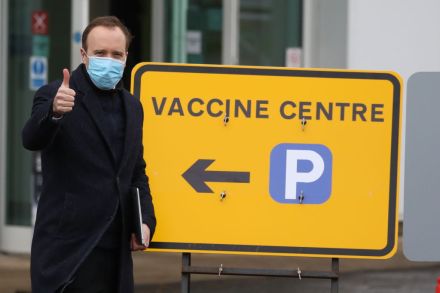
There are plenty of different ways in which Matt Hancock, the health secretary, can be criticised for his handling of the Covid-19 crisis. Track and trace didn’t work, lockdowns were sporadic and probably too late, and the messaging wobbled all over the place. But comparing the British vaccination drive to France and the rest of the EU? That was completely right. When Hancock remarked on Sky News yesterday that the UK had vaccinated more people in just three days than France had managed in total, his critics on social media went into a predictable meltdown. It’s not a competition or a race lectured the finger-waggers. We have only done one dose.

Tavistock gender clinic whistleblowers have been vindicated

From our UK edition

The Care Quality Commission has released its reports on the gender identity services offered by the Tavistock and Portman NHS Foundation Trust. They make for grim reading. The CQC describes an NHS facility that — until last month — put vulnerable children on a pathway to the use of untested medicines and life-changing interventions, sometimes without keeping proper records proving consent for treatment or demonstrating the reasons for that treatment. An NHS service where staff were afraid to raise concerns about procedure and practice for fear of 'retribution' from their employers. An NHS service that failed to ask fundamental questions about the growing number of vulnerable children being presented for treatment.

Patient ‘safety’ checks are causing deadly vaccination delays

From our UK edition

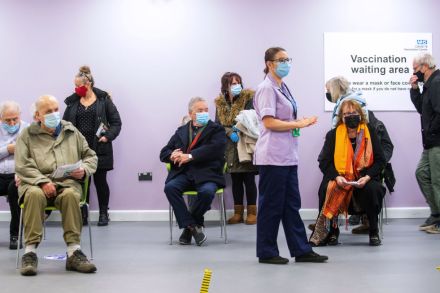
I have now observed a Covid-19 vaccination hub from both sides. As a patient waiting outside in a three-hour queue, much of it in the rain, I wondered why everything was moving so slowly. As a volunteer doctor working on the inside, I saw numerous good-hearted colleagues trying their hardest, bursting a gut to make the system work. Why the difference? I have concluded that the NHS approach to patient safety is a very significant contributor to vaccination delays. There has been national publicity around the mandatory training for potential volunteers before they can start work, which has included ‘diversity’ and ‘counter-extremism’ training.

Would speeding up the vaccine programme placate Tory MPs?

From our UK edition

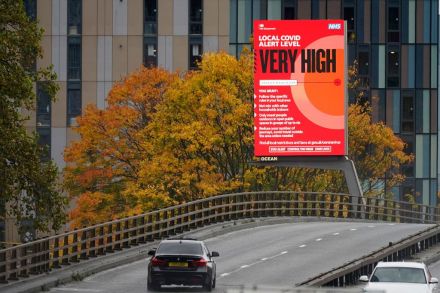
More than 75 per cent of England will be in the top tier of coronavirus restrictions from midnight after Health Secretary Matt Hancock announced a large number of areas would move up into Tier 4. This is part of an attempt to contain the spread of the new variant of Covid-19, as hospitals come under what Hancock described as ‘significant pressure’ to treat surging numbers of patients with the virus. Hancock was speaking on what he described as a day of ‘mixed emotions’, and he was naturally keen to emphasise the difference that the approval of the Oxford/AstraZeneca vaccine would make to the length of time people will be subject to these restrictions.

Would it be immoral to raise cash for the NHS by selling £100,000 vaccines?

From our UK edition

It is easy to be offended by the idea of the super-rich trying to buy their place in the queue for the Covid-19 vaccine ahead of your granny, and easy to feel a warm glow of satisfaction that they are being rebuffed – all supplies are being held on such a tight rein by the NHS that private clinics can’t get a look in. But would it really be such a bad idea if a handful of very wealthy individuals were allowed to have the vaccine ahead of schedule and raise some very useful cash for the NHS in the process? If we are going to vaccinate our way out of the Covid-19 crisis we are very shortly going to have to be administering millions of doses a week.

Is Boris’s gay conversion therapy ban enough?

From our UK edition

Gay conversion therapy has been heading for a ban for a few years now, with Boris Johnson repeatedly pledging to stop the 'absolutely abhorrent' practice. The government is working on the details of such a ban, which is not without its problems, particularly when it comes to therapy for transgender people. But it would be the first time the government has got at all involved in the world of therapy and counselling, which is not currently subject to statutory regulation. Ministers' current position is that government regulation of the sector would not be 'proportionate or effective'.

The damning verdict on puberty blocker treatment for trans children

From our UK edition

If the Keira Bell judgment did not sufficiently expose the shortcomings of the Gender Identity Development Service (GIDS) – the only NHS clinic in England for children presenting with gender dysphoria – then another recent study published after that key ruling must surely now trigger a full-blown inquiry. The study followed the progress of 44 children referred by GIDS for puberty blockers when they were aged between 12 and 15. All except one – 98 per cent of the cohort – progressed to cross sex-hormones. The lead author was Dr Polly Carmichael, GIDS director. The research has yet to be peer reviewed, but let's be clear: this was a study of patients at GIDS, and the results were reported by the director of the clinic herself.

If tiers don’t work, expect a third wave in the new year

From our UK edition

‘The difficulty is that we’re coming out of the tough autumn measures, out of the lockdown… with the incidence of the disease still pretty high,’ Boris Johnson explained on Friday. It is against this backdrop that he finds himself trying to sell tougher Covid rules as England emerges from the November lockdown. It is an especially difficult sell, of course, when an area has been placed in a higher tier than before the lockdown – even if, as in many instances, cases are now lower than when the tier system was first introduced. It understandably appears incoherent and arbitrary. The Prime Minister’s case is that he hates lockdowns too, but observing the Tier system properly is the quickest way to normality.

How the NHS has coped with the second wave

From our UK edition

Across Europe, hospitals have been filling up again with the second wave of coronavirus. France, Belgium, Germany, Switzerland and the Netherlands have all been hit, as has the Midwest of the United States. In England we’ve gone from fewer than 500 Covid-positive patients in hospital at the start of September to nearly 15,000 now. Each morning, we anxiously scrutinise the overnight figures. Thankfully, in the past week Covid inpatient numbers have begun to plateau — although they’ve still been rising in parts of the Midlands, London and Kent. So it’s an uneven picture. But unlike in March, community testing gives hospitals advance warning, so we’re able to adjust the provision of local health services almost in real time.

Nationwide vaccination could end social distancing in April

From our UK edition

The NHS plans to vaccinate everyone who wants a jab by early April, according to leaked documents seen by the Health Service Journal. This marks a shift in strategy from the government’s previous plan to only vaccinate the vulnerable. If successful, it would mean that all social distancing measures could be ended in April. The documents operate on a 75 per cent take-up rate for the vaccine among the general population, which seems a touch high given polling on the subject. It assumes that the NHS would be vaccinating 4.5 million people per week and for both the Oxford and Pfizer vaccines people would need to take two doses, 28 days apart.

Letters: Why lockdown II was necessary

From our UK edition

Cancelled procedures Sir: Your leader (‘A lockdown too far’, 7 November) suggests that the Prime Minister should have shown ‘leadership’ and ignored Sage’s call for a second national lockdown. Sam Carlisle (‘No respite’, 7 November) illustrates why this would have been a mistake. Sam reminds us that ‘half of community paediatricians were deployed to acute services’ during the pandemic’s first wave. Many other specialists were similarly redeployed. That the NHS was not overwhelmed in the first wave was precisely because most routine work stopped and staff were redeployed en masse to treat Covid-19 patients. Leaving projections aside, there were in fact 13,000 Covid-19 patients in hospital on Sunday 8 November.

Who came up with ‘lockdown’?

From our UK edition

The start of lockdown The earliest known use of ‘lockdown’ in its current sense was in a 1973 story in the Fresno Bee, a Californian newspaper, referring to prisoners being kept in their cells after a knife attack. Despite apparently giving the world the concept, not all Fresno locals seemed happy to be placed in lockdown in April. A protest in May resulted in a fight between protestors and the president of the city council. Bed cover How full of Covid patients are hospitals?

The infantilism of locking down to ‘save Christmas’

From our UK edition

It seems, then, that this latest lockdown has been instigated simply to protect two very questionable institutions — the National Health Service and Christmas. Both have a certain historicity about them and were widely liked. Both, too, have become bloated and hideous caricatures of what they once were. There is a certain infantilism about the repeated demands to ‘save Christmas’ which conjures up the image of serious adults — Chris Whitty, for example, or Sir Patrick Vallance — hanging up their stockings on Christmas Eve and jumping up and down on the bed in excitement at five o’clock the following morning. There is no Santa Claus, Patrick. There is no sleigh and the elves have been long ago furloughed. It all comes from Argos, mate. Hark!

Instead of lockdown, let’s create a National Shielding Service

From our UK edition

So what would you do? That was the question that cropped up on my Twitter timeline after I’d sent out various tweets condemning the shambolic decision by Boris Johnson to order another England-wide lockdown. I noticed the same question in the replies to an anti-lockdown tweet sent out by the Mail on Sunday’s Dan Hodges too. And it is a fair one that I think deserves an answer from commentators used to throwing rotten tomatoes at the stage but seldom willing to climb up on it. So here is mine: First, it is too late to call off the lockdown now, as preparations for another approach will take some time. So point one is that we must now go with the lockdown until December 2, but we should assert that it will end then and it will be the last one.

The generosity of French doctors

From our UK edition

My last NHS scan showed a shadow on a rib. The scan report couldn’t decide between a new cancer metastasis or scarring from an old injury. The first would mean the cancer had moved into my skeleton and was on a winning streak. I have fractured ribs in sharp collisions with steering wheels more than once and cling strenuously to the old-scar hypothesis. The image showed a second suspicious blur. Something, possibly a tumour, was putting pressure on my left kidney. Since then I’ve been going around with a length of plastic tube inserted in my urethra to drain it. Until that point my cancer was just a word. Now an occasional throb or ache there reminds me forcibly of my destructibility.

Covid, lockdown and the economics of valuing lives

From our UK edition

How much should we pay to save life? The question is often viewed as distasteful: you can’t put a price on human life. But resources are finite. Even if the only purpose of life was to prolong it for as long as possible, there would be limits to healthcare affordability. So if resources are limited, how can their application be made fairly? And how can this logic be applied in a pandemic? One element when establishing a fair method is to consider life years saved rather than lives saved. This recognises that someone of my age (55), who has already enjoyed two-thirds of his likely life span, should be a lower priority for treatment than a child who has had barely a tenth of theirs.

The memo Dominic Cummings never sent

From our UK edition

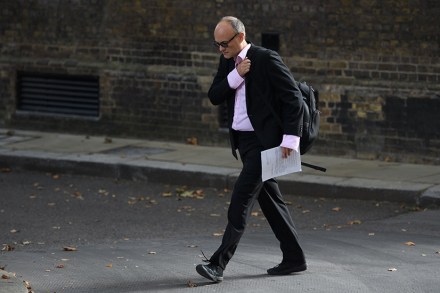
There’s something about Dominic Cummings I will always like, and perhaps partly it’s the danger. I hardly know him well — perhaps at all, really — but will never forget an evening many years ago after a Times debate, when a few of us participants repaired to a restaurant called Fish near London Bridge. We sat up late, talking and drinking until we were just a handful; and one was Dominic. Hours with this arresting man sped by. He reminded me of one of my heroes in politics, the late Sir Keith Joseph, though Cummings is relaxed and loose, and Keith could be stiff and shy. What they shared, though, beyond a beguiling intellectual confidence, was an appetite for stripping things back to first principles and following the logic.

Was the maskless man in my carriage dying of Covid?

From our UK edition

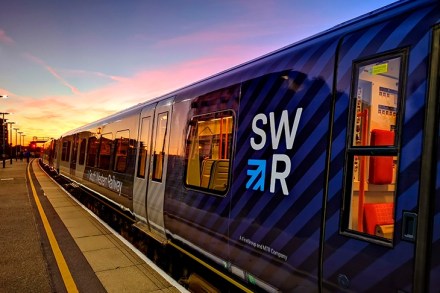
A man without a mask appeared to be dying of Covid, or something quite like it, on the London to Guildford train. Hunched double in his seat across the aisle, he groaned as he coughed, gasped as he sneezed, and sniffed as a way of clearing the mess because he hadn’t got a tissue. Sans mask, sans handkerchief he spluttered and spattered. His capacity to ignore my stare was magnificent. I’m not a tolerant person, and when someone is sneezing at me during what is supposed to be a pandemic I cannot muster generosity. Sitting on the worn, red upholstery of the 1453 South Western train service from Waterloo, I looked daggers at this fellow to no avail.

Trust the NHS to take the worst elements of the private sector

From our UK edition

After driving around the hospital grounds in concentric circles until I was surely down a wormhole, I found the scanning unit. It was shoehorned down a narrow alley and had four parking spaces outside its door, all of them empty, but the sign above them was clear: ‘Private parking, wheel-clamping in operation.’ It did not say patient parking. Most likely, with a sign like that, it was staff parking. I looked around and realised I was stuck down a dead end. My only option was to reverse backwards, craning my neck around because the old Volvo long ago ceased to have functioning beepers.

My ‘virus’ turned out to be arthritis

From our UK edition

‘Hallo! You was callin’ us about appoint…MENT!’ said the lady at the scanning unit of my local hospital in broken English. Nothing wrong with that. It’s just that when I received a letter bearing the logo of a private company informing me of the details of my forthcoming MRI, I got all excited, anticipating efficiency. Although I was having it done on the NHS, the appointment came through swiftly with no mention of the health service on the paperwork, which raised my expectations. I rang to confirm, but after holding for a while I was told to leave a message and someone would ring me back. A few hours later came the cheery ‘Hallo!