Neoliberalism

Letters: many are waiting for the Tory comeback

From our UK edition

Con’s the word Sir: In his article ‘Neo con’ (6 June) Michael Simmons claims that neoliberalism powered this country into the 21st century as the fastest-growing large economy in Europe. It didn’t; it was the North Sea that fuelled the UK’s growth, the UK being the only large European economy gifted by geology with major oil and gas fields. Comparing the UK and Norway over this period is enlightening. The UK, believing in neoliberalism, sold off its national oil company BNOC and trusted in ‘the market’, while Norway, wanting a direct stake in its substantial oil and gas resource, created the state-owned company Statoil to manage it.

True neoliberalism has never been tried

From our UK edition

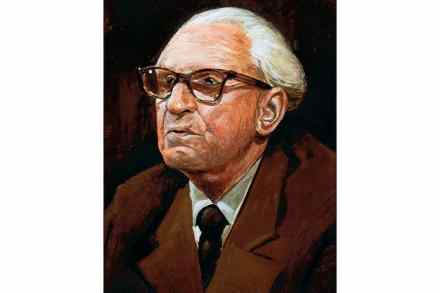
Friedrich Hayek once argued that if you put the word ‘social’ in front of a noun, the meaning was negated. Social justice wasn’t about due process; social democracies didn’t safeguard freedom. For those on the left, who can never have enough social-isms, there is a more toxic prefix. If you want to damn something, stick a ‘neo’ in front. Nothing is quite as wicked as a neoconservative, but coming dangerously close is a neoliberal. Liberals were once generally supposed to be the squishiest of centrists. But listen to the men and women making the weather in British politics now, and you’d imagine that neoliberals were the horsemen of the apocalypse. Andy Burnham has blamed ‘40 years of neoliberalism’ for the problems faced by workers in Makerfield, and indeed beyond.

How did we ever come to accept the inhumane excesses of capitalism?

From our UK edition

What was neoliberalism? In its most recent iteration, we think of the market seeping into every minute corner of human existence. We think of privatisation, off-shoring and the parcelling out of services to the highest bidder. Neoliberalism takes the proud liberal individual – in pursuit of his or her happiness, rather keen on freedom – and shreds them through a mean-spirited calculator to come up with some sort of shrunken market midget, an efficient risk-evaluating robot. Neoliberalism takes the proud individual and shreds him or her through a mean-spirited calculator Yet even though the market is supposed to be the arbiter of everything, repeated state intervention appears to be necessary to sustain this otherwise perfect economic vision.

Good riddance to neoliberalism

From our UK edition

I listened to a fascinating debate on the BBC’s The World This Weekend about the ideological origins of that thing, populism. The agreeably thuggish Javier Milei had just taken the reins of Argentina and, perhaps a little late in the day, the TW2 (as it is known in BBC circles) production team had noticed that almost every election held anywhere these days – except perhaps Australia and here – tends to result in a win for a party which is either overtly populist, as in Argentina, or is called populist by its opponents and the BBC. What the hell is going on, they wondered, only ten years too late. Who did they choose to ‘debate’ the issue? Prince Harry and Wolf from Gladiators? The suave game-show presenter Ben Shephard and Herbie the Skateboarding Duck?

The ‘natcons’ are here to stay

Cast your mind back to the 1990s for a moment. The left, dispirited at their generation-long rout at the hands of Ronald Reagan and Margaret Thatcher, and enraged by the ratification of limited-government trends at the hands of Bill Clinton and Tony Blair, were looking for a new rallying point. By the end of the decade, the intellectual left had settled upon a new epithet: “neoliberalism.” Although the term was not brand new, it exploded in popularity in left academic journals and soon in left media too. Simply put, “neoliberalism” means “democratic capitalism.

Has liberalism destroyed itself?

From our UK edition

According to Vladimir Putin, liberalism is an ‘obsolete’ doctrine, a worn-out political philosophy no longer fit for purpose. In this well-timed, rather urgent book, Francis Fukuyama attacks that view and puts a vigorous case for the defence. Despite its faults, liberalism is a force for good, he says, and it remains the only political philosophy capable of taking on the authoritarians of Moscow and Beijing. But the despots are not the central focus of his argument. The biggest threats to the liberal society, he writes, come from within. In Fukuyama’s crisp retelling, the liberal ideal emerged in the aftermath of Europe’s wars of religion. The notion that people could only exist as part of a rigid group had led to division, antagonism and slaughter.

Right on: Boris Johnson’s Britain and the new political reality

Political realignments occur when large groups of voters desert one party for one or more other parties, shattering old coalitions and forming new ones. In America and northern Europe, working-class voters — mostly, but not exclusively, native and white — have been leaving established left-of-center parties. On their way out, they have met college-educated metropolitan professionals and managers migrating the other way. Center-left parties have exchanged the industrial workers who were once their core constituency for a new upscale clientele. The emerging center-left is supported by the college-credentialed middle classes, native minorities and immigrant diasporas.

boris johnson right neoliberalism