Nazism

Death by Dior, by Terry Cooper – review

From our UK edition

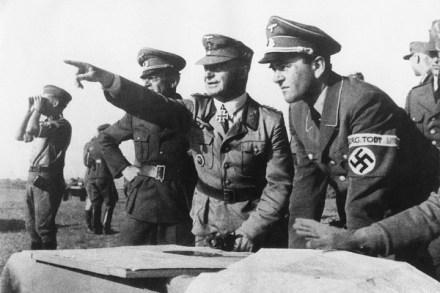
This book may sound like it’s going to be about high fashion, but it’s actually about Nazism, satanism, incest and murder. Françoise Dior decided that her uncle Christian had been killed in a Jewish plot in 1957, so she joined a Nazi movement in France before moving to London to work for the cause over here. Later, she got more interested in the ‘spiritual side of Nazism’, which developed into a fascination with Satan. A sexual relationship with her teenage daughter Christiane eventually turned sour and when Françoise could no longer put up with her, she tricked Christiane into committing suicide. It’s all told in a cheerful, chatty way by Terry Cooper, who was Françoise’s lover for many years.
A book you must read: Berlin Noir, the Bernie Gunther saga

From our UK edition

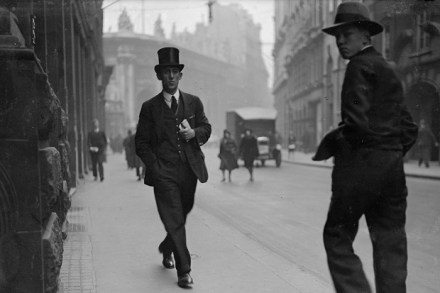
One of the givens in detective fiction these days is that the sleuth should be deeply flawed. You almost expect, as you pry open the pages of the latest overnight sensation  to discover that the inspector in question is an internet troll who gets in fights at closing time and closes his eyes to the excesses of the English Defence League while somehow remaining sympathetic and miles better than his boss, who imagines that proper procedure and pins in the board are the way to solve crime. It would be stretching things, even so, to imagine that we might get behind a Berlin detective – known as a ‘bull’ – who happens to be the go-to man for most of the Nazi hierarchy in wartime Germany.

Dreams and Nightmares: Europe in the twentieth century

From our UK edition

So much abuse has been heaped on the European Union in recent years that it is easy to forget that Europe and the EU are not the same thing. Geert Mak reminds us of this fact. He is one of the most celebrated journalists and commentators in the Netherlands. Mak – widely read, multi-lingual and endlessly curious – considers the whole of Europe to be his home. He has won awards for his books in Germany, as well as in his native Holland, and been inducted into the Legion d’Honneur in France. He is also, on the side, a bit of an anglophile. In 1999, with millennial fever rising, Mak was commissioned by the centre-left Dutch newspaper NRC Handelsblad to set off on an epic journey.

More Niallism: Keynes opposed Versailles because he was a screaming queen

From our UK edition

When I heard that Niall Ferguson had said that JM Keynes advocated reckless economic policies because he was gay and childless, and hence had no concern for the future, I wrote: 'If true, this represents Ferguson's degeneration from historian to shock jock'. The reports were true, but I was wrong. There has been no degeneration. Ferguson has always been this crass and crassly inaccurate. Donald Markwell, Warden of Rhodes House until last year, pointed me to his John Maynard Keynes and International Relations for the gruesome details. Markwell had to devote time and space to the ugly task of dissecting an attack on Keynes by Ferguson in a 1995 edition of the Spectator.

National Socialism: the clue’s in the name

From our UK edition

How can conservatives ensure they always lose? A good place to start is to concede every lie of the left. The Conservative Party appears to be doing what it can in this regard. Take their decision to strike Rachel Frosh from their candidates list for the great crime of... linking Nazism to socialism. Frosh committed her thought crime on Twitter. Thanks to a left-wing stink being kicked up on the same medium, her career – including twenty years in the NHS – is now apparently nullified overnight. She has had to step down from her role as a Police and Crime Commissioner and now she cannot stand for the Conservatives at an election. A party spokesman has said: ‘these comments are completely unacceptable and it is right that she has stepped down’.

The Fuhrer was not amused

From our UK edition

‘The German sense of humour,’ Mark Twain famously observed, ‘Is no laughing matter.’ Although many Greeks, stretched on the Euro's rack at Berlin's behest, may be inclined to agree, Rudolph Herzog's intriguing study of humour in and against Hitler's Germany, Dead Funny: Telling Jokes in Hitler's Germany, proves conclusively that the Teutonic funny bone, while it may be difficult to locate, definitely exists.

A great historian with fascist tendencies has died

From our UK edition

A great historian has died. He joined the Nazi party in the 1930s, spurred by a fear of the communism which was then spreading through Europe. Although he survived for many decades to see the consequences of the ideology, he nevertheless remained nostalgic for, and loyal to, fascism. He also retained an active interest in the Conservative party and acted as a guru for a time to John Major, though he subsequently expressed disappointment at the direction of his leadership. In a statement the current leader of the Conservative party, David Cameron described the historian as: ‘An extraordinary historian, a man passionate about his politics and a great friend of my family’.

Blast from the past: The Teleportation Accident reviewed

From our UK edition

He'd probably agree with Edward Gibbon's assessment of history as 'little more than the register of the crimes, follies, and misfortunes of mankind' but Ned Beauman's instinct as to why we do what we do is a lot more basic. We're motivated by sex: whether we're having it or - as is more often the case in Beauman's world - not having it. And he might have a point. Take for example Ernst Hanfstaengl who described his former buddy, a certain Adolf Hitler, as "a man who was neither fish, flesh nor fowl, neither fully homosexual nor fully heterosexual... I had formed the firm conviction that he was impotent, the repressed, masturbating type." A committed Freudian might call that motive enough.

Interview: Bernard Wasserstein and the Nazi genocide

From our UK edition

As 1930s Europe moved towards the catastrophe of the Second World War, much of the greater part of the continent —  for Jews — was being turned into a giant concentration camp. Bernard Wasserstein’s On the Eve, The Jews of Europe Before the Second World War, captures the sorrows and glories of European Jewry in the decades leading up the Nazi genocide. From the shtetls of Lithuania, to the salons of Vienna, Jewish culture was already on the road to extinction. Wasserstein’s book also proves that contrary to received wisdom, there was a growing awareness that Jews were approaching a cataclysmic extinction. Bernard Wasserstein was born in London and has taught at Oxford, Sheffield, Jerusalem, Brandeis, and Glasgow Universities.

Gitta Sereny and the truth about evil

From our UK edition

The death of the author and journalist Gitta Sereny earlier this month drew some strangely critical notices. One piece even tried to blame her for a current cultural tendency to claim people are not responsible for their own actions. Though this was a dissenting view, there was a more general seam of criticism which ran through many obituaries. The claim was, essentially, that Sereny grew too uncomfortably close to her subjects and even ended up on occasions sympathising with them or excusing them. It is probably on the basis of her biography of Albert Speer that most of the criticism has come. It is true that Sereny got close to Speer and liked him.

‘Let everyone live happily…’

From our UK edition

Created to remember one of the darkest chapters in mankind's history, Holocaust Day is for many people an occasion for unadulterated discomfort. Most of my family perished in the Holocaust and those who survived either hid in occupied Poland, pretending to be Catholics, fled to Uzbekistan in the then-USSR or, like Marcel Rayman, fought the Nazis. Today I re-read a letter Marcel sent to his family the night before he was executed by the Nazis for trying to kill the German commander of Paris: Little mother, When you read this letter, I'm sure it will cause you extreme pain, but I will have been dead for a while, and you'll be consoled by my brother who will live happily with you and give you all the joy I would have liked to give you.

The Lucifer Effect

From our UK edition

Today’s papers are full of comment on the brilliant Panorama exposé of care home abuse. But none have mentioned what jumped out at me: the parallels between this and the Stanford Prison Experiment. The way that the tattooed Wayne treated his mentally ill patients is sickening — but, to me, this is not just a story about human evil. It’s a story about how institutionalisation brings out the evil in people, and that this evil is far closer to the surface than we like to admit. Philip Zimbardo, a psychology professor at Stanford, randomly divided 25 volunteers to play the roles of prisoners and guards in a poorly-regulated, mock prison.

Caught between two great evils

From our UK edition

David Brooks, the great New York Times columnist, recommends the best essays of the year every Christmas. His selection this year includes a brilliant essay by Anne Applebaum, of this parish, on Hitler, Stalin and Eastern Europe. It makes you realise quite how bloody the Eastern Front was—‘On any given day in the autumn of 1941, as many Soviet POWs died as did British and American POWs during the entire war’—and think about the effect on these societies of being caught in the middle of these two extremist ideologies. There is always a tendency for us to discuss how the crimes of Hitler and Stalin compare.