Native American history

Killers of the Flower Moon captures the singular sensation of outside-ness

In the summers my grandmother would drive us south of town to where the black oaks thinned out and the world opened into pasture land and sky: prairie grass as far as you could see. Here, on their tribal land, the Seminole People would hold an annual powwow. Folks congregated to visit and eat frybread tacos, and I would skateboard with my Muskogee friends, Mike and Bobby Harjo on the cement basketball court, or along sections of sidewalk outside the aluminum-sided lodge. Around sundown, when the whippoorwills began to call from the sparse stands of blackjack and the fireflies winked on and off, the sound of drums started to pound the earth. You could feel them coming up through the soles of your shoes.
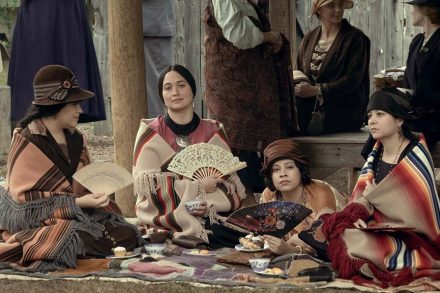
killers of the flower moon

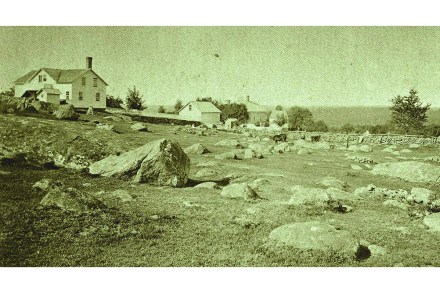
Are New England’s stone heaps Native Americans’ sacred ruins?

Brightman Hill lies deep in the forests of Hopkinton, Rhode Island. It is named for the Brightmans, one of the families who farmed it, and evidence of its agricultural past is, to most observers, unambiguous: old building foundations, a nineteenth-century burial ground, an extensive network of stone walls and hundreds of stone heaps, the results of field clearing. But in 2019, a federally-funded survey of Brightman Hill shattered these traditional interpretations. The surveyors, Ceremonial Landscapes Research, LLC, are a small group of antiquarians led by Alexandra Martin, a registered professional archaeologist who recently earned her doctorate in anthropology. Instead of stone heaps and walls, the surveyors reported “linear stone groupings” on Brightman Hill.

stone