National debt

Trump threatens to deport Elon Musk over BBB opposition

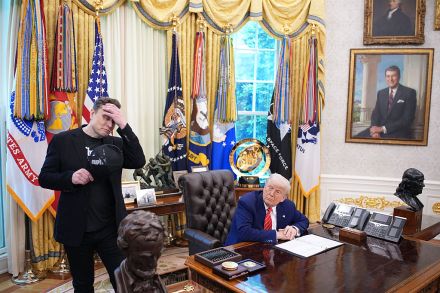
It’s a time, as a great Republican once announced, for choosing. Elon or the Donald? After they seemed to reach a détente, open hostilities have now resumed. This isn’t a cold war but a hot one that could go nuclear at any moment. To borrow from Trump’s own comment about Israel and Iran, we basically have two guys that "have been fighting so long and so hard that they don't know what the fuck they're doing." Will it jeopardize Trump’s chances for a Nobel Peace Prize? Are foreign mediators necessary to create a new ceasefire? Musk is threatening to launch and fund a new political party, much in the spirit of Nigel Farage’s Reform party, that could crater Republican political fortunes in the midterm elections. If anyone could succeed, it would be Musk.

Elon Musk and Donald Trump in the Oval Office (Getty)

Give Trump’s tariffs a shot

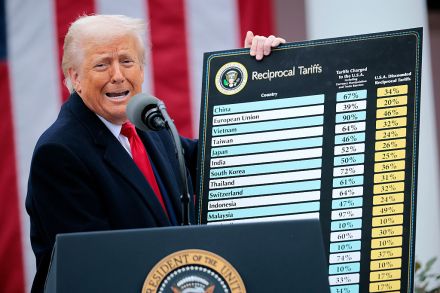
So the big question is: will it work? Will Trump’s protectionist policies, announced with some fanfare at a Rose Garden event at the White House yesterday, increase American prosperity? Or will they harm the economy?  Opinion on that matter is sharply divided. In one corner we have the free traders. They are wringing their hands and warning about higher prices, disruption of international trade and a trade war no one can win.  In the other corner are – what to call them? Most are not “anti-free traders” or “economic protectionists” (though some are).  Let’s call them “fair traders.” They like the idea of free trade – in theory. What they don’t like is the ethic of “free trade for thee but not for me.

Recession? What recession?

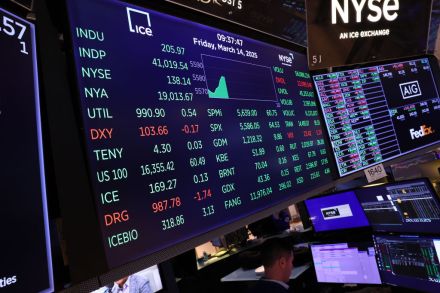
The stock market, traditionally a leading indicator, entered correction territory last week. But does that indicate that a recession is coming? Well, it’s an old saying on Wall Street that the market has predicted ten of the last three recessions. Markets hate uncertainty, and no one knows how President Trump’s efforts to use American tariffs to force our trading partners to lower theirs will turn out. But foreign trade is increasingly important to all countries, so it’s likely that, after some political Sturm und Drang, deals will be struck and international trade will continue the strongly upward path it has been on since the end of World War Two. By definition, a recession is two consecutive quarters of contraction.

shares

Is it too late to save America?

Regular readers may recall how fond I am of a mot from the British diplomat, author and art collector Edgar Vincent, the first (and, as it happened, the last) Viscount d’Abernon: “An Englishman’s mind works best when it is almost too late.” When I first encountered Lord D’Abernon’s saying, I was impressed by its slightly disabused cheerfulness. “Whew,” I thought. “As usual, some impending disaster was neatly avoided at the last moment by the wit and pluck of the doughty Brits.” The drama of the near-escape added to the sweetness of relief. Surely we Yankees — most of whom, until recently, were basically displaced Brits — could also be counted on to display the requisite derring-do at the critical moment. Could we though? “Almost too late.

america

Why it’s time to end the debt ceiling and fund the IRS

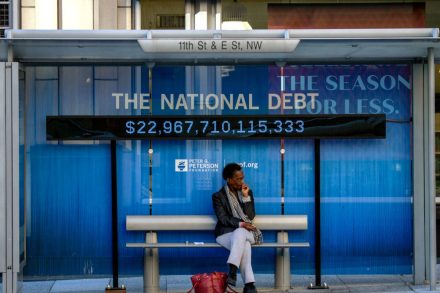
Amid the much-anticipated debt ceiling imbroglio, it’s become clear that our national debt can't keep growing like this. To tackle this issue, we need to start by admitting the problem: about 70 percent of federal spending is mandatory, meaning it grows automatically without congressional input. Unfortunately, most of this is Social Security, Medicare, Medicaid, and other politically popular entitlement programs. Cutting the benefits these programs dole out is a political third rail most self-interested political actors won’t dare to touch. Luckily, we don't need to eliminate these programs. What entitlement reform supporters want is to secure these programs’ solvency and make sure they’re there for future generations.

Congress pretends to hold the Pentagon accountable

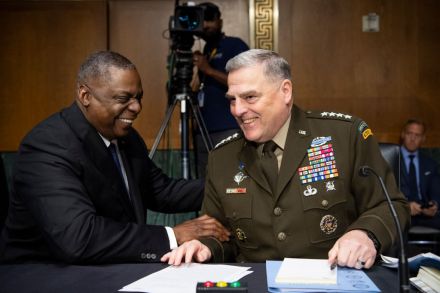
The Biden administration’s latest $3.5 trillion spending proposal continues to attract attention. With a hodgepodge of Democratic priorities ranging from climate change to Medicare expansion, the bill is the more partisan companion of the administration’s $1 trillion infrastructure plan. Of course, another blockbuster story has been distracting attention from these packages — the difficult withdrawal from Afghanistan. Many in Congress continue to be critical of the administration’s handling of the pullout, and some are determined to use the crisis to their political advantage.

congress defense budget

Forever in our debt

President Donald Trump will enter an election year with the threat of impeachment still hanging over him. Yet in most respects his administration is in a far better position than his critics could have imagined when he took office nearly three years ago. Economic growth, while in retreat in recent months, remains ahead of that of other developed countries. Stock markets, which Nobel Prize-winning economist Paul Krugman said might ‘never recover’ from Trump’s election, are at near-record highs. Where Trump’s opponents feared that his bellicose language would spark a nuclear conflict in North Korea, he defused the situation. His approach to foreign policy may be incoherent, but it hasn’t yet proven to be disastrous.

national debt