Musicals

Like attending a joyous religious service: We Will Rock You, at the Coliseum, reviewed

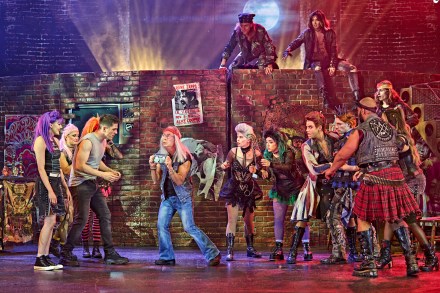
One of the earliest jukebox musicals has returned to the West End. When the show opened in 2002 the author, Ben Elton, plugged his production on TV chat shows with a wisecracking slogan: ‘We Will Rock You isn’t just a title… it’s a promise.’ The easy-listening storyline draws inspiration from the Old Testament and from Mad Max. We’re in a dystopian future world ruled by faceless corporations that sell mass-produced garbage to zombified youngsters addicted to their mobile phones. A tribe of exiles, the Bohemians, roam the underworld in search of the relics of a vanished culture known as ‘rock’n’roll’. The Bohemians meet a visionary outcast, Galileo, who recites song lyrics that the Bohemians recognise as vestiges of the ‘sacred texts’ that they worship.

Much better than the film: Mrs Doubtfire, at Shaftesbury Theatre, reviewed

Mrs Doubtfire is a social comedy about divorce. We meet Miranda, a talentless, bitter mother, who tires of her caring but imperfect husband, Daniel, and kicks him out of the house on some footling pretext. When Miranda later discovers that Daniel’s loyalty to their children is an asset of inestimable value she invites him back. And he accepts her offer without a murmur of recrimination. The story is based on the cruel imbalances in family law that entitle a vengeful, heartless woman like Miranda to destroy the emotional wellbeing of her children and her husband, and to call her vandalism justice. In this story Daniel is a voiceover artist who impersonates an eccentric Scottish nanny, Mrs Doubtfire, and persuades Miranda to hire him as their kids’ carer. A neat set-up.

In defence of musicals

You can always rely on theatreland to serve up drama off stage as well as on. Hopefully the spat between Lord Andrew Lloyd Webber and Sir David Hare over whether musicals are ‘killing’ theatre will run and run.  Writing in The Spectator last week, Hare moaned: ‘Musicals have become the leylandii of theatre, strangling everything in their path… are dramatists not writing enough good plays which can attract 800 people a night? Will well-known actors not appear in them? Or did producers mislay their balls during lockdown?

A tremendous show that will attract serious attention from the West End: Rehab – The Musical reviewed

Rehab: The Musical opens with a boyband star, Kid Pop, getting busted for possession of cocaine. The judge sentences him to a course of treatment at the Glade which he attends with great reluctance. Giving up marching powder is the last thing on his mind. ‘I said no to drugs but they just wouldn’t listen.’ His sharky agent, Malcolm Stone, wants to prolong Kid Pop’s notoriety by sending an undercover ‘addict’ to the Glade to spy on him and leak stories to the press. Stone hires a luscious sex bomb, Lucy, to take on the job, and it’s obvious that Kid Pop will seduce her and their affair will end in redemption for both parties. Predictable enough, perhaps, but the couple’s journey is a joy to experience.

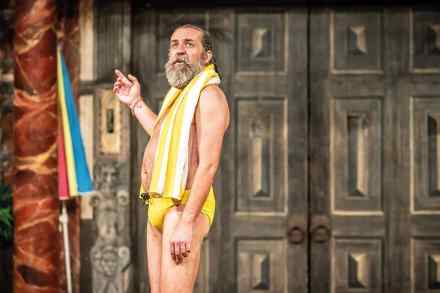
The show works a treat: Globe’s The Tempest reviewed

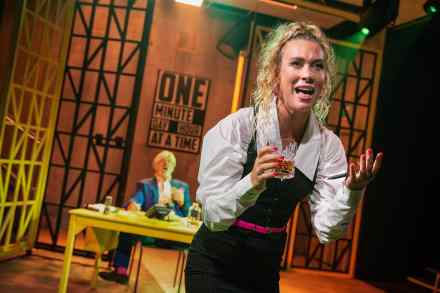
Southwark Playhouse has a reputation for small musicals with big ambitions. Tasting Notes is set in a wine bar run by a reckless entrepreneur, LJ, whose business bears her name. In real life, LJ’s bar would go bust within weeks. It serves vintage wines to a clientele of wealthy tipplers who chug back large tureens of Malbec and claret but who eat no food. The staff help themselves to free champers and Burgundy whenever they choose, and the boss fusses around like a mother hen making sure her brood are safe and content. Bad punctuality is never punished and the staff improvise each shift as they go along. But the emotional atmosphere of LJ’s feels right.

An electrifying, immersive thrill: Scottish Opera’s Candide reviewed

The first part of the adventure was getting there. Out of the subway, past the tower blocks and under the motorway flyover. A quick glance at Google Maps and into a patch of litter-blown scrub. Someone bustles up alongside me: ‘Are you looking for the opera?’ I am, yes: and my guess is that the cluster of clipboard-y types in high-vis tabards next to that warehouse probably marks the entrance. We’re waved in: ‘Big Cock’ proclaims a graffiti-covered wall.

I can’t recommend this Cole Porter musical highly enough: Anything Goes, at the Barbican, reviewed

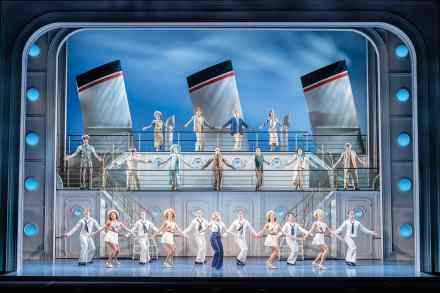
The Barbican’s big summer show is billed on the website as ‘the sold-out musical sensation, Anything Goes’. The term ‘sold-out’ is a strange way to describe a production that’s keen to get your business. You’d be forgiven for clicking away and hunting for a show with seats available. What the Barbican means is that this is a revival of an earlier production that did great business. And that may explain why tickets aplenty are available even on a busy Friday night. This version stars Kerry Ellis as the showgirl, Reno, who falls in love on a transatlantic cruise ship. Virtually every number is a classic. If you read any couplet from the title song you’ll be humming the melody all day. https://www.youtube.com/watch?

Hard to believe this rambling apprentice-piece ever made it to the stage: Almeida’s The House of Shades reviewed

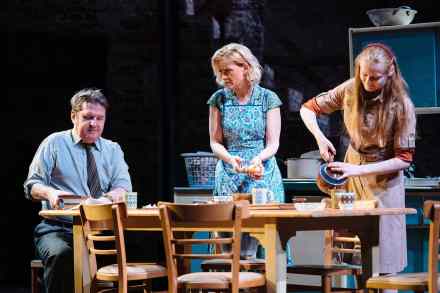
The House of Shades is a state-of-the nation play that covers the past six decades of grinding poverty in Nottingham. The action opens in 1965 with a corpse being sponged down by an amusingly saucy mortician. The dead man, Alistair, sits up and walks into the kitchen where he natters with his prickly, loud-mouthed wife, Constance (Anne-Marie Duff). They seem to live in the city’s most dangerous dwelling. People keep dying. Then they come back to life to make a speech or two. Constance’s pregnant daughter doesn’t survive a back-room abortion and she shows up half a dozen times in a skirt dripping with blood. Alistair expires again and returns to life to tell us what it’s like to die. How the writer, Beth Steel, researched this experience isn’t clear.

A beautiful, frustrating bore: Florian Zeller’s The Forest, at Hampstead Theatre, reviewed

The Forest is the latest thriller from the French dramatist Florian Zeller, translated by Oscar winner Christopher Hampton. It’s a well-worn yarn of adultery, betrayal and vengeance set among the yuppie classes. The action is located in France but the actors speak in Home Counties accents. (In theory, at least. Some are better at imitating BBC newsreaders than others.) Zeller makes his story deliberately arty and obscure. Man 1, also known as Pierre, is a wealthy doctor whose wife, or ‘The Wife’, is played by Gina McKee. Pierre has a hysterical girlfriend, known as ‘The Girlfriend’, who threatens to reveal their affair and destroy Pierre’s marriage. The Girlfriend dies bloodily in their love nest. But was this suicide?

Borderline soft porn but thrilling: Moulin Rouge! The Musical at Piccadilly Theatre reviewed

Moulin Rouge wins no marks for its storyline. A struggling Parisian theatre is bought out by an evil financier who wants to marry the venue’s star, Satine, whose heart belongs elsewhere. The show opens like a pantomime with a bantering style and cheesy jokes. And there are passages of physical comedy that look weird amid the glamour of fin-de-siècle Paris. But the slapstick is crisply acted and well directed. And the comic scenes are balanced by full-throttle dance routines played by strutting hunks and twerking lovelies in black fishnet stockings. Every bodice is wound tight enough to ping open at any second. It’s borderline soft-porn but it’s delivered with thrilling doses of self-confidence and brio.

A story of reflection and self-discovery: Anaïs Mitchell’s new album reviewed

Any artist who has habitually written or performed in character — from David Bowie to Lady Gaga — eventually arrives at their Mike Yarwood moment: ‘And this is me!’ With the release of her sixth solo record, Anaïs Mitchell has reached the point of personal revelation. ‘I’ve spent a lot of time trying to write in the voice of other characters,’ she says. ‘It felt like after so many years of working on telling other stories — now here are some of mine.’ In 2020 Mitchell was named one of Time magazine’s 100 most influential people. Nevertheless, she requires an introduction.

In praise of understudies

The actor Ronald Fraser was famous for two things: his comic timing and his liking for a drink. On one occasion in the 1960s, he was happily sitting three sheets to the wind in a local hostelry, when he remembered that he was supposed to be on stage at a matinee. After walking unsteadily to the theatre, he stood in the wings and heard someone else in his role: the understudy, holding the audience in the palm of his hand. His name was Donald Sutherland, and he was revealing the quality that took him from bit parts on the London stage to worldwide stardom. The importance of understudies and covers has been elevated to new heights by the Covid pandemic. Leading men and ladies are dropping out the world over.

Why? Spielberg’s remake of West Side Story reviewed

When you first hear that a remake of West Side Story is on the cards, it’s: God, why? Why would anyone look at West Side Story, which won ten Oscars in 1961, and think: that needs doing again? Who would do that? Steven Spielberg, that’s who, and as it had garnered mostly five-star reviews before I’d had a chance to watch, the question became: how? What wonders might he have brought to a film that was great and beautiful in the first instance? Not much. It is more authentic. The back stories are more substantial. The singing and dance numbers are bigger. There’s a part for Rita Moreno, which is neat. But in being more so it is also peculiarly less so. Plus there is an elephant in the room. Two, actually.

The forgotten story of the pioneering surgeon who healed disfigured airmen

‘You’re inside an incinerator. The cockpit is on fire. You are burning. You can see bits of your body melting off. And you are struggling to get out.’ This is Andrew Doyle, the creator of Titania McGrath, describing to me the experience of an RAF pilot trying to escape from a stricken plane during the second world war. He explains that the injured airmen were treated by a New Zealand surgeon, Archibald McIndoe, who developed new methods for repairing skin damage at a specialist burns unit in the 1940s. And this is the subject that Doyle has chosen for a new musical. It may seem an odd departure for the anti-woke satirist but his passion for musical theatre is long-standing. He has written more than half a dozen song-and-dance shows with various collaborators.

Every MP must see this play: Value Engineering – Scenes from the Grenfell Inquiry reviewed

Scenes from the Grenfell Inquiry is a gripping, horrifying drama. Nicolas Kent and Richard Norton-Taylor have sifted through the public hearings and dramatised the most arresting exchanges. Ron Cook, often miscast as a comedian, is superb as the frosty and occasionally irascible inquisitor, Richard Millett. Early on, he asks the witnesses ‘not to indulge in a merry-go-round of buck-passing’. Later, he comments acidly, ‘That invitation has not been accepted.’ Every witness has something to hide and something to be ashamed of. A fireman searching for a child on the upper floors can’t explain why he didn’t rouse families from their flats and help them escape. A witness describes the inferno’s ghastly noise, ‘like sparklers’.

If it were any better, it would actually be a terrible pity: Diana – The Musical reviewed

This week, an excellent film (Moving On) and a film that isn’t at all, but is entirely worth it as it’s one of the super bad ones that don’t come along too often. It’s the kind that, if it were any better, it would actually be a terrible pity. (See also: Cats.) It’s Diana: The Musical and it’s two hours of ‘whaaaaaat?’ and pinching yourself that this is really happening. (After two hours I was black and blue, with the pinching.) I don’t know what the best lyric is but ‘Harry, my ginger-haired son, you’ll always be second to none’ has to be up there. (Also: ‘It’s the Thrilla in Manila but with Diana and Camilla’ has to be in the game. The top spot is highly contested.

How the British musical conquered the world

What do Henry VIII’s wives, a Rastafarian musical icon and a drag queen have in common? They are all the subjects of new stage shows that are heralding a golden age of the British musical. Let’s start with the court of Henry VIII. A pair of friends at Cambridge University, Toby Marlow and Lucy Moss, decided to write their own musical four years ago because the student theatre society couldn’t afford to pay the royalties for an existing one. They based it on the life stories of the six women who were unfortunate enough to marry Henry VIII. Six, as this debut effort came to be known, opens on Broadway this week, with huge advance ticket sales already achieved. ‘Historically, Britain was a place of Shakespeare, and new plays.

Sexist, classist and pro-global warming: Frozen, at Theatre Royal Drury Lane, reviewed

Frozen the musical declares war on woke politics. The 2013 Disney movie has been turned into a song-and-dance show that openly celebrates sexism, classism and misogyny. Plus, it salutes the joys of global warming. It’s set in a Scandinavian realm ruled by a kindly monarch who lives in a castle attended by fawning servants. No sign of social mobility here. An impetuous young princess, Anna, falls in love with an eligible duke, Hans, but their betrothal annoys Anna’s sister, Princess Elsa. This is dangerous because Elsa has magical powers that she can’t control. She accidentally casts a spell on Anna, who falls to the ground with a terrible illness. Things get worse when a cold snap arrives from the north and plunges the entire kingdom into a new ice age.

The history of the Theatre Royal Drury Lane is the theatrical history of England

Andrew Lloyd Webber has not been in the best of moods lately, largely thanks to all the Covid delays to his new musical Cinderella, now finally about to open — for the umpteenth announced time — at the Gillian Lynne Theatre. The bigger news, however, is that his theatre at the other end of Drury Lane, the grand old Theatre Royal, is finally finished after massive renovations. Lloyd Webber has spent an awesome £60 million on the rebirth of his Grade I-listed theatre, known to show folk as ‘the Lane’, with his wife Madeleine heavily involved and in cahoots with the heritage expert Simon Thurley and the great theatre architect Steve Tompkins. The result? Oh my goodness! The sheer elegance of its 1812 Greek revival design by Benjamin Wyatt is drop-dead.

Zips along with enormous vim: Malcolm Arnold’s The Dancing Master reviewed

Malcolm Arnold composed his opera The Dancing Master in 1952 for BBC television. It never appeared, the problem being the source material — William Wycherley’s 1671 farce The Gentleman Dancing Master. Jokes about wedding nights and ‘scarlet foppery’ might have flown in the reign of Charles II but the New Elizabethans at Broadcasting House were altogether more shockable. ‘Too bawdy for family audiences,’ was Auntie’s official verdict, leaving The Dancing Master largely forgotten until a premiere recording late last year, and now — conducted by John Andrews and using almost the same cast — its first ever professional production, at the Buxton International Festival.