Music

The saddest music in the world

From our UK edition

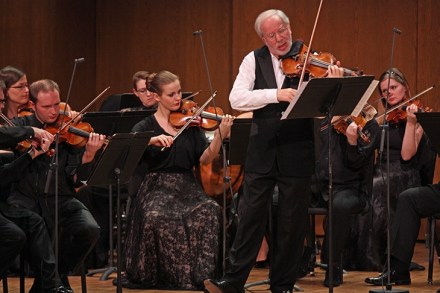
It’s a strange compliment to pay a composer — that the most profound impression their music makes is of an absence. I can’t claim much prior experience of the composer Mieczyslaw Weinberg, who died in 1996: a vague sense of a Shostakovich-like figure who had a bad time of it under Stalin, and the composer of an opera, The Passenger, for which great claims are made by people whose judgment I respect but who probably, on balance, spend too much time with their heads in Eastern Europe. By the end of the first evening of this ‘Weinberg Weekend’, devised by Mirga Grazinyte-Tyla and the City of Birmingham Symphony Orchestra, I felt slightly ashamed about that. Gidon Kremer played his own violin transcription of Weinberg’s 24 Preludes for solo cello.

Britten’s Blackadder moment

From our UK edition

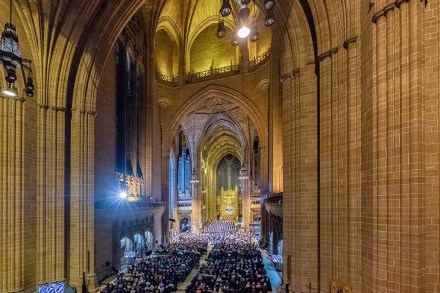
‘What passing-bells for these who die as cattle?’ We’ve heard a lot, lately, of the knell that tolls through the opening bars of Benjamin Britten’s War Requiem, and at Liverpool’s Anglican cathedral it was played on actual church bells. The Royal Liverpool Philharmonic Orchestra’s percussionist Graham Johns has had a set specially cast, and as he struck them video screens relayed the moment all the way down the cathedral’s length. The orchestra was a one-off, assembled half-and-half from the RLPO and the NDR Radiophilharmonie Hannover (the conductor Andrew Manze holds positions in both cities), and this was a major civic occasion, attended by gold chains of all sizes and preceded by speeches from city worthies.

Breaking his silence

From our UK edition

Arriving in Budapest, I receive a summons I cannot refuse. Gyorgy Kurtag wants to see me. Famously elusive, the last of the living avant-gardists is about to present his first opera at La Scala Milan this month and, if past form is anything to go by, he’s unlikely to utter much about it beyond a cryptic Magyar aphorism. Kurtag is 92 and his Scala opera — Fin de Partie, after Samuel Beckett’s Endgame — is a hefty 450 pages long, which may be as much music as he has written in half a lifetime. So why is this master miniaturist — famous for compressing his ideas down to a few chords — submitting a vast opera to the unforgiving glare of an Italian first-night audience?

The Maestro, Ennio Morricone, interviewed: ‘I am a real composer’

From our UK edition

Ennio Morricone, the Oscar-winning Italian film composer, has died at the age of 91. Here, Richard Bratby spoke to the 'Maestro'. Ennio Morricone’s staff wish it to be known that he does not write soundtracks. ‘Maestro Morricone writes “Film Music” NOT “Sound Tracks”’, explain the printed interview guidelines. ‘Maestro Morricone is a composer. Composers do not use the piano to compose music with, they write their music down directly in musical notes without the interference of any musical instrument.’ Well, that’s Beethoven told. In the classical music world, you hear tales about ‘riders’, the Spinal Tap-like lists of minimum requirements that pop stars issue before consenting to walk among mortal men.

Not easily Suede

From our UK edition

‘I always think they’re not lusting after me,’ Brett Anderson says of the middle-aged fans who still turn up to see his band Suede and leave the shows a little flushed and excited. ‘They’re lusting after something that doesn’t really exist. They’re remembering their wild youth. It’s faintly comical to me when I think about myself in the 1990s and the sexuality of it. That got a bit out of control, I suppose. And it’s odd, because I’m quite a reserved person in lots of ways, so I don’t really know what was going on there.’ Oh, Brett, you do yourself a disservice. Look at yourself! Not an ounce of flab, dressed like a clothes-horse, face all sharp lines and clean planes. You’re a well-preserved man.

The coming of the Messiah

From our UK edition

England has been home to three great composer-entrepreneurs since 1700: Benjamin Britten in the 20th century; Arthur Sullivan in the 19th; and George Frederick Handel in the 18th. The operatic landscape they encountered was relatively fallow, yet each cultivated his patch of earth, produced works of astonishing originality and impact, and revolutionised both the art form and the country’s opera industry, at least for a time. Handel was the most incongruous of the three, this gruff German son of a barber-surgeon, with heavily accented English who, aged 26 and following the phenomenal success in London of his opera Rinaldo, found himself parachuted into the centre of British court and theatrical life.

Striking the right note

From our UK edition

I was at a funeral the other day at which the music was so inspiring that I struggled to feel sad. That’s fair enough, you may think — but the person in the coffin was my own mother. This is a difficult point to explain in cold print, but there are reasons why I wasn’t grief-stricken at the death of the person who meant most to me in the world. My mother Pamela loved my sister and me with a passion; she radiated holiness, but in an unobtrusively English way. She was also a very private person, sometimes driven to distraction by her attention-seeking son. She never sought — and never received — any official recognition of her decades of service to the Catholic Church.

Gypsy king

From our UK edition

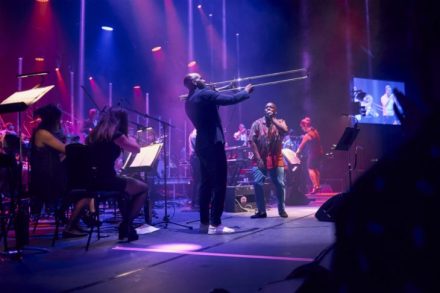
Looney Tunes was always at its best when soundtracked by a Hungarian gypsy dance. (Watch ‘Pigs in a Polka’ if you don’t believe me.) It’s music that was made to chase small cartoon animals — and terrify conductors. The gunshot syncopations. The hand-break turns in tempi. The banana-skin portamenti and rubato ravines… Musical tripwires everywhere. Nothing to faze conductor Ivan Fischer, however. Last week at the Proms, with the Budapest Festival Orchestra, Fischer was giving a guided tour of Hungarian gypsy music and its century-long cohabitation with classical music. It was a masterclass.

Performing garage on an orchestra doesn’t lend the genre legitimacy – it just sanitises the music

From our UK edition

When I originally heard that DJ Spoony was curating a night of UK garage backed by a 36-piece orchestra at the Barbican, I was in Thailand surrounded by hostile monkeys. The news provoked such intense feelings of joy and nostalgia that I immediately sought out a rum and pineapple, downloaded whatever half-baked compilation that Twice as Nice had wheeled out and had an impromptu rave outside my hut.

Simon says… farewell

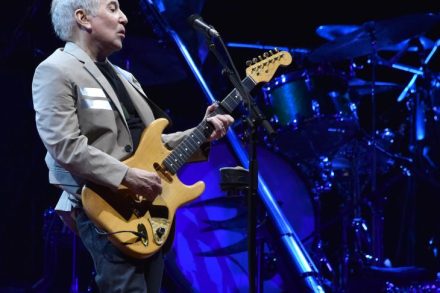
Early in 1987, a middle-aged woman approached me on the record counter of the Slough branch of Boots. ‘What do you have by Ladysmith Black Mambazo?’ she demanded. Nothing. Boots in Slough wasn’t big on South African isicathamiya choral music. ‘Well,’ she suggested, ‘you really ought to get their records in. They’re going to be huge.’ She was wrong, but I knew why she was so sure. Ladysmith Black Mambazo had been among the standout guests on Paul Simon’s Graceland, released a few months before. Graceland made Simon, by my reckoning, the first pop star who had emerged from the rock’n’roll era to make a major cultural impact across three decades. By the 1980s, the Stones had become just a touring machine. McCartney was adrift.

Knights at the opera

From our UK edition

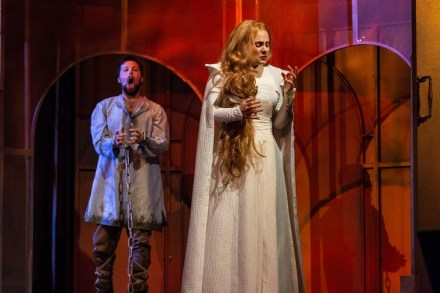
I’ve been trying to pinpoint the exact moment when it became impossible to take Mascagni’s Isabeau seriously. It wasn’t when the scenery jammed, leaving half the cast briefly trapped inside a revolving tower. These things happen, after all: you simply suppress thoughts of Spinal Tap and re-suspend disbelief. I don’t think it was the entry of a character called Ubaldo of Edinburgh either, though people were definitely starting to snigger. It wasn’t even the bit when Mascagni, called upon to depict a trotting horse orchestrally, deployed what sounded like a pair of coconut shells. A score that had started as a weak but listenable slice of art-nouveau medievalism descended — clip clop, clip clop! — into pure Monty Python and the Holy Grail.

Rules of engagement | 5 July 2018

From our UK edition

‘Can one person really grasp the significance of what another person has been through?’ asks Dr Rita Charon in this week’s essay on Radio 3. She’s a physician in New York (isn’t it somehow telling that in Britain we’ve long since forgotten what GP actually stands for?) and as a result of her experiences as a doctor has set up a pioneering training programme at Columbia University. In Narrative Medicine (produced by Elizabeth Funning) Charon explained how she came to believe in the power of literature, of listening to stories, as a way of bringing physicians ‘near enough to the patient to recognise their suffering and help them through their ordeal without disabling clinical judgment or rendering them helpless with passive sympathy’.

d/Deaf and dumb

All my life I’ve wanted to compose music, and now I’ve done it. I’ve written a sonata for solo flute that boasts two highly original features; it’s five hours long and must be performed by a badger. Though it took me only five minutes to write, my opus one is guaranteed to get through to the second round of the next competition for new composers sponsored by Sheffield University and the Centre for New Music. That’s because they operate a ‘two ticks’ policy, as the Scottish pianist Philip Sharp — possibly the only classical musician in Britain who calls himself a classical liberal — revealed in his blog earlier this year.

Letters | 28 June 2018

From our UK edition

Harvard’s racial quotas Sir: While I largely agree with Coleman Hughes that racial quotas are counterproductive (‘The diversity trap’, 23 June), he misuses Martin Luther King Jr to buttress his argument. King said that he hoped his descendants would ‘be judged…by the content of their character’, not by their standardised test scores. The grim pursuit of purely quantifiable ratings for intelligence and achievement in American schools — by Asians and white Protestants alike — is an even greater scourge these days than the illiberal goal of ‘diversity’ at any cost.

Hypnotic threnodies

From our UK edition

The tricky term ‘Krautrock’ was first used by the British music press in the early 1970s to describe the drones and industrial kling-klang of difficult German bands such as Kraftwerk, Tangerine Dream, Popul Vuh, Faust and Can. A British fear and loathing of Germany and the Germans informed numerous New Musical Express Krautrock articles. (‘Kraftwerk: the Final Solution to the Music Problem’, or ‘Can: They Have Ways of Making You Listen’.) The term was made semi-respectable by Julian Cope, the erudite jester of English pop, in his ironically entitled book Krautrocksampler (1995), which commended the strange new music that rose from the moral and material ruins of post-Hitlerite Germany. It is hard now to imagine how startlingly new Can must have sounded.

‘I think The Kinks could have found a better frontman’: Ray Davies interviewed

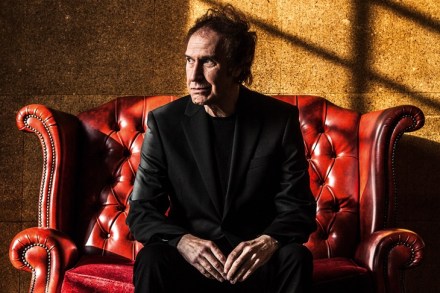
‘I like your shirt today,’ Sir Ray Davies says to the waiter who brings his glass of water to the table outside a café in Highgate. ‘How’s your girlfriend?’ It turns out the girlfriend is no longer the girlfriend. ‘You broke up? You know, that happens. It’ll be OK. You’ll meet somebody else.’ He pauses and then says something that runs through my head for days after our interview. ‘She’ll meet somebody else.’ It’s true, of course; she will. And it’s a human thing to say: both parties to the relationship will move on. But it’s also delivered with a hint of claws. Who wants to be told, fresh from a break-up, that their ex will soon be hooking up with another partner?

‘I’ve got dementia in reverse’

‘I like your shirt today,’ Sir Ray Davies says to the waiter who brings his glass of water to the table outside a café in Highgate. ‘How’s your girlfriend?’ It turns out the girlfriend is no longer the girlfriend. ‘You broke up? You know, that happens. It’ll be OK. You’ll meet somebody else.’ He pauses and then says something that runs through my head for days after our interview. ‘She’ll meet somebody else.’ It’s true, of course; she will. And it’s a human thing to say: both parties to the relationship will move on. But it’s also delivered with a hint of claws. Who wants to be told, fresh from a break-up, that their ex will soon be hooking up with another partner?

Playing dirty?

From our UK edition

A young Korean, 22 years old, won the Dublin International Piano Competition last month. Nothing unusual about that. Koreans and Chinese, raised in a school of hard knocks and rounded off in western conservatories, are winning most prizes. A few — like the phenomenal Lauren Zhang who made child’s play of Prokofiev’s second piano concerto in the BBC Young Musician of the Year — are prodigious talents with bright futures ahead. Dublin’s winner Sae Yoon Chon is probably not one of them. His Prokofiev, an effortful shadow of Zhang’s electrification, trundled along at pedestrian pace with one or two stumbles. I was therefore surprised to see that Chon won. I also noticed that he is a student of the jury chairman.

Books Podcast: music, doomed love, and Nazis with Paul Kildea

From our UK edition

It’s a first for the Spectator Books podcast this week: music! We’ve temporarily dispensed with our usual intro jingle to allow this week’s guest, Paul Kildea, to play us in. Paul’s new book Chopin’s Piano: A Journey Into Romanticism is a fascinating and unusual piece of non-fiction that sheds light on Chopin’s life and music, and on their afterlife, as its author pursues an Ahab-like pursuit of the piano on which he composed his Preludes in Majorca. I spoke to Paul at the Royal Overseas League in London, so that with the help of their instrument, he could punctuate our conversation with some musical illustrations of his points. Bitter musical disputes, doomed love, George Sand and Nazis: this one, I think, has it all.

Trivial pursuits | 7 June 2018

From our UK edition

‘Is there an end [to this opera] that is not trivial?’ asks the Countess in her final bars of Richard Strauss’s last opera Capriccio. Given the previous two and a half hours, the answer would seem to be a decided no. It is a frothy confection even by the standards of his later operas, the better parts reminiscent of the Prologue to Ariadne auf Naxos and some of Arabella. One thing to be said in its defence is that Strauss’s writing it in 1941–2 is no criticism of him or of the work. People make a fuss about that, but do they think he should have produced an heroic piece — something he had already done, unfortunately — or another work in favour of peace, like the disastrous Friedenstag of 1938?