Museum of Modern Art

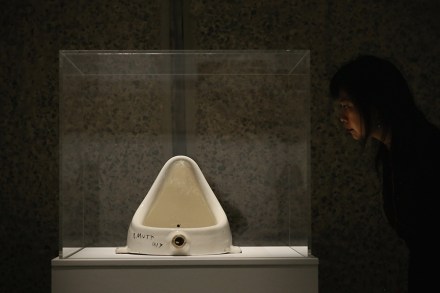
Was Marcel Duchamp’s notorious ‘Fountain’ even his own work?

This slim volume has only one fault. It has no illustrations. So you’ll have to do some Googling or visit the current Duchamp exhibition at MoMA (until August 22) if you want to know what "The Bride Stripped Bare by Her Bachelors, Even" looks like. Otherwise it’s perfect – wittily written and packed with many fascinating characters besides the ever intriguing Marcel Duchamp. He didn’t actually arrive in New York until 1915, but when he did he found himself already famous. His "Nude Descending a Staircase, No. 2" had been included in the 1913 International Exhibition of Modern Art, alongside works by Picasso, Van Gogh, Gauguin, Matisse and Braque, and completely stole the show. Duchamp didn’t even know the painting was being exhibited.

duchamp

Is Hilma af Klint overrated?

At the corner of Manhattan’s Tenth Avenue and 22nd Street, there is a mural by the Brazilian artist Eduardo Kobra. Situated over the landmark Empire Diner, Kobra's painting reimagines Mount Rushmore as a paean to art stardom or, depending on how one looks at these things, the tragically hip and perpetually overrated.  Kobra supplants George Washington, Thomas Jefferson, Abraham Lincoln and Theodore Roosevelt with the graffiti artists Keith Haring and Jean-Michel Basquiat, the Mexican fabulist Frida Kahlo and the melanin-deprived panjandrum of Pop, Andy Warhol. These cultural icons loom over the crowds supping on blistered shishitos and tuna tartare inside the diner.

The one-note wonder

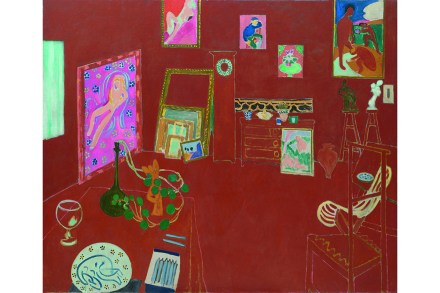
Art museums normally organize career surveys or thematic exhibitions, but this spring the Museum of Modern Art has departed from this practice to focus on a single work. Matisse: The Red Studio examines the pivotal painting of the same name that Henri Matisse (1869-1954) created in 1911. Exhibitions are normally years in the making, so while this one was in the works long before the Covid-induced lockdown, it offers a model for institutions struggling in the wake of the pandemic. Rather than expending scarce resources on an expensive blockbuster loan show, do a deep dive into something in your own collection. And what a dive this is.

matisse

The insufferable wokeness of public art

In the middle of the 20th century, the Central Intelligence Agency executed a commendable troll against the American left. Long rumored to be a joke, documents released in the 1990s revealed that during the Cold War the CIA secretly funded and promoted some of America’s biggest contemporary artists without the knowledge of the artists themselves. It was art as weapon. The US aimed to showcase the intellectual freedom and creative superiority of Western, capitalist societies against the drab, inhibited propagandist art of the Soviet Union by broadcasting this wildly inventive style in vogue at the time. The CIA propped up artists like Jackson Pollock, Robert Motherwell, Willem de Kooning and Mark Rothko.

public art