Motherhood

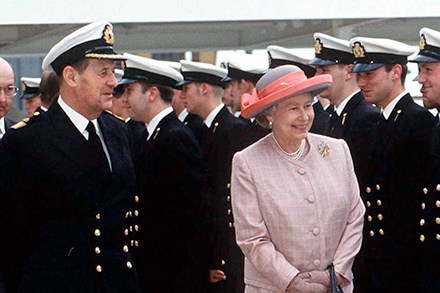
The exquisitely dull life of Elizabeth II, expert on cap badges

The dogs, horses, diamonds, furs, full-length evening gowns of lace and pearls; private jets and limousines; the ever-present jostling retinue; the push and shove of photographers and the clamour of crowds – Elizabeth Taylor and Elizabeth II had a lot in common, each taking themselves very seriously and needing to be seen to be believed. Whereas the Hollywood actress was majestic mainly in her vulgarity and brashness, however, the late Queen, as is evident in this pair of biographies, did her level best to be reticent, even non-existent. The best known of her few recorded utterances are ‘Oh really?’ and ‘Are you sure?’. She had a tendency to stare at a person with ‘absolutely no expression’, or at best ‘an expression of controlled irritation’.

Long live the yummy mummy

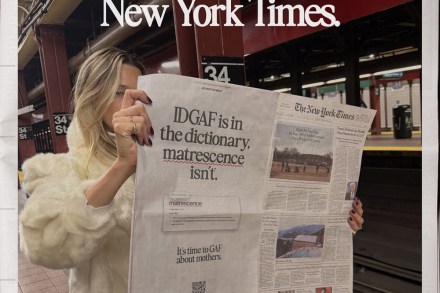
Yummy mummies everywhere, put your Veja trainers and frill-collar shirts away, because last week the Times issued a stinging broadside. Being labelled a ‘yummy mummy’ is apparently now so derogatory as to be an ‘almost cancellable offence’. The Yummy is dead, the headline declared, while my phone blew up like the fourth reactor at Chernobyl as Yummies far and wide forwarded me the article. ‘We are not dead!’ many fulminated, while others were more concise: ‘That’s just bollocks; I’ve never worn barrel jeans in my life.

When two worlds collide: Well, This is Awkward, by Esther Walker reviewed

Esther Walker, an established journalist and writer of non-fiction, opens her debut novel in the business world but segues into the concerns of balancing children and career. It’s a page-turner, silly yet serious; and, as with many good comedies, the humour comes from pain. Mairéad Alexander is a childless 44-year-old social media exec in London, caught in the hamster wheel of corporate work, hair bleaching and ‘buzzkill’ bad dates, when her life is tripped up by the unexpected arrival of Sunny, her 11-year-old niece. When we meet Mairéad she has recently sold her social media business for a packet and is now a consultant for the company that bought it. She finds herself working alongside poisonous colleagues with saccharine overtones and enduring the Gen-Z fashion police.

Who will stand up for motherhood?

Scientists at the Oregon Health and Science University have created the beginnings of a baby using not human eggs, but skin cells. My reaction upon reading this news was to try to fold it up and tuck it away deep in some mental crevasse where I’d be sure never to see it again, because the implications are just too grim; the potential for suffering too much to bear. What the lab has done is devise a way to persuade human skin cells to behave like sex cells (eggs and sperm) and to divide using not only mitosis, which replicates all 46 chromosomes, but meiosis, which results in just 23. Once they’ve discarded half their chromosomes, the skin cells can then be fertilised with sperm, just as if they were human eggs.

Mothers’ union: The Benefactors, by Wendy Erskine, reviewed

This blistering debut novel from the acclaimed short-story writer Wendy Erskine circles around a case of sexual assault, expanding into a polyphonic story that is at once an evocative fictional oral history of contemporary Belfast, a powerful depiction of trauma and a provocative exploration of social power dynamics. Erskine teases out narrative strands through a handful of characters’ viewpoints and intersperses these with vignettes written in a first-person verbatim style from a wider cast. She has carefully selected her main parts. Alongside Misty, the assaulted teenager, the focus is on the three women whose 18-year-old sons were the perpetrators.

Britain has lost the plot over Peppa Pig

We’ve been through a lot as a nation over the past few years. Watching politicians debate scotch eggs, finding out (without wanting to) how Prince Harry lost his virginity, Just Stop Oil’s tomato soup tantrums… so sometimes an event arises that makes you ask yourself: has this all taken a larger toll than we realised on our collective psyche? Are we, in fact, having some kind of national nervous breakdown?  The answer would appear to be a big, fat, pig-shaped yes, given the ‘breaking news’ announcement on ITV’s Good Morning Britain this week that Peppa Pig matriarch Mummy Pig had given birth to her third piglet, Evie. https://twitter.

The mother of a mystery: Audition, by Katie Kitamura, reviewed

It is remarkable the web Katie Kitamura can spin around a scene as simple as a woman joining a man for lunch. His name is Xavier. We don’t know her name, but we do know she’s a successful actress. He’s beautiful, almost half her age, and she’s aware of how that must look to the other diners, the waiter hovering at her elbow, and her husband, who inexplicably enters after their food arrives before exiting in a hurry. She and Xavier had met two weeks earlier when he appeared at the theatre where she was rehearsing for a play and said he had something ‘complicated but important’ to tell her: he had good reason to believe she might be his biological mother. This is the piece of information around which Kitamura’s confounding and quietly intense fifth novel shapeshifts.

Marriage, motherhood and money: Show Don’t Tell, by Curtis Sittenfeld, reviewed

Show Don’t Tell, a collection of 12 short stories by the American writer Curtis Sittenfeld, explores marriage, sex, money, racism, literature and friendship from the 1990s to the present. There is a fine line here between memoir and fiction, with many of the female protagonists being Midwestern, bookish Democrats – quite like Sittenfeld herself. In the eponymous story, Ruthie, a writer, dismisses the notion that ‘women’s fiction’ is perceived as giving off ‘the vibe of ten-year-old girls at a slumber party’. She reflects on internalised misogyny: ‘It took a long time, but eventually I stopped seeing women as inherently ridiculous.

What kind of woman envies her daughter?

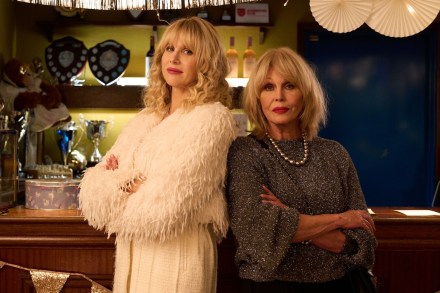
My mother hated Motherland, storming out after five minutes, saying Julia’s frantic school drop-off was too much like real life. She’d have loathed Amanda, the self-styled ‘alpha mum’. But I loved it – and was happy with the spin-off Amandaland, where Dame Joanna Lumley plays Amanda’s mother with gleeful froideur. When interviewed alongside her screen daughter, Lucy Punch, Lumley commented that one of the reasons for their characters’ taut relationship is how ageing women are resentful of their pretty daughters. Maternal envy, being rather destructive for all concerned, has provoked much debate in the papers (and no doubt consternation at dinner parties across Middle England).

The best film about a woman turning into a dog that you’ll see this year

Nightbitch stars Amy Adams as a mother who is so full of rage about her loss of identity it makes her feral and she starts turning into a dog. It’s weird and there is nothing I can say to make it sound less weird – she grows a tail! Extra nipples! – but it’s actually a more regular and less wild story than you might have imagined. In other words: once you get over the dog, it’s fine(ish). If you can’t get over the dog, forget it. It is directed by Marielle Heller (Diary of a Teenage Girl, Can You Ever Forgive Me?, A Beautiful Day in the Neighbourhood) and is an adaptation of the novel by Rachel Yoder. Growing up in a Mennonite community, Yoder saw how her mother had to sacrifice herself and swore that it would never happen to her.

The shame of being an alcoholic mother

Recollections of crimes, misdemeanours and shameful stories can pall, especially when viewed through the bleary-eyed lens of alcohol. But In the Blood, a memoir of devastating clarity – the result of an unprecedented collaboration between a mother and daughter whose alcoholic gene was ‘baked into them like a curse’ – provides a frightening insight into the labyrinthine workings of the addict’s devious mind.  The illness had run riotously through many generations until Julia Hamilton and Arabella Byrne both rejected what had ‘zig-zagged through [their] family like a knight in chess’.

Childcare is mothercare

When I was a small child, my mother left me in the charge of an elderly neighbour so that she could write. My grandmother lived far away in Scotland and no formal childcare existed. Still, my mother wanted to write. In bald economic terms, you could say that she was trying to rejoin the workforce to boost GDP and spare the state handouts. Forty years on, she doesn’t see it like that. ‘I needed to work to feel normal again – I didn’t want to go mad,’ she says, unapologetically. Had she been in the same predicament now, she could have looked forward to the welfare reforms that promise working parents of children in England between the ages of nine months and two years up to 30 hours of funded childcare.

Why Mummy smokes

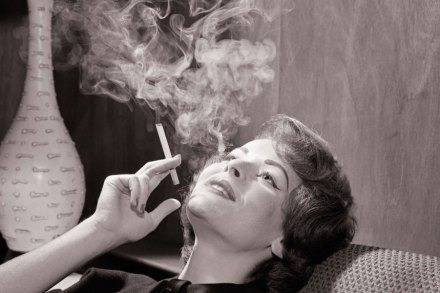
It’s 7.02 p.m. and I’m standing outside my house by the bins smoking a fag. Upstairs, I can hear that my six-year-old is awake but I’m choosing to ignore her. How repellent, I hear you murmur. And it is repellent, in many ways. I am a smoker and a mother, hardly the Madonna and child. How can these two realities ever be reconciled? They jam against each other all day long, uncomfortably.  Smoking is bloody great. If you’re a smoker that is. Otherwise it’s just disgusting It’s OK, I tell myself, every single day. I never smoke in front of them. Instead, I smoke when they’re in bed, when the day is done, and the bedroom doors are firmly shut. Often, I smoke during the day too.

Murder in the dark: The Eighth House, by Linda Segtnan, reviewed

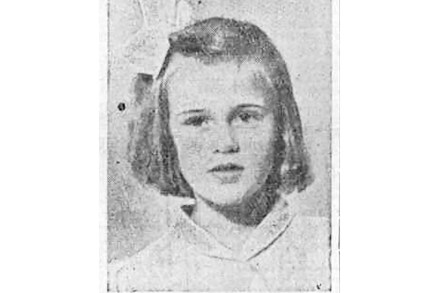
It takes a Scandinavian mother to write like this: ‘Why murder a nine-year-old girl? She wasn’t raped. Rape is the only motive I know of for the murder of little girls, unless the killer is a close relative.’ Linda Segtnan’s The Eighth House benefits from this bluntness. Its author, a historical researcher based in Stockholm, was browsing through a newspaper archive in 2018 when a photograph of nine-year-old Birgitta Sivander caught her attention. The girl lived in a village called Perstorp in southern Sweden until one evening in May 1948 she went out to the football field and did not return. A search was organised, the human chain making its way into the nearby forest in the middle of the night to look for her. They found her clogs.

British families deserve a tax break

I am delighted to report that some £800,000 of taxpayers’ money is to be spent ‘remediating’ the works of Robert Louis Stevenson to show what a racist bastard he was. 70 per cent of Irish mums say they would stay at home to look after their kids if given the opportunity I assume the decision was taken because, as a nation, we are absolutely awash with cash at the moment and need somewhere to dispense of it. This project, funded by the quango UK Research and Innovation (UKRI), will be carried out at Edinburgh University. I hope that, aside from clobbering Stevenson for having been born during a different time period, they also have a go at him for his stereotypical portrayal of the disabled – and indeed pirates.

A mother-daughter love story

In Splinters, the American novelist and essayist Leslie Jamison leaves behind the issue of her addiction and recovery – the subject of her previous memoir, The Recovering (2018) – and takes us through her pregnancy, experience of childbirth, marriage, divorce and post-separation dating life. Each stage of her journey is related with the author’s trademark love of the telling detail: On the postpartum ward my window ledge filled up with snacks from friends: graham crackers, cashews, cheddar cheese, coconut water, oranges with tiny green leaves. Someone hands her a form to fill out. ‘Did I want bone broth?’ We can assume she does, as bone broth appears later on. Much of Splinters recounts her marriage to the author Charles Bock – referred to throughout as ‘C’.

Refugee lives: The Singularity, by Balsam Karam, reviewed

One Friday evening in a half-ruined, half-rebuilt city, where smart tourists dine out in restaurants next to refugees in makeshift shelters, a woman walks the streets. In torn clothes and slippers ‘worn ragged’, she hands out leaflets. On every piece of paper the same words are written: ‘Has anyone seen my daughter?’ On the same evening, in the same coastal city, which is ‘half obscured by skyscrapers’, another woman walks the streets with a different purpose, seeking to spend time away from her co-workers on a business trip. As she cradles her pregnant stomach, she watches as a female figure climbs over a clifftop railing and jumps, leaving behind a bag of leaflets. Later, the second woman has a miscarriage.

How to make the most of the third trimester of pregnancy

The final trimester of pregnancy is a strange time. You’ll be told to rest, as if you can somehow bank sleep. The reality is likely to be a dash to buy everything you need, as well as don’t need (a hi-tech ‘nappy bag’ for instance). Once the baby arrives, even trying to get out of the house becomes a mission. With that in mind, here are some helpful ways to focus mind and body during the final few weeks, if you’d rather not spend too much time obsessing over the correct shade for the nursery.  Complete your baby courses The National Childbirth Trust runs the most well-known antenatal courses, but many others are available too. Bump and Baby Club is supposedly a little more relaxed in its attitude towards childbirth.

Parallel lives: Violets, by Alex Hyde, reviewed

When Violet wakes up in Birmingham Women’s Hospital at the start of Alex Hyde’s debut novel her first thought is of what has happened to the enamel pail of blood, because she hates the idea of someone else emptying it: ‘Was that what it meant, lifeblood? Placental, uterine. She had seen the blood drop out of her into the pail. It came with the force of an ending.’ A messy business, miscarriage. Across the country in Wales, another Violet is dealing with a different sort of mess. ‘No, still nothing. Violet pulled up her knickers and swilled out the pan. Every time she would check. Every slight feeling of wet.’ But there is no blood, although she usually has her period at the same time as her mother.

The parent snatchers: The School for Good Mothers, by Jessamine Chan, reviewed

Frida Liu, the 39-year-old mother of a toddler named Harriet, has a very bad day which will haunt her for the length of this novel. She is divorced from Harriet’s father, a middle-aged man called Gust who has left her for a 28-year-old Pilates instructor called Susanna. Harriet will only fall asleep, Frida explains, ‘if I’m holding her hand’. As a consequence, Frida herself has been averaging two hours sleep a night when she finally cracks and decides to leave her daughter unattended so that she can collect some papers from her work place. After her neighbours hear the child crying they call the police and Harriet goes to live with Gust and Susanna.