Motherhood

Down with the children’s birthday-industrial complex

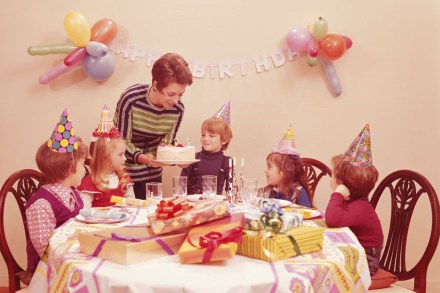
Recently, I’ve been thinking a lot about birthdays. For one thing, I’m writing this on the very day I turn 37. For another, you might’ve heard that America’s got a big one coming up later this year: 250. Old enough to stop squabbling and act its age. But right now, the only birthday that matters in our household is my daughter’s, and it’s coming up in two weeks. New York City children’s birthday parties – at least many of the ones I’ve witnessed – are unlike anything you’ve ever seen. Not so much parties as highly coordinated tests of moral conscience. They’re diplomatic summits involving balloons, sugar and, yes, perhaps a touch of low-level psychological warfare.

How to write a diary

A few gray hairs have appeared on our dog Budgie’s chin. She’s only seven and is part of our family. The silver streaks are a reminder that we are inching slowly to the inevitable day when she will no longer be with us. “Having dogs is a sad business,” my dad says. “You fall in love with them and when they go, they break your heart.” I once heard Ricky Gervais describe dogs as life’s greatest invention, the closest thing to something spiritual most of us will ever experience. As a joke, my husband asked me whether Budgie was my best friend. “Yes,” I replied, and I wasn’t joking at all. I write a diary and I try to think of something to say every day. Occasionally I stop myself: “You can’t write that,” I think. “What if someone reads it?

diary

My initiation into breastfeeding

The most fastidious of us prepare for the marathon of our first labor and birth, but still fail to wrap our minds around the unpredictable onslaught of intense sensations that breastfeeding brings. I knew that only a genuine catastrophe would prevent me from birthing my baby at home with a midwife, and I didn’t leave the prospect of using formula as a feasible outcome in any possible world. Despite this, I had no idea that my initiation into breastfeeding would amount to psychospiritual martyrdom. The distinctively American cultural complaint that nursing women (or “chest-feeders” as we are now called) must not discuss the importance of breastfeeding from fear of offending formula users need not apply here, but the benefits of breastfeeding are numerous.

breastfeeding

Anti-surrogacy activists are looking out for the kids

Conservative commentator Guy Benson and his husband recently announced the arrival of a new baby, born via surrogate. Controversy erupted when they tweeted out the news. Last year, when Dave Rubin, another conservative commentator, and his husband announced they would have two surrogate babies, there was a similar flare-up. Surrogacy is the only way a male couple can biologically become parents, but the practice is increasingly questioned due to moral and ethical concerns surrounding the industry and the rights of children. Now, the issue is dividing conservatives who have recently found common ground against things like radical transgender ideology. Some immediately conclude that critics of surrogacy harbor bias against gay families.

surrogacy

White feminists are finding new problems with motherhood

Do you ever wish that your young children would stop asking you questions, constantly touching your body and being needy for your love and attention? That’s called being “touched out,” a new-age expression for the Extremely Online mother who can’t seem to reconcile with the idea that her life is going to be different after she has children. It’s also the title of Amanda Montei’s memoir-cum-cultural criticism on how modern motherhood in America is indistinguishable from the pervasive rape culture that permeates every aspect of a woman’s life in the country, including marriage, the workplace and yes, parenthood. Montei’s revelations about motherhood came to her after #MeToo took off.

Confessions of the mommy groupchat

As I approach my daughter’s first birthday this month, I’m reflecting on what it’s been like to become a mom so late in the game — and the thousands of lessons I’ve learned. A lot of people have carried me through pregnancy and the first year: my husband, for one, has been a rock. His mother and stepfather. My aunt and uncle. They’ve all shown up for us in ways we didn’t even know we would need, with home-cooked meals when I was in the newborn bubble, with baby care so we could work or sleep or unwind. However, nothing has carried me quite like the groupchat a friend started in my first trimester. This friend had her second child on the way and realized three of us were pregnant all within months of one another, so she started the chat.

grumpy

The left declares war on sperm

There’s a perplexing debate buzzing online about where babies come from, and liberals are highlighting the fundamentally warped way they view human life and relationships. Author Gabrielle Blair is making waves for her groundbreaking discovery that if men stopped ejaculating inside women, we would have fewer unwanted pregnancies and abortions (though Blair, herself a Mormon mother of six, believes “women that want or need an abortion should be able to get one whenever they want or need one”). In promoting her new book, Ejaculate Responsibly: A Whole New Way to Think about Abortion, Blair has been advocating for free vasectomies and for a “social campaign that talks about the reality of vasectomies.

Siri Hustvedt and saving the personal essay

Siri Hustvedt, Mothers, Fathers, and Others (Simon and Schuster, 304 pages) An essay by Honor Jones for The Atlantic went viral last month. It was entitled “How I demolished my life” and was a how-divorce-altered-me piece, something of a bildungsroman for the fortysomething woman. One paragraph in particular caused enormous offense on social media: How much of my life — I mean the architecture of my life, but also its essence, my soul, my mind — had I built around my husband? Who could I be if I wasn’t his wife? Maybe I would microdose. Maybe I would have sex with women. Maybe I would write a book. Many found the essay galling because it intellectualizes a decision that many married couples go through.

It’s different for girls

‘Buy pink baby clothes,’ Kim Jiyoung, the protagonist of this best-selling South Korean novel is told at the obstetrician’s office. Jiyoung’s mother responds: ‘It’s OK, the next one will be a boy.’ There are numerous births in this book. Births of girls are met with disappointment. The births of sons are celebrated. When Jiyoung is born in 1982, ‘abortion for medical problems had been legal for 10 years...aborting females was common practice as if “daughter” was a medical problem’. Her younger sister is ‘erased’.

jiyoung

Trump moms are the best people in America

There was a transgender coffee shop near my apartment I once frequented. I swear, everyone who worked there was a trans man, biological women presenting themselves as men to varying degrees of effort. The baristas were nice enough, but the coffee shop closed, barely lasting six months, which is a travesty considering it declared itself a safe haven for refugees. A large poster displayed on the front window proclaimed, ‘Refugees welcome here!’ with an illustration of a sad Arabic man holding an infant wrapped in a filthy shroud. Where will they go now? During its sad, brief run I spent many hours in that coffee shop seeped in mediocrity.

trump moms

The strange rise of calling kids ‘mama’

The first person I heard refer to their child as ‘mama’ was a friend I met at a prenatal yoga class when I was pregnant with my daughter six years ago. After the babies were born, I would hear her croon to her daughter as she put on her tiny snow suit, ready for the bitter New York winter outside: ‘Come on mama; let’s go mama.’ She does know it was she who gave birth to the child and not the other way around, I would wonder. To begin with I didn’t think much of this somewhat idiosyncratic nickname.

mama mother and child