Morality

Does a propensity for crime depend on one’s DNA?

From our UK edition

This book begins strangely. Kathryn Paige Harden and her man Travis go off into the Texas desert to take some LSD in the hope that it will provide a ‘hard serotonergic reboot’. They have not so far had sex, but Travis has plans. ‘You’ll come back with your third eye,’ he says, ‘and then we’ll fuck. You’ll be glad we waited.’ At this point you may be tempted to hurl the book across the room. The self-centredness is oppressive. But persist. It rapidly becomes a very powerful read. Harden is a psychologist and behavioural geneticist, and the primary theme of Original Sin is the way in which science raises questions about morality and the law. For example, is a psychotic man who murders his wife less guilty than a sane man who does so with a clear head?

Canada’s assisted suicide laws are out of control

Death, somehow, seems like the wrong word. So Canada’s euthanasia doctors have adopted other terms for what they offer: each lethal injection is called a “provision.” Stefanie Green, a Vancouver Island doctor who used to work in maternity services, prefers “delivery.” Canada has sleepwalked into a moral maze with no exit, where euthanasia becomes a solution for social problems Since Canada’s parliament introduced euthanasia in 2016, a new vocabulary has arisen. Those with a terminal illness, whose death is “reasonably foreseeable” are “Track 1”; those who have no such diagnosis but qualify through “grievous and irremediable” conditions are “Track 2.

Canada

The blurred lines between politics and common morality

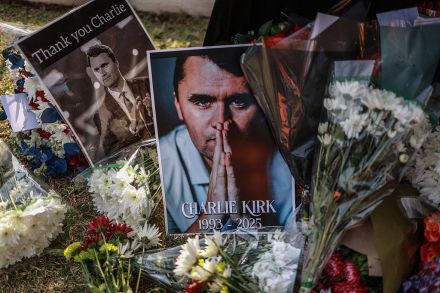
Some 238 years ago Thomas Jefferson wrote that “the tree of liberty must be refreshed from time to time with the blood of patriots and tyrants.” Charlie Kirk was a patriot and his blood, shed by an assassin’s bullet, is making Americans take their free-speech liberties seriously once again. Jefferson wrote his famous line in response to an insurrection – a real, armed one quite unlike the ugly out-of-control protest at the US Capitol on January 6, 2021. The author of the Declaration of Independence wasn’t defending the rebels who had risen up under the command of Daniel Shays. His letter was instead a warning against overreaction to the rebellion on the part of the national government.

morality

Bristling with meaning: the language of hair in 19th-century America

From our UK edition

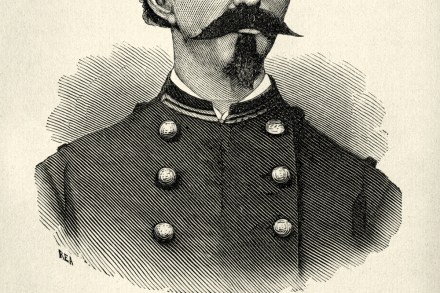
In Whiskerology, Sarah Gold McBride combs through a bristling, tangled mess of data, facts and theories about gender, race, national identity and their relationship to – yep, you guessed – hair. Do not buy this book if you are looking for a fun read about vintage updos, goatees and ponytails; Ye Olde Horrible Haircuts it is not. It’s a book about hair as a kind of cultural text; readable, manipulable, highly permable and ideologically curled. One does not, it turns out, simply go and get a haircut: one enters a vast semiotic salon, more Saussure than Sassoon, where you’re lucky to get out without a scalping. McBride is a 21st-century American scholar writing about 19th-century American hair, but the manner is classic mid-20th-century French plait.

Outlandish epic: Lies and Sorcery, by Elsa Morante, reviewed

From our UK edition

In 1948, Natalia Ginzburg, then an editor at the Italian publishing house Einaudi, received an 800-page brick of a manuscript from an acquaintance, Elsa Morante. Ginzburg read it in one sitting and declared Morante was going to be ‘the greatest writer of the century’. More recently, Elena Ferrante credited Morante with showing her ‘what literature can be’. The book that produced such praise – Italo Calvino called it ‘a serious novel, full of living human beings’ – has gone by different names in English: House of Liars or, in this new edition published by Penguin Classics and NYRB Books, Lies and Sorcery.

Qatargate and the dubious moral authority of NGOs 

From our UK edition

The Qatargate scandal haunting the European Union is not merely about corrupt politicians and officials. The deplorable role of a non-governmental organisation is at the heart of the scandal, which highlights the interlocking of NGOs and EU parliamentarians and decision makers. The most interesting feature of the corruption scandal surrounding the detention of the EU parliament’s vice-president Eva Kaili and politicians and EU apparatchiks is their connection to a supposedly squeaky-clean NGO called Fight Impunity. The current president of the organisation is Pier Antonio Panzeri, 67, a former Italian leftist MEP. He was arrested after €600,000 in bank notes was found in his house in Brussels.

Down with the American morality police

When, oh, when will the United States catch up with Iran? Those bearded, bomb-building, Koran-quoting clerics — we underestimate them at our peril. They know enough, the ayatollahs, to get rid of their morality police who have for decades subverted Iranian civic life, as they've reportedly done this week after protests in that country continued. The morality police in Iran were known for harassing Iranians — women especially — who were deemed insufficiently devoted to Islamic purity. Yet when the morality cops apparently killed a young women for her gall in showing too much hair, public protests erupted. Morality is one thing, persecution is another, as the ayatollahs appear to have figured out. Morality requiring visible and painful enforcement can’t be sustained.

Why we should study literature, not science

From our UK edition

Gstaad Who was it who said good manners had gone the way of black and white TV? Actually it was yours truly after watching the slobs parading up and down Gstaad’s main street. That was last year, but the bad news is that this year slobovia has come to stay again. Mind you, Alexandra and I had planned to have 50 friends for a party to celebrate 50 years of my enslavement, but Mister Omicron arrived and put a damper on our plans. The tent on the lawn and the oompah band were cancelled, and the New Year’s Eve blast turned into a smallish affair. The good news is that there are still a few people who don’t adhere to the online culture of today, that of anger, incivility and non-stop use of the F-word.

Do I have a right to be offended by threesomes?

From our UK edition

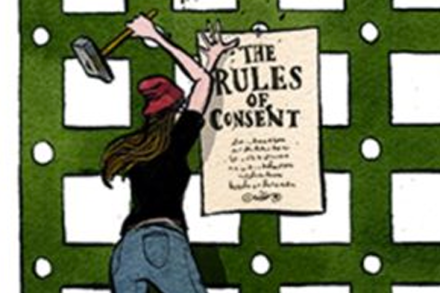
I couldn’t get to sleep the other night for worrying about the future of liberalism. So I got up and put the telly on. Maybe there would be something soothing on, to help me forget my worries. There was a show on Channel 4 called My First Threesome. The voiceover explained that lockdown had led many of us to be more sexually adventurous, and even to explore ‘what is for many of us the ultimate fantasy’. Before we met some enthusiastic adventurers, a brief historical segment explained that many wise ancient cultures saw sex with more than one person as a perfectly natural desire. ‘Then for centuries religion and shame pushed it to the realm of fantasy.

Feminism’s sexual inadequacy

There’s an Old Testament story that ought to be better known (who does God’s PR these days?). King David is in his palace, and a servant announces that he has a caller. It’s Nathan the prophet. Good old Nathan — committed to maximizing the life-chances of the poor, a real old-school man of the people, and often a bit spiky with it — a man to keep onside. Yes, yes, send him in. Nathan launches into a story about a humble farmer who has been conned by some smooth-talking landlord and has now lost his land and his last remaining lamb to this greedy sod. The king’s a bit disappointed that Nathan has brought such a tiny issue to his attention — he was hoping for a big juicy cause he could champion, so as to remind the people of his compassionate-conservative credentials.

sexual

Jonathan Sacks: morality is not optional

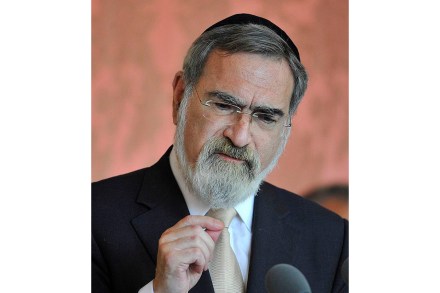
Rabbi Jonathan Sacks, who died on Saturday at the age of 72, was a modern Maimonides, a guide to the perplexed in an age of spiritual confusion and moral dissolution. A philosophy student before he entered the rabbinate, Sacks combined the legacies of Athens and Jerusalem and became the leading public intellectual and ethicist of our time. A source of pride to Britain’s small and sometimes beleaguered Jewish community, Sacks did not just work to improve the moral state of the Jewish people and defend the state of Israel. Adeptly linking the particular to the universal, he defended the religious conscience, and identified the common ground through which interfaith negotiations have transformed Jewish-Christian relations.

jonathan sacks

We are living in an age of cultural climate change

A free society is a moral achievement. Over the past 50 years in the West this truth has been forgotten, ignored or denied. That is why today liberal democracy is at risk. Societal freedom cannot be sustained by market economics and liberal democratic politics alone. It needs a third element: morality, a concern for the welfare of others, an active commitment to justice and compassion, a willingness to ask not just what is good for me but what is good for ‘all of us together’. It is about ‘Us’, not ‘Me’; about ‘We’, not I’.

climate