Moneyblog

The new Lifetime ISA hasn’t been properly thought through

The Government has announced it will scrap the much-criticised 5 per cent penalty fee for those who cash in a Lifetime individual savings account (LISA) during the first year. While it’s good that politicians are listening to criticism of the new product, any extra complexity is always a barrier to consumer understanding. And don’t forget that half of savers in the UK don’t even know what ‘ISA’ stands for*. The LISA - a complex hybrid between a pension and an individual savings account - is due to launch in April, and yet the Government is still making up the rules as it goes along. It could be revolutionary, but the new product has not been properly thought through. What is it?

Don’t give in to New Year fad diets and fitness – they’re a waste of money

It's not long now until Christmas Day, that cherished time of year when we don our elasticated pants, break the seal on the Quality Street and prepare to eat until we pass out. It's the one day of the calendar when diets, healthy eating and all thoughts of exercise are banished, to be replaced by cries of 'just one more helping', 'where's the remote', and, let's face it, sheer gluttony. It's a special time. Like most things, however, this abandonment comes at a cost, and I don't just mean the suffusion of self-loathing on Boxing Day. There's a financial price to be paid come New Year, and that takes the form of gym memberships, workout clothes and fad diets.

We must empower teachers to deliver financial education

Last week the Joseph Rowntree Foundation released a report, Monitoring Poverty and Social Exclusion 2016, which revealed that more than seven million people in the UK are living in poverty, despite being part of a working family. Among the identifiable factors behind these figures were the rising costs of private renting, stagnating wages and cuts to benefits, with Helen Barnard, head of analysis at the foundation saying that 'the economy is not working for low-income families'. As a financial education charity, we would offer another important factor – stubbornly low levels of financial literacy, which affect families from across every social stratum. The effects of this are all around us, from spiralling personal debt to falling savings levels.

VAT: a back door money spinner that generates billions for the government

If conspiracy theorists turned their attention to the economy rather than, I don’t know, aliens or Hillary Clinton, surely it would not take long for them to notice the peculiar rise in the tax take from VAT. VAT sounds innocuous enough, perhaps because no one really knows why it is there or what 'Value Added' actually means. But it’s not really innocuous. To a government that makes much of its supposed generosity on income tax through, for example, increasing personal allowances, VAT is becoming the back door money spinner du jour. VAT has all the hallmarks of a brilliantly unfair tax. Unlike income tax, it is often invisible or well hidden.

Always look on the bright side of…death. What we really want at our funeral

We Brits are a macabre bunch, more prone to thinking about glass half empty than glass half full. 'Expect the worst and you won't be disappointed,' could be our national mantra. A landmark study published today by the London School of Economics reveals the key to human happiness - and it's not pots of money. Researchers say that most human misery can be attributed to failed relationships and physical and mental illness. All told, economic factors are not, er, factors in our well-being. That doesn't stop us obsessing about cash, though. Nor does it prevent us from dwelling on inescapable financial outlays, such as paying for funerals, both for ourselves and for those we love. According to SunLife's annual Cost of Dying report, the average cost of a funeral is now £3,897.

Shoppers: know your rights this Christmas

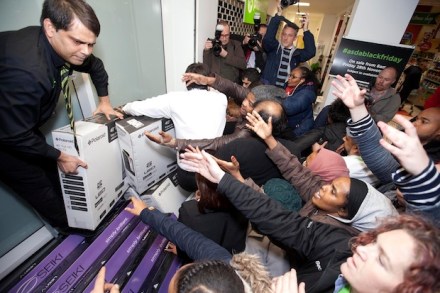
Time moves on so quickly and now here we are again - it’s the month when many people are focused on their Christmas shopping. So what better time for shoppers to brush up on their rights, be wary of scammers and consider the best credit card deals to make their cash go a little further. Know your rights on returns There may have been some impulse buys on Black Friday - and anyone can change their mind. So it’s good to know that shoppers will have around 30 days to return an item for a refund or store credit. It’s important to check the returns policy of the store at the point of purchase to make sure you don’t miss the deadline, or you could be wasting your cash when you think you snapped up a bargain.

Waiting for the delivery that never comes? You’re not alone

Unless you work from home or are blessed with an understanding employer who offers flexible hours, waiting in for a delivery can feel like a sojourn to the seventh circle of hell. 'Your delivery slot is 8am to 10am,' intones the recorded voice. But you don't believe a word of it. In fact, you know they're lying, much in the same way you know the taxi driver isn't 'just around the corner'. No, he's five miles away and has yet to break into third gear. So it comes as little surprise to learn that people whose delivery is late, turns up broken or doesn't arrive at all spend on average two and a half hour sorting out the problem, That's according to Citizens Advice, which is preparing for a rise in people seeking help for problems with deliveries.

Challenger banks are failing to deliver better banking

Just over a year ago I believed that new challenger banks were on the edge of glory, about to kick off an era of better and fairer banking for everybody. In an article for ResPublica I wrote: 'When real colour is injected into the financial services industry, consumers will be better served and ultimately empowered to engage.' New challenger banks were meant to deliver this colour, and to better serve customers. Alas, I wrong. New banks are simply not delivering better banking. These new challenger banks are important because they’ve been held up as the white knights of banking. The story goes something like this: more competition will force bloated incumbents to get a little bit smarter and help to improve products and customer services across the board.

Banks are doing too little, too late to combat online fraud

If the movie Bonnie and Clyde with Warren Beatty and Faye Dunaway is on TV again this Christmas, it might act as a reminder that the days when bank robbers used guns and getaway cars have been consigned to history. Nowadays, thieves are armed with broadband, not bullets. They don’t need a getaway car because they don’t even need to be in the same country to clean out the coffers. Online banking is convenient, and often the best interest rates are available on internet accounts only – but it’s also a bonanza for fraudsters. The banks are improving the situation for their customers, but it’s too little, too late. They are desperate to get us all to migrate online, but for their benefit, not ours.

There’s no shame in being a Santa Scrooge

In another world, I would sit down at the beginning of December with a notepad and pen and make a really organised Christmas shopping list. What I actually do is commence the proceedings by searching every drawer in the house for forgotten gift vouchers. I usually start with the children’s rooms. My son and daughter, despite being brought up to count every penny, hardly ever use these things. My daughter’s school probably thinks it is setting her off on a lifetime of worthy pursuits with a £5 voucher for WH Smith awarded for good work over the year. She, however, shoves the thing in with her socks and promptly forgets about it. To her, a £5 voucher is not even the price of a Jacqueline Wilson.

Loyalty doesn’t pay: why insurers need to treat their existing customers better

One of the worst habits of the trillion-pound general insurance industry will be brought to an end in April next year. Even to a cynic, the willingness of many large general insurers to prey on the blind faith of loyal customers is thoroughly distasteful. Each year, they write with their renewal notices, thanking us for our business and saying there is no need to do anything if the policy still meets our needs. 'This is an automatic renewal,' they say. 'We look forward to providing another 12 months of cover.' How convenient, thinks the time-poor customer, trusting that the insurer which looks his home and car will have his best interests in mind.

Don’t fall for the so-called ‘wealth gurus’

Anyone can get rich. All you need is a positive mindset and a few quid to hand over to a self-styled ‘guru’ who will teach you the secret to financial freedom. And who better to instruct you than billionaire Donald Trump? Well, that’s what a bunch of wannabe millionaires in the US thought anyway. They paid up to $35,000 (£28,000) for courses at Trump University (entry requirements: cheque book) where Trump’s ‘hand-picked’ instructors would reveal the ‘secrets’ of real estate (or the property market as we call it in the UK). When the secrets failed to materialise, three lawsuits alleged that Trump University defrauded students by using misleading marketing practices and engaging in aggressive sales tactics.

Secret squirrel savings: why keeping financial secrets is a good idea

The Prudential seems shocked to find that many couples aren’t entirely honest with each other when it comes to their finances. The deceptions uncovered were manifold: there were secret squirrel savings accounts, undisclosed credit card debt and personal loans (and occasionally mortgages)-  as well as a general lack of truthfulness about how much each earned. The research found that a surprising one in six said their partner did not know what their salary was. Not surprisingly, in most cases they thought take-home pay was significantly less that it actually was. In total, the Prudential reckons couples today have ‘millions of pounds’ in money secrets.

Employees lose out after salary sacrifice perks scrapped

If you're not familiar with the term, then 'salary sacrifice' is a bit of a puzzler. Just what is your boss expecting you to sacrifice? A chunk of your wages? A goat in the car park at lunchtime? Put simply, salary sacrifice arrangements enable employees to give up salary in return for benefits-in-kind that are often subject to more favourable tax treatment than their wage packet. They're a nice little earner for staff and employers as they essentially permit a bypassing of National Insurance (NI) payments. So, employers allow their workers to take a so-called 'pay cut' and that money is funnelled into a pension or another benefit such as childcare or a mobile phone. The end result: both parties pay less NI, as well as paying tax on a smaller income.

Are you a ‘guilty gifter’? Don’t get sucked into pointless present-buying

Cyber Monday. It's an odd phrase, more likely to conjure apocalyptic visions of a Terminator-style machine invasion than a frenzied day of online shopping. Like Black Friday, Cyber Monday is relatively new to these shores. In just a few short years, it's become part of the year's busiest spending weekend, with both days book-ending a four-day shopping spree. This year it looks like Cyber Monday will overtake Black Friday in terms of sales as people shift towards online spending. Experts predict that UK shoppers will increase spending by a fifth to £1.9 billion today. Amid all this hype, however, is the very real prospect that falling for retailers' hyperbole surrounding the last payday before Christmas will result in an untold number of pointless purchases.

A crackdown on pension scams is welcome but we need action not words

There was one nugget in Philip Hammond’s first - and last - Autumn Statement that was met with almost universal approval: a crackdown on pension scams and cold-callers. 'About time too' seemed to be the general response, including from two former pensions ministers. I certainly wouldn’t disagree with this sentiment. Pension Life, a group that helps fraud victims recover losses, estimates that people have lost a staggering £1.7 billion in pension scams in the past six years. Action is well overdue. But before we get too carried away it’s worth noting that all we have at present are words, not action. The Chancellor hasn’t introduced any ‘ban’ on cold-callers yet.

Insurance costs to rise again thanks to the Chancellor

While there were plenty of people-pleasers in yesterday's Autumn Statement, it's safe to say that insurance companies were not happy. Yes, there will be a crackdown on fraudulent whiplash claims, and yes, there is another freeze on fuel duty (all good news for insurers and their customers). But these aren't the issues clogging my inbox this morning. Insurance Premium Tax (IPT), that's what's got them all going. This is the crux of the matter: the former Chancellor George Osborne announced an increase in IPT from 6 per cent to 9.5 per cent in the Summer Budget in July 2015 which came into effect in November of the same year. The rate was increased again to 10 per cent in this year’s March Budget, coming into effect on October 1.

Don’t be too quick to applaud the Chancellor’s ban on letting fees

If there's one thing sure to get estate agents' knickers in a twist, it's a threat to their income. And so the news that Philip Hammond will use the Autumn Statement to announce a ban on letting fees has sparked a tirade of protestations and a bumper crop of press releases lamenting their lot. But letting agent fees have been a thorn in the side of renters for some time. Young people in particular complain that charges, such as £420 to change the name on a tenancy agreement and £330 to set up a tenancy, hamper their efforts to save for house deposit. But it's not just the young who feel that these fees are unjust: last month more than a quarter of a million people signed a petition that was delivered to Downing Street demanding that the charges be banned.

Decent broadband now a ‘must-have’ for house buyers

Location, location, location is the estate agent’s mantra when asked to define what makes a property hot - or not. But these days where your house sits on the digital highway can also prove crucial to luring prospective buyers. It’s no secret that the rollout of super-fast broadband and mobile connectivity in the UK has been beset by delays – the goalposts set by successive governments have been moved several times over the years, due to various (buffering?) issues. But does being able to binge at will on the HD version of the latest TV series, or having the ability to do your entire grocery shop on a 300Mbps connection, really influence people’s decisions when buying a house?

Ethical investing is reforming capitalism’s vices

Winston Churchill said the inherent vice of capitalism is its unequal share of blessings. Today, the ever-widening chasm of inequality is contributing to a potential tide of political shocks across the West. But it is not all doom and gloom. A rapidly increasing number of individuals are attempting to redress inequalities by using their money to make the world a fairer place – and cleaner one too. In my last blog, I looked at how social investments such as community shares have the potential to transform large parts of our economy. An even more important example, in terms of size, is green and ethical funds. According to research organisation Vigeo EIRIS, this sector nearly trebled from £6 billion to £15 billion in the UK in the 11 years to June 2016.