Rebecca O'Connor

Has HMRC done enough to solve the botched implementation of child benefit charges?

From our UK edition

You’ve just had a baby. Life is upside down, but in a good way. A couple of months in, you are talking to your antenatal group and someone mentions child benefit. It’s not something you’d have thought you’d be eligible for, as you and your partner earn too much to get any benefits, as a rule. You go to the HMRC website, fill out the form and get a letter back. 'I am writing to tell you that you are entitled to child benefit at £20.70 a week', it begins. 'Brill, that will pay for the nappies', you think. So you take it and you are £1,076.40 a year to the good, at current rates. That’s just for child one. You could receive a bit more benefit if you have a second child, but at a lower amount, and you note there’s a two child limit.

The debt elephant in the middle class sitting room

From our UK edition

At some point in the last ten years, since the financial crisis (for that life-changing decade is an anniversary we are approaching), a change in perspective occurred: we went from seeing unsecured debt as something that is undesirable but occasionally necessary to something that is both unavoidable and normal. Credit cards and loans, once something for emergencies, are now a vital way to get through the month until payday for millions of people. Research from GoCompare found that 22 per cent of the British public relies on credit cards to live. The average consumer credit debt was £7,349 in April this year - £543.70 extra per household on a year before, according to the Money Charity.

The young are tired of London – and who can blame them?

From our UK edition

London has historically been the place to go for young creative types. These days, renting damp warehouses and staying in bad relationships just because being in a couple makes life cheaper are among the many grim choices some make just to be there. But they wouldn’t have it any other way. The thought of settling in a parochial university town or returning home to Little Borington is the closest thing to death imaginable. The peak age for moving to London is 23, according to the Office for National Statistics (ONS) – shortly after graduation. Young Londoners accept high housing costs relative to pay as a trade-off for fun and potential. They want a different life to small-town Mums and Dads - and perma-debt is a price worth paying to be part of the action. Or is it?

We should teach infants about the value of money

From our UK edition

On the one hand, perhaps he should only be thinking about football, Minecraft, his Lego Millennium Falcon and whether he is actually capable of magic. On the other, I can’t let this window of opportunity go by. Being five-years-old is a prime time for learning about the world and how things work. It might seem a bit too young to be dulling his imagination with compound interest, but it’s a lesson he probably won’t get at school (unfortunately) and is one he would do well to get sooner rather than later. That’s why I’ve started giving my five-year-old son £2 pocket money every week for the completion of very minor tasks, such as keeping his room tidy and getting himself dressed.

Mortgage rates are fuelling the generational wealth imbalance

From our UK edition

At some point a few years ago, after the financial crisis had passed but the economic stats still showed the effects, while wandering down the posh bit of my local high street where all the top-end furniture retailers, Italian delis and estate agents reside, I suddenly got it. I noticed that the ones carrying the White Company, Fenwicks and Russell & Bromley shopping bags were all roughly between 50 and 60. Despite the country apparently being in the doldrums, this well-dressed, insouciant and slightly aimless tribe had money to spend. All the economic indicators were telling us GDP was still pretty flat, unemployment and wages were still struggling, food bank queues were getting longer and first-time buyers still couldn’t afford deposits. The macro picture was gloomy.

VAT: a back door money spinner that generates billions for the government

From our UK edition

If conspiracy theorists turned their attention to the economy rather than, I don’t know, aliens or Hillary Clinton, surely it would not take long for them to notice the peculiar rise in the tax take from VAT. VAT sounds innocuous enough, perhaps because no one really knows why it is there or what 'Value Added' actually means. But it’s not really innocuous. To a government that makes much of its supposed generosity on income tax through, for example, increasing personal allowances, VAT is becoming the back door money spinner du jour. VAT has all the hallmarks of a brilliantly unfair tax. Unlike income tax, it is often invisible or well hidden.

We need to be more sceptical about financial adverts

From our UK edition

Scepticism has a solid place in the history of British philosophical enquiry. Back in the 18th century, empiricists such as David Hume dedicated their lives to the importance of suspending belief in things for which there is insufficient evidence through experience. On the whole, it’s a tradition our culture has maintained. Scepticism rears up in daily life all the time - for example, when your mother-in-law asks how you are, and you think: 'Is the asking of this question sufficient evidence for me to believe that you really are genuinely interested in how I am?

Car insurance rises again – did driving just get prohibitively pricey?

From our UK edition

I’m not a car-hater. Somehow, I’ve got two of them. I love driving. It’s fun, it’s powerful, it’s one of the best things about being born in the 20th century. But it’s getting seriously expensive. Cars are moneypits, that we all know. Buying one is often an exercise in trying to guess which will cost you the least over the next five to ten years. Petrol prices are rising again and likely to go up further as a result of higher oil prices and, of course, Brexit. A desire to avoid the slings and arrows of yo-yo petrol prices is one reason I seriously looked into getting an electric vehicle this year, instead of my diesel guzzling Ford Zetec (solid family car, ok).

Keeping finances secret can be bad for your wealth (and health)

From our UK edition

How much do you know about your spouse? Hair colour, date of birth, where they grew up, what they do for a living…how much they earn, perhaps? Not so much that last one, according to a number of respondents to a popular thread on Mumsnet last week. The proportion of respondents who do not know how much their husbands and partners earn was surprisingly high. 'I have a rough idea,' said one. 'We keep our finances separate. As long as he pays his share of the bills, it doesn’t matter,' said another. Really? Prudential, the insurer, found that 12 per cent of Brits do not tell their partners what they earn.

Rising rental payments could precipitate another financial crisis

From our UK edition

The country is divided in many ways. High up on this list of divisions, perhaps even in the top five, is the one between people who have bought the property they live in, and those who rent it. This gap is wider and growing at a faster rate than you would guess. The average deposit saved to buy a house is now £33,000, according to Halifax, compared with just under £18,000 nine years ago. ONS figures put average rent rises at around 2.5 per cent a year. Mortgage repayments, thanks to lower interest rates, are low and heading down – especially if you are an equity-rich, older homeowner. The average monthly mortgage repayment is £542, compared with an average monthly rent of £746 outside London, according to Homelet.

‘Invisible spending’ is turning us into a nation of Micawbers

From our UK edition

You don’t have to be an economist to know that if you spend more than you earn, you’re in trouble. As Micawber famously said in David Copperfield: 'Annual income twenty pounds, annual expenditure nineteen pounds nineteen shillings and six pence, result happiness. Annual income twenty pounds, annual expenditure twenty pounds nought and six, result misery.' But what Micawber couldn’t account for was the swathe of stuff we would find ourselves paying for to live a modern life in the 21st century. Back in those days, there were five outgoings: food, clothes, heat, light and accommodation.

Death of early retirement? More like death of retirement

From our UK edition

The biggest cultural shifts happen invisibly, bubbling away below the surface for years before someone notices a change. So it was the acceptability of moustaches and gluten-free diets. And so it is with an understanding that we will be working until we die. There was once a time when the goal of any aspirational worker with decent earnings potential was early retirement. It was the Holy Grail of just deserts - you’ve worked hard, you’ve earned the right to sit looking at starry skies in a permanently semi-sozzled state on the veranda of a villa in the South of France, where family and friends will come and visit and be impressed and say: 'What do you do with your time?' And you will reply: 'I read and sunbathe and just don’t know where the day goes.' Not anymore.

I’m a saver, get me out of here! Navigating the new savings maze

From our UK edition

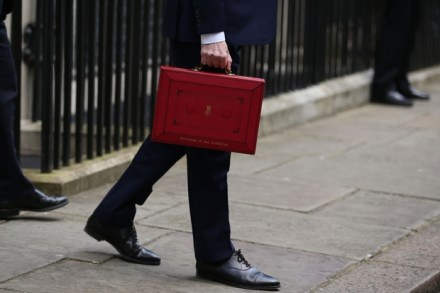
Every time George Osborne takes hold of a red box he seems to come up with another tax-free savings vehicle. Or so it appears to Individual Savings Account (ISA) savers, who two years ago had two straightforward choices: cash or stocks and shares. Cash for the risk averse, stocks and shares for the risk aware. Now, depending on your home ownership status and attitude to risk, there are two more options in the mix - the Help to Buy ISA and the Innovative Finance ISA, and one on the way - the Lifetime ISA. Which to choose? How much to save in each? Navigating the new savings maze requires more motivation than a bush tucker trial – only the most tenacious will pass.

Pets v children: financially speaking, it’s no contest

From our UK edition

There’s a whole swathe of wannabe parents buying pets to 'practise on', according to recent research. More than two million British dog owners bought their dogs to limber up for a baby, the Direct Line survey found. Meanwhile, a third of dog owners without children feel like parents and one in 20 childless dog owners believe owning a dog is more work than having a baby. It’s hard to know whether to feel more sorry for the dogs or the children. Babying a dog is a sure-fire way to psychologically destroy it and if you reckon that pampering a pooch is anything like the mind and body annihilation that comes with raising an infant, then when you do bear the bairn, you’d better get up to speed pretty quickly, for its sake. I know: I’ve got both.