Money

Does the ‘anti-growth coalition’ run the Treasury?

From our UK edition

‘Permanent revolution’ is the on dit in Whitehall these days – and what it means is that the Truss administration U-turns so often the whole machinery of government is constantly spinning round on its axis. The latest volte-face is the decision to appoint James Bowler, a 20-year establishment veteran, as Permanent Secretary to the Treasury. The Chancellor, Kwasi Kwarteng, declared himself ‘delighted to welcome James back to the Treasury,’ which is causing a few chuckles in SW1. The joke in Westminster today is apparently that the anti-growth coalition actually runs the Treasury It’s well-known that Kwarteng’s plan was to shake up the Treasury. Bowler represents precisely the sort of orthodox officialdom he has for years wanted to remove.

What the weak pound means for London property

From our UK edition

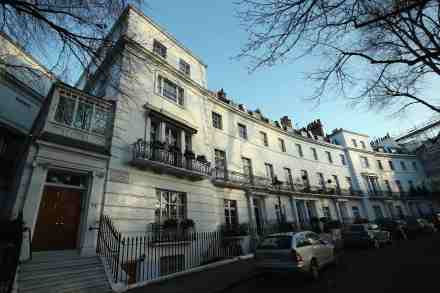
Having written recently about how Prime Central London is enjoying a time in the sun after almost a decade in the doldrums, buying a property there just got even more tempting – if, that is, you’re spending dollars. And 66 countries worldwide are linked to the currency and affected by fluctuations in its value. A property in Kensington and Chelsea will now cost dollar-based buyers two-thirds of what it would have cost them in 2014 Over more than four decades it’s been clear that the fortunes of PCL are affected more by geopolitical events and exchange rates than by domestic interest rates. Any global ‘black swan’ event – such as the removal of the Shah of Iran, the introduction of the euro, the LTCM collapse – has had an effect.

Why is the right not making the moral case for lower taxes?

From our UK edition

There was an article recently in the increasingly woke but still useful New Scientist which attempted to gauge the degree to which luck was responsible for who we are and, hence, an individual’s life circumstances. I think it came in third place after genes and the environment – which are also both down to luck, really, I suppose. The thesis seemed to be we pay too little attention to the role of luck when considering why one man is a millionaire and the other is a lavatory attendant or a book reviewer. I would beg to differ. Ascribing luck to one’s unfortunate position in life is very prevalent indeed and is as left-wing an argument as blaming the class system or the colour of one’s skin (although with slightly less justification).

City slickers’ reaction to Kwarteng’s unfunded plan is entirely rational

From our UK edition

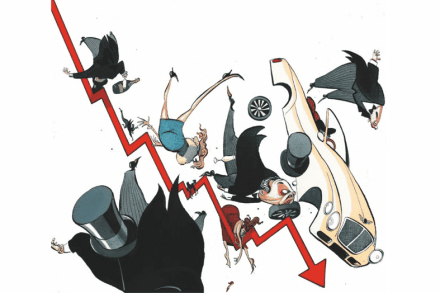
‘Fury at the City slickers betting against UK plc,’ shouted the Daily Mail on Tuesday, after Monday’s mayhem saw the pound hit an all-time low of $1.03. A more accurate corporate metaphor, though less punchy as headline material, would have been something like this… Activist mavericks seize boardroom control of giant sluggish utility. Novice finance director slashes prices, raises dividends for rich shareholders, shuns in-house forecasters and says he’ll borrow whatever it costs. To which markets reply: ‘Blimey, mate, that’s bonkers. So we’re dumping your shares and the cost of your debt just doubled.’ And that, I’m afraid, is an entirely rational response, not a wickedly speculative one.

The rise of the eco-mansion

From our UK edition

In a wide clearing in woodland in a county of southern England that shall remain unnamed, a very unusual property is being built from brick and wood. When complete in a couple of years’ time, a lost rambler who stumbles across it may think he has found an old country house dating from the early 18th century, perhaps even the late 17th. With its classical proportions and time-honoured elegance, the building could be mistaken for an unadvertised outpost of the National Trust, the ancestral home of minor gentry, or even the setting for Bridgerton or some other regency drama. Yet this will be a thoroughly modern home, albeit one that embraces certain ancient methods to achieve its agenda: being as eco-friendly as possible.

Will Liz Truss take on the IMF?

From our UK edition

Tonight the International Monetary Fund has weighed in on the UK’s mini-Budget, offering a direct rebuke of Liz Truss and Kwasi Kwarteng’s tax cuts. ‘We are closely monitoring recent economic developments in the UK and are engaged with the authorities,’ its spokesperson said, in reference to the fluctuating pound and rising borrowing costs. ‘Given elevated inflation pressures in many countries, including the UK, we do not recommend large and untargeted fiscal packages at this juncture' – suggesting some concern that the measures could be inflationary.

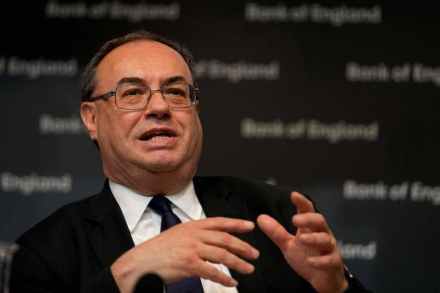
Can the Bank of England inspire confidence?

From our UK edition

It has dawned on the government that last week’s mini-Budget might have been a bit too one-sided: £70 billion worth of extra borrowing and not a single mention of spending cuts or efficiency gains has seen borrowing costs spike (up by 0.3 per cent just today). As James Forsyth reports on Coffee House, this afternoon’s announcement that a ‘medium term fiscal plan’ will be announced next month is an attempt by the Treasury to reassure markets – and convince them that fiscal responsibility has not totally disappeared from this government’s agenda. Emphasis is being placed on previous promises to make sure debt falls as a percentage of GDP in the coming years. But what about the other side of the coin?

How worrying is the falling pound?

From our UK edition

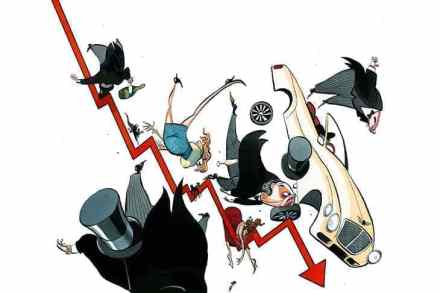
How are markets responding to Kwasi Kwarteng’s mini-Budget? A sharp fall in the pound today has plenty of critics arguing that the tax-slashing announcements have already proved a failure. Sterling fell this afternoon to $1.09, bringing the currency to another 37-year low against the dollar. This is more than a 3 per cent dip in just one day. The euro took a hit too, but a smaller one at 1.5 per cent. It’s difficult to separate this new record low from today’s announcements – but also near impossible to draw direct correlation, as the pound and euro have both been in freefall against the dollar for weeks now.

Why the global elite are buying London property again

From our UK edition

If you’re looking for a bellwether for the world economy, you could do worse than consider what’s happening at the very highest end of London’s property market. Over several decades, Prime Central London – or PCL – had become a repository for cash from wealthy foreigners, whether they actually wanted to live there or not. This had several side effects – namely that PCL became mostly lined with empty properties and prices went into ‘trophy’ mode. This is a world controlled by a cabal of high-end agents operating completely off the grid Then Brexit appeared on the horizon, and for some time rich international buyers avoided London out of fear of complications that might arise from being outside the EU.

Flat broke: my Help to Buy disaster

From our UK edition

‘Do you want a cup of tea?’ The surveyor shook his head. It would take me longer to boil the kettle than for him to do a valuation of my 400 sq ft, one-bedroom flat. I paced awkwardly around. A minute later, he gave me the thumbs-up. Valuation complete, he left. I boiled the kettle anyway. Four years after the purchase of the flat, via the ‘Help to Buy: Equity Loan’ scheme, I couldn’t be more desperate to sell. Would I make a profit? I just want to escape its clutches and avoid a loss. Why sell? Let’s start at the beginning. Why buy? Perhaps it was an early midlife crisis. At nearly 30 years old, I thought it time to leave the familial roost. It was unfair on my parents to have me, the resident ghost daughter, living at home for ever.

Are the markets scared of Liz Truss?

From our UK edition

Look at the chart for interest rate expectations in isolation, and you might come to the conclusion that Rishi Sunak is right about Liz Truss’s fiscal policies. In June, markets were expecting rates to peak at around 3.5 per cent next year; now they are expecting them to reach close to 4.5 per cent. Moreover, as Truss’s victory came to be seen as inevitable, the FTSE 100 plunged from 7,550 on 19 August to 7,230 this morning – a fall of 4.2 per cent. The pound has fallen from $1.22 on 10 August to $1.15 now. Markets could be forgiven some apprehension But hang on a minute. Markets have been revising their interest rate expectations all year.

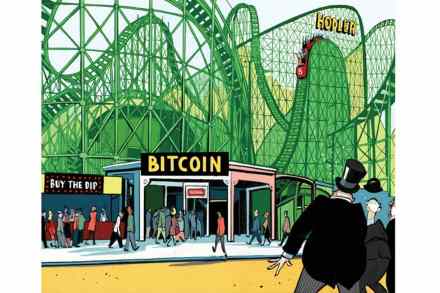
Crypto keeps bouncing back

From our UK edition

This time it was surely all over. As inflation started to rise towards a 40-year high, as central banks started raising interest rates for the first time in more than a decade, and as the monetary printing presses finally stopped running, the cryptocurrencies crashed.  What a crash it was. Bitcoin, the best-known crypto, fell all the way from $61,000 last November to less than $19,000 in June, a spectacular drop of more than two thirds. Ethereum, Solana and other, frailer ‘coins’ – as well as the even flimsier digital collectors’ items known as NFTs – all tanked. This appeared finally to confirm what the doubters had said all along.

How to save money: switch to cash and reprogram your boiler

From our UK edition

We’ll find out shortly whether official statistics agree with economists surveyed by Bloomberg who say UK GDP probably shrank by 0.2 per cent in the second quarter. But at an uncomfortable moment when we know things can only get worse, looking backwards doesn’t help and nor does holding out hope for a miraculous ‘emergency budget’ in September. As for forecasting beyond that, it’s almost too scary to contemplate. Better to shun economists and politicians and focus instead on facts that tell us what’s happening now – such as data from Barclaycard – and things we can do keep our own budgets in balance.

The death of saving

From our UK edition

I was intrigued to learn from Tom Daley – that young man who became famous for jumping off a platform into some water – that homophobia is a ‘legacy of colonialism’. The Ugandan President, Yoweri Museveni, begs to differ. He believes that it is homosexuality which is a legacy of colonialism and had been brought to his benighted country by effete whitey – and so he may well think Tom is indulging in the disagreeable act of ‘whitesplaining’. However, it is possible, if not likely, that both Tom and Yoweri are correct – after all, it is difficult to be homophobic if you have around you a complete absence of homosexuals, as I have discovered since moving back to the north-east of England.

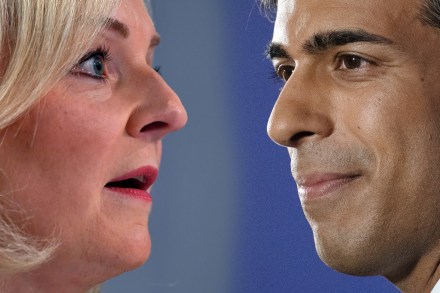
The real difference between Sunak and Truss’s tax policies

From our UK edition

The Tory leadership race is becoming a test of patience. Today Rishi Sunak has laid out his plan to slash tax: not in a matter of days or weeks, as Liz Truss has pledged to do, but by the end of the next parliament. He’s promised to reduce the base rate of income tax by 20 per cent, by taking 1p off income tax in 2024 (as already pledged) and an additional 3p over the next parliament. As Fraser Nelson notes on Coffee House, the timing of this announcement is working against him: it’s easily characterised as a u-turn on tax cuts, when in truth the former Chancellor is far more interested in reducing the tax burden than perhaps his time in the Treasury conveyed. Team Sunak was always planning to hold back his bigger policy announcements for later in the campaign.

Is the US in recession or not?

From our UK edition

There's an almighty debate ongoing in the US about what exactly a 'recession' is. Treasury secretary Janet Yellen said the US economy is not shrinking, saying it is in a state of 'transition', not recession. But in a clip from 2000 being circulated on Twitter that is comically apt, Bill Clinton said 'a recession is two quarters in a row of negative growth'. https://twitter.com/DailyCaller/status/1552720121445105666?ref_src=twsrc%5Etfw Regardless of who's right, the US is currently in Bill Clinton's definition of a recession. Figures show that the economy shrank by 0.2 per cent in the second quarter of this year, following a 1.6 per cent fall in the first quarter. Over the year, the US economy is now 0.9 per cent smaller than it was a year ago.

The surprising tricks that can cut your energy bills

From our UK edition

We are all facing months of rising bills, with warnings that there may even be blackouts ahead. But all is not lost. Here are ten ways you can cut your energy consumption – and some of them will surprise you… Change your lightbulbs – even the 'energy saving' ones. If you still have old-style incandescent lightbulbs in your home – or even the original, fluorescent energy-saving bulbs – you are wasting a fortune. A five-watt LED lightbulb produces as much light as an old-style 60-watt lightbulb does. Lighting constitutes the single biggest proportion of most energy bills on account of how often we have the lights on – so this single change can make a significant difference.

Letters: What Sturgeon has got wrong

From our UK edition

Sturgeon’s single issue Sir: Nicola Sturgeon needs to be careful what she wishes for. Declaring that the next general election will be concerned solely with the issue of Scottish independence is, as you say, ‘a constitutional absurdity’ (‘Sturgeon’s bluff’, 2 July). Heads of government who stipulate single-issue elections are on a hiding to nothing, and rightly so. Theresa May’s ‘Brexit’ election in 2017 turned out badly for her, although at least she kept her job (just). Ted Heath wasn’t so lucky in 1974 (‘Who rules Britain?’), ditto Churchill in 1945 (‘Who won the war?’) or Stanley Baldwin in 1923 (‘Free trade or protection?’).

Is our card-only culture fuelling inflation?

From our UK edition

Is anything anywhere getting noticeably better – economically speaking – or at least less bad? Are commodities and manufactured goods beginning to move more freely, for example, to ease the demand pressures that are stoking inflation? It’s good news that the number of container ships anchored off Los Angeles-Long Beach waiting to unload has fallen from more than 100 in January to around 20 at the latest count, but I note also that dockers there are demanding a 10 per cent pay rise. Drewry’s World Container Index – the handiest indicator of global shipping costs – has fallen 32 per cent from its peak last autumn, but remains five times higher than in the autumn of 2019.

Where’s Boris’s plan to stop the economic chaos?

From our UK edition

Interest payments on the national debt rose 70 per cent last month to £7.6 billion (compared with a year earlier) – largely because of the impact of inflation on income paid to holders of index-linked gilts, which are inflation-protected government bonds. More worryingly, this was 49 per cent more than the official forecast made in March by the Office for Budget Responsibility (OBR). It suggests the OBR’s forecast that the government will have to pay £87.2 billion in interest payments (a colossal sum) may be too low, especially since the ONS is not factoring in the most recent inflation figures in its calculations of the monthly bill.