Modern manners

How did you kill that hat?

From our UK edition

The well-dressed lady turned the fur collar over in her hands and fixed me with a withering stare. ‘Is this real fur?’ I was helping out in my friend’s clothes shop, a fashionable haunt in a chichi area of south-west London. ‘Yes,’ I said, bracing myself. She stroked the luxuriant fur, then asked, ‘What is it?’ ‘Fox?’ I said, making the answer a question, as you do when you are expecting protest. ‘Where did the fox come from?’ This was too much. I hadn’t the foggiest. So I fixed her with a meaningful gaze and said: ‘Northcote Road. It was going through the bins.’ She didn’t laugh. Was she going to rant at me about animal rights?


Barometer | 12 January 2017

From our UK edition

Black background A Morris dancing troupe with blacked-up faces had to abandon its performance in a Birmingham shopping centre after being heckled and accused of racism. — There are several explanations for the tradition of Border Morris groups blackening their faces, but it was certainly established by 1509, when a Shrovetide banquet for ambassadors featured torch-bearers with blackened faces. — Some believe it to have derived from Spain and Portugal, where dancers blacked up as Moors. Others believe that it derives from the practice of poachers blackening up to conceal themselves in darkness. — Blacking up is punished more mildly now than in the 18th century: a 1723 anti-poaching law made it a capital offence to be caught in a forest with a blackened face.

Making work for ourselves

From our UK edition

In 1929 John Maynard Keynes predicted that by 2029 people in the developed nations could enjoy a perfectly civilised standard of living while working for 16 hours a week. His hope was for our precious hours of extra leisure to be devoted to such edifying pursuits as playing Grand Theft Auto and watching kittens skateboarding on YouTube. (Actually he didn’t predict that bit — he suggested we’d be listening to string quartets and attending poetry recitals but, hey, that was the Bloomsbury Group for you.) Today, however, not only has the work week stayed constant but, in direct contradiction of the theory, the better-paid now work disproportionately longer hours.

Not owning a car

From our UK edition

On two occasions, sainted members of my family have offered me a car for nothing. Both times, I turned them down — and not out of selflessness or for green reasons. I said no because I knew it would mean me sitting still in a metal box for hundreds more hours every year. If I were the only driver in London, I’d have accepted the free cars in a second. Even if I could have been transported back to 1970s London — when in my memory the streets were largely empty — I’d have said yes. But driving in London — and in British cities, generally — has now got so popular that it’s become a victim of its own success.

A priest at the door

From our UK edition

It was October 2010 the night the priest came to our door. The knock startled Tim’s dullard beagle into a howl just as Tim’s mother was serving up dinner. She and her husband had flown in from New York a few weeks earlier to care for their dying son. Tim and I had moved to London the year before. Our friends — newsroom colleagues — visited sometimes, though only with advance notice. Tim’s brain tumour had severely blunted his wit. I was prone to crying jags. As a couple, we did not inspire drop-ins. Tim’s mother told us to start eating and went to answer the knock. The beagle ricocheted in frenzy between food and front door. ‘Charity collectors,’ Tim’s father guessed.‘They love targeting dinner time.

Dear Mary | 5 January 2017

From our UK edition

Q. I have bought a second-floor flat which comes with a bow-shaped balcony which overlooks a communal garden. My problem is that I will want to go on to the balcony to smoke but I won’t want my neighbours to see me doing this. Nor will I want them to be able to see who is standing on the balcony smoking with me. Solution? — Name withheld, London W11 A. Why not take a tip from the late Lucian Freud? When the reclusive painter had his own bow-shaped balcony, he concealed his doings from neighbours with a 7ft high wall of tightly packed Chinese bamboo. This device allowed Freud to see out through the gaps, while the light made fabulous patterns as it filtered in and over the small pools of water on the floor of the balcony. Q.

In our virtual future, why would anyone work?

From our UK edition

A flash of the future, over the holidays, that felt like a flash of the past. It happened on Christmas Day, just after lunch, when my father-in-law gave me a virtual reality headset. It looks like a pair of ski goggles. They used to be fearsomely expensive, but recently some bright spark came up with the idea of replacing the screen and the computing power with a slot into which you pop your phone. All you need now is a frame and a couple of lenses, and you’re off into a virtual world. You can get a cardboard one for a tenner. They’re amazing. We all had a go. First, I went up Mount Everest. Then I put my mother into a shark tank. My wife went on a rollercoaster.

An age of bright new lights on ugly new estates

From our UK edition

‘Trying to determine what is going on in the world by reading newspapers,’ remarked the journalist and screenwriter Ben Hecht, ‘is like trying to tell the time by watching the second hand of a clock.’ He was right, but the fault lies not with the newspapers. The problem arises from the idea of news. ‘News’ cannot see so much of what’s happening that matters. As the new year begins I’d ask you to consider a small example: the most visible change to the built environment in Britain. I’ve yet to read anything you could call a ‘splash’ on the subject, but gradually, steadily, and in time no doubt universally, we’re losing our yellow-orange ‘sodium’ streetlights, in favour of blue-white LED ones.

Taught to be stupid

From our UK edition

Enough! Enough! For months, the so-called liberal elite has been writing articles, having radio and TV discussions, giving sermons (literally) and making speeches in which it has struggled to understand those strange creatures: ordinary people. The elite is bemused by what drives these people to make perverse decisions about Brexit and Trump. Are they racist, narrow-minded or just stupid? Whatever the reason, ordinary people have frankly been a disappointment. Time, ladies and gentlemen, please! Instead, let’s do the opposite. Let’s try to explain to ordinary people what drives the liberal elite. The elite persists with some very strange and disturbing views. Are its members brainwashed, snobbish or just so remote from real life that they do not understand how things work?

Celebrity Dear Mary

From our UK edition

From Rt Hon Gisela Stuart MP Q. I keep getting into arguments with people about what being a Labour MP is all about. I used to think that being in government was better than being in opposition. They now tell me I’m wrong and that the years since 2010 have been better and purer than the flawed years from 1997 to 2010. Help. Are they right and am I wrong? A. As a Roman Catholic German Brexiteer Labour MP for a Birmingham constituency, you should have grown used to being in a minority. If you would rather be in power than out of it, the obvious solution is to switch sides and join the Conservative benches.

Season’s beatings

From our UK edition

My colleagues at the commercial and chancery bar are all at their chalets in Gstaad, funded by the endless fees from Jarndyce and Jarndyce, and the family bar are out en famille in Mustique, awaiting the festive fallout — there’s something about turkey, port and the Queen’s Speech that pulls marriages apart like a pound-shop cracker, and divorce doesn’t come cheap. But for we poor criminal hacks, it’s business as usual: crime never sleeps, and never less so than when Santa Claus is coming to town. As a junior barrister I made out like a bandit. Booze flows, blood follows; office parties are a magnet to drug dealers keen to ensure that all enjoy the right kind of white Christmas.

The invention of Santa

From our UK edition

Santa Claus ate Father Christmas. It happened quite suddenly. Well, it took about a decade, but that’s suddenly in cultural terms. Over the course of the 1870s the venerable British figure of Father Christmas was consumed by an American interloper. Father Christmas (first recorded in the 14th century) was the English personification of Christmas. Just as Jack Frost is a personification of the cold and the Easter Bunny is a rabbitification of Easter, so Father Christmas stood for Christmas. He was an old man (because Christmas was ancient) and he was plump (because Christmas was a feast). But Father Christmas did not give presents, did not come down the chimney, had nothing to do with stockings or reindeer and did not live at the North Pole.

Called to the bar

From our UK edition

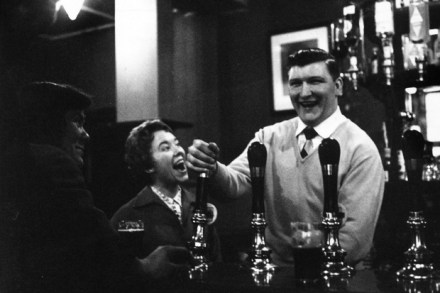
If you’ve missed the endless articles whingeing about pub closures, it must be because you’ve been too blotto to focus. It is impossible for a mediocre drinking hole to close its doors for the last time without some thirsty hack reaching for his collected George Orwell essays and waxing lyrical about the Moon Under Water and the death of the English pub. It’s true that many pubs are closing (27 a week, according to the Campaign for Real Ale) and demographic changes have called last orders for numerous decent pubs — and some gems — in areas where changing populations have seen demand dissolve quicker than a morning Alka-Seltzer. But the main reason why most pubs closed is simple: they were dreadful.

A curse on silky teabags

From our UK edition

Inventor of the silky teabag, take a bow. You have achieved something that until now no one would have thought possible. You have taken an item so simple, so perfect, so completely suited to its purpose that the idea of ruining it had occurred to literally no one — and you have ruined it. You have ruined the teabag. I first encountered this abomination a couple of years ago. Shoreditch, inevitably, in one of those places with a blackboard proclaiming their Instagram handle and a witty quote. Ordering a tea, I was presented with a cup, a pot of hot water and a teabag. I put the bag into the water, noticing as I did so the silky texture of its material, more like plastic than paper. It felt nice, a pleasing sensation on the fingertips.

The sexy new face of cigarette packaging

From our UK edition

Something for which to thank the government, at last. It is much, much more fun buying cigarettes these days. It was quite good fun when they stopped having the fags on display and you had to play a kind of pin-the-tail-on-the-donkey game with the woman behind the counter. A bit like that section in Play School where you had to guess if it was behind the round window or the square window or the other window, a sort of arched regency type of thing. The woman scurrying hither and thither, pulling back shutters and scouring the shelves, not allowed to open all compartments at one time in case everybody suddenly dies of cancer because they’ve seen some cigarettes. But now it’s better still.

Permanent ink

From our UK edition

 Brooklyn Shall I have my sister’s skin peeled off for display after she dies? Specifically, the tattooed bits — the swatches on either forearm adorned with foliate designs by her favourite artist, and the patch on her wrist inked in her own handwriting with transliterated Hebrew. I’ve always liked them, and not just because they annoy Mother. Should they be separated from her mortal remains, preserved through the wonders of mortuary science, and mounted in a shadow box to grace my bookshelf in her memory? I ran the idea by her the other day while lounging in her Brooklyn garden. Without looking up from the barbecue where she was grilling our formerly free-range dinner, Sister replied, ‘What?’ Her reaction was understandable.

The pick-up artists who seduced a country

From our UK edition

Many years ago, when I was a mere slip of a features journalist, I spent a weekend learning how to be a pick-up artist. Amazing. You assume it won’t work, that sort of thing, but it totally did. Towards the end of the second night, having not said an unscripted word in about half an hour, I found myself in the VIP room of a London nightclub, being gazed at in rapt adoration by a wildly attractive twentysomething blonde. Seriously, people don’t normally look at me like that. It was special. And then I ran away, terrified, because I had a girlfriend. My guide through all this was a man called Neil Strauss, author of a book called The Game.

In praise of Advent

From our UK edition

The first Sunday of Advent is 27 November this year. For those of us who prefer Advent services to Christmas ones, the earlier the better, frankly. I relish the frisson of gloom, foreboding and fear of judgment you get at Advent, alongside the hope. ‘The Holly and the Ivy’ is all very well, but it’s the minor chord at the end of ‘O Come, O Come, Emmanuel’ that I crave. So do thousands of others, it seems. The Advent service at Salisbury Cathedral, for example, is so oversubscribed these days that it’s repeated on three consecutive evenings, starting on the Friday before Advent Sunday. So, tears barely dry from the Remembrance Sunday requiem, you find yourself queuing in the cloisters for an hour and a half on Friday 25 November.