Miles davis

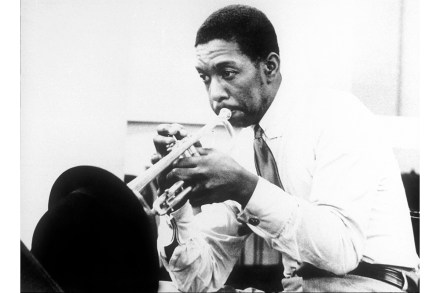
The underrated Kenny Dorham

Kenny Dorham was one of the jazz greats. The closest player in modern times to his intimate sound is probably Roy Hargrove, who, like Dorham, hailed from the Lone Star State. But despite all the accolades from the jazz cognoscenti, there is something plaintive about his career, down to the liner notes for his own albums. Indeed, right from the first sentence. Take the 1956 album Kenny Dorham and the Jazz Prophets on the ABC-Paramount label: “Kenny Dorham is one of those artists who have not as yet been accorded their deserved share of recognition.

Durham

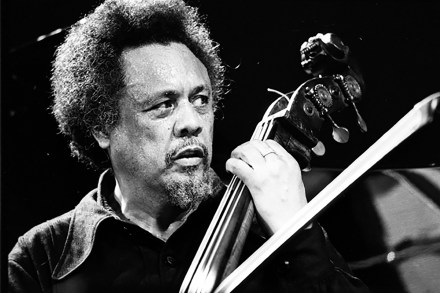
Charles Mingus at 100

"All the Things You Are” is an essential jazz standard, but in 1960 the bassist Charles Mingus gave it an update: “All the Things You Could Be by Now If Sigmund Freud’s Wife Was Your Mother.” It doesn’t take a psychoanalyst to peek under the hood of this composition. Like many Mingus tunes, the loose adaptation is fairly bipolar, picking up and dropping off in fits and starts, alternating between vacuum-tight swinging sections and meandering, tempo-less squabbles between members of the four-piece band. Mingus isn’t for the faint of heart, but on the centenary of his birth it’s worth confronting his life’s work, which surely places him among America’s most important composers.

Mingus

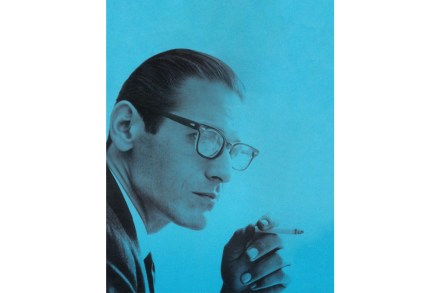
Along came Bill Evans

Everybody Digs Bill Evans was the title of one of the great jazz pianist’s early albums, but it wasn’t always clear that he dug himself, at least if you consider his turbulent personal life. There was, first and foremost, the lifelong drug habit, culminating in his death in 1980, which one friend deemed the ‘longest suicide note in history’. There was also the introspective streak that prompted Evans to doubt his own prowess even after he had become famous. But there is also the spellbinding music that casts as powerful a spell as ever. Small wonder that a cluster of purveyors of fine music, including Craft Records, Electric Recording Company and Acoustic Sounds, have rushed to reissue his works on CD and LP.

bill evans

From Cool to Cringe: what’s happened to American culture?

Back in March, around 4,000 years ago, the world was ending. Plague swept in from the east like a horde. Clam-tight lockdowns, unthinkable even days before, were announced everywhere. Who could save us? On March 18 our prayers were answered. An honor roll of Hollywood bluebloods took action. Assembled by Wonder Woman herself, Gal Gadot, they created a video montage cover of John Lennon’s masterpiece — yes! — ‘Imagine’, which she posted — thank goodness! — on Instagram. ‘We’re all in this together,’ said Gadot’s expensive oval face, and, in a sense, she was right. Will Ferrell and Mark Ruffalo, Sia and Zoë Kravitz, Norah Jones and Amy Adams: they were all in this big wet bathful of tears together.

cool cringe

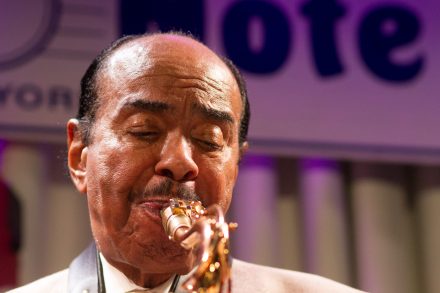
Tenor badness

In Stephen Spielberg’s 2004 comedy The Terminal, Viktor Navorski (Tom Hanks) is a native of Krakozhia, a small eastern European country engulfed in civil war. When Navorski lands at JFK, he discovers that his passport is invalid as America does not recognize Krakozhia’s new regime. He’s stuck in the airport for months and unable to accomplish his mission: completing his father’s quest to obtain the autographs of all 57 musicians in Art Kane’s 1958 photograph ‘A Great Day in Harlem’, a who’s who of jazz greats (including Count Basie, Coleman Hawkins, Dizzy Gillespie and Thelonious Monk), captured on East 126th Street in daylight without their instruments.

benny golson

The real McCoy

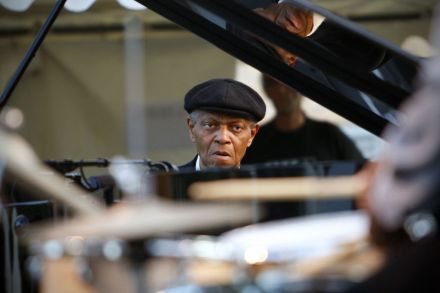
‘My current pianist, McCoy Tyner, holds down the harmonies, and that allows me to forget them,’ John Coltrane said in an interview in 1961. ‘He’s sort of the one who gives me wings and lets me take off from the ground from time to time.’ Tyner, who died on Friday at the age of 82, will be remembered for his crucial role supporting John Coltrane during some of the legendary saxophonist’s most creative years. But on the occasion of Tyner’s death it’s also worth recognizing that ‘the Real McCoy’ had a penetrating voice and lasting influence all his own.A son of west Philadelphia born in 1938, Tyner was encouraged by supportive parents and was playing piano by 13.

mccoy tyner