Migration

Brexit isn’t to blame for the Polish exodus

From our UK edition

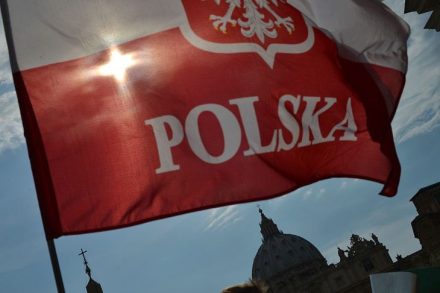
I guess the hate crime epidemic that gripped Britain after Brexit hasn't put that many people off, with new figures showing net migration of 273,000 in the three months to September 2016. That represents a decline of 49,000, of which 12,000 is due to an increase in eastern Europeans heading home (39,000, as opposed to 27,000 the previous year), which I imagine is less to do with any hostile atmosphere in Britain than the booming economy in Poland. No doubt that's the way it will be presented, though - 'Poles fleeing the Brexit terror'.

Nine questions those protesting against Donald Trump’s immigration ban must answer

From our UK edition

I wonder whether there might be any long-term effects from shouting ‘racist’, ‘fascist’, ‘misogynist’ all the time? It is possible that it is hard to think while your fingers are in your ears and you are shouting names at everybody. I just put the thought out there. Certainly the consequences of not thinking much seem to be all around us.  Though the Trump administration has decided to put temporary travel restrictions on people from certain countries, the policy seems to have certain internal inconsistencies. For instance, as Gordon Brown said in 2008, 75 per cent of Britain’s security threats originate from Pakistan.

An emperor’s inauguration

From our UK edition

Given that Donald Trump is not the most popular president the USA has ever seen, even among his own party, it is salutary to be reminded what induction ceremonies can be like for those who devised imaginative routes to power. Pertinax, who started life as a schoolmaster, was a governor of Britain and a highly respected consul before succeeding the ghastly Commodus as emperor on 30 December AD 192. But the military did not appreciate his immediate attempts to restore discipline and financial stability, and he was assassinated three months later.

Flight into Israel

From our UK edition

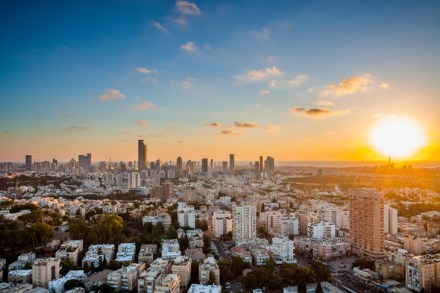
I’ve always lived in London. I grew up near Baker Street and went to school in Camden. Even when I was at college in Kent, I lived in Islington and commuted. Five years ago I moved to Belsize Park and I’ve been here, the nicest place I’ve lived, ever since. I didn’t mean to stay — I was going to see the world, but my father died and my mother said she needed me to be close. She said it with a tremor in her voice, so I stayed. London is in my heart and in my blood, but the wind has changed, like it did for Mary Poppins, and I think it’s going to blow me out of the city, all the way to Tel Aviv. The referendum result didn’t make me decide to leave, but it was a penny on the scales. This no longer feels like home.

Full text: Jeremy Corbyn’s Brexit speech

From our UK edition

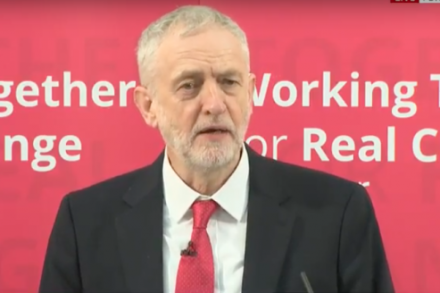
Listen to the whole speech here: Whether you voted to Leave or to Remain, you voted for a better future for Britain. One thing is clear, the Tories cannot deliver that. So today I want to set how Labour will deliver that vision of a better Britain. This government is in disarray over Brexit. As the Prime Minister made clear herself  they didn’t plan for it before the referendum and they still don’t have a plan now. I voted and campaigned to remain and reform as many of you may know I was not uncritical of the European Union. It has many failings. Some people argued that we should have a second referendum. That case was put to our party’s membership last summer and defeated. Britain is now leaving the European Union.

Immigration reaches record high – but what does that really tell us about Brexit Britain?

From our UK edition

How much do the net migration figures mean these days? The Office for National Statistics released its latest migration estimates today, which put immigration to the UK in the year to June 2016 at a record high of 650,000 - up 11,000 on the previous year. Net migration was at 335,000. That figure comprises 189,000 EU citizens and 196,000 non-EU citizens who came to Britain, and 49,000 Brits who left this country. But these figures mostly cover the period before the EU referendum. The ONS includes three months of data following June’s vote in today’s release. And the estimates for the year that follows will also reflect Britain’s current immigration arrangements, not the ones that Britons voted for in the referendum, whatever those arrangements may be.

Bordering on insanity | 3 November 2016

From our UK edition

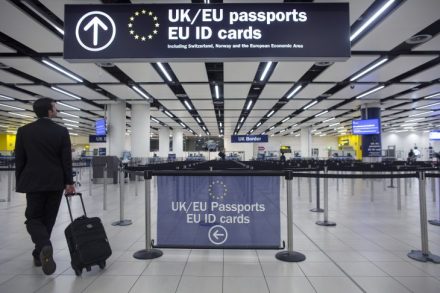
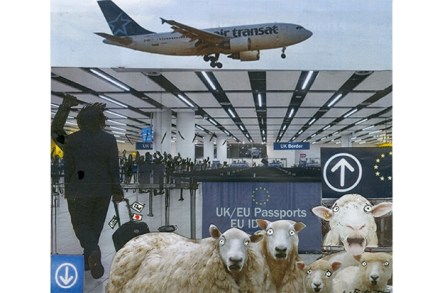
There are lots of signs at Gatwick about how it is unacceptable to be ‘rude or abusive’ to Border Force staff. One poster warns that losing your temper or gesticulating in a threatening manner could be a criminal offence. Keep a lid on it, is the-message. My wife Joanna and I recently had plenty of time to study these missives and just about kept a lid on it after returning from a weekend in Spain. It was a Monday evening that became a Monday night at Gatwick’s north terminal as thousands of travellers snaked back and forth for nearly an hour at passport control in an atmosphere that swung from anger to sheer astonishment at the incompetence of the government agency that mans the UK border at British airports.

Diary – 27 October 2016

From our UK edition

I have never met Donald Trump, but I knew his parents. A fact that makes me feel about 100 years old. Which was actually nearer the age Fred and Mary Anne Trump were when, as a teenager, I made my first trip to New York. I remember riding backwards in their limousine on the way to lunch with the extended Trump clan and the lovely Mary Anne apologising that her son Donald would not be joining us. ‘You know about Donald?’ she inquired. I nodded, and recall her adding rather wistfully, ‘He’s always been the outgoing one.’ One of the great pleasures of life, I now realise — and a fine compensation for slowly greying hair — is watching other people navigate the slalom of their careers.

The road to the Jungle

From our UK edition

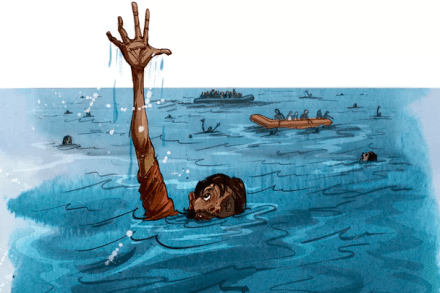
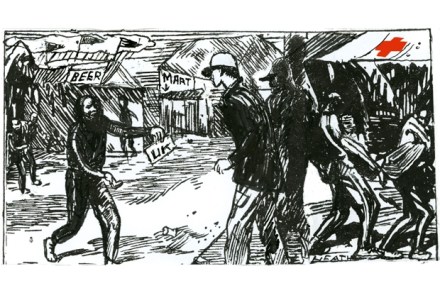
 Calais On Sunday evening a British motorist, Abraham Reichman, 35, from Stamford Hill, north London, hit two Eritrean migrants who were trying to block the A16 outside Calais. They had leapt in front of his car, he says, as he slowed down to avoid dozens of migrants on the motorway. Terrified, Mr Reichman drove off at speed to the police station, where he later found out that one of the Eritreans had died. The police released him after several hours but he is under investigation for homicide involontaire. It is not difficult to meet migrants so determined to get to the land of milk and honey on the British side of the English Channel that they are prepared to risk their lives and put those of drivers in mortal danger.

Labour asks the Government 170 questions about Brexit. But has no answer on migration

From our UK edition

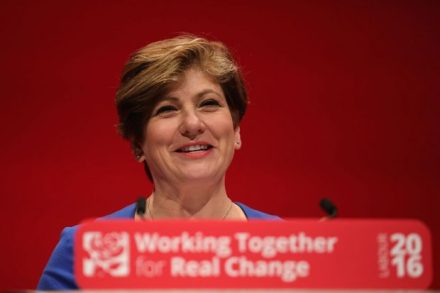
Labour wants to ask the Government 170 questions about its plan for Brexit. Yet when it comes to answering questions themselves, it seems the party is much less willing to give an answer. Emily Thornberry, in her new guise as shadow foreign secretary, was quizzed on how Labour would handle migration from the EU after Brexit on the Today show just now. And in typical fashion, she did her best to dodge the question. Here's what she said: 'Our position is that we need to be open to the idea of reasonably managed migration. And we need to have it as part of a larger negotiation but we are open to that. Our position is that it is a negotiation and our position is that nobody who voted in the Brexit referendum voted to take away someone else's job.

Who comes after Merkel?

From our UK edition

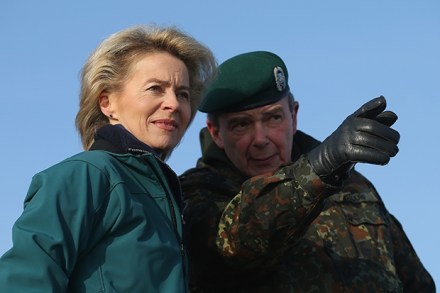
A year from now, 60 million Germans go to the polls in the most important general election in mainland Europe for a generation. The result will define German — and European — politics for the next four years. There are huge questions to be resolved, from the refugee crisis to the financial crisis, but right now the question in Germany is: will Mutti run again? Angela Merkel’s nickname, Mutti (Mummy) is a memento of happier times. A year ago, her position as matriarch of the Bundesrepublik seemed unassailable. And then, last September, she opened Germany’s borders to hundreds of thousands of fleeing Syrians. Over a million refugees arrived last year. The reaction of native Germans could be measured at the polling booths.

The Spectator podcast: The Swedish model. How not to welcome refugees | 3 September 2016

From our UK edition

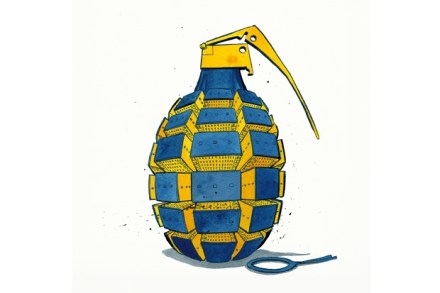
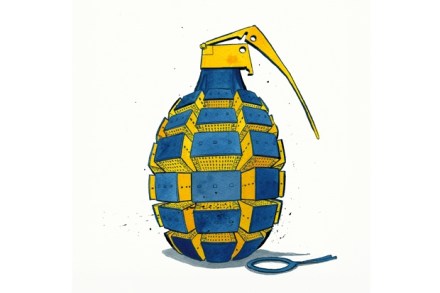
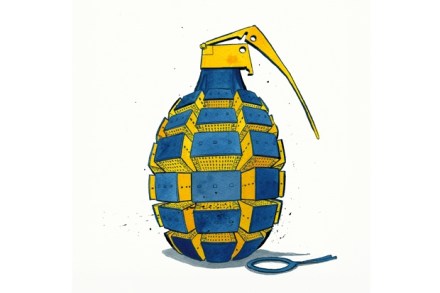
For a certain type of social democrat, no country gets them quite as hot and bothered as Sweden. As Toby Livendell writes in this week's Spectator cover story, Sweden has long regarded itself as a humanitarian superpower, taking in 650,000 asylum seekers in the last 15 years. But by far the biggest issue is integration. And this was brought to stark British attention last week when a Birmingham schoolboy was murdered with a grenade in Gothenburg. So, what has gone wrong in Sweden? To answer that question, Lara Prendergast is joined on the Spectator podcast by Fraser Nelson and Ivar Arpi. Ivar says: 'Basically the Swedish idealism ran into a big wall called reality in the autumn of 2015.

Sweden’s refugee crisis

From our UK edition

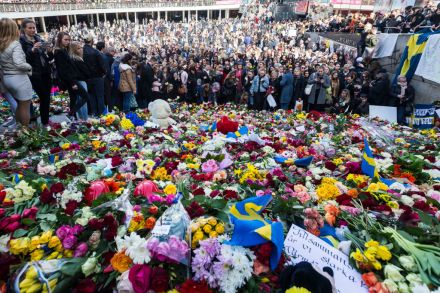
 Stockholm For a British boy to be killed by a grenade attack anywhere is appalling, but for it to happen in a suburb of Gothenburg should shatter a few illusions about Sweden. Last week’s murder of eight-year-old Yuusuf Warsame fits a pattern that Swedes have come slowly to recognise over the years. He was from Birmingham, visiting relatives, and was caught up in what Swedish police believe is a gang war within the Somali community. Last year, a four-year-old girl was killed by a car bomb outside Gothenburg, another apparent victim of gang violence.

The Spectator podcast: The Swedish model. How not to welcome refugees

From our UK edition

For a certain type of social democrat, no country gets them quite as hot and bothered as Sweden. As Toby Livendell writes in this week's Spectator cover story, Sweden has long regarded itself as a humanitarian superpower, taking in 650,000 asylum seekers in the last 15 years. But by far the biggest issue is integration. And this was brought to stark British attention last week when a Birmingham schoolboy was murdered with a grenade in Gothenburg. So, what has gone wrong in Sweden? To answer that question, Lara Prendergast is joined on the Spectator podcast by Fraser Nelson and Ivar Arpi. Ivar says: 'Basically the Swedish idealism ran into a big wall called reality in the autumn of 2015.

Barometer | 25 August 2016

From our UK edition

Golden years How many Olympic events would Team GB have to win before we could earn back the gold reserves sold by Gordon Brown? — Olympic gold medals are in fact gold-plated silver and contain only 6g of gold. Between 1999 and 2002 Gordon Brown sold off 395 tons of gold — enough to mint 64.7m medals. Assuming the number of golds on offer at the summer Olympics remains 812, as at Rio, that would mean winning every event at 79,679 Olympiads, taking us to the games of ad 320736. — It would be a different story if, as last happened in 1912, the medals were solid gold. With 500g of gold in each medal, we could achieve the feat by ad 5848.

Today’s net migration figures show the huge task facing Theresa May

From our UK edition

The good news for the Government is that net migration is down. The bad news? It's down by so little (a fall of 9,000 to a total of 327,000) that you won't hear anyone crowing about today's figures. That the 'tens of thousands' target made by the Government still hasn't been met is no surprise at all. And we can expect to see a continuation of the semantic shift from that Tory 'promise' down to a 'pledge'. So apart from telling us that, as far as net migration is concerned, it's business as usual, what do today's figures show us? For one, they make it clear that solving this issue won't be easy for the Prime Minister. Net migration from certain EU countries like Romania and Bulgaria is at a record high.

Italy’s migrant purgatory

From our UK edition

 Ravenna At a car park a short walk from Dante’s tomb, one of the gang of illegal immigrants who tell motorists where to park and hound them for cash agreed to talk to me for €20. His name was Billy, he said, and he was 22. He was from Senegal and a Muslim. He had come to Italy by fishing boat 14 months ago from Libya, where he had arrived via Mali and Algeria. He paid €200 for the trip (the going rate is said to be at least €1,000) and his boat landed at Lampedusa, 160 nautical miles from Tripoli. ‘Why did you come?’ I asked. ‘In Senegal, no jobs,’ he replied. No war either, I pointed out: ‘You’re not refugees.’ ‘Yes, we are,’ Billy insisted. ‘Tribes are fighting in Senegal.

Brexit provides the perfect opportunity to crack the immigration question

From our UK edition

The British public are clearly dissatisfied with the way our immigration system currently works. One of the main reasons that motivated people to vote for Brexit in the recent referendum is the hope that Britain could better control immigration by ending the free movement of people from the EU. For years now, immigration has been one of the issues that the public are most concerned about. But there is hope: now, more than ever, the cynicism can be cracked. There is an exciting opportunity, thanks to Brexit and the appointment of a new Cabinet, for the Government to introduce significant reforms to our immigration system to increase public confidence in it. What do the majority of the public want? Sensible stuff, unsurprisingly.

The net migration reckoning draws nearer

From our UK edition

Is the new government under Theresa May going to ditch the target to drive net migration into the tens of thousands? Amber Rudd and Boris Johnson signalled a change of policy from the back-of-a-fag-packet plan yesterday by saying the aim was to ‘bring migration down to sustainable levels’, though Downing Street insisted that this was not an end to the target, saying ‘the Prime Minister does see sustainable levels as down to the tens of thousands’. It would be odd, given May’s personal commitment to the net migration target, and her personal frustration (and that of her aide Nick Timothy) that it wasn’t met as a result - in her view at least - of special pleading from other ministers, especially George Osborne and ministers in the Business department.

After the Nice attack, Michel Houllebecq’s nightmare vision edges closer

From our UK edition

I only got around to reading Michel Houellebecq’s Submission last month, a darkly amusing book about how France destabilises as it is caught between Islamic and nativist violence. It is, even by French standards, extremely pessimistic, but then who can blame them? When I visited France last summer, I noted just how many heavily armed police there were, even in the obscure western region we were staying at; more than I’d seen in any European country apart from Northern Ireland. The owner of the campsite, who was also a local official, explained that they were expecting something terrible to happen. Which it has done, twice now, this latter atrocity worse in many ways as it involved children.