Middle east

A year in Gaziantep before the earthquake

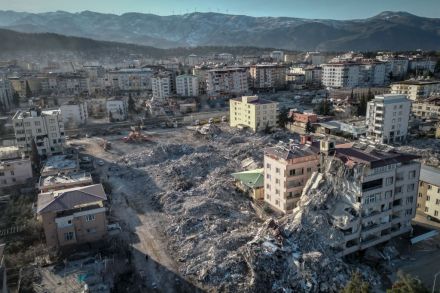
In 2013, I was studying for a Master’s degree in Beirut when a bomb went off in Baghdad. I remember receiving a message from a friend checking in to see if I was all right — even though I was 500 miles away. It can be hard to convey to people back in the United States that violence in the Middle East is not necessarily a part of everyday life. At times — in Iraq in the years following the US invasion, for example — it is. But such attacks are usually a tragic anomaly. All this stands in stark contrast to news about the earthquakes in southern Turkey and northern Syria, which struck last week and killed at least 36,000 people.

gaziantep

The missing Biden foreign policy

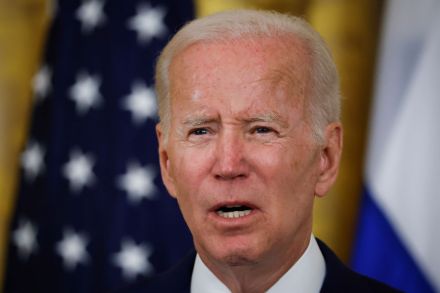
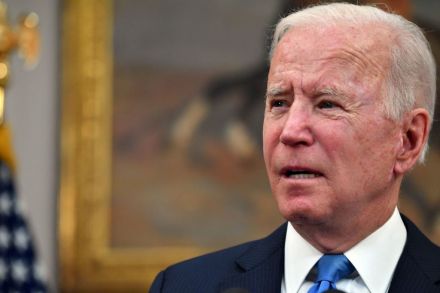
What is Joe Biden's foreign policy? It's a trick question, because he has no actual policy, no plan, no careful set of chess moves a step ahead of his adversary. America suffers for it. Biden's foreign policy initially began and ended in Afghanistan with the disastrous withdrawal that left refugees strewn across the globe. There were years, then months, then weeks, then days to plan the NEO — the noncombatant evacuation order — and plenty of planning books for one sitting on desks in places like Seoul.

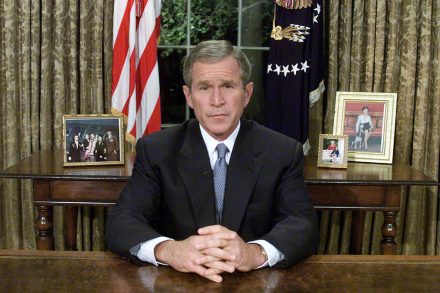
Bush is leading us to tragedy (2002)

From our UK edition

It's 20 years since the clamour for the invasion of Iraq was at its loudest. Boris Johnson, The Spectator's then editor, spoke to the Saudi ambassador to the UK, Ghazi Algosaibi. You can read more on our fully digitised archive. 'No, no,' says the Saudi ambassador. 'This is how you do it. You cannot lift your arm above the shoulder, and you must do it sideways.' He moves alongside, a big man with a faint resemblance to Leon Brittan, and makes a thwacking motion. Meet Ghazi Algosaibi, 62, a poet and author, the Arab world's leading envoy to London, who has recently earned not just a personal rebuke from Jack Straw, but the demands of the Jewish Board of Deputies that he be expelled from the country.

Can Israelis trust the UN?

From our UK edition

You probably think you’ve heard every story there is to hear about people getting fired over their tweets. Well, here’s the story of Sarah Muscroft. She’s got them all beat. Until last Friday, Muscroft was the head of the UN Office for the Coordination of Humanitarian Affairs in the Occupied Palestinian Territory (OCHA). For 72 hours beginning on 5 August, Islamic Jihad fired 1,000 rockets into Israel and Israel responded with 170 counterstrikes, with the terrorist group citing as its pretext Israel’s targeted killing of two of its senior commanders and the arrest of dozens of its members. Eventually, a ceasefire was brokered with the assistance of Egypt.

The West cannot do business with Iran

From our UK edition

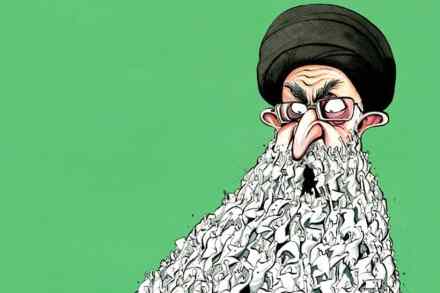
Salman Rushdie's would-be assassin might have been a lone wolf. He might have had no contact with military or intelligence figures. He might never even have set foot in Tehran. But be in no doubt: he acted, in effect, as an agent of the Islamic Republic of Iran. Under the terms of the fatwa issued by Ayatollah Khomeini in February 1989, Rushdie ‘and all those involved in its publication who were aware of its content, are sentenced to death’. Khomeini urged 'brave Muslims to quickly kill them wherever they find them so that no one ever again would dare to insult the sanctities of Muslims', adding: ‘Anyone killed while trying to execute Rushdie would, God willing, be a martyr.

Don’t expect much from Biden’s Middle East trip

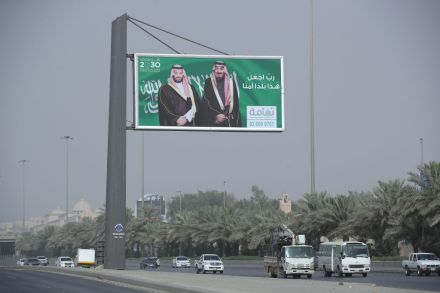
It took Barack Obama less than three months to fly to the Middle East for a visit, landing in Iraq to visit the tens of thousands of US troops stationed there at the time. Donald Trump’s first overseas trip as president was to the Kingdom of Saudi Arabia (also three months into his tenure), where he basked in the limelight, watched in awe as his face was plastered on buildings in Riyadh, and hovered over a glowing orb with King Salman. Now, eighteen months into his presidency, Joe Biden will be spending a few days this week in the region, making stops in Israel, the West Bank, and Jeddah, Saudi Arabia, for a summit of the Gulf Cooperation Council.

Are the Abraham Accords working?

From our UK edition

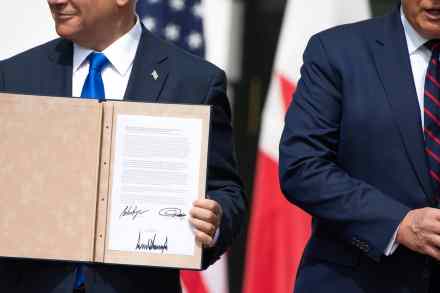
Two years ago, UAE citizens were barred from entering Israel. No longer. The inaugural Emirates flight touched down in Tel Aviv last week, a Boeing 777 carrying 335 passengers. For much of the 20th century, the only thing that the Middle East could agree on was the destruction of the Jewish state. But attitudes are changing. The purported reason is the so-called Abraham Accords, signed in 2020 after Donald Trump decided to solve the seemingly intractable problem of the Middle East. If Don the Dealmaker couldn’t do it, who could? Seven decades of antagonism had failed, the White House argued, and the Palestinian cause seemed as troubled as ever, so why not try a different approach?

‘America or chaos’ is a false choice

There is an age-old dogma in the US foreign policy establishment: when America pulls back, chaos ensues. Like an anti-inflammatory that keeps arthritis under control, Washington’s presence in this or that region keeps enemies cowed, partners reassured, and the barbarians at the gates. Of course, just because an argument is popular doesn’t mean it’s accurate. There are several problems with the “America must be everywhere, at all times” line of thinking, the most poignant of which is that it turns the US military into an agency of global rent-a-cops.

Why is Biden copying Obama’s mistakes with Iran?

From our UK edition

There was a picture taken on Tuesday that says more than just a thousand words. The photograph was snapped in Sharm el-Sheikh and shows Abu Dhabi Crown Prince Mohamed bin Zayed Al Nahyan and Israeli Prime Minister Naftali Bennett seated either side of Egyptian president Abdel Fattah el-Sisi. According to the Egyptian president’s office, they met to discuss ‘the repercussions of global developments, especially with regard to energy, market stability, and food security’ but ‘they also exchanged visions and views on the latest developments of several international and regional issues’. That’s a very wordy way of saying ‘Iran’.

Did the realists underestimate Putin?

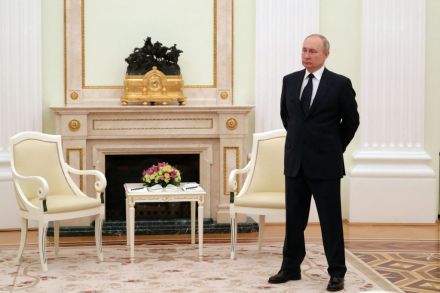
Liberal internationalists, neoconservatives and NeverTrumpers are having the time of their lives these days, ridiculing anyone on the political right who has ever said a good thing about Vladimir Putin. Those “Putin groupies” as a Wall Street Journal columnist described them, include former Italian prime minister Silvio Berlusconi, far-right French presidential candidate Marine Le Pen, Hungarian prime minister Viktor Orbán and, of course, Trump himself. Trump described Putin as a “genius” and said he was a better president than Barack Obama — and he isn’t the only American president to compliment the Russian leader. President George W. Bush said about Putin, “I looked the man in the eye. I found him to be very straightforward and trustworthy.

putin

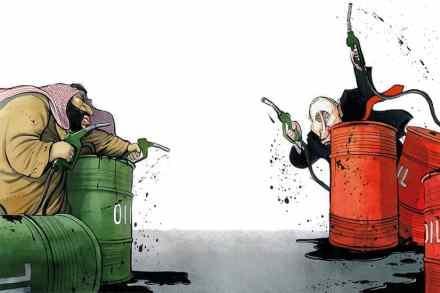
The West has to bite its lip for Saudi oil

From our UK edition

It would be ridiculous to claim that Boris Johnson’s visit to Saudi Arabia is not morally problematic. He is going to a country which held a mass execution for 81 people this weekend – a record number – and to visit a man who US intelligence blames for the brutal murder of the journalist Jamal Khashoggi. Yet, if the West wishes to reduce Vladimir Putin’s leverage – and stabilise the oil market – then it needs Saudi Arabia to pump more; no country has more spare capacity than Saudi Arabia, which could produce another 1.5 to 2 million barrels a day if it wanted to.

Can Boris get the Saudis to pump more oil?

From our UK edition

The oil price is up by more than 40 per cent since the start of the year. It is being driven up by the Russian invasion of Ukraine, the lack of investment in oil and turning the world economy on and off again: US production is still not back to pre-pandemic levels. In the immediate term, as I say in the Times today, pretty much the only way to bring the price down is to get Saudi Arabia – which has 1.5 to 2 million barrels a day of spare capacity – to pump more. The West’s relationship with Saudi Arabia has always been morally problematic.

Why would the Saudis bail out Biden?

From our UK edition

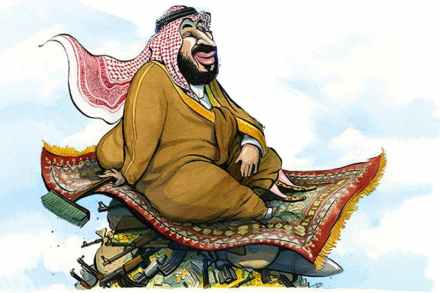
Is Saudi Arabia shunning Washington? Mohammed bin Salman has reportedly been refusing to phone Joe Biden, who wants the kingdom to turn on its oil taps as the West desperately seeks alternatives to the Russian energy market.  Riyadh – the world’s largest oil exporter – has so far failed to accommodate Washington’s pleas. Ahead of the Russian invasion in mid-February, the US asked the Opec+ cartel – of which Saudi Arabia is the most important member – to produce more oil to slow the already rising prices. Opec+ stood firm, and said they would increase production by 400,000 barrels a day in April, a rise agreed before the threat of a Russian invasion of Ukraine.

terror

Noninterventionists never win arguments

I’ve been thinking about where I was on the eve of the US invasion of Iraq in 2003, and my memories of the event are quite depressing. What have we learned? As a research fellow at the Cato Institute at that time, I was working with other analysts preparing research, authoring commentaries, publishing op-ed articles and giving interviews to the broadcast media, warning about the consequences of the coming American military conquest in the Middle East. It's not polite to toot one’s own horn, but we were right.

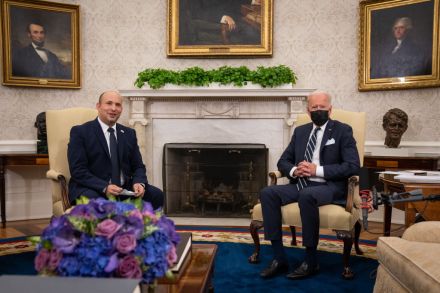
Israel and America are drifting apart

Israeli Prime Minister Naftali Bennett has revealed what members of his country’s national security elite have been chatting about behind closed doors for quite a while. “The United States has been, and will always be our best friend,” the Israeli PM said in a speech delivered before the Institute for National Security Studies (INSS) at Tel Aviv University. Then came the big “but”: “Washington has its own set of interests, which we must honestly admit do not always overlap with ours.” “We are speaking honestly and understand one another,” Bennett elaborated. America’s “interest in the region is dwindling. The United States is currently focused on the Russian-Ukrainian border and it is in a strategic conflict with China.

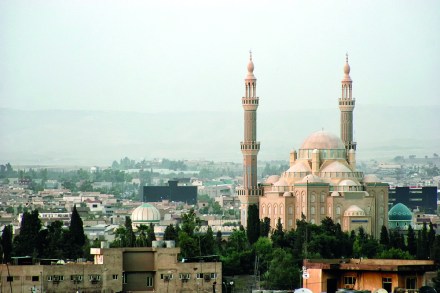
Return to Iraq

The land around Erbil, the capital city of the Kurdistan region of northern Iraq, is mostly beige, flat and seemingly endless. The mountain has seen a lot of action. The terror group ISIS remains dug in around it and the Kurdish peshmerga, with whom I recently spent time, continue to battle against them. Iraq. Two syllables, almost two decades of conflict. When people think of Iraq they think of several things: the disastrous 2003 war, oil (like all Arab countries in the popular imagination), ISIS and, if they’re a bit older, the mustachioed features of Saddam Hussein that stood, in the early years of this century, for the type of dictator painted as the West’s greatest threat. I think of all those things, too. But they’re leavened by something else: family.

iraq

The fantasy of an Israeli-Palestinian ‘peace’

Long-time readers of this site may be aware that yours truly has not only applauded the Trump administration’s successful efforts to normalize Israel’s relationship with several Arab countries but has also proposed awarding the Nobel Peace Prize to Jared Kushner, the architect of the Abraham Accords. There were many reasons for my bullish sentiments regarding the Trump administration’s Middle East policy. First and foremost, as I pointed out, it disrupted the old American paradigm that held that any effort towards rapprochement between Arabs and Israelis hostage to the ultimatums of the radical Palestinian leadership.

peace palestinian

Biden’s Pentagon wants to keep the military overstretched

Nearly ten months after President Biden ordered defense secretary Lloyd Austin to undertake a comprehensive, across-the-board review of America's military overseas, the Pentagon finally concluded the study this week. And it landed with a loud thud of disappointment. So far as we can tell (the entire product won’t be released to the public), the results of the Global Posture Review (GPR) range from unimaginative to pitiful. Or, in the words of one congressional aide familiar with the findings, "No decisions, no changes, no sense of urgency, no creative thinking. Lots of word salad.” Of course, the GPR is hardly the first government report to be classified this way.

military

Goodbye, Lebanon

I’m sorry, Lebanon. We love you but we just can’t take it anymore. We’re breaking up with you. We’ve lived in Lebanon, on and off, for almost a decade. Our retreat began over the summer when we decided we couldn’t risk going to the beach with our daughter, who’s almost two. Every year, the Lebanese National Council for Scientific Research puts out a report that says that the seawater around many of Lebanon’s beaches is full of fecal bacteria. Raw sewage is discharged into the sea: you are literally swimming in shit. From some beaches, you can see the pipe and a murky flow of streptococci. We tried. We really did. We visited a private beach club that was supposed to have some of the cleanest water in the country.

lebanon

How did US intelligence get Afghanistan so wrong?

From our UK edition

It may well go down as the understatement of the year. In a quite extraordinary address to the nation after the fall of Kabul to the Taliban, the US President made this admission: ‘The truth is this did unfold more quickly than we had anticipated. So what’s happened? Afghanistan’s political leaders gave up and fled the country. The Afghan military collapsed, sometimes without trying to fight.’ https://www.youtube.com/watch?v=OUrivUGaATM If this were the only intelligence failing of recent years, then maybe a little indulgence could be shown More quickly? Than we had anticipated? As recently as 10 August, US intelligence said that it would take the Taliban up to 90 days to take Kabul.