Mental health

Therapy speak is turning us into sissies

As one who’s always been keen on putting their hand up and admitting to their faults (a perverse form of boasting, I suspect) I was always suspicious of the medicalization of character flaws which apparently render us helpless in the clammy hands of Fortuna. It was bad enough when friends who’d generally always seemed highly capable jumped on the ADHD bus in later life, suddenly flinching at loud noises when they’d spent a good deal of their lives dancing to ear-splitting techno.

therapy speak

Therapy speak is turning us into sissies

As one who’s always been keen on putting their hand up and admitting to their faults (a perverse form of boasting, I suspect) I was always suspicious of the medicalisation of character flaws which apparently render us helpless in the clammy hands of Fortuna. It was bad enough when friends who’d generally always seemed highly capable jumped on the ADHD bus in later life, suddenly flinching at loud noises when they’d spent a good deal of their lives dancing to ear-splitting techno. But it was another sort of annoying when ex-friends who were merely awful people started blaming all their past ghastliness first on ADHD and then – still not feeling special enough – on autism, a serious condition which affects a tiny amount of people.

Big Pharma wants to sell you psychedelic drugs

This year is set to be the year of psychedelics – Trump’s trip, you could call it. Since the President signed an executive order supporting the use of psychedelic medicines in April, no fewer than six federal agencies have announced initiatives to help usher the industry along. The agencies, mainly connected to the Department of Health and Human Services, have approved multiple million-dollar initiatives to research, approve and roll out psychedelics. A whole fleet of startups are now circling the Food and Drug Administration. Three of these have Commissioner’s National Priority Vouchers from the FDA, which means that when they submit their new drug applications, the agency will make a decision within two months of filing.

psychedelics

The ADHD-ification of squishy toys 

‘Feeling a bit stressed or anxious? Want to practise more mindfulness? Looking for good vibes and your best mellow and chill?’ This is not an advert for a life coach but the official sales pitch for NeeDohs, the much-coveted new children’s toys. These are not mere playthings, you see. Thanks to the ADHD-ification of childhood, they are ‘sensory fidgets’. NeeDohs are produced by American manufacturer Schylling. They are ‘the original sensory squish toy’, but others have appeared on the market, such as squishy ‘original viral dumplings’, produced by RMS International. Squishies are the latest craze – brightly coloured blobs of plastic to squash, squeeze, stretch and supposedly help children who have trouble focusing. Squishy, stretchy toys aren’t really new.

How the movies improve your mental health

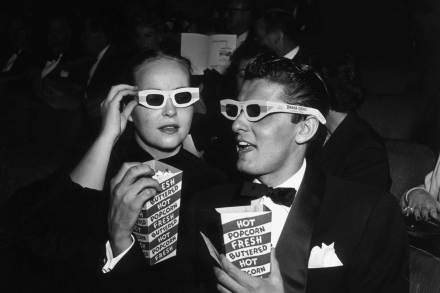
If you subscribe to The Spectator, there’s a fair chance you are a committed reader. Of books, I mean. Books are your friends, they don’t frighten you. Even long books. But here’s a behavioral oddity that I’ve noticed in others, and in myself. We tend not to read many books twice, but we do often watch movies twice, even more than twice. Of course, length may have a lot to do with it; movies are rarely more than two hours long; books can often take days to finish. But is there something more to it, something deeper? Down here on the beaches in Florida we now recognize something the psychologists are calling “cinematherapy.

The banality of Meghan the Martyr

The great Dolly Parton once quipped “get down off your cross, honey, someone needs the wood.” This remark, aimed at attention-seeking self-described martyrs, could almost have been dreamt up for the Duchess of Sussex. Meghan, along with her ever-subservient husband Prince Harry, is currently bringing the gospel according to Meghan to Australia. During her quasi-royal tour to promote a wellness weekend that she is the keynote speaker at, Meghan has invented a new catchphrase – “Call me Meg” – and has been photographed smiling and looking appropriately radiant. The Netflix cash might be drying up, but enough has been banked for her to look a million dollars in the various Instagram-friendly outfits she has been sporting.

Meghan

My search for the perfect New York therapist ended badly

Before moving to New York City, I had a particular vision of what my life as a writer in this fabled land of opportunity would look like. I’d wear sleek, black turtlenecks and skinny jeans. I’d go to diners and eat bagels. I’d defy the caloric calculus and stay svelte. I’d write at my window like Carrie Bradshaw, getting paid at least $2.50 per word. I’d go to book parties and stroll through the West Village, occasionally bumping into a semi-famous friend. We’d spontaneously drink wine. Perhaps most importantly, I’d have an excellent therapist – someone who had many leather-bound books, a calm and reassuring presence that could effortlessly calibrate my mental state. He’d look a bit like Wallace Shawn or maybe Barbra Streisand.

How AI led a psychiatrist to a breakdown

This is the story of Paul, a 52-year-old psychiatrist who had a psycho-spiritual crisis triggered by overwork and overuse of AI. But this is not a usual AI cautionary tale, because Paul also says AI helped him navigate said crisis and make sense of it. Is he still in the grip of AI-induced mania? You decide. Paul has ADHD, and took a common form of stimulant to treat it until recently. He is interested in big ideas and spirituality. Early last year, he was working freelance and using AI to help him produce two or three 5,000-word reports a day. Because it was so useful at work, Paul started talking to AI more and more, sometimes for 20 hours a day. One night, he uploaded books by Epictetus and Marcus Aurelius into an AI and spent the night chatting to “them.

The uncomfortable truth about the new Mental Health Act

From our UK edition

Three years ago, Nottingham University students Grace O’Malley-Kumar and Barnaby Webber, along with caretaker Ian Coates, were murdered by Valdo Calocane in a psychotic rampage. These were preventable deaths. Calocane should have been detained long before he went on his killing spree. The fact that he wasn’t is the consequence of a decade of progressive ideology in the NHS and police, who turned a blind eye to Calocane’s psychosis in part because he was a black man. By 2023, there could have been no doubt about his violent tendencies. In 2020, he was arrested after he attempted to force entry into his neighbour’s flat, believing (falsely) that his mother was being raped inside. Just 11 minutes after he was released on the same day, he attempted to force a woman’s door.

The death of personality

From our UK edition

My late mother was a kind woman – who I treated badly in adolescence, as teenage girls are often inclined to do – so the few times she said nasty things to me stick in my mind. In fact, I can only think of one: when I was 11, she told me that I had ‘no personality’. I remember sitting in my bedroom, staring at a poster of David Bowie, my eyes practically crossed in crossness. What did she mean, ‘no personality’? I was a right weirdo, already well under way with the process of changing myself from a wholesome working-class Bristolian schoolgirl into a total freak, thanks to growing immersion in the works of the Velvet Underground and Oscar Wilde.

The art of owning up

From our UK edition

Though Rebecca Culley is obviously a wrong ’un – having stolen £90,000 from her dear old gramps while pretending to care for him and only spend a minimum of his cash on ‘bits and bobs’ – I couldn’t help feeling a flash of admiration for her. When she was caught bang to rights, she diagnosed herself as a ‘spoilt brat’. At last, a person with lousy personality traits – in this case acquisitiveness, laziness and dishonesty – has refused to reach for some bogus medical synonym to justify their behaviour and has used words which all of us can read and think: ‘Yep, sounds about right.

Why are psychiatrists scared of sectioning dangerous patients?

From our UK edition

The police initially treated last weekend’s stabbings on a train near Huntingdon as a possible terror attack, before confirming it wasn’t. Since then, it has been widely reported that the suspect, Anthony Williams, told one of his victims that ‘the devil’s not going to win’ as she pleaded with him not to stab her. So instead of terrorism, the outlines of another familiar British tragedy have begun to take shape: a violent outburst by a man apparently in the grip of severe mental illness. Why would someone with severe mental illness be able to roam in public? It is partly because of underfunded public services. The number of mental health beds in the NHS decreased by a quarter between 2010 and last year.

The inconvenient truth about cannabis and mental illness

From our UK edition

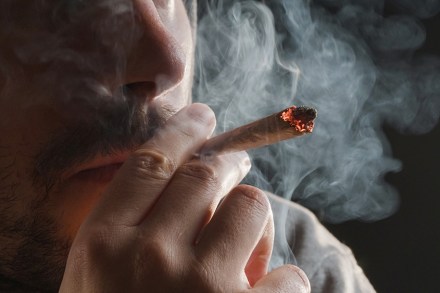
Mash’s older brother was the same age as Anthony Williams when he slaughtered a stranger in a brutal and random attack. He was in the grip of a psychotic disorder caused by cannabis. We do not yet know what drove Williams, a 32-year-old African Caribbean man, to allegedly try to murder ten people during a 14-minute knife rampage on a train. But Mash is in no doubt cannabis often plays a part in attacks like these. ‘In my community smoking weed is normalised,’ he says. ‘We laugh and joke about hearing voices or having a “para” [a paranoid fit].’ He counts on his fingers: ‘Two brothers, two cousins and multiple friends’ who have experienced hallucinations and delusions. He shakes his head sadly. ‘Weed is killing my people.

Perfection: Hampstead Theatre’s The Assembled Parties reviewed

From our UK edition

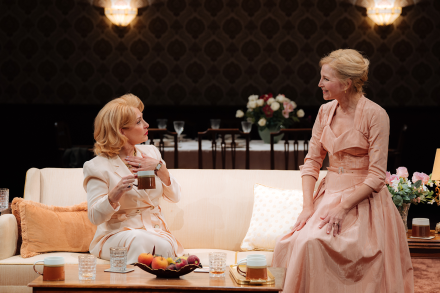
The Assembled Parties, by Richard Greenberg, is a rich, warm family comedy that received three Tony nominations in 2013 following its New York première. Hampstead has taken a slight risk with this revival. The cryptic title doesn’t suggest an easygoing drama full of excellent jokes. The Yiddish slang may be unfamiliar to English ears, and the social pedigree of the family needs explanation. These are wealthy New York Jews living in a 14-room apartment which they rent but don’t own, so their fortune is insecurely anchored. And the action starts in 1980 and fast-forwards to 2000 so it feels like a period piece aimed at the over-sixties. Those drawbacks aside, the show is a sensation.

Every line in the new Alan Partridge is perfect

From our UK edition

By now, viewers of TV thrillers are no strangers to a baffling prologue – but this week brought a particularly extreme example. Nine Bodies in a Mexican Morgue opened with shots of a desert, a cactus, an animal skull nailed to a cross and a moustachioed man driving a battered pick-up truck with a Virgin Mary on the dashboard. So we were definitely in Mexico. For a while, however, that was about all that was clear, as the words ‘Day Nine’ flashed up and the truck’s unidentified female passenger spied on a dilapidated military base through binoculars.

The lunacy of emotional support animals

From our UK edition

Naturally, the start of the new school year is often stressful for pupils. Perhaps those anxious children returning to their classrooms this week could follow the example of Milly, a young Lancashire student. When picking up her GCSE results from her school, Tarleton Academy, near Preston, she brought her ‘best friend’ Kevin – a four-year-old ram. Milly says Kevin is her ‘therapy sheep’. He accompanies her ‘pretty much everywhere’. He was her date to the school prom, wearing a halter to match her dress. Milly seems resilient enough: later this year she is going to compete in the Young Shepherd of the Year competition. Perhaps her unwillingness to be parted from Kevin displays her dedication to her work.

The problem with psychiatrists? They’re all depressed

From our UK edition

Edinburgh seems underpopulated this year. The whisky bars are half full and the throngs of tourists who usually crowd the roadways haven’t materialised. There’s a sharp chill in the air too. Anoraks and hats are worn all day, and anyone eating outdoors in the evening is dressed for base camp. Perhaps tourists don’t want to travel because they’re too depressed. That’s the specialism of Dr Benji Waterhouse, an NHS shrink, who writes and performs comedy about his patients. Dr Benji is an attractive presence on stage with his crumpled Oxfam clothes and his dreamy, half-shaven look. He could be the guy who tunes up U2’s guitars. His act is very funny and it contains some amazing revelations.

Are antidepressants making Americans violent?

On April 20, 1999, Eric Harris and Dylan Klebold entered Columbine High School in Colorado, armed to the teeth, and set about murdering their fellow classmates and teachers. When the shooting was over, 12 children and one teacher lay dead. Harris and Klebold were dead, too, and 20 others were wounded. Within a little over a week of the atrocity, there was already speculation that psychotropic drugs might have been a factor, specifically the powerful and relatively new antidepressant Luvox (fluvoxamine), which Harris was known to have been taking. Fluvoxamine is a selective serotonin reuptake inhibitor (SSRI), a class of antidepressant medication that was first trialed in the 1970s and then brought to market in  the US in the late 1980s.

antidepressants

In defence of benzos

From our UK edition

In the latest series of The White Lotus – a moral fable about the narcissism and toxicity of the privileged class – Parker Posey plays Victoria Ratliff, a Southern matriarch routinely spaced out on the tranquilliser lorazepam. Her daughter Piper asks why she needs it. ‘Certain social situations make me anxious,’ she drawls. When her husband Timothy (Jason Isaacs) gets word that his crooked financial empire is about to crumble, he starts necking Victoria’s pills in secret before swiping the bottle. My ears always prick up at the mention of lorazepam because, like Timothy Ratliff, I have taken it illicitly to manage anxiety. However, I was not stealing it from my wife, but receiving it in the post from my mother.

The science of a happier 2025

From our UK edition

As 2025 gets under way, I’m going to guess that one of your hopes for the coming year is ‘to be happy’. I’m also going to take a punt that you’re likely to spend a considerable amount of time, effort and money doing things you hope will make you feel that way. But considering that happiness is the number one goal of most people living in the western world, here lies the unspoken paradox at the heart of this tireless quest. Most of us can reel off a list of things that we believe will make us feel good – a great holiday, a delicious dinner, a promotion at work, fabulous sex. Yet many still don’t have a clue about how the feeling of pleasure is made in our brains in the first place. And knowing would be an incredibly useful way to work out how get more of it in 2025.