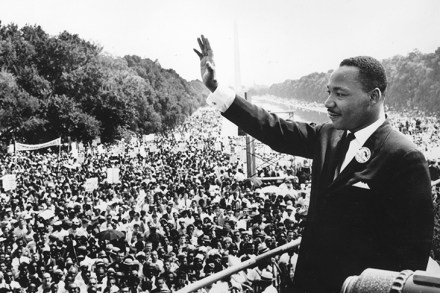
Martin luther king

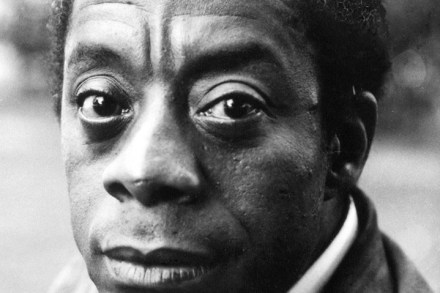
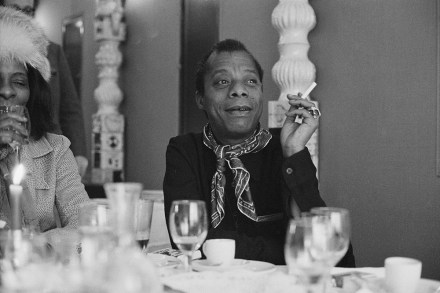
James Baldwin – dogged by painful uncertainties throughout life

From our UK edition

James Baldwin, like many American novelists before him, F. Scott Fitzgerald and John Dos Passos included, spent his formative years flitting restlessly between New York and Europe – New York being a source of fascination but also of creative burnout. He completed his first novel, Go Tell It On the Mountain (1953), not in Harlem, where he grew up and set the book, but in a Swiss chalet owned by the family of his then boyfriend, Lucien Happersberger. As he lived and worked in Loèche-les-Bains, Baldwin reasoned that the village children who shouted ‘neger’ at him did not mean to be unkind. They were simply curious and could never have known ‘the echoes this sound raises in me’.
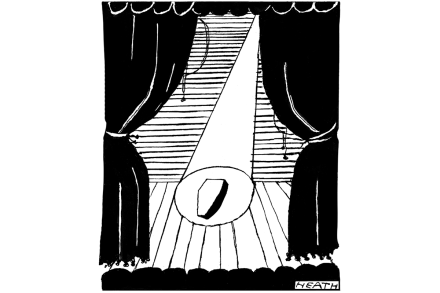
The myth of human sacrifice

Most of us indulge in mild fortune-telling. We think "If the light changes before I count to five, I’ll get the job" or "If the solitaire hand comes out my tests will be negative’, and so on. We understand prophecy as the ability to foretell the future. But biblically, prophecy was not prediction but castigation. And prophets were those who were inspired by God to describe the present. Dr. King, Malcolm X and Charlie Kirk were modern prophets. Their lives and speech forced the populace to confront the unacceptable and obvious, which is why they were killed. Mass murderers and political assassins are incapable of facing the truth that their fury is not caused by "the other" but by their own mind.

david mamet

Greener pastures for ex-congressman Mark Green

The Republican majority in the House is down to +7: Representative Mark Green of Tennessee’s 7th congressional district officially resigned on Monday. Green was the subject of a rather messy scandal in his final term: his wife of 35 years initiated divorce proceedings last September, wrongly accusing the congressman of having an affair with a 32-year-old female Axios reporter in the filing. He was, in fact, cheating on her with a different young woman, who exonerated the reporter. “We’ve all had to basically grieve the loss of the person that we thought was our father,” Green’s daughter Catherine told local press at the time. “My dad sells himself in politics as being a Christian, conservative family man... His actions in the last, whatever, year have not been that.

Rep. Mark Green (R-TN) chairman of the House Homeland Security Committee

Why does James Baldwin matter so much now?

From our UK edition

James Baldwin matters. To veteran Baldwin admirers, his renewed prominence comes as a surprise after decades of indifference. This year, in the centenary of his birth in Harlem, Baldwin has seemed to matter more than at any time since his heyday, when he combined the roles of writer and civil rights spokesman. Between 1961 and 1964 he produced three bestselling books – two collections of essays and the novel Another Country – as well as a stylish collaboration with the photographer Richard Avedon and a Broadway play. In May 1963, Time put him on its cover (Martin Luther King had to wait until the following January). Life called him ‘the monarch of the current literary jungle’.

The game’s up for ‘anti-racist’ racism

From our UK edition

There are only a few rules to column-writing. One of the strictest is never to waste time bouncing off the effluent of morons. So, for instance, it is a rule among British columnists not to use the term ‘Owen Jones’ in an article. It is too easy. Every couple of hours there will be another gaseous eruption. For example, this past week Jones, a YouTuber, has been engaged in campaigning to persuade a ‘queer’ British entrant in the Eurovision Song Contest to withdraw from the competition because of Gaza. It is by no means clear how much the citizens of Gaza care for the ‘solidarity’ of a couple of gay blokes in the UK.

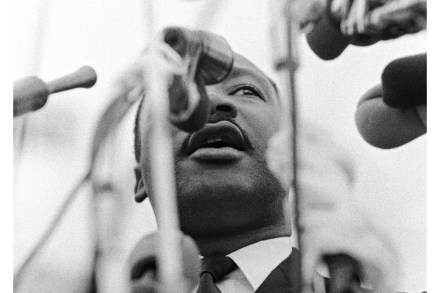
Who was the real Martin Luther King, Jr.?

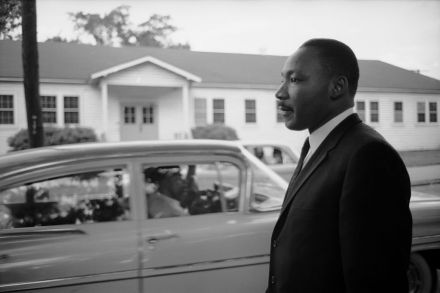
Jonathan Eig’s new King: A Life (KAL) is the first comprehensive biography of the black civil rights hero to appear in more than thirty years, and it will succeed my own Bearing the Cross (BTC), published in 1986, as the standard account. One normally does not review a book one’s blurbed — I’ve called it “a great leap forward in our biographical understanding” — nor where one’s actively aided the author’s research and read his manuscript multiple times. But comparisons between KAL and BTC will be legion, so highlighting the three most significant ways in which the two biographies differ will be a service both to the thousands of readers whom Eig’s volume should attract and to students of King’s life more generally.

king

Hoover damned

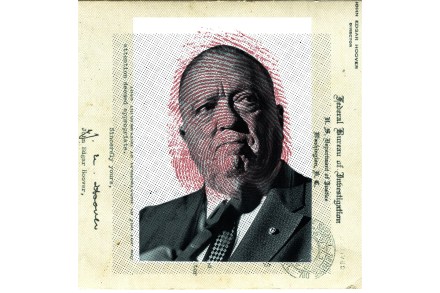
When J. Edgar Hoover died in May 1972 at seventy-seven, he had been director of the Federal Bureau of Investigation for forty-eight years, ever since progressive attorney general Harlan Fiske Stone had promoted the then-obscure twenty-nine-year-old Justice Department bureaucrat in 1924. With fewer than 400 agents, limited responsibilities, and a reputation badly tarnished under a corrupt previous attorney general, what was then called the Bureau of Investigation offered modest prospects. Still, the new boss set out to clean house, institute stringent hiring standards and impose a culture of science-based crime-fighting on his federal agents. One new hire in 1928 was Clyde A.

hoover
honorary rudy giuliani

Who really deserves to have their honorary degree revoked?

The first time President Trump was impeached by House Democrats was for his “high crime” of having a telephone conversation with Ukrainian president Volodymyr Zelenskyy. There were some other minor details — and Trump was acquitted on February 5, 2020. While the impeachment failed to deliver his removal from office, it did elevate a minor figure to the stature of hero among die-hard Trump haters: Alexander Vindman, who served on the National Security Council. Vindman had conjured the story that Trump’s phone call entailed an impeachable “abuse of power.” Vindman’s feverish dream excited others, but there was no substance to it. Heads of state have hard-ball conversations all the time.

The sin of neutrality

From our UK edition

Yet again, millions of civilians across the Horn of Africa are starving. The world blames the crisis on drought and climate change, which nowadays is the way we excuse these countries for environmental mismanagement. But as ever, war is really the single greatest reason why people are killed year after year in this region. And while western countries pour billions of dollars of food aid into Ethiopia, Somalia and South Sudan, the weapons flooding those states originate mainly from Russia, China, Belarus – and Ukraine. In response to an article I recently wrote in The Spectator about why I think so few African governments condemn Russia’s invasion of Ukraine, I have had the usual deluge of ad hominem attacks so familiar to anybody who dares to criticise African governments.

Sidney Poitier refused to be defined by race

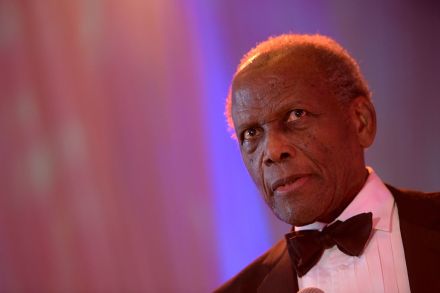
The actor Sidney Poitier, who has died at the age of ninety-four — a month shy of his ninety-fifth birthday — has justifiably been celebrated as one of the last remaining actors from "Old Hollywood." Poitier continued to act until 1997, with his final role being a somewhat anti-climatic appearance as an FBI director in the indifferent remake of The Day of the Jackal. But his heyday came in the Fifties and Sixties, when he established himself as the first bona fide African-American box office draw and a performer of rare force and charisma.

Sidney Poitier

Why great speeches are made for stage and screen

From our UK edition

Curious thing, writer’s block. If you believe it exists. Terry Pratchett didn’t. ‘There’s no such thing,’ he said. ‘It was invented by people in California who couldn’t write.’ He had a point. Writers write, period. But there is a syndrome in my house known as Not Starting Anything New Through Fear Of It Being Not Very Good. Less catchy than ‘writer’s block’, but arguably a more accurate description of the condition. My Covid-induced version of the above involved endlessly ‘honing’ an already completed play about my mother to devastatingly little effect and musing on the oldest creative question of all: is there a formula for writing success, and if so what is it?

Can the republic survive?

‘A republic, if you can keep it.’ That was Ben Franklin’s famous response when asked, as the Constitutional Convention ended in 1787, what sort of government the delegates had crafted. Time was, I thought Franklin's answer droll. But on July 4, 2020, I wonder. A republic depends on the rule of law. The rule of law has been having a hard time of it lately. So: can we keep it? I have never been tempted to equate the equality celebrated by the Declaration of Independence with egalitarianism. The philosopher Harvey Mansfield was obviously correct, I believe, when he spoke of the 'self-evident half-truth that all men are created equal.' Differences in talent, disposition, family situation, and plain dumb luck inevitably result in differences in achievement.

republic

I will not be silent

After the horrible death of George Floyd in Minneapolis, I started to grow increasingly uncomfortable by what I saw. I saw the legitimate grievances of African Americans who for too long have failed to see their lives improve. I saw virtue-signaling whites lecture the rest of us to do something. My heart grew heavy. I was told again and again that I had 'white privilege’; that America suffered from 'institutional racism’; that the original sin of slavery made the country I love so deeply flawed. I reached my boiling point as I drove my kids to meet up with friends where I shared my discomfort with the narrative being told about America. In the car, we talked about what's been happening.

silent

The strange new liberal attraction to the feds

In a political era defined by abnormalities, few developments are as bizarre as the newfound liberal admiration for federal law enforcement. Given its rich history of activism and countercultural tendencies, the left has traditionally regarded federal law enforcement with hostility. Looking back, this attitude has been largely earned. Throughout the 20th century, radical leftists were relentlessly targeted under the guise of protecting America from seditious ideologies. For instance, from 1919 to 1920 thousands of suspected communists were arrested in sweeping raids that spanned 23 states. Subsequent attempts to combat 'subversives' would prove no less appalling: in 1964, the FBI hatched at blackmail plot aimed at coercing Dr Martin Luther King, Jr. to commit suicide.

feds fbi

Did American outlets refuse to publish the MLK sex transcripts?

It’s #MeToo time for Martin Luther King — despite, historian David J. Garrow alleges, the efforts of senior staff at the New York Times, the Washington Post, the Atlantic, the LA Times and the Guardian. In this week’s Green Room podcast, Garrow, a Pulitzer Prize-winning historian, alleges that these outlets chose not to publish his discovery of transcripts from the FBI’s taped surveillance of Martin Luther King. Instead, Garrow’s research was published this week in Britain’s Standpoint magazine. https://audioboom.

mlk #metoo

Prophet, priest and King: understanding the real MLK

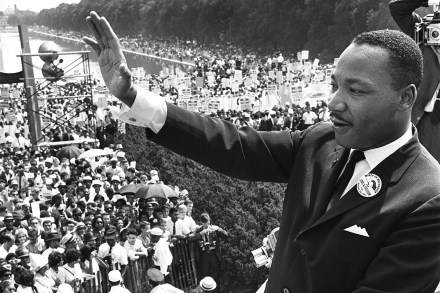
For over half a century, we’ve been misunderstanding Martin Luther King. Our secular minds are programmed to see him as a civil rights activist, but as another MLK Day comes and goes, it is time to see King as he saw himself: as a priest and a prophet. Today, we tend to understand prophecy as focused on prediction. The nature of biblical prophecy and the word’s classical origins have been forgotten. Pro, the prefix of the Greek word prophetes means ‘fore’, but also ‘forth’. To be a prophet is to ‘fore-tell’ but equally to ‘forth-tell’ – to be a divinely-inspired forecaster or to preach moral, spiritual and political messages. King saw his role as the latter.

mlk faith prophet

On the run with Martin Luther King’s assassin

This newly translated novel by the Spanish writer Antonio Muñoz Molina is really two books, spliced together in alternating chapters. One is a deeply researched account of the squalid peregrinations of James Earl Ray, who spent two months on the run after murdering Martin Luther King, Jr., in 1968. The other is a memoir charting the gradual attainment of personal and professional happiness on the part of the author himself. The reader feels confident that both protagonists will eventually arrive at their historically appointed destinies: handcuffs at Heathrow airport for Ray; a career as a celebrated author for Muñoz Molina. But considerable suspense surrounds the question of what on earth these two stories will have to do with each other.