The culture war inside the space program
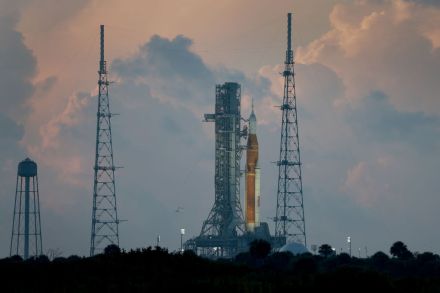
For many, the upcoming launch of NASA’s Artemis 1 (after a botched attempt earlier this week) undoubtedly seems the start of a new and exciting era in space exploration. Not only is the US finally planning to return to the Moon — this time to build a permanent outpost on the lunar surface — but in just a few months Elon Musk’s SpaceX will be sending its gigantic Starship, theoretically capable of carrying 100 astronauts, into Earth orbit. “Space is sexy again,” as astrophysicist Paul M. Sutter recently put it. “After the excitement of the initial Apollo missions dwindled into a subject only discussed by ultra-nerds, and the cool factor of the Space Shuttle gave way to the realization that it didn’t really do much, people generally lost interest in space.