Mark twain

Mark Twain’s finest invention was himself

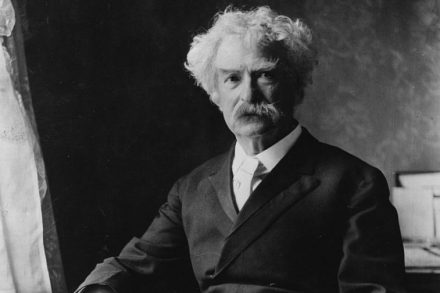
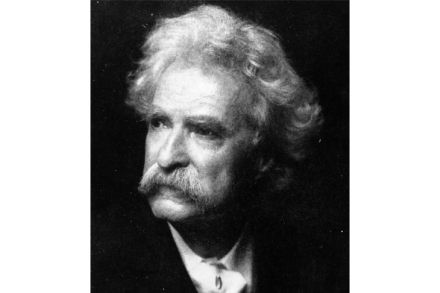
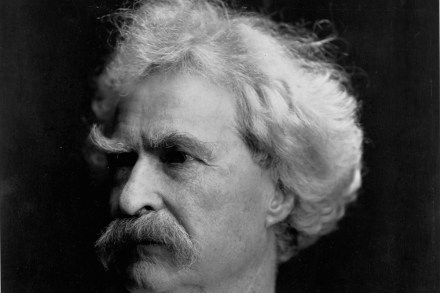
To speak of Mark Twain is to speak of the American psyche laid bare: forever restless, with an insatiable appetite for reinvention and biting commentary. Twain was not just a novelist or humorist: he was, in many respects, the nation’s most accurate mirror. He wrote the truth and then laughed at it. He carved his stories out of riverbanks and war zones, courtrooms and campfires. In his storytelling, Twain blurred the lines between truth and falsehoods, rage and laughter, freedom and fate. He gave us some of the greatest figures in American fiction. But Twain (1835-1910) was a creation more vivid, more volatile and more enduring than any character he put on the page. The “father of American literature,” as William Faulkner called him, didn’t hide behind his fiction.
Twain

The slave’s story: James, by Percival Everett, reviewed

From our UK edition

Rereading The Adventures of Huckle-berry Finn can be a saddening experience. It’s not just the oft-repeated n-word that jolts, then pains, then twinges; it’s the ‘no sah’, ‘I’s agwyne to’ locutions of Huck’s companion, the runaway slave Jim. In retelling the celebrated adventure story in Jim’s own voice, Percival Everett upends the convention. James and his fellow slaves can speak perfectly good English between themselves. It’s only when white folks are around that they perform blackness. Whether two slaves out of the earshot of whites would discuss if a situation represents ‘an example of proleptic irony or dramatic irony’ is another matter.

The only way Ron DeSantis prevails

I wonder if Ron DeSantis’s favorite mot these days is from Mark Twain: “Reports of my death are greatly exaggerated.” Maybe so. But let’s face it, the reports are many and deafening.  They are also damaging. Consider, to take one recent example, the report, conveyed by Semafor, on the DeSantis Meme Team that works under the rubric of “War Room Creative Ideas” on the encrypted message app Signal.   Among the “creative ideas” were videos, insinuated anonymously onto Twitter (as it then was), that smeared Donald Trump by including a fascist symbol — get it? Another attacked Trump for pro-LGBT rights comments. Both were instantly attacked by the Trump base.

ron desantis

The pleasures – and perils – of getting on your bike

From our UK edition

Jody Rosen lives and cycles in Brooklyn, which makes him what the Mexican essayist Julio Torri calls ‘a suicide apprentice’. He has been ‘rear-ended’ and ‘doored’ several times. He quotes an unnamed cyclist who likens the click of a car door being opened to the sound of a gun being cocked. ‘Get a bicycle,’ said Mark Twain. `You will not regret it, if you live.’ This rangy, digressive book contains just about the right amount of bicycle history and mechanics for the unobsessed. Rosen is not a bicycle fetishist.

Mark Twain in Buffalo

“Irreverence is the champion of liberty and its only sure defense,” wrote Mark Twain in an age before irreverence became a hanging, or at least exiling, offense. Perhaps the more apt aphorism today belongs to Edward Abbey: “The distrust of wit is the beginning of tyranny.” (The distrust of half-wit, I suppose, is the beginning of a TV critic.) Mark Twain would be hopelessly out of favor with both wings of the modern duopoly. Militaristic Republicans would scorn Twain for his skepticism of empire and mockery of world-saving cant. (He was a supporter of the Anti-Imperialist League and proposed that the stars and stripes be replaced by the skull and crossbones.

twain

Ever the Twain

Mark Twain’s work contains in itself pretty much all of 19th-century America. This is America as she was when still, geographically and socially, more a frontier society than not; before she became heavily industrialized, urbanized and suburbanized: increasingly convergent upon the European societies from which she was descended. Twain’s America is, in short, America when she remained a unique place; even as she was evolving with lightning speed from her earlier self into something approaching her present one. Mark Twain made an international reputation for himself with the publication in 1869 of The Innocents Abroad, a travelogue that recounts a trip of many months through Europe and the Middle East.

twain

Madcap escapades: The All True Adventures (and Rare Education) of the Daredevil Daniel Bones, by Owen Booth, reviewed

From our UK edition

The narrative of an adolescent travelling by water with an older companion, undergoing trials and ordeals, encountering scoundrels and villains, with glimpses of society from high to low as they drift pass: it doesn’t take long before the flavour of this picaresque novel starts to seem hauntingly familiar. In his mid-teens towards the end of the 19th century, Dan, like Huckleberry Finn, escapes from a drunken father, and, though his journey is down the waterways of Europe rather than the Mississippi, the way he silently registers the corruption he sees all around him is deeply reminiscent of his literary forebear.