Mark carney

Mark Carney’s referendum ‘uncertainty spike’ exposed as bluster

From our UK edition

In the runup to the referendum, we heard repeated warnings that, whatever the outcome of the actual vote, the damage to the UK economy had been done. The Bank of England, whose governor has been accused of becoming something of a fellow traveller for Project Fear, warned in its Monetary Policy Committee meeting in March that: ‘There appears to be increased uncertainty surrounding the forthcoming referendum on UK membership of the European Union’. In April, the BoE was at it again, downgrading second-quarter growth from 0.5 per cent to 0.3 per cent. Warnings such as these risk of being self-fulfilling: if you talk about uncertainty, it’s hardly surprising that investors feel uncertain, creating a knock-on effect out of nowhere.

Osborne’s gone. So why’s Carney still around?

From our UK edition

Did you see that odd photo of George Osborne looking shifty, queuing up in the Vietnamese jungle for the chance to fire an M60 machine gun? I found it interesting for a number of reasons. One, obviously, is that it’s probably the first time in five years Osborne hasn’t been pictured wearing a hard hat and goggles. Another is what it tells us about his earnings prospects on the US speaker tour circuit: those guns can fire up to 650 rounds a minute — so at the local tourist rate of £1 a bullet that’s quite an expensive cheap thrill. Mainly, though, what struck me about that snap was just how quickly fortune’s wheel can turn.
The Bank of England has just taken a huge risk – on a Brexit boom

From our UK edition

Plunging output. The FTSE in freefall. A financial collapse. Unemployment rising rapidly and trade falling off a cliff. At first glance, you might think that was an accurate description of the British economy, given the decisions that the Bank of England took this morning. After all, to cut interest rates to their lowest level in history, to re-launch quantitative easing, and to promise more action down the road, the economy must be in crisis, right? Except, er, it isn’t really. While there are good reasons to argue that the decision to leave the European Union may well hurt the economy in the medium-term, there is no immediate emergency. In fact, the Bank has just taken a huge risk – of over-stimulating the economy, and creating a Brexit boom.

‘Stimulus now’: Bank of England cuts interest rate down to 0.25pc

From our UK edition

As expected, the Bank of England has cut base interest rates down to 0.25 per cent- the first movement since rates were cut to an 'emergency' low of 0.5 per cent in March 2009. There's a "clear case for stimulus, and stimulus now" said Mark Carney, BoE governor - so the money printing machine is being put back into action. About £60 billion is to be created electronically, and used to lend money to the government via gilt purchases. It will save Theresa May's government a fortune: the rate of interest charged on the many loans it takes (ie, gilt yields) collapsed to 0.63pc today; almost half the rate they were a month ago. The bank's prediction now is that Britain will avoid recession after the Brexit vote (contrary to what George Osborne was suggesting) but with growth halved to 0.

Money digest: Bad news for savers, good news for borrowers

From our UK edition

Savings accounts are disappearing rapidly as the expected cut to the base rate draws closer, says the Guardian. Moneyfacts, a data provider, found that 13 best buy savings deals were withdrawn in July – and have yet to be replaced. These include a three-year bond from Saga at 1.8 per cent and other deals from Virgin Money. The Post Office, too, has scrapped its top-paying three-year bond. Savers will be badly affected if the Bank of England cuts the base rate to 0.25 per cent as anticipated, the paper warns. On the other hand, borrowers are likely to do well. Moneyfacts found that mortgage rates have dropped to a new low of 2.48 per cent on an average two-year fixed rate deal – down from 2.68 per cent a year ago.

Money digest: Britain braced for ‘Super Thursday’ interest rate cut

From our UK edition

Britain’s financial status could be downgraded this week amid reports the Bank of England will cut interest rates on Thursday. The Guardian says that the Bank's Monetary Policy Committee will examine the latest growth forecasts and inflation report, and then make a decision on whether to cut interest. If they do, it will be the first time the rate has changed since it was set at 0.5 per cent in March 2009. Mark Carney, the governor, warned that a vote for Brexit could tip the UK into recession and the figures seem to back up this pessimism, according to the paper. In May, growth was forecast at 2.3 per cent, but economists now believe that it could be as little as less than one per cent. It is expected that the bank will cut interest rates to 0.25 per cent.

The Spectator’s Notes | 14 July 2016

From our UK edition

On Tuesday night in London, I spoke to Women2Win, a Conservative organisation dedicated to recruiting more women candidates. My title, suggested long ago, was ‘The Woman Who Won’. It referred to Margaret Thatcher. The day before my speech was delivered, another woman (and former chairman of Women2Win) won, so now there are two. Everyone seized the moment to compare and contrast them. There is a clear difference between Theresa May’s situation today and Mrs Thatcher’s in 1975. Mrs May, like Ted Heath in 1975, represents the side that just lost, Mrs Thatcher the side with a new idea about how to win. Mrs May is the establishment candidate: Mrs Thatcher was the insurgent.

Bank of England holds the base rate at 0.5 per cent

From our UK edition

So, the Bank of England didn’t do it: against market expectations that there would be a cut, the base rate has been kept at 0.5 per cent, where it’s been since March 2009. The pound shot up by 1.5¢ against the dollar on the news. https://twitter.com/bankofengland/status/753544578947481600 The Bank is keeping its powder dry and today's hold doesn't mean there isn't a cut coming: The Monetary Policy Committee is meeting again in three weeks’ time when it will have new forecasts for the economy and more official data on the impact of the referendum. ‘Most members of the Committee expect monetary policy to be loosened in August,’ the minutes of this month's meeting note.

Will Mark Carney Brexit by Christmas?

From our UK edition

Critics say the Bank of England put itself under suspicion by entering the referendum fray. Now Mark Carney says its warnings are being borne out by the post-referendum economic reaction. He misses the point. By having made those warnings himself, even if he sincerely believed them, he became like a politician trying to win, rather than a public servant trying honestly to manage either outcome. The more loudly he tries to vindicate himself and attack the motives of his accusers, the more clearly this is proved. It would damage confidence if Mr Carney were to leave his job suddenly, particularly if the government pushed him; but surely he should quietly be booking a flight home to Canada by Christmas. This is an extract from Charles Moore's Notes.

Mark Carney clashes with Jacob Rees-Mogg over BoE’s Brexit warnings

From our UK edition

Jacob Rees-Mogg and Mark Carney’s clash at this morning’s Treasury Committee was a masterclass in passive aggressiveness veiled in pleases and thankyous. From the words being said, it wasn’t clear there was any enmity in the room. But Carney’s expressions couldn’t have made things clearer: there is certainly no love lost between these two. Before the referendum, Rees-Mogg said Carney had come under 'undue influence' during the referendum campaign from the Treasury. Today, the Tory MP went on the attack in the politest way possible as he tried his trump card question once again about whether Carney would have conducted himself in the same way during a general election. Last time, Carney batted away the question deftly.

Mark Carney should admit that the Bank of England fell for Project Fear

From our UK edition

A stable government, led by a good-looking modernising liberal. A free trade agreement that gives it unrestricted access to the largest economic bloc in the world. Rising prices and a return to growth. There must be times when the Governor of the Bank of England Mark Carney wishes he was still in charge of the relatively simple Canadian economy, and had never been tempted to try and steer the damp and grey island on the other side of the North Atlantic through a moment of national angst. There may be worse jobs in the world – replacing Chris Evans on Top Gear, perhaps, or joke-writer for Theresa May – but it is hard to think of them right now.

Mark Carney uses interest rate decision to put the boot in over Brexit again

From our UK edition

The Bank of England's decision to keep interest rates pegged at 0.5 per cent won't surprise anyone. What is more interesting, after today's row involving Mark Carney, is how much the Bank had to say about the EU referendum. Brexiteers hoping Mark Carney and the BoE's Monetary Policy Committee would keep quiet about next week's vote will be disappointed. In its meeting minutes, the MPC gives it both barrels when warning about the dangers of Brexit. The MPC says a vote to leave would send sterling's exchange rate tumbling. It goes on to add that: 'As the Committee set out last month, the most significant risks to the MPC’s forecast concern the referendum.

Bank of England Brexit bust-up shows the referendum campaign is getting nastier

From our UK edition

With a week to go until the referendum, nerves are running high in both the 'Leave' and 'Remain' campaigns. This morning, we've seen that nervousness manifest itself in a spat between senior Tories and the Treasury and the Bank of England. Iain Duncan Smith, Michael Howard, Lord Lamont and Lord Lawson have signed a letter saying both the BoE and Treasury have been 'peddling phoney forecasts' to scare people into backing 'Remain'. In their letter to the Daily Telegraph, they go on to say that: 'There has been startling dishonesty in the economic debate, with a woeful failure on the part of the Bank of England, the Treasury, and other official sources to present a fair and balanced analysis.

Mervyn King hits out at ‘wildly exaggerated claims’ in referendum ‘debate’ – ‘the government has to take some responsibility’

From our UK edition

Although Mark Carney has warned that a Brexit is the 'biggest domestic risk to financial stability', his predecessor Mervyn King takes a somewhat different approach when it comes to the impending EU referendum. The former Bank of England governor used an appearance today at the Hay Festival to hit out at the 'wildly exagerated claims' made in the run-up to the vote. 'I wondered who would be the first to lower the tone,' King joshed when asked whether he thought Britain should stay or go.

Today in audio: Fallon says Putin would ‘Vote leave’

From our UK edition

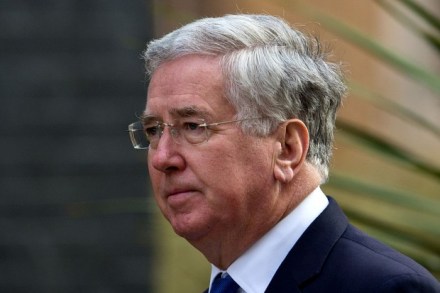
Vladimir Putin's name has popped up again in the Brexit debate. This time, however, it wasn't the Prime Minister suggesting that the Russian president would favour Britain leaving the EU, but the Defence Secretary. Michael Fallon said Putin would 'Vote Leave' and he also told a Commons select committee that 'there is absolutely no doubt in my mind that a British exit from the European Union would be applauded in Moscow'. He added that it would be a 'payday for Putin': Michael Fallon went on to say that being in the EU ensured that Russia had 'paid the price' for its intervention in Ukraine. Meanwhile, the Prime Minister gave a speech in which he said Brexit could ramp up the cost of a family holiday. But where was he planning on heading off to on his own summer trip?

Could Brexit solve the housing crisis?

From our UK edition

It is, at times, unclear that George Osborne is aware that the under-30s are voting in this EU referendum. When he talks about house prices plummeting post-Brexit, he talks as if this will strike fear into everyone’s hearts. For older people seeking to downsize, this might be true – but for almost everyone else, it’s not. And when I hear the In side arguing that we should all be terrified of Brexit because it will cause house prices to fall, I can’t help but wonder if this is the best single reason to vote ‘out’. For most people my age, one of the worst changes in Britain has been the way property prices have spiraled out of control – indeed, how the economic system is conspiring against my generation.

The IMF serves up more Project Fear – and it’s working

From our UK edition

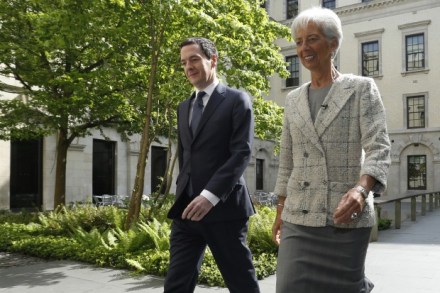
Another day, another warning about the economic bombshell which would follow Brexit. This time it's the turn of the IMF. In a press conference at the Treasury, Christine Lagarde spoke of the outcome of a vote to leave the EU ranging from 'bad to very bad'. Whilst the IMF's report said: 'A vote to leave the EU would create uncertainty about the nature of the UK’s long-term economic relationship with the EU and the rest of the world. A vote for exit would precipitate a protracted period of heightened uncertainty, leading to financial market volatility and a hit to output.' George Osborne was clearly grateful for the support of the IMF in the severity of their warning against Brexit.

Mark Carney isn’t butting out of the Brexit debate any time soon

From our UK edition

The Bank of England isn’t going to butt out of the Brexit debate any time soon it seems. Today’s interest rate decision produced few surprises with the Bank sticking at 0.5%. But the headlines are focusing instead on its warning about the consequences of a vote to leave the EU. The wording about the dangers of Brexit was the starkest yet. The Bank of England said: ‘A vote to leave the EU could materially alter the outlook for output and inflation and therefore the appropriate setting of monetary policy. Households could defer consumption and firms delay investment, lowering labour demand and causing unemployment to rise’ As doomsday scenarios go, excluding the Prime Minister’s warning about World War three, they don’t come much darker than this.

Mark Carney wades into Brexit debate again

From our UK edition

Whatever might be said about the Governor of the Bank of England, it's hard to fault his persistence. Mark Carney has made a habit of wading into the debate surrounding the EU referendum. And based on his appearance in front of the Lords Economic Affairs Committee this afternoon, he isn't planning on stopping any time soon. Carney repeated the MPC's warnings about the 'threats' from the forthcoming referendum being 'the most significant near-term domestic risk to financial stability'.

My straw polls say the ‘leave’ campaign is failing to make a clear economic case

From our UK edition

In every gathering, someone — often me — calls for a show of hands on Brexit. And I have to report that, in the varied circles in which I move, ‘leave’ may have the best tunes but isn’t winning the argument. At a Mayfair fundraiser for a Jewish charity, the crowd of mostly thirty-to-fortysomething men in suits (and many in yarmulkes) was 90 per cent for ‘remain’; a former Tory minister was spotted waving both arms in a desperate bid to boost the ‘leave’ minority. In a more mixed crowd of business people at a Budget briefing in Newcastle, the balance was much the same.