Margaret thatcher

What do we think of when we think of Essex?

From our UK edition

Apparently much of the notoriety – or perhaps by now it has become allure – of Essex is my fault. In 1990, weeks before Mrs Thatcher was defenestrated, I wrote an article in the Sunday Telegraph called ‘Essex Man’, in circumstances that Tim Burrows describes entirely accurately in this exceptionally well-written and intelligent book. Although the Iron Lady was about to be history, the part of England that had come to exemplify her achievement and her legacy was throbbing with capitalist energy more than ever – which motivated the profile of Essex Man and his hard work and ability to seize opportunities in a society where native ability counted for more than class.
Thatcherism is a cult the Tories should not follow

From our UK edition

Friedrich Nietzsche may not be the most fashionable member of the conservative canon, but doubtless he wouldn’t care much. He knew that one of the main symptoms of a civilisation in decline is ‘herd thinking’. Regardless of the victor, this summer’s Conservative leadership contest has been a case in point for Freud’s narcissism of small differences. None of the candidates have dared deviate from the dogma of Thatcherism. Grant Shapps said it loudest: like Thatcher, he would confront union ‘Luddites’ to save an ailing economy. Liz Truss wants to to ‘crack down’ on trade union ‘militants’ by making it harder for them to call strikes.

It’s time for Tory socialism

From our UK edition

The Conservative leadership contest has descended into a low-tax auction, which is not a good thing. The implication is that the Conservatives think government should be minuscule at the very moment when private enterprise is letting us down – the energy companies are raking in cash and spending it on stock buybacks – and the state seems to be on its knees. We live in a country where it’s become widely accepted that if you call an ambulance, it won’t show up for several hours; the borders are wide open; social care is under-funded; and the police have ceased investigating certain crimes. If anything, this is a moment to rediscover an older Tory tradition of state-building.

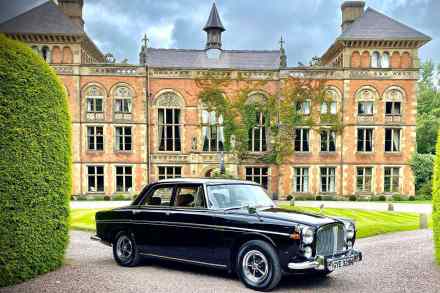
Yours for £45,000, the car that drove Margaret Thatcher into history

From our UK edition

‘A new girl drops in at the palace,’ announced the London Evening News on the front page of its ‘election special’ of 4 May 1979. The accompanying image showed a beaming Margaret Thatcher (pre-implant teeth in evidence) waving from the rear seat of a ministerial car, on her way to meet the Queen and receive her official invitation to form a new administration. Another ‘new girl’ (or boy?) might be dropping in at the palace soon – but if he or she wants to do it in the same car, it will cost them.

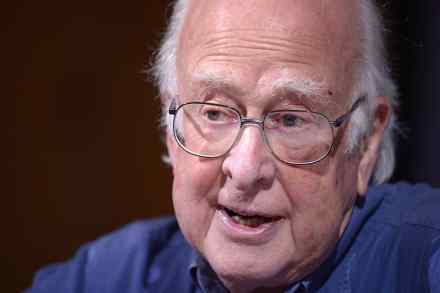
Solving the mystery of mass almost ruined Peter Higgs’s life

From our UK edition

In 1993 William Waldegrave, the science minister, was looking into a project being planned on the continent. Cern, the European research body, was upgrading its particle collider to create what it called the Large Hadron Collider. This underground apparatus ran beneath the French-Swiss border and it was so vast that its diameter equalled that of the Circle Line. Two beams of subatomic particles called protons would be fired around this subterranean loop in opposing directions and smashed together at 99.99 per cent of the speed of light. The scientists’ aim was to prove the existence of a fundamental particle called the Higgs Boson, which they hoped would appear momentarily from the sub-atomic luminescence. Waldegrave grasped the significance of the project.

Pelosi is right to put China on notice

House speaker Nancy Pelosi has always had a flair for the dramatic. During the Trump presidency, for example, she ostentatiously tore up his State of the Union speech. But for sheer spectacle, it will be hard for Pelosi to top her “will she, won’t she” visit to Taiwan this week. In spite of the suspense, there was never really any doubt about it. For weeks China has issued dire warnings about the perils of her visit. So, as it happens, have several commentators, including The Spectator’s Freddy Gray, whom I debated on the Americano podcast, and who seems to have a bad case of the collywobbles about the Pelosi trip.

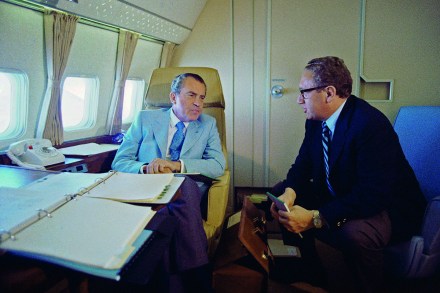
Henry Kissinger’s likely last book is on leadership

Leadership, Henry Kissinger writes in his latest book, is a medium by which a society moves from the past of its memory to the future of imagination. It is “indispensable.” As Kissinger says, “Decisions must be made, trust earned, promises kept, a way forward proposed.” Without leadership, ordinary people are, he argues, incapable of “reach[ing] from where they are to where they have never been and, sometimes, can scarcely imagine going.” But leadership is also, in Andrew Roberts’s phrase, “a ‘protean’ thing with little fixed definition.” Leadership is ultimately what leaders do; it goes in whatever direction they choose.

kissinger

The ‘natcons’ are here to stay

Cast your mind back to the 1990s for a moment. The left, dispirited at their generation-long rout at the hands of Ronald Reagan and Margaret Thatcher, and enraged by the ratification of limited-government trends at the hands of Bill Clinton and Tony Blair, were looking for a new rallying point. By the end of the decade, the intellectual left had settled upon a new epithet: “neoliberalism.” Although the term was not brand new, it exploded in popularity in left academic journals and soon in left media too. Simply put, “neoliberalism” means “democratic capitalism.

Liz Truss is no Margaret Thatcher

From our UK edition

The late Senator Lloyd Bentsen was 26 years older than the young Senator Dan Quayle when in 1988 they crossed swords in a debate in Omaha, Nebraska. Their exchange became famous. Quayle had been comparing himself with the late John F. Kennedy. Old Bentsen hit back: ‘Senator, I served with Jack Kennedy. I knew Jack Kennedy. Jack Kennedy was a friend of mine. Senator, you’re no Jack Kennedy.’ As it happens, I’m 26 years older than Liz Truss. So it’s a temptation to which I yield to quote that exchange, now that Ms Truss, explicitly, both in her wardrobe and the photo opportunities she contrives, is inviting comparison with the late Baroness Thatcher. I can’t quite mimic Bentsen’s claim.

Inflation is a social evil, so why don’t our leaders care?

From our UK edition

It was a ‘destroyer of society’, a ‘tax on ordinary people’s savings’ and a threat to social order. You don’t have to spend very long browsing the history books to find thumping quotes from Ronald Reagan or Margaret Thatcher denouncing rising prices as an evil that had to be defeated. And today? Even with prices in the UK now rising at 9.1 per cent, the fastest for 40 years, there are just a few mumbled apologies, coupled with some evasive excuses. That is not good enough. If we are going to defeat inflation all over again, it will take some leadership. We learned today that inflation has nudged up again, this time well past the 9 per cent barrier.

Boris Johnson saved by his hollow party

Boris Johnson has survived the attempt by some in Britain's Conservative party to remove him as prime minister. The margin not quite close. But by being so publicly called into question, both the prime minister and his party have been weakened. Dogged by real and performative public disapproval, Johnson will have difficulty remaining in power for the rest of the parliamentary term, and more performing to do in the next election to remain in office after it. In the fabled axioms of British politics, two things are meant to be clear. One is that the Conservative party is the natural party of government. The country is slightly right-of-center, the logic goes, and it is a rare Labour challenge which can defeat this innate advantage.

Has liberalism destroyed itself?

From our UK edition

According to Vladimir Putin, liberalism is an ‘obsolete’ doctrine, a worn-out political philosophy no longer fit for purpose. In this well-timed, rather urgent book, Francis Fukuyama attacks that view and puts a vigorous case for the defence. Despite its faults, liberalism is a force for good, he says, and it remains the only political philosophy capable of taking on the authoritarians of Moscow and Beijing. But the despots are not the central focus of his argument. The biggest threats to the liberal society, he writes, come from within. In Fukuyama’s crisp retelling, the liberal ideal emerged in the aftermath of Europe’s wars of religion. The notion that people could only exist as part of a rigid group had led to division, antagonism and slaughter.

How Britain was misled over Europe for 60 years

From our UK edition

Just as one is inclined to believe Carlyle’s point that the history of the world is but the biography of great men, so Christopher Tugendhat, in this level-headed account, is right to conclude that the history of the Conservative party in the past 60 or 70 years has been deeply affected by the biography of the movement for the European Union. And it would have shocked Carlyle that a great woman – Margaret Thatcher – played a central part and, according to Tugendhat, altered the course of the party’s relationship with Europe. She was certainly central to the debate, not least because rather too many Conservatives felt she had died a martyr’s political death in 1990 when she was forced from Downing Street by people they regarded as treacherous pro-Europeans.

Spies shouldn’t be political

From our UK edition

Now that events in Ukraine are restoring a sense of proportion about the difference between aggressive autocracies and free countries, it seems almost incredible that, only last year, sporting teams etc were all but compelled to ‘take the knee’ in deference to Black Lives Matter. One official prominent in this obeisance (metaphorical not literal in his case) was Sir Stephen Lovegrove. As Permanent Secretary at the Ministry of Defence, he emailed staff in the wake of George Floyd’s murder in May 2020, using the BLM hashtag, and castigating the racism of his own department.

Thatcher wanted to privatise Channel 4

From our UK edition

It is always amusing to hear the left selectively invoking Margaret Thatcher. This week, they are doing so to prevent the privatisation of Channel 4, citing the fact that she brought the channel into being. She did, in 1982; but in her memoirs, she explains that by 1988, when she was striving for the phasing out of the BBC television licence fee, she decided that Channel 4 would be better off privatised. On both subjects, she was defeated by what she calls ‘the monopolistic grip of the broadcasting establishment’. That grip is scarcely looser today.

What would have happened in the Falklands if Thatcher had been a man?

From our UK edition

Argentina invaded the Falkland Islands 40 years ago. I had joined the Daily Telegraph as a reporter in 1979 and was by then a leader writer. The Falklands was the first really seismic story I had encountered. What made it so exciting was that it was both genuinely absurd and genuinely important. The absurdity lay in Argentina’s vainglory. It violently claimed a right to the islands which not one single Falklands resident accepted. Its caudillo, General Galtieri, was from the comic-opera school of Latin American dictators, covered with gold braid and frequently drunk. In his invasion broadcast, he invoked the Virgin Mary. But Our Lady wisely ducked the contest, leaving the Iron Lady to sort it out.

What would Thatcher have said about Putin?

From our UK edition

When Sir Tony Brenton writes a letter to the Times, as he frequently does, it always says at the bottom that he was British ambassador to Moscow. The uninformed reader could be forgiven for thinking the sub-editors have got it back to front and he was actually the Russian ambassador to London. Sir Tony’s message in every letter is ‘It’s all Britain’s fault’. In his latest, his particular target was the Foreign Secretary, Liz Truss, after her visit to Moscow. He said she ‘might usefully recall Margaret Thatcher’s wise message to Mikhail Gorbachev sent in 1985 as perestroika began to take off: “We know that you have as much right to feel secure as we do.

What I really said to Gordon Brown: Field Marshal Lord Guthrie sets the record straight

From our UK edition

A headline in the Mail on Sunday, taken up eagerly by the BBC’s Today programme, claimed recently: ‘The SAS is getting worried that not enough posh officers are applying for jobs.’ Having hooked those shocked by the thought that the SAS should draw such distinctions, as well as those appalled that oiks are applying at all, the piece actually went on to explain that one officer failed the selection because he ‘lacked the sophistication’ to be able to brief cabinet ministers on operations. No lack of sophistication ever attached to Charles Guthrie.

Wrapped up in satire, a serious lesson about the fine line between success and scandal

From our UK edition

Have you heard of champing? Neither had I. Turns out it’s camping in a field beside a deserted church. When it rains, you abandon your flimsy tent and instead bed down in the hushed aisles. At the beginning of Ferdinand Mount’s new novel, Making Nice, Dickie Pentecost and his wife Jane, together with their daughters Flo and Lucy, are doing just that. In the morning they meet fellow champer Ethel, short for Ethelbert, a bewitching man with stony eyes and sticking-up hair. ‘Ethel,’ says Dickie. ‘I suppose they could have shortened it to Bert instead.

A dutiful exercise carried out in a rush

From our UK edition

Like department stores, empires and encyclopaedias, the multi-volume narrative national history is an invention of the later 18th century. It reaches its apogee, promising to bring everything important within a single enclosure, in the 19th and early 20th century. After that, ambitious examples appear to be fighting against a general lack of enthusiasm. Most of these works are little read now, from David Hume’s 1750s The History of England all the way through to Winston Churchill’s idiosyncratic A History of the English-Speaking Peoples in the 1950s. The grand sweep has a tendency to define the significant in advance.