Margaret thatcher

Adolescent metro liberals dance on Thatcher’s grave while her real enemies are respectful

From our UK edition

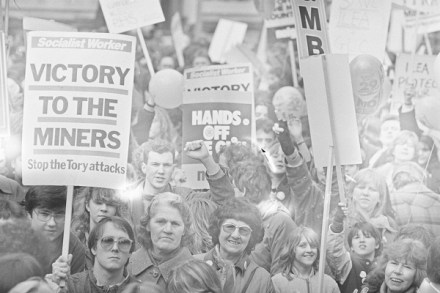
I was up in Mansfield on Thursday, interviewing retired miners for a film on the good old days of 1985, UDM v NUM and so on. The miners who stayed with the NUM in Nottinghamshire were, as you might guess, very militant indeed and very left wing. They still are. I asked one of them, off camera, what he thought of the whole Thatcher funeral business – there can’t be a group of people in Britain who more painfully copped her wrath, regardless of whether you think the strike was right or wrong. ‘I won’t be wearing a black tie,’ he admitted, ‘but it’s wrong, isn’t it, to revel in the death of a human being? You shouldn’t do that.
For 79p a download you can outrage the Establishment!

From our UK edition

During the period when Ireland  had its own sort of censorship, a version of the Vatican’s Index of Forbidden Books, there was an ugly rush by publishers and writers to get their books onto it. The novelist Flann O'Brien used to complain that the chances of literary success for a book that hadn’t been banned were very slim. The lesson seems not to have been learned by some of Lady Thatcher’s friends, the ones who are urging the BBC not to broadcast 'Ding Dong the Witch is Dead' if it gets to the top of the charts. For some reason it’s been doing awfully well since her death. Headlines in the Daily Mail and Telegraph have helpfully reinforced the sense that buying the thing is an excitingly subversive thing to do. Just think!

Is UKIP posing as the new party of the British working class?

From our UK edition

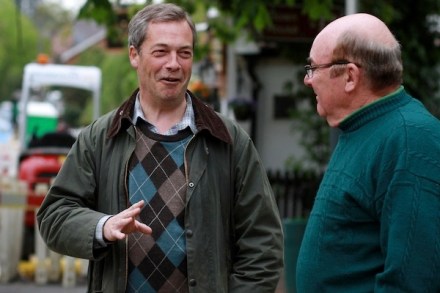
How seriously should we take Nigel Farage? He’s an exceptional politician but when UKIP did so well at Eastleigh I suspected they may have peaked. I went along to test my theory at a UKIP rally in Worcester last week, expecting to find a few hardline Eurosceptics huddled together in a room and I wondered how the audience would compare with that of the old BNP rallies. What I found was quite different: it was mobbed, Farage spoke very well – speaking about housing, unemployment, school places – essentially, UKIP is trying to reposition as a patriotic party of the working class. I write about this in my Telegraph column today. Here are my main points. The Worcester rally’s popularity... My plan was to sneak in half an hour early for the 7pm rally, but by 6.

Margaret Thatcher vs the intelligentsia

From our UK edition

On a warm summer evening in 1986, the crème-de-la-crème of London’s literary establishment met at Antonia Fraser’s house in Holland Park to discuss how they could bring about the downfall of Margaret Thatcher. Among their number were Harold Pinter, Ian McEwan, John Mortimer, David Hare, Margaret Drabble, Michael Holroyd, Angela Carter and Salman Rushdie, who referred to Thatcher in The Satanic Verses as ‘Mrs Torture’. With characteristic lack of modesty, they called themselves the 20 June Group — a reference to the plot to assassinate Hitler that was hatched on 20 July 1944. ‘We have a precise agenda and we’re going to meet again and again until they break all the windows and drag us out,’ said Pinter.

Diary – 11 April 2013

From our UK edition

Whenever feminists have complained in my presence about neglect of female high-achievers, other than rock singers and courtesans, I always like to mention brilliant Margaret Thatcher. It always makes them furious. They can’t bear to think of her as one of the most successful women of the 20th century. I had afternoon tea with her and Denis once in their chintzy flat at No. 10, where she expressed a great interest in Rupert Murdoch, whom she rather admired. My father-in-law, Stephen Spender, was also a Maggie fan and once, after he had delivered a speech about Henry Moore at Westminster Abbey, she repeated the whole speech back to him at the party afterwards word for word. Tragically her prodigious memory failed her in the end.

The Spectator’s Notes | 11 April 2013

From our UK edition

It is strange how we are never ready for events which are, in principle, certain. The media have prepared for Margaret Thatcher’s death for years, and yet there was a rushed, improvised quality to much of the coverage when she actually did die. We have a curious habit of all saying the same thing, and feeling comforted by that, when really it is our job to say as many different things as possible. The BBC, which Mrs Thatcher, and even more Denis, detested, has been straining itself to be fair, but fairly bursting with frustration in the attempt. The way for it to express its subliminal opposition to her is by using the word ‘divisive’ all the time. By day two, this had become its dominant theme.

Mrs T’s unfinished business

From our UK edition

Soon after Margaret Thatcher was elected leader of the Conservative party she came for lunch at The Spectator and our then proprietor, Henry Keswick, wanted to offer his congratulations — and his advice. It was time to crush the trades unions, he told her. ‘Mr Keswick,’ she replied. ‘You have spent the past 14 years in Hong Kong, where such things may be doable. I have spent them in Britain, where things are very different.’ She was advocating a simple principle: practicality comes before ideology. The only point in fighting battles is to win them. Her victories were so decisive and spectacular that it is possible — as we have seen in the last few days — to dwell almost entirely on them (and those who didn’t like them).

The difficult legacy of Margaret Thatcher in Sunderland

From our UK edition

Margaret Thatcher remains a truly hated figure in the north of England. The 1984 Miners' Strike and retrenchment of the shipyards had a phenomenal social impact which has pretty much written off a generation (or more) of voters for the Conservative party. Sunderland makes a good case study of the challenges faced by Tories in the wake of Thatcherism. As this anecdote from a Tory activist on the stump highlights, voters in the neck of those woods seem unable to forgive her: "I met a man in his mid 60s from Morton. He started to call Thatcher all the names under the sun for no apparent reason -- I had not remotely mentioned her — and said that the "only thing that f***ing woman had ever done for me was let me buy my council house and my British Gas shares".

The ‘Thatcher should quit’ splash that never was

From our UK edition

When Prime Minister, Mrs Thatcher did not have a great deal to do with The Spectator. She was not hostile, but slightly suspicious and perplexed. ‘This is Charles Moore,’ I remember her saying edgily as she introduced me to the Turkish prime minister at a reception. ‘He supports us some of the time.’ After the sinking of theBelgrano in May 1982, Ferdinand Mount, then the political editor, wrote a column deploring the incident and calling for a ceasefire. The then editor Alexander Chancellor, who had incited the piece when Ferdy had really wanted to fall silent altogether, put it all over the cover.

‘We insisted on making it easier for her’: How the Left helped Thatcher succeed

From our UK edition

The eulogies and condemnation following Baroness Thatcher’s death are coalescing into two clear truths. The first is that her legacy will always be contested: the nationwide reaction to Margaret Thatcher’s death – if viewed honestly – is one of embittered polarisation. The second is that the British Left must always recognise the pivotal role it played in enabling Thatcher to succeed and prosecute a political programme that damaged so many of the people that progressive politics exists to serve. The lessons of Labour’s failures during the dominant Thatcher period are as relevant today as they were during her time in office. The British Left fostered, enabled and created Thatcher’s premiership.

The View from 22 — Francis Maude and Liz Truss on Margaret Thatcher

From our UK edition

How does Margaret Thatcher's legacy impact Tory MPs today? This week's Spectator magazine contains a 16-page supplement considering the premiership of Baroness Thatcher, both high and low points. On this week's View from 22 podcast, Francis Maude debates whether Thatcher was the original moderniser. One of the few ministers to serve under both Thatcher and David Cameron, Maude offers his insights into what Thatcher thought of the present-day Tory party, why she actually avoided some particular battles, and how she is seen by the Prime Minister, who Maude suggests is completing the Thatcherite project. The Children and Families minister Liz Truss — a self-proclaimed Thatcherite — also joins us to discuss what the 2010 intake of Tory MPs think about Margaret Thatcher.

The Tory modernisers are Margaret Thatcher’s true heirs

From our UK edition

Margaret Thatcher’s death has inevitably prompted intense reflection among Tories about what lessons the party should learn from her time in office. ‘We must finish the job’ is the refrain on the lips of Thatcherite ministers, and there are more of those today than there were a year ago. The experience of office has had a radicalising effect on the Cameroons. To be sure, today’s circumstances are not the same as those of 1979 or ’89. Her exact policy prescription is not what is required. This is something that Thatcher, a politician who relished fresh thinking, would have appreciated. But what the party does need is the spirit of Thatcherism, that understanding of what a centre-right party should be in the modern age.

Cecil Parkinson, Charles Powell, John Simpson and Steve Hilton remember Margaret Thatcher

From our UK edition

Cecil Parkinson: Underestimated – but unbowed Even among Mrs Thatcher’s original shadow Cabinet, there were those who simply did not believe that she would be capable of dealing with the problems of a declining country. To a man they were wrong. Each underestimated the determination of Margaret Thatcher. She did not regard the manifesto on which she had been elected as a set of pledges designed merely to win an election and to be abandoned when the going got tough. She intended to honour hers: to reduce the role of the state; to transfer power to the people. Trade union members were given the right to elect their leaders at regular intervals and to vote before being called out on strike.

The grape, the grain and Margaret Thatcher

From our UK edition

It is impossible to think about anything else. Her death was more of a shock than a surprise. She had, alas, outlived the quality of life, so the immediate sadness is more appropriate to the human condition than to her own passing. But when such a mighty figure moves on, the world seems diminished. Margaret Thatcher and drink: not an easy juxtaposition. She took little interest in any of life’s pleasures except work and she had little sense of humour. ‘Humour’ derives from the medieval humours, so a sense of humour ought to imply a balanced personality. There was nothing balanced about her: just as well. We should all give thanks for the lack of balance which enabled her to strike so relentlessly in pursuit of her objectives, all of vital national importance.

Thatcher changed the City for the better – but human nature led it astray

From our UK edition

‘Margaret had no love for the banks,’ Nigel Lawson wrote in The View from No. 11. The idea that the amoral greed of the City and the banking crisis it fuelled should be blamed on Margaret Thatcher has been much bandied about this week. Let me try to put it in -perspective. In her early years in power, Thatcher thought of the City as another enclave of the ‘wet’ public-school types who so annoyed her in the Conservative party. The high-street banks were, in her view, a complacent cartel that reported over-large profits during the 1981 recession (hence the windfall tax), refused to contribute to Tory coffers, and did nothing to promote recovery.

Margaret Thatcher: faultless on the Falklands but a disaster at home

From our UK edition

I’m afraid we have to use Nelson Mandela as an example once again. He is proving very useful in his dotage, old Nels, as a comparison for stuff. A sort of benchmark. So, when the BBC’s Eddie Mair kebabed Boris Johnson and called him a ‘pretty nasty piece of work’, it seemed to me relevant to ask if he would level the same sort of charge at Nelson, were Eddie ever to be afforded an interview with the sainted man. Nelson’s organisation, remember, blew things up with bombs, and people died: he was a terrorist — whereas in effect all Boris did was schtupp some ditsy babe and tell Michael Howard a porkie pie. But it is unimaginable that Mr Mair would have been as rough on Nelson as he was on Boris; he would, instead, have been utterly reverential.

All the Iron Ladies

From our UK edition

The day Mrs Thatcher became Leader of the Opposition was a nightmare. Her victory over Mr Heath meant that I had to do a cartoon featuring her for the next day’s Daily Telegraph. But her arrival had been so swift that I barely knew who she was, and had almost no idea what she looked like. I had a problem. I don’t remember getting the photographs from her file in the picture library to draw from. My memory begins as I sat at my desk and looked through them. They were all close-ups of her teeth and upper gums, bared in smiles, under various pantomime ugly-sister hats. In those days, all Tory women wore peculiar hats most of the time. I did not have enough to go on. I struggled for hours to draw her likeness and I still feel the pain of my failure.

Working for Mrs Thatcher

From our UK edition

A doctor providing geriatric care once told me of the damage Mrs Thatcher had done to the NHS. He used to employ a simple test to find out whether his elderly patients had become seriously gaga. He would ask them who the Prime Minister was: as their minds weakened so the only name they came up with was Winston Churchill. But after Mrs Thatcher had become Prime Minister even the most confused of his elderly patients gave the right answer. Now of course his test can work again. Right through until the middle of the next century, elderly people in nursing homes will be assuring polite young doctors that Mrs Thatcher is the Prime Minister. I joined her Downing Street staff at the beginning of 1984 during the miners’ strike.