Margaret thatcher

There are no shortcuts to reforming the EU

From our UK edition

What does a Tory eurosceptic look like? Loud chalk-stripe, a flash of red braces and the faintest whiff of a lunch-time gander at the Members’ wine list. Right? Wrong. The economic trauma of the crash of 2008 is demanding that just as Conservative modernisation needs to be rebooted to suit the new Age of Austerity – with a focus on bold economic reformism to tackle welfare traps, worklessness and failing schools instead of the cultural gesturism of early modernisation – so too the crisis demands a rebooted euroscepticism.  The Tory Party in Parliament has been transformed by the arrival of the Cameron generation: more entrepreneurial, impatient, ambitious and global in our outlook.
The EU had 30 years to create a single market, and failed – we need change

From our UK edition

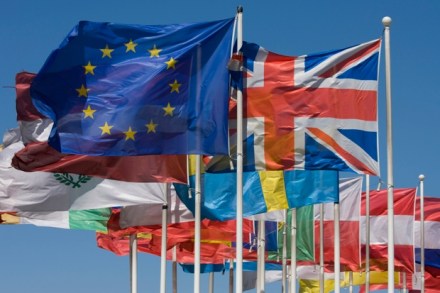
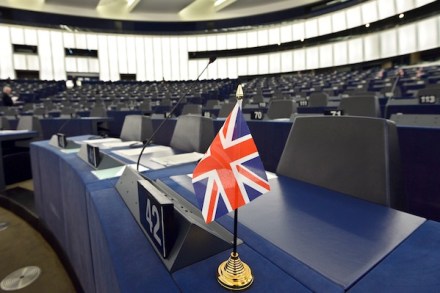
It is perhaps the most striking failure of the EU that nearly 30 years since Margaret Thatcher signed the Single European Act with the vision of a single trading market by 1992, that in 2014 we do not yet have a genuine single market in the services sector. This profound failure has cost the EU billions in economic growth and disproportionately affects the UK, which has a huge service industry base. The EU official website, with a delicious piece of understatement, comments: ‘Despite its achievements so far, the single market is not yet complete. Important gaps remain in some areas. Pieces of legislation are missing. And administrative obstacles and lacking enforcement leave the full potential of the Single Market unexploited.’ The cost of this failure is stark.

Can Lord Heseltine save the England cricket team?

From our UK edition

Apologies may be in order. A few weeks ago, I was advocating aid for Australia. As we had set the place up, we had a duty when this once-proud daughter house was sliding into decline. We used criminals to get the country going, which worked well. Hard, amoral characters, they built a nation in their own image. That was Australia for two centuries: hard, amoral - and good at cricket. Then everything seemed to be going wrong. Perhaps it was the southern sun's fault: melting down toughness and leaving a vacuum for decadence. It was time for the mother country to come to the rescue with fresh supplies of convicts (we have plenty). With their restorative blood-lines, the hardness might return and the Aussies should be capable of playing proper cricket again, in fifty years or so.

The gospel according to Robert Halfon

From our UK edition

The campaigning backbench MP Robert Halfon was invited to say grace at the First Annual Margaret Thatcher Memorial Dinner at Churchill College, Cambridge on Saturday night. It's not often you get table thumping after a prayer: 'For what we are about to receive, may the Lord make us truly grateful for the free market that keeps the price of food down and competition forever and ever. Amen.' Amen to that.

Welcome to Maggie Land

From our UK edition

Mr Steerpike was among the throng that gathered at the East India Club on Thursday night to hear about the development of the Margaret Thatcher Centre, the project to perpetuate the legacy of Britain’s greatest post-war leader. Donal Blaney, the Thatcher Centre’s CEO, and Conor Burns MP invited the Lady’s ‘most fervent supporters’ to pledge £1,000 each in a ‘true sign appreciation to Lady Thatcher’. Blaney also explained why he is ‘devoting his life’ to the project, telling the predominantly male but surprisingly young crowd: ‘Lady Thatcher delivered; now it’s our turn.’ The organisers have drawn inspiration from the USA.

Nigel Lawson’s diary: My secret showdown with the Royal Society over global warming

From our UK edition

The long-discussed meeting between a group of climate scientists and Fellows of the Royal Society on the one side, and me and some colleagues from my think-tank, the Global Warming Policy Foundation on the other, has now at last taken place. It was held behind closed doors in a committee room at the House of Lords, the secrecy — no press present — at the insistence of the Royal Society Fellows, an insistence I find puzzling given the clear public interest in the issue of climate change in general and climate change policy in particular. The origins go back almost a year, to a lecture by the president of the Royal Society, the biologist Sir Paul Nurse. In it he chose to launch a gratuitous personal attack on me, making a number of palpably false allegations.

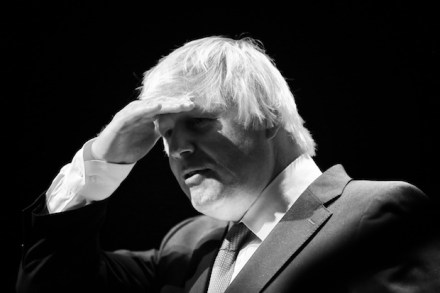
Boris Johnson: greed can be good

From our UK edition

Boris Johnson prides himself on being one of the few politicians who gets away with saying the unsayable. He stuck to that theme tonight with his Margaret Thatcher lecture to the Centre for Policy Studies, in which he argued that greed isn't a bad thing. He said: 'But I also hope that there is no return to that spirit of Loadsamoney heartlessness – figuratively riffling banknotes under the noses of the homeless; and I hope that this time the Gordon Gekkos of London are conspicuous not just for their greed – valid motivator though greed may be for economic progress – as for what they give and do for the rest of the population, many of whom have experienced real falls in their incomes over the last five years.

The PM’s musical tin-ear

From our UK edition

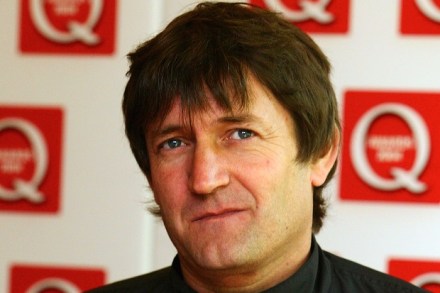
The news that Hull has been crowned the UK’s City of Culture for 2017 was discussed at PMQs. The PM extolled the virtues of the city, and made special mention of native eighties alt rockers The Housemartins. However, with a crashing sense of inevitability, the band’s founder, Paul Heaton, was unhappy with the endorsement: ‘Well, apparently David Cameron likes ‘London 0 Hull 4’. Which part of the attack on his policies and rich friends did he like best???’  The poor wee lamb ranted for a while about Thatcherism, and then concluded: ‘Cameron has ruined my day.’ My heart bleeds. Still, you would have thought that Cameron might have learned his music lesson by now.

How ‘Help to Buy’ helps the Tories

From our UK edition

Few images are more seared in the Tory consciousness than that of Margaret Thatcher handing over the keys to people who had brought their council house under ‘right to buy’. The image seemed to sum up the aspirational appeal of Thatcherism. I suspect that there’ll be a slight homage to these images when Cameron meets some of those that the government’s ‘Help to Buy’ scheme is helping onto the housing ladder tomorrow. Number 10 wants to show that the full scheme, which has only been running for a month, is already being used by a large number of people. The economics behind ‘Help to Buy’ might make many on the right nervous; even some Cabinet ministers are worried about it stoking another housing bubble.

John Cole: ‘An institution cherished by the viewing public’

From our UK edition

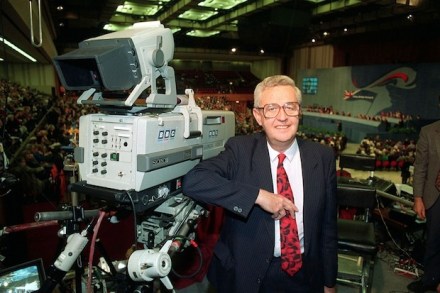
The BBC’s former political editor, John Cole, has died aged 85. As their political reporter during the Thatcher era, he covered many major stories concerning her, including the miners' strike and the Brighton bombing. We have dug up from the archive a review, by John Campbell, of Cole’s memoir, ‘As it seemed to me’, from April 1995.  John Cole's Ulster accent was a shock to metropolitan ears when he became the BBC's Political Editor in 1981. Scottish or Yorkshire voices were no problem, but there was unfamiliarity amounting almost to incongruity in hearing that particular accent discoursing on subjects wider than the tribal politics of Northern Ireland.

The Grangemouth scandal shows it’s time to keep an eye on the Reds. Again

From our UK edition

The most extraordinary thing about the scandal of Unite at Grangemouth and in Falkirk is how long it took the outside world to notice. Partly, this is an effect of devolution: almost nothing Scottish is now considered news in London, even if it is of kingdom-wide importance. Partly, it results from the loss of media and political attention to trade union affairs. So successful was Mrs Thatcher in taming union political power that newspapers laid off the labour correspondents who, in the 1970s and early 1980s, had been the aristocrats of the news room. As for the Tories, they have forgotten the Cold War arts of keeping dossiers on subversion.

A response to my critics on global warming

From our UK edition

My Spectator cover story on the net benefits of climate change sparked a lot of interest. There was an explosion of fury from all the predictable places. Yet not one of my critics managed to disprove my central assertion, that climate change is probably causing net benefits now and is likely to continue doing so for some decades yet. I’ve written responses to some of the critical articles and reproduce them here. 1. Duncan Geere in the New Statesman. Four paragraphs in his piece in turn begin with 'He's right...' so I am glad that Geere confirms that I am right about all my main points. If you read my article you will find that each of Geere's assertions about the eventual harm of climate change are also in my piece.

The Lady lives on

From our UK edition

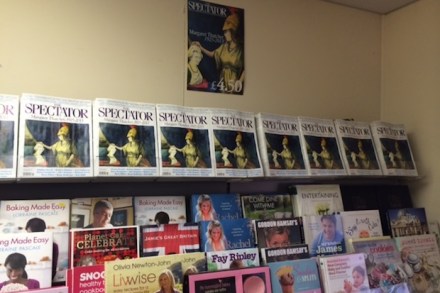
Margaret Thatcher's memory may be fading a little in England, but at least it still burns bright in Stanley. Here's a photo taken in a newsagent in the Falklands capital just this afternoon, where, six months after her death, copies of The Spectator's commemorative issue are still selling well. It does her — and us — proud.

Women think that David Cameron is out of touch for good reason

From our UK edition

Well, the great breadmaking debate hots up. David Cameron neatly sidestepped the heffalump trap that Nick Ferrari put in his path in an interview on LBC when he asked him the price of a Value Loaf in Tesco or Sainsbury. As you and I know, dear reader, Mr Cameron would no more eat that stuff than his own fingernails, and I for one applaud his good sense. If you can afford not to, don’t. But his elegant solution to the problem of not knowing that loaf-shaped carbohydrate costs 47p (he thought bread costs ‘north of a pound’, which is true of the kind he eats, only double that) was to say that he makes his own bread, from flour milled in the Cotswolds, a process which takes all of 30 seconds in a breadmaker as a way of getting his children to eat granary loafs.

Thatcher’s legacy is alive and well. Don’t let Labour unravel it

From our UK edition

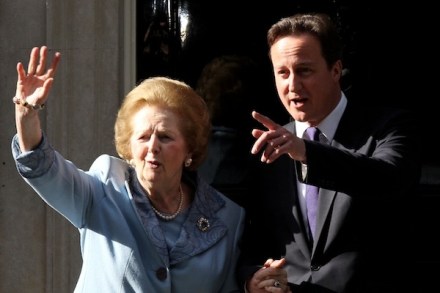
Today the conference hall in Manchester paid our respects, once again, to Britain’s greatest peacetime leader, Margaret Thatcher. listen to ‘The Conseratives' tribute to Margaret Thatcher’ on Audioboo It is a source of never-ending pride for every Conservative MP that we represent a party which was led by the country’s first female Prime Minister. Baroness Thatcher did more to extend wealth and ownership across the country than any other politician. We are all better off because of what she did. But it’s not only in the conference hall in Manchester that Baroness Thatcher’s legacy is alive and well. Across the country we see the change in the transferring of wealth from the state to the people.

She lives on in our hearts and our wallets

From our UK edition

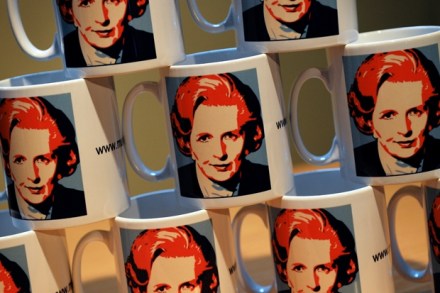
‘L'Angleterre est une nation de boutiquiers,’ said Napoleon, and now our greatest grocer’s daughter will be remembered with the highest honour this land can bestow: a shop. The Tories will open “Maggie’s Shop” at their conference and online. Think t-shirts and posters rather than milk and coal.

Jack Dromey: Labour let Thatcher become the champion of aspiration

From our UK edition

When Margaret Thatcher passed away and the broadcasters, newspapers, and casual drinkers in pubs picked over what her legacy really was, one of the key policies mentioned - and praised - time and time again by those from all sides of the political spectrum was the Right to Buy. It was an iconic housing policy that helped people who would never have had a chance of making it onto the housing ladder realise the dream of owning their own property. It was an empowering policy (the detail, of course, is slightly more complicated: the way the policy was designed led to a reduction in the overall size of the social rented sector, but as an iconic gesture to a group of people who were not traditional shire Tories, it's hard to beat this one).

Yes, Royal Mail should be privatised.

From our UK edition

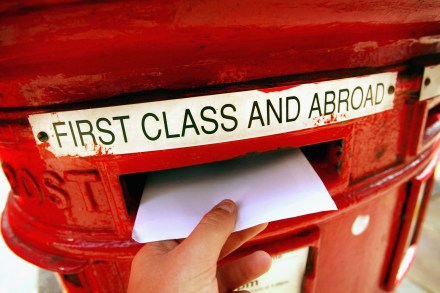
In this morning's post: enticing offers from McDonald's, Domino's pizza, Sainsbury's a local clothes shop and a children's charity. Arriving later today: a couriered parcel from Amazon.  That's often the reality of the modern British postal service. The Royal Mail delivers things you don't want; private companies deliver the things you do. Which is one reason why all the arguments citing the fact that Margaret Thatcher - sorry, even Margaret Thatcher - thought privatising the Royal Mail a step too far are cute but utterly irrelevant. It's a different world now. One in which if things are to stay the same they must change. And so, on balance, the partial privatisation of Royal Mail is a better idea than not partially privatising it.

Margaret Thatcher: friend of the unions?

From our UK edition

When Margaret Thatcher won the 1979 election, she was helped into Downing Street by what many of today’s politicians would regard as an unlikely group of Tory voters. The votes of trade unionists were crucial to Margaret Thatcher beating Jim Callaghan in 1979. And this didn’t happen by accident – Mrs Thatcher, the one-time President of the Dartford branch of Conservative Trade Unionists had made active efforts to appeal to those moderate trade unionists who felt let down by their leaders. After becoming leader in 1975, she set out to revive Conservative Trade Unionists. By the 1979 election, the organisation had 250 branches and was able to hold a pre-election rally at Wembley. Of course, this wasn’t the first time that Conservatives courted trade unionists.

GQ Man of the Year: Charles Moore vs Russell Brand

From our UK edition

The Foreign Secretary was left not knowing where to look at tonight's GQ Man of the Year awards, when this parish's very own Charles Moore declared war on the media luvvies. Invited to present the award for Writer of the Year, Hague looked noticeably relieved to hand over the gong for Moore's epic biography of Baroness Thatcher. But the fireworks were yet to come. Taking to the stage to Elvis Costello's She, it was a poignant moment, only to be shattered by Moore himself who decided to take a chunk out of Russell Brand for his jokes earlier about the sponsor, Hugo Boss, who infamously designed uniforms for the Nazis. While Brand quipped that 'let's face it they looked fantastic', Moore disagreed somewhat.