Margaret hodge

Keir Starmer’s selective ageism

From our UK edition

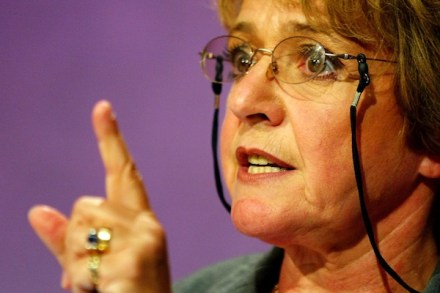
If the newspaper reports are correct and Margaret Hodge is about to be named as the next chair of Ofcom, it’s a surprising choice. The current chair, Michael Grade, had a storied television career, whereas Hodge has never worked in the media. But the most jaw-dropping thing about this appointment is that she’s 81. Not that I’ve got anything against octogenarians – I’ll be one myself in the blink of an eye. But the government has. In its manifesto, Labour promised to introduce a mandatory retirement age of 80 in the House of Lords, and it’s already set the wheels in motion. Why is Margaret Hodge considered to be too old to sit in the Upper House, but not too old to chair a public regulator? To complicate things, Sir Keir Starmer made her a peer in August 2024.
John Bercow on sleeping arrangements in the Speaker’s House

From our UK edition

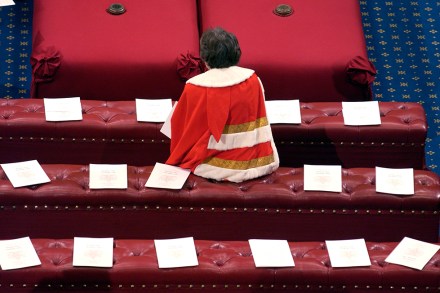
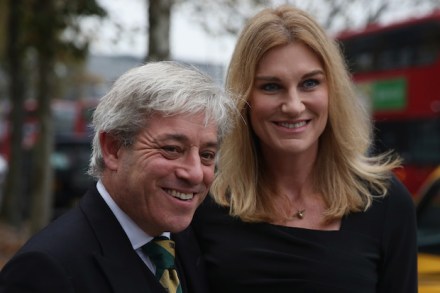
To describe John Bercow and his wife Sally's marriage as colourful, could be seen to be an understatement. The Speaker's wife has regularly made the news, just last year hitting the headlines after she temporarily left her husband to be with his cousin. So, Mr S was intrigued to learn that Bercow offered guests at the launch of Margaret Hodge's latest book It's Impossible a rundown of his sleeping arrangement. Held at the Speaker's House, Bercow used his speech to give a history of the property -- and the beds.

I know who I’m supporting in the Corbyn-Hodge leadership contest

From our UK edition

Christ help us – Corbyn or Hodge! I think, given the choice, I’m pretty firmly with Jezza. One deranged bien-pensant half of Islington versus the other. At least Corbyn isn’t smug. It’s one of the few things you can say in his favour. Re the anti-Semitism. There are a number of broad points to make. First, it is absolutely endemic within two sections of the Labour Party – the perpetually adolescent white middle-class lefties, and the Muslims – the latter of which now comprise a significant proportion of Labour activists and voters in parts of London and the dilapidated former mill-towns of West Yorkshire and East Lancashire. And Luton. And parts of the midlands.

Spectator letters: John Major on James Goldsmith

From our UK edition

The Goldsmith effect Sir: Much as I admire filial loyalty, I cannot allow Zac Goldsmith’s article about his father to go uncorrected (‘My dad saved the pound’, 28 February). Sir James Goldsmith was a formidable campaigner against the European Union and the euro currency, but at no point did he alter government policy. Zac Goldsmith suggests that I did not offer a referendum on membership of the euro currency out of conviction. This is wrong. I believed that any decision to abandon sterling — which I myself did not favour — was so fundamental that it would need national endorsement. On constitutional grounds some Cabinet members dissented, but many will confirm that I was seeking agreement for such a policy long before the Referendum party was founded.

Is Margaret Hodge the ‘tarantula’ good for politics?

From our UK edition

It’s not just on the Health Select Committee that election fever is starting to take hold. The Public Accounts Committee had a party-political row this week too, with accusations that Tory members had blocked plans to question Lord Green over HSBC. There is now a leak inquiry underway about who from the committee told the Guardian that Tory MPs blocked a bid for Green, while those Conservatives insist that they are happy for him to give evidence if he is needed for the inquiry. This sort of jostling on a committee isn’t particularly surprising given the proximity of an election, but while the PAC by tradition doesn’t have the sorts of stormy votes that other select committees have, it has seen some political tensions.

Won’t someone please unleash the challenger banks?

From our UK edition

In my Yorkshire town of Helmsley the NatWest branch, originally an outpost of Beckett & Co of Leeds, has closed down — collateral damage of its crippled parent RBS’s continuing struggle for viability. Our branch of the Australian-owned Yorkshire Bank, descendant of the West Riding Penny Savings institution, became an antique shop some time ago. HSBC, formerly Midland, is now a hairdressing salon. When they arrived a century ago, all three were ‘challenger banks’ of their day. But now they have gone, no challengers have ridden in to replace them — unless we count Handelsbanken, the progressively old-fashioned Swedish retail bank that has a thriving franchise down the road at Scarborough.

Who on earth does Margaret Hodge think she is?

From our UK edition

Most people, when they hear the word populist, will think of Marine Le Pen going mad about Muslim immigrants or a Ukipper saying he wouldn't want an Albanian living next door. But yesterday we witnessed a different kind of populism: the deceptively right-on variety, which aims its black-and-white moralistic fury not at cash-starved people at the bottom of society, but at wealthy individuals at the top. The purveyor of populism this time was Margaret Hodge, panto queen of the Public Accounts Committee, her target was some HSBC suits, and it made for an unedifying spectacle. https://www.youtube.com/watch?v=zNdu-ueG78o Hodge has in recent years become Parliament's poundshop Robespierre, a one-woman mopper-up of moral rot in the establishment, the purifier of the political realm.

Why does the skin colour of London’s next Mayor matter one toss, Margaret Hodge?

From our UK edition

Shocking news belatedly reaches me that the Labour MP Margaret Hodge has pulled out of the race to become the next Mayor of London. I am not sure how London will cope without this colossus, but there we are. She said: 'I actually think the time is right for us to have a non-white mayor.' Oh, DO you, actually? Is it possible to be more patronising than this? Why does the colour of a candidate’s skin matter one toss, you privately-educated, minted offspring of a multi-millionaire? It may well be that the best Labour candidate for mayor – David Lammy – happens to be black. But to suggest one should vote for him on account of his skin colour is repulsive and, I would suggest, racist.

Margaret Hodge’s oily donation

From our UK edition

Despite being the heiress to a steel fortune, Margaret Hodge never stops criticising multinational corporations over their tax affairs including the use of offshore havens and complex company schemes that befuddle the taxman. BP, for example, reportedly has 85 subsidiaries in a variety of tax havens built up over many years. That has not stopped moaning Margaret taking a hefty £8,000 donation from Bryan Sanderson. Who is he? Well, he is the former BP director, who worked at the company for over three decades.

Ignore Margaret Hodge and the BBC – free schools are working

From our UK edition

Today’s NAO report on free schools has recognised the ‘clear progress’ we have made opening 174 schools in three years with significantly lower costs than Labour’s school programmes. But, as Isabel Hardman, Toby Young and Policy Exchange’s Jonathan Simons have pointed out, instead of reading the report the BBC and PAC Chairwoman Margaret Hodge have chosen to ignore the facts. The BBC’s headline claims ‘free school costs budget trebled to £1.5bn, says report.’ But the NAO report states that ‘many new schools have been established quickly and at relatively low cost’. At £6.

The BBC Trust is a classic New Labour horlicks

From our UK edition

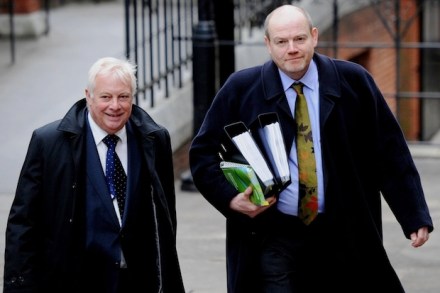
Nobody is ever 'invited' to appear before Margaret Hodge and the Commons public accounts committee. They are always 'hauled' before her. Thus it was with a whole phalanx of BBC executives, past and present, this afternoon. There are really two things which came out of the appearance of Lord (Chris) Patten, Mark Thompson et al. The first is the obvious reminder that the BBC has become a strangely upside-down organisation of late. Rich in senior management, it has spent recent years farming out major portions of news and other programme-making, apparently so that it could concentrate on the really important task of management. Of course the BBC is not the only public body to have suffered this upside-down-itis.

The curious case of Durand boarding school

From our UK edition

The Durand boarding school project is a wonderfully ambitious attempt to give children from one of the most deprived parts of London the kind of education that has traditionally only be available to a privileged few. But earlier this week, the National Audit Office criticised the Department for Education for handing over money for the project without sufficiently assessing the risks. Margaret Hodge, chair of the Public Accounts Committee, followed up with a letter to the parish council questioning the financial sense of the project. However, as a letter from the school’s head Sir Greg Martin reveals, Hodge had not spoken to Durand before writing the letter.

Crossrail: transport miracle or public sector folly?

From our UK edition

Phyllis has gone to Tottenham Court Road, but Ada is having a day off. In fact she’s slumbering deep below us, just south of Bond Street station with her head under Grays Antique Centre. Phyllis and Ada are twin sisters, 140 metres long, weighing 1,000 tonnes each. I’m imagining them as domesticated versions of those monstrous sandworms on the planet -Arrakis in Frank Herbert’s Dune, with their crystal teeth and ‘bellows breath of cinnamon’. They are the tunnel-boring machines that are munching through London’s sub-terrain from Royal Oak to Farringdon where, some time in autumn 2014, they will bump into their cousins Elizabeth and Victoria, coming the other way from Limmo Peninsula in Docklands.

Cameron’s tax tightrope

From our UK edition

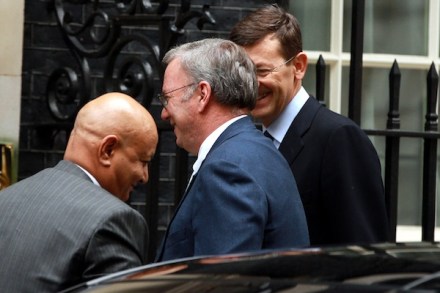
David Cameron didn't spend yesterday wringing his hands in Downing Street about the progress of his gay marriage bill: he was meeting his business advisory group. He allowed Google CEO Eric Schmidt to sneak out via the No 10 back door, a rather awkward metaphor for the company's tax arrangements. The Prime Minister is well aware of rising public anger about tax avoidance, and the rise of Margaret Hodge, who has a Calvinist preacher tendency in her role as chair of the Public Accounts Committee.

Wind power is unnecessarily stretching the cost of living

From our UK edition

The perfect news to greet a freezing Britain today — energy bills are set to take another hike thanks to a series of dodgy wind energy contracts. According to today’s Telegraph, a ‘shocking series of errors’ has resulted in deals worth £17 billion stacked in the favour of turbine manufacturers. As well as wasting taxpayers' money, it appears the excessive costs of these contracts could be handed down to families, placing an extra strain on households at a time when family incomes are being pushed to the limit. Who do we have to thank?

When ‘boycott’ isn’t quite the right word

From our UK edition

Boycott Amazon was the message from Margaret Hodge MP in last weekend’s Observer. This comes in the wake of new revelations about just how little UK tax is paid by Amazon and other corporate giants Starbucks and Google. According to Conservative MP Charlie Elphicke, Amazon’s UK sales amounted to £3.9 billion last year, but it paid just 2.5 per cent tax on its estimated profits thanks to channelling sales through its Luxembourg HQ. There is a feeling that although it is legal, it isn’t fair that a company which has warehouses and employs 15,000 people in the UK doesn’t pay enough tax. Some argue that it is down to HMRC to tighten these tax loopholes so as to prevent multi-national corporations from taking advantage of them.

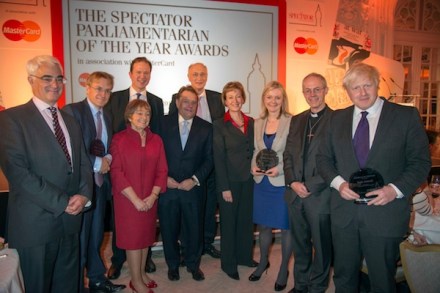
Boris, bishops and other gossip from the Spectator Parliamentarian awards

From our UK edition

Justin Welby, the nominated Archbishop of Canterbury, accepted his Spectator award for Peer of the Year (in recognition of his work on the Parliamentary Commission on Banking Standards) by conceding that, after the General Synod rejected women bishops yesterday, he has achieved the rare distinction of losing a vote of confidence without having assumed office. This joke was the start of a masterful comic performance in what was, clearly, an off-the-cuff speech.

The Spectator Parliamentarian of the Year Awards | 21 November 2012

From our UK edition

The Spectator’s Parliamentarian of the Year awards are being held this afternoon at the Savoy Hotel. In total 14 awards were presented by Michael Gove, Secretary of State for Education, who was invited to be  guest of honour in recognition of his parliamentary achievement. The award winners were: 1. Newcomer of the Year - Andrea Leadsom MP (Con) 2. Backbencher of the Year - Rt Hon Alistair Darling MP (Lab) 3. Campaigner of the Year - Rt Hon Andy Burnham MP (Lab) 4. Inquisitor of the Year - Rt Hon Margaret Hodge MP (Lab) 5. Speech of the Year - Charles Walker MP (Con) & Kevan Jones MP (Lab) 6. Resignation of the Year - Rt Hon Lord Hill of Oareford (Con) 7. Apology of the Year - Rt Hon Nick Clegg MP (Lib Dem) 8.

Headmistress Hodge grills HMRC on tax avoidance

From our UK edition

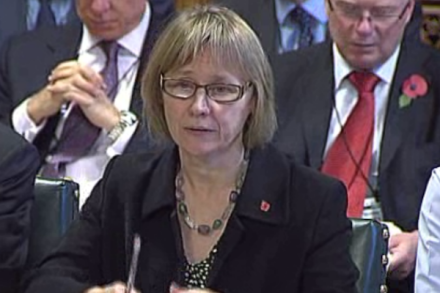
Ever since Margaret Hodge took over the chairmanship of the Public Accounts Committee, its evidence sessions have become rather lively: more like a fearsome grilling from the headmistress than a slow-moving chinwag with a group of MPs hoping for the next division bell. Hodge was on terrifying form today as senior officials from HMRC sat down to take evidence. She directed her teacherly wrath in particular at Lin Homer, chief executive and permanent secretary of HMRC, who gave the bulk of the evidence on the department's work in tackling tax avoidance. Homer appeared rather shell-shocked by the onslaught, like a pupil trying to explain why she wasn't wearing a tie and had rolled her skirt.

Hodge’s new nemesis: Sir Jeremy Heywood

From our UK edition

Margaret Hodge subjected senior civil servants to a fierce ear-boxing this morning. She accused them of trying to avoid the scrutiny of her Public Accounts Committee, and declared the current doctrine of ministerial responsibility unfit for the 21st century: ‘The senior civil service needs to acknowledge that we live in a different world from the world in which ancient conventions could prevail. Everybody wants greater transparency and accountability.’ Hodge also said she ‘has been rattling the cage too much for some’ and detailed some of the resistance she’s encountered.