Manufacturing

Trump makes America’s Coke pure again

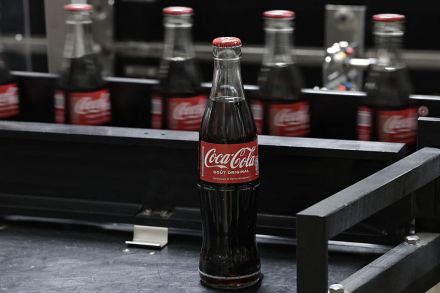
Squashed between his Truth Social announcements that fentanyl is now a Schedule I drug, President Trump made a surprising declaration related to his own favorite addictive substance: Coke (the drink). "I have been speaking to Coca-Cola about using REAL Cane Sugar in Coke in the United States, and they have agreed to do so," he proclaimed. "I’d like to thank all of those in authority at Coca-Cola. This will be a very good move by them – You’ll see. It’s just better!" Coca-Cola responded to Trump's message merrily. "We appreciate President Trump's enthusiasm for our iconic Coca-Cola brand. More details on new innovative offerings within our Coca-Cola product range will be shared soon," the company said in a statement.
Coke to be made with cane sugar

Tariff haters don’t live in the Rust Belt

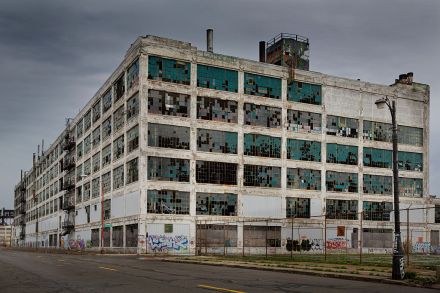
There is a vacant lot at the edge of downtown Philipsburg, Pennsylvania, my hometown. Three years ago, a handsome, sturdy brick factory building stood in that lot, albeit most of the windows were broken, as it had been abandoned for years. After it closed, the building became a favorite hangout for ne’er-do-wells, whose act of arson forced its recent demolition. For decades, though, the clothing factory employed thousands of people and made downtown hum, as workers crowded the restaurants and took care of errands on their lunchbreaks. They – along with the hundreds of people employed by a cigar plant on the outskirts of town – also bought houses and rented properties here and supported locally owned pharmacies, barbers, hardware stores, grocery stores, and the hospital.

Letters from Spectator readers, October 2024

The Californication of the Democratic Party At the risk of taking a Marxian perspective, California has become exactly what could have been predicted in 1993, with the loss of its manufacturing base to the 1990s defense cuts and much of its agricultural base to environmental regulation and foreign competition under the WTO. The state’s economy is now based on some of the most unequal industries on the planet: software, entertainment and hospitality. Plus, in the case of entertainment, an industry that has always tolerated and quietly celebrated what may politely be called decadence, or less politely, degeneracy. Just look at who has all the discretionary money and how they got it, and almost everything else follows. — M.

letters

How America’s ‘big sort’ will upend politics

The world may not be turning upside down, but it’s certainly tilting. In the long shadow of the pandemic, with war on the European continent and the West and China entering a new cold war, the “new economy” of bits and bytes that was supposed to connect and shape the world has hit a rough patch. Meanwhile, the much disdained “old” economy of manufacturing, agriculture and energy is thriving. Today, it’s not steel companies or gas plants that are experiencing mass layoffs, but firms such as Goldman Sachs, Meta, Amazon, Microsoft, Snap and Google. Last year, media companies  lost $500 billion in value and tech firms have shed $4 trillion off their valuations. Industrial spaces are in high demand while downtown offices sit half-empty.

big sort

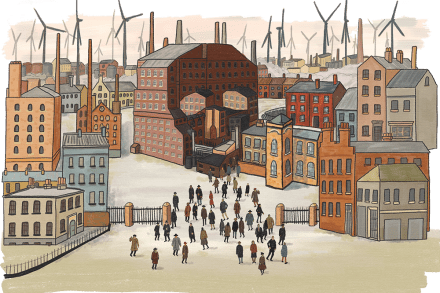
Manufacturing in the US shouldn’t be so hard

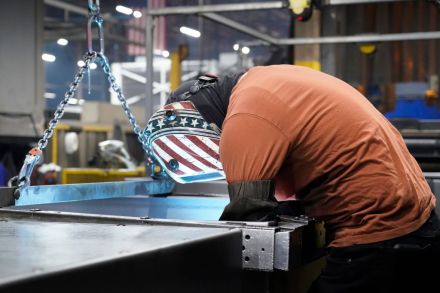
There’s an automotive parts manufacturer in my hometown. The company has grown over the course of its 19-year life, from around 20 employees two decades ago to 45 full-time employees today. Despite the dirty nature of much of the work, the facility is kept clean, open, airy, and bright. There are no shavings on the floor or fumes in the air. The men who weld, bend, blast, and powder coat the metal parts and send them to the warehouse for packaging and shipment do so energetically. “Honestly, [the work] is very satisfying,” the shop’s lead welder, Joe, told me during a recent tour of the facility. “I’ve always wanted to do things with my hands, and I’ve always enjoyed welding.